A day’s worth of data should not take longer than a day to arrive. At the Kennedy Center, it did. An institution devoted to timing onstage had a rather less obliging clock backstage: its data warehouse. Virtual Service Operations’ published account describes daily loads taking 26-36 hours. Buying a replacement exceeded the budget. The more useful question became whether a small, working prototype could change the job itself.
- VSO combines cloud engineering with ongoing IT operations and hands-on user support.
- Its FogLifter software connects IT assets, service quality, and costs.
- Veteran recruitment is paired with technical mentoring and team-based delivery.
- Its customer stories reward prototypes, clear ownership, and systems people can maintain.
A day’s data should not take a day
Working with AWS Professional Services, VSO helped build a modular system using change data capture to keep records synchronized. VSO reports a six-minute daily load. The Kennedy Center wanted something its staff could operate and expand; documentation and training were part of the solution. In VSO’s account, an earlier consulting attempt had not worked. A usable prototype helped make self-sufficiency believable.
The interesting part is the buying decision. A replacement purchase would have answered the question, “What should we buy?” The prototype answered a more demanding one: “Can we work with this?” For anyone who has inherited an expensive system that only its supplier understands, the distinction has a certain bitter charm.
The cloud still has a desk
VSO occupies the space between a technology purchase and a functioning working day. Its managed services cover infrastructure operations; its cloud practice designs and moves workloads; its end-user teams deal with the devices through which people encounter all that architecture. A printer problem can be wonderfully indifferent to a company’s transformation strategy.
The end-user practice reports supporting more than 100,000 users across the United States. Its work includes onsite repairs, device imaging, asset tracking, refurbishment, and returned-equipment processing. Some of the service happens at walk-up tech bars; some happens in depots. These are practical, physical jobs, even when the application lives in a cloud.
In November 2023, VSO announced a $50 million deskside support contract with a large defense contractor. The term was four years, covering nearly 100 locations, with 185 additional resources. The customer was not named. The amount describes that engagement’s scale, rather than a price list for another buyer.
The business model follows the work. A customer can engage VSO for an engineering project, a migration, ongoing managed operations, or software. Delivery may also pass through a larger prime contractor. The firm’s partnership page describes co-selling and co-delivery with Kyndryl, alongside relationships with IBM, Microsoft, AWS, Rubrik, and Dell. Enterprise IT is a crowded dinner table. VSO does not have to own every chair to earn its place.
First, agree on the inventory
FogLifter, VSO’s proprietary software, addresses a less theatrical form of dysfunction: the systems do not agree. A configuration database has one picture of the estate. Billing has another. Service records introduce a third. Before anybody debates whether IT costs too much, somebody must establish what is actually there.
The implementation sequence has three memorable names: Count, Caliber, and Cost. Count normalizes and deduplicates asset records. Caliber measures service against customer-defined commitments. Cost connects assets with billing classifications. The sequence has an accountant’s restraint and an engineer’s logic: an elegant financial report is of limited use if its inventory is wrong.
- 01CountWhat exists?
- 02CaliberHow is it served?
- 03CostWhat is charged?
Its current product positioning adds natural-language questions over reconciled IT data and describes a foundation connecting cloud, billing, infrastructure, and service records. VSO presents FogLifter as complementary to tools such as Apptio and ServiceNow. That is a useful market distinction: the proposition is to improve the evidence those systems consume, rather than demand that a customer abandon them.
An anonymous manufacturing customer quoted on VSO’s website describes roughly 12 petabytes of storage across more than 20 locations and says FogLifter saved over 100 person-hours monthly on granular billing requirements. That is a customer testimonial, not a universal savings forecast. Still, it reveals the product’s natural habitat: enough equipment, suppliers, and billing detail for reconciliation to become a job of its own.
A migration is also an argument
Consider Fannie Mae. VSO’s case study describes architecture and information-security support, alongside AWS Professional Services, for moving more than 200 legacy applications. One reporting application used Jupyter notebooks on an over-provisioned Kubernetes cluster. Its users wanted the move to be operationally transparent. They had reports to produce, not an appetite for infrastructure maintenance.
VSO describes a design using SageMaker that removed the application team’s responsibility for the underlying Kubernetes and notebook infrastructure. Designs also went through architecture review boards. The work required an understanding of application behavior and security policy, as well as AWS services. A technically plausible migration still needs people to approve it and users to tolerate it.
Allogy’s migration supplies another instructive detail. Moving its Capillary training application from commercial AWS to GovCloud required a different video-processing tool and code changes to support MediaConvert. VSO says the production move occurred during an approved monthly maintenance window. The destination was not simply the same room with a different name on the door.
These are the conditions that make VSO’s expertise relevant: mixed infrastructure, strict security expectations, scarce architecture capacity, and continuing obligations to users. They also show the limits of copying a migration mechanically. If a required service differs at the destination, the application must accommodate it. If source-system access is restricted, a migration plan needs cooperation before it needs more enthusiasm.
The team behind the ticket
VSO’s veteran focus becomes more concrete when viewed as a training arrangement. Its Cloud Center of Excellence provides technical escalation and mentoring. Developing staff take on progressively more responsibility, including ticket queues, on-call work, server builds, and restores. The intended cycle ends with experienced veterans mentoring newer arrivals.
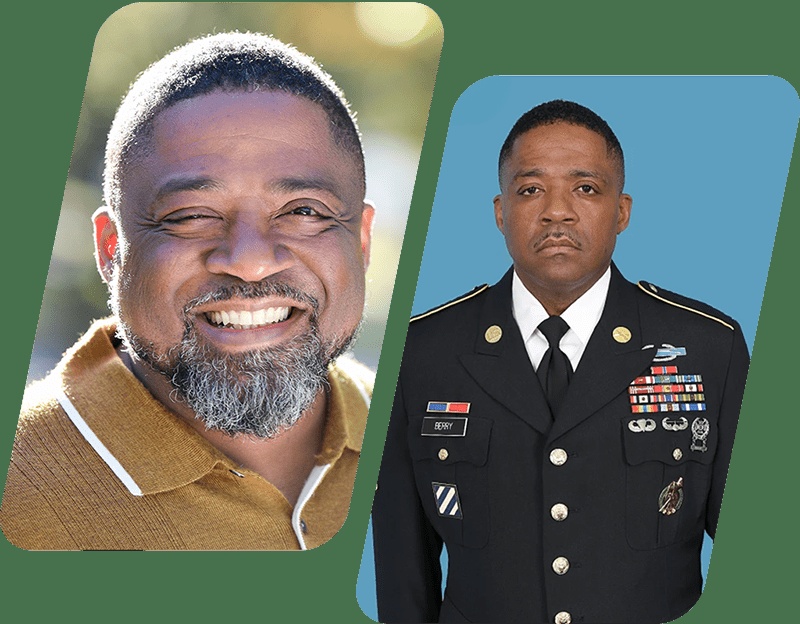
A 2022 OpsRamp partnership announcement explains the delivery machinery: monitoring alerts are correlated before actionable tickets reach Jira Service Management. CTO Laura Richardson described the staffing model in equally practical terms.
“We hire veterans, train them in teams and deploy them in teams.”Laura Richardson / 2022 OpsRamp announcement
That announcement put veterans at more than 60% of the operations division at the time. It is a dated division-level figure, rather than a current company-wide headcount. The operational idea matters more: train people together, give them shared procedures, and route problems toward expertise. VSO’s concise cultural principle, “No Jerks, Thanks,” is rather easier to remember than most corporate prose.
The approach extends beyond servers. VSO’s IBM subcontract case study concerns pandemic unemployment assistance, reporting 1.3 million calls processed and first-call resolution above 90%. Those are company-reported project results. They show that service operations can mean helping a person navigate an urgent administrative problem as well as repairing technology.
Copy the questions, then buy the service
VSO’s recent announcements place it firmly in regulated IT: four Microsoft Solutions Partner designations in May 2026, followed by an August announcement of 68% revenue growth over 2022-2025 and an Inc. 5000 listing. Credentials help establish technical breadth. Customer projects tell a buyer what to investigate next.
The transferable lesson is a sequence of questions. Can your staff maintain the proposed system? Do asset records match the bill? Who owns an alert after it becomes a ticket? Will the application’s dependencies exist in the destination cloud? What must be settled before the maintenance window opens?
A buyer with those complications may find VSO’s combination of engineering, software, and operations useful. A simpler environment with little reconciliation work may have less need for the whole offering. Start with a specific workload or service problem and measurable acceptance criteria. There is considerable pleasure in a grand technology announcement. There is more lasting pleasure in a Tuesday that works.
Continue the conversation
VSO website · Explore FogLifter · Customer projects · News and articles
LinkedIn · X · YouTube interviews and videos · Watch the FogLifter NLQ demo