Chris Miles was already running a business when another one began arriving in the form of questions. His construction customers wanted help with their computers. He knew his way around the technology, so he helped. There was work to finish, a company to run, and apparently an unofficial computer department to staff. The department consisted of Chris.
In 1997, those requests became Miles Technologies, the company now called Miles IT. The beginning has a pleasing lack of ceremony. A customer had a problem. Miles could do something about it. Repeat that exchange often enough, and a favor starts looking suspiciously like an occupation.
His career has since acquired business software, a larger workforce and a long-term ownership plan. Yet the original question remains useful: what is the person asking for help actually trying to accomplish?
The customers had another question
Construction gave Miles an unusually practical apprenticeship in business. He started his own company at 16. Later, while taking a civil engineering course load at the University of Delaware, he was also employing people in siding and dock-building businesses. The classroom and the payroll were competing for space in the same week.
By his account, there was an early education in getting paid, too. “I had to learn what ‘collections’ meant at 17,” he recalled. That is a compact business syllabus. Deliver the work. Send the bill. Discover that these are separate achievements.
Computers were part of how he organized the operation. Customers noticed and asked for help with their own systems. The experience made him useful across two sets of problems: what the technology could do, and what running a business required. His university connection also lasted. Fellow Delaware alumnus and fraternity brother John Bialous became a senior colleague at Miles Technologies.
A company learns to answer
Miles began the technology company in the basement of his home in Shamong, New Jersey. Early customer requests sometimes ran ahead of the team’s existing experience. He later recalled announcing that they were going to build a website because someone had asked for one, although they were not yet web developers.
The detail is revealing without needing much embroidery. The sale created a new problem to solve. A useful answer required learning something. As Miles tells it, figuring out unfamiliar work became part of the company’s approach.
He has kept learning in less dramatic settings, too. Driving once supplied time for books on tape; CDs and Audible followed. His preference was for books, and his explanation emphasized the work involved in getting one published. Even the car journey could accommodate another lesson.
Over time, the founder’s job changed. Today, he focuses on setting direction, developing leaders and representing the business. Those responsibilities follow naturally from the basement problem. Once other people are answering the customer, the founder has to help them make decisions that hold together.
“A lot of people look at interruptions as an annoyance. Interruptions actually make you advance, in my opinion.”
Chris Miles
The paperwork was part of the product
The construction background helps explain why Miles’s interests extend beyond keeping a computer running. A working business also needs to know where an order stands, who owns a project, what a customer was promised and whether the numbers agree.
In 2013, Miles Technologies launched Business by Miles. The web-based platform brought functions such as customer relationship management, accounting, human resources and project management into one system. Miles described the aim as making those operations easier for smaller companies with limited resources.
By July 2014, the company had 142 employees, and 15 businesses were using the software. Those numbers capture a particular stage, with a new product still early in its life. Miles was discussing a ten-year plan, including more employees and a much larger customer base. He was already treating a young software product as a business that would need years of work.
Miles is now Striven’s founder and CEO. The product addresses the difficulties created by disconnected software. The everyday problem is familiar: separate systems can require people to move information around before they can get on with the work the information describes.
One business. Several responsibilities. Information needs to travel.
In 2020, marketing director Scott Hammer connected Striven’s development to years of customer work at Miles Technologies. The organization had accumulated experience across IT services, custom software, marketing and web development. Striven was presented as a product of that accumulated knowledge.
The connection makes sense as a reading of Miles’s career. He had used technology inside a company he was responsible for running. Later, he built a company that helped other operators do the same. The software work extends that concern into the unglamorous, consequential details of a working day.
A place to build things, again
In July 2018, Miles Technologies moved into a 160,000-square-foot property in Lumberton. The purchase was supported by a TD Bank commercial mortgage with New Jersey Economic Development Authority participation. A business that began downstairs at home now needed considerably more downstairs.
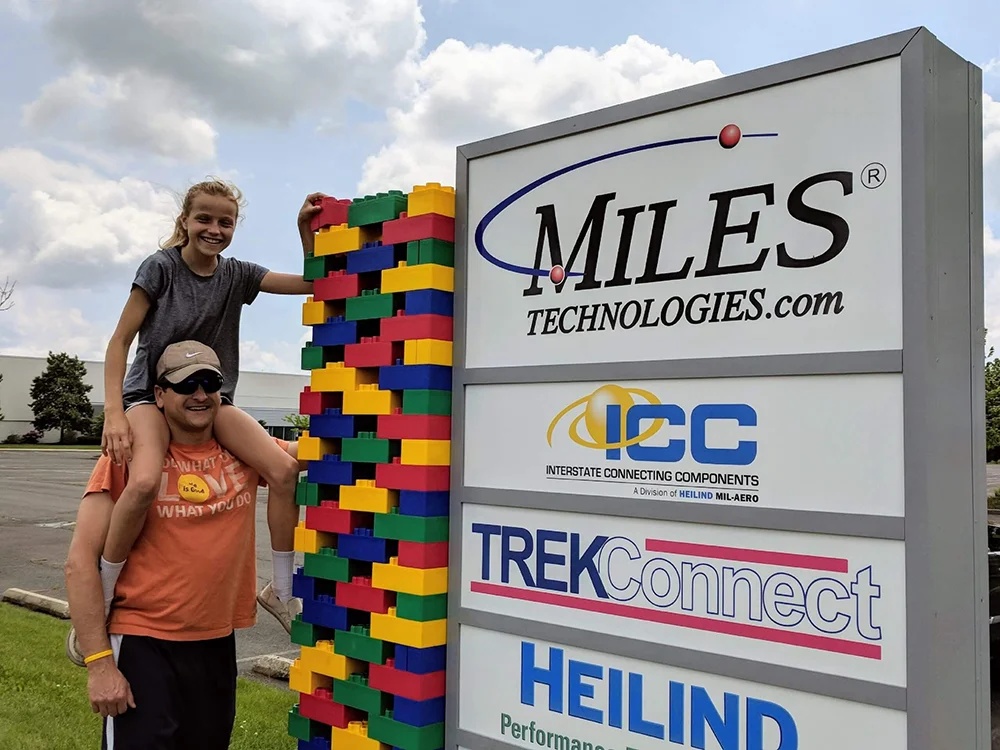
The headquarters offered pickleball and basketball courts, ping pong and a break room seating more than 100 people. Employees built desks from large, colorful blocks. For a founder who came out of construction, a workplace that involved assembling the furniture seems a particularly appropriate development.
The employment story extended beyond those already hired. By January 2019, the company was training applicants who had not yet reached the skills needed for a job there. About 50 people per quarter went through the program at that time, alongside internships for local college students.
That effort gives substance to Miles’s stated ambition: maximum employment. It is a demanding goal to choose. More work requires customers; more capable workers require teaching; more people require leaders who can help them succeed. The goal brings several parts of his job into one sentence.
Let the people in the room explain it
Miles has also written about the problem of attracting those people. In a 2014 recruiting article, he urged employers to make better use of employee referrals, to remind staff about openings and to make opportunities easy to share.
He saw another advantage in employees talking about the workplace: candidates understand that recruiters are paid to present a company attractively. Someone already doing the job can offer a different kind of account. He recommended employee participation on social media and job-review sites, while acknowledging that asking for extra help required tact.
The advice is practical and slightly inconvenient for management. A recruiting message has to live alongside what employees actually experience. People can distribute an opening; whether they want a friend to take it is a more interesting question.
In January 2015, Vistage announced that Miles had been honored in the Philadelphia Business Journal’s 2014 Most Admired CEO Awards in technology. He had joined the executive peer organization in 2011. The recognition sits beside an older pattern in his career: work gets done through relationships, including relationships with people who will tell you how the work looks from their side.
Keeping the keys
As Miles IT has grown, Miles has made a specific commitment about ownership. The company says it has no intention of selling. Its stated ownership rests with him and family trusts, and its public explanation includes succession planning designed to preserve continuity for customers and employees.
That is a more involved promise than simply enjoying the CEO’s chair. A company has to keep functioning when any one leader is absent. Its explanation explicitly addresses the potential absence of leadership members, including Miles himself. Keeping the business means planning for a future in which it can operate beyond the founder’s daily involvement.
Miles IT says its team now includes more than 500 professionals. Its service offering spans managed IT, software, websites and marketing. The scale changes the practical meaning of the original arrangement. A customer asking Chris for help has become a customer relying on an organization.
In August 2026, Miles IT announced a Summer Clutch Global Award. Miles’s accompanying comments credited the team’s efforts and service. It is a recent entry in a story whose central operational challenge has been building an answer that can come from more people than its founder.
The work beyond the work
Miles credits his mother with inspiring his entrepreneurial interest. She raised four children on her own, ran a business and supported his first venture. He values time with his wife and children, and enjoys tennis, pickleball and boating.
There is room for a joke in his outlook, too. Among his favorite sayings is a cheerfully literal response to life handing you lemons: keep the free fruit. It fits a person whose professional story repeatedly turns on noticing something useful in what has arrived.
The early requests were for computer help. Later came software, employees to develop and a company to prepare for the years ahead. Miles has kept finding work inside other people’s questions. The next part of the job is making sure there are people ready to answer.