Sam Gutmann had already delivered his verdict on backing up Salesforce data. Someone had put the idea on a whiteboard during a strategy meeting at his earlier company. He thought it was ridiculous. Years later, he would lead a business devoted to the same proposition, then sell it to Salesforce. The cloud had changed. So had his answer.
There is something pleasingly awkward about that sequence. Entrepreneurs are often presented as people who see the future before everyone else. Gutmann's story allows for a less theatrical skill: revisiting an opinion after the evidence has moved on. Being right eventually can require admitting that you were wrong quite confidently.
By November 2024, Own Company, formerly OwnBackup, had become part of Salesforce. The announced transaction called for approximately $1.9 billion in cash, excluding the value of the roughly 10 percent Salesforce already owned. Gutmann was CEO at the acquisition. In October 2026, he returned to another corner of cloud infrastructure as Datafy's CEO. His career keeps finding its way back to the data.
The problem before the coffee
Long before Own, Gutmann was helping businesses think about what happened when their files disappeared. He co-founded Intronis in 2003 after working as a business consultant. A Worcester Polytechnic Institute graduate, he had noticed that companies either lacked backup systems or neglected the ones they had. The technology existed. The habit of using it reliably was another matter.
In a 2008 discussion aimed at architects, he explained the stakes in language that required no computer science degree: “if you lose your drawings, you've lost the entire business.” For an architecture practice, the files were the work. A backup sitting beside the computer could disappear in the same disaster as the original. Repeatedly overwriting one tape could erase the very version somebody later needed.
That early work gives his later career a certain continuity. Storage fashions changed; the underlying customer problem survived. A business could buy increasingly sophisticated software and still discover, at an inconvenient moment, that its important information was unavailable. Gutmann had been selling an answer to that problem since the days when backup advice included remembering where you had put the tapes.
Intronis also taught him about reaching customers through other businesses. By 2010, he was talking about the company's partner program and its option for technology providers to sell the service under their own brands. Distribution was already part of his vocabulary. Building a useful product and arranging for somebody to buy it occupied the same conversation.
A detour with consequences
After leaving Intronis around 2010, Gutmann worked in his family's business and explored investing. Golden Seeds, which backs women-led companies, became part of that period. He attended pitch meetings, examined startups and asked questions from the other side of the table. For someone who would return to operating, it was a chance to watch how other founders explained their assumptions.
One contemporary account describes him challenging entrepreneurs while treating them respectfully. That combination matters more than a description such as “visionary.” A hard question can expose a weak business model. It can also shut down a useful conversation if the person asking enjoys the performance too much. The picture here is of an investor interested in the answer.
The turn toward Own came during a family trip to Israel in 2014. His friend Ori Yankelev was meeting the people behind a backup project. Gutmann came along to a coffee shop in Herzliya. A social detour became a conversation about a CEO job. By 2015, he was running OwnBackup. Yankelev joined too; Ariel Berkman was central to the technical founding team.
His earlier skepticism makes the meeting more interesting. A familiar label can conceal a changed opportunity. “Backup” sounded like territory he already knew. Software delivered through the cloud had created a different place for the same old mistakes to occur. He had to assess the business in front of him rather than the idea he remembered dismissing.
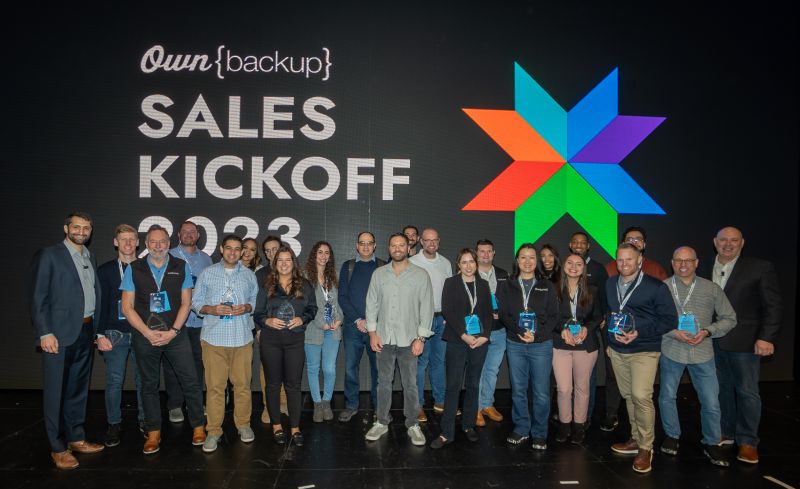
The spreadsheet behind the pitch
Gutmann's later account of operating Own includes an unusually domestic detail: an Excel budget that reached all the way down to coffee. He kept responsibility for the financial model rather than handing the exercise entirely to an outsourced finance team. The point was to understand what each decision did to the business.
It is an appealing counterweight to the accidental coffee-shop beginning. The encounter supplied an opening; it did not supply the operating system. A company still needed decisions about spending, hiring and where to concentrate attention. His approach put those choices into a model that could be inspected, argued over and changed.
He also interviewed prospective employees through roughly the first 400 hires, with particular attention to how they would work with others. Neither a spreadsheet nor a hiring conversation guarantees a good company. Together, however, they reveal where this CEO spent his time: understanding the machinery and choosing the people who would run it.
“We really see an IPO-sized opportunity ahead of us.”
Sam Gutmann, February 2021
When the numbers became very large
By early 2021, his ambitions were explicit. OwnBackup had raised a $167.5 million Series D at a $1.4 billion valuation. Gutmann was discussing the infrastructure required for a future public company, additional offices and expansion beyond Salesforce. The company reported around 3,000 customers, compared with about 2,000 in the middle of 2020.
He was also describing a business with several products: recovery, archiving and tools for preparing development environments. That detail helps explain why “backup” would eventually become too narrow a name. Customers needed to retrieve lost information, but administrators also needed ways to manage the data they still had. A practical foothold was becoming a broader set of jobs.
In August, another financing followed: $240 million at a $3.35 billion valuation. Alkeon Capital and B Capital Group co-led the round. OwnBackup also announced support for Microsoft Dynamics 365. Gutmann said the business had been growing 100 percent year over year since 2018. The funding gave the expansion plans a considerable bank balance.
Those figures describe different things. Money raised pays for building the company. A private valuation records the price investors accepted for a stake at a particular moment. Neither number is revenue. Keeping the distinctions straight is useful when the later acquisition arrives; a founder's career is easy to flatten into a string of impressive dollar signs.
August 2021
at that round
September 2024*
*Net of the value of Salesforce's existing roughly 10% stake; subject to customary adjustments. These measures are not directly comparable.
The uncomfortable middle
The next chapter included a contraction. In November 2022, OwnBackup laid off more than 170 employees in Israel and the United States, approximately 17 percent of a workforce that had been around 1,000. The financing headlines from the previous year did not make those jobs permanent. Growth and security had proved to be different promises.
It belongs in a profile of Gutmann because the uncomfortable decisions were part of his tenure too. A story that travels directly from a chance meeting to an acquisition leaves out the people who experienced the company as an employer. For them, the meaningful milestones included a hiring decision and, for some, a departure.
The business continued to expand its scope. In 2023, OwnBackup became Own Company as it moved beyond its original backup identity. By August 2024, its customers included Zoom and Lamborghini, and it was serving more than 6,000 organizations. Microsoft and ServiceNow had joined Salesforce among the software environments it supported.
The change of name had a practical logic. Own Discover added analysis of historical data to the picture. Information kept for recovery could also help a customer examine what had happened over time. The company that had begun by protecting yesterday's work was finding other uses for yesterday's records.
The buyer already knew the business
Salesforce was a longstanding participant in Own's world. Own had been an AppExchange partner since 2012, and Salesforce Ventures was an investor. When the acquisition agreement arrived in September 2024, the buyer already had both a financial stake and a working relationship with the company. Nearly 7,000 customers were then relying on Own.
The deal brought data protection into a platform increasingly talking about artificial intelligence. Gutmann described an ambition to help customers protect information and use it for business insights and AI. That is a sensible connection: useful analysis depends on having records available, and new uses for information create fresh reasons to manage access carefully.
Salesforce completed the acquisition on November 18. In his subsequent farewell message, Gutmann returned to the early days at the Benjamin Hotel in Herzliya and the thousands of customers the company now served. He gave employees and the wider community considerable space in his account. The closing transaction was a company event; leaving was personal.
Another company, another practical problem
By October 2026, Gutmann had joined Datafy as CEO. Datafy works on cloud storage management, aiming to give businesses more control over storage costs and performance. The subject is adjacent to his earlier work: infrastructure that many people prefer to think about only when a bill arrives or something stops working.
There is no need to predict another acquisition to make that return interesting. He has moved from an early online backup company through investing, then through a decade at Own, and back to operating. The accumulated experience includes a product market he initially misread, an enormous financing year, layoffs and a sale to an existing partner.
His most useful career detail may still be the whiteboard. Gutmann could have remained attached to the judgment he made there. Instead, he took a meeting, reconsidered the problem and spent years working on the answer. For a business built around getting things back, changing his mind turned out to be a productive place to begin.
Continue the conversation
Read, watch & connect
- Sam Gutmann on LinkedIn ↗
- Datafy · His next operating chapter ↗
- Own · Data protection and management ↗
- Watch · Gutmann in conversation at SaaStr ↗
- In his own words · The coffee shop and the company ↗
- The 2021 interview · Plans for a public company ↗
- The transaction · Salesforce's acquisition announcement ↗
- The latest · October 2026 Datafy appointment ↗