Consider the least glamorous moment in an AI sales pitch: somebody has to check whether the customer already exists. Before the clever answer, before the property recommendation, before the appointment appears on a calendar, there is a record to find. Conscendo's real estate agent checks for duplicates by phone or email. A small detail. It tells you quite a lot about the company building it.
- The job: implement, connect, and maintain Salesforce around the way a business operates.
- The new focus: AI agents that act on company records, with data and permissions underneath.
- The useful lesson: test the awkward transaction before celebrating the polished demonstration.
Conscendo sells the work between buying a platform and getting people to use it. Its menu spans implementation, customization, integration, assessment, and managed services. Today, Agentforce sits at the front of that menu. But look through the company's technical writing and another subject keeps returning: what must be true before automation deserves anybody's trust.
A property enquiry becomes a record
In a July 2026 real estate walkthrough, Conscendo describes an assistant that captures buyer preferences, recommends properties, answers brochure questions, schedules visits, and handles callbacks. Its forms collect structured information. Its recommendations query Salesforce project records. Its answers draw on project brochures. The conversation leaves a trail the sales team can follow.
The telling feature is the callback. A buyer who declines to book a visit still produces something useful: a Salesforce task with a preferred time and a note. The design accommodates an unfinished sale. That is a more interesting ambition than making the chat window sound personable.
Read this as a company-described implementation, rather than a measured conversion study. Its practical appeal is easy to understand: fewer enquiries waiting for someone to transcribe them, and fewer handoffs depending on a colleague remembering what happened yesterday.
- 01CaptureStructured preferences
- 02MatchLive project records
- 03ActVisit or callback
The second door is the test
Another Conscendo architecture article starts with a manufacturing dealer portal. An agent places orders. Then somebody wants the same service on WhatsApp. Suddenly, a seemingly simple expansion creates a choice: reuse the order rules or build another version for another channel.
Conscendo argues for shared tools over shared intentions. Inventory checks, credit limits, and order validation should run through the same underlying logic. Model Context Protocol, or MCP, supplies a standard way for agents to discover and call those tools. The portal and the messaging app become different entrances to the same process.
This is where its market position becomes legible. Conscendo is a Salesforce services specialist selling architecture and delivery expertise. The alternative buyer choices include another implementation partner or an internal platform team. Its argument for selection is continuity across data, workflows, integrations, and agents. Buyers can test that argument by asking to see one business rule enforced through two different channels.
“Salesforce should get used, not just delivered.”
Conscendo's founding rule
A demo cannot close the books
Revenue Cloud gives the company an especially concrete way to explain its concerns. A quote can look correct while the accounting behind it remains fragile. Conscendo's September integration article asks how a contract change reaches an ERP general ledger, the system holding the financial accounts.
Sending an event is only one step. The downstream system must process it, post the entry, confirm it, and support reconciliation. A network interruption or rejected transaction needs an owner and a recovery path. Batch processing can be appropriate; the important condition is that the business understands and accepts the delay.
For a buyer, the copyable exercise is wonderfully unshowy. Change a live contract in a test environment. Follow it into the accounting system. Interrupt the integration. Ask what happens next, who notices, and whether replaying the message creates a duplicate. That exercise turns a vague promise of connection into something inspectable.
Change the contract.
Trace the money.
Then break the connection.
What the customer actually buys
The business model is fee-for-service consulting, with ongoing managed services available after implementation. Salesforce products are the underlying platform; Conscendo supplies the assessment, configuration, code, integration, and support. That distinction matters when setting a budget: platform consumption and the work of making the platform fit are separate planning questions.
Its service range includes sales pipelines, customer service, marketing journeys, quoting and billing, student records, consumer-goods operations, and MuleSoft integrations. Education and healthcare sit alongside manufacturing and financial services in its target industries. University Hub is a named organization represented by a customer testimonial on Conscendo's site.
Fit depends on the work. A company running interconnected Salesforce processes has a different need from a small team seeking a basic contact list. If records are unreliable or nobody owns the process, an agent adds another dependency. Conscendo's manufacturing guidance accordingly puts agreement-data ownership and reconciliation ahead of agent-driven forecasting. The sequencing is the substance of the offer.
Teaching people to ask the awkward question
Founded in 2021, Conscendo is led by co-founders Sirish Chandra Kolli, CEO, and Aswani Sunkara, CTO. It announced Salesforce Crest status in January 2025 and Summit status that December. Those milestones establish its progress inside the partner ecosystem; they do not replace scrutiny of a proposed project.
Salesforce's AppExchange listing offers another useful distinction: 138 certified people and 358 certifications when checked. People and credentials measure different things, because one consultant can hold several qualifications. The listing also identifies education and construction-related industry competencies. For a customer choosing a delivery team, that is a starting point for questions about who will actually work on the assignment, which skills they bring, and how their experience matches the particular system being changed.
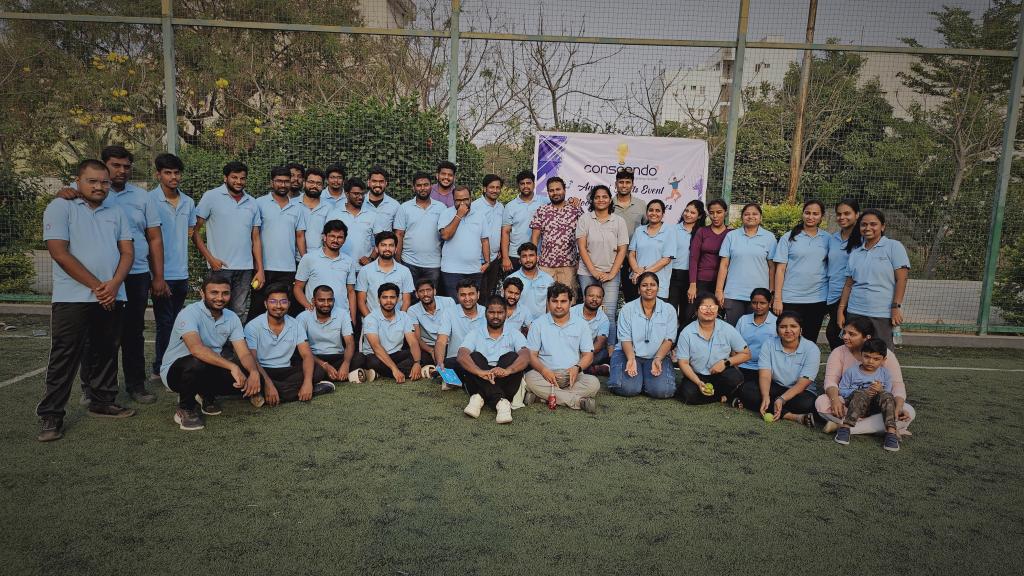
There is a human counterpart to the architecture pitch. Great Place To Work's company profile includes employee accounts of monthly town halls, mentorship, flexible arrangements, and recognition for extra hours. Its team photographs show colleagues together at a sports event. These are glimpses of workplace practice, rather than a complete account of daily life.
Conscendo's most transferable idea is an order of operations. Establish who owns the data. Put the rules somewhere reusable. Decide what failure looks like. Then let the agent act. The attractive part of enterprise AI is the moment it does something for you. This company's more useful subject is everything that moment depends on.