Before Jesse Lyu tried to persuade people to carry an orange computer, he collected synthesizers. It is a useful place to begin. A synthesizer asks you to believe that a particular arrangement of knobs, buttons and circuits can make something worth hearing. The rabbit r1 asks you to believe that a button, a camera and a voice can make a computer worth talking to. Both leave considerable room for an embarrassing live performance.
Lyu’s taste in instruments helped connect him with Jesper Kouthoofd, the founder of Swedish electronics company Teenage Engineering. Their collaboration reached from a smart speaker at Baidu to the r1. Along the way, Lyu became the public face of an argument: people should be able to tell computers what they want, without first learning where somebody has hidden the right menu.
He has pursued that argument through several companies and an unusually public product disappointment. By September 2026, rabbit was offering OS3, software that could be reached from a browser or a message. The orange box had become one possible entrance to the system. For a founder associated with a conspicuous physical object, that is an interesting place to arrive.
A student timetable, briefly liberated
Born in Xi’an, China, Lyu came to Liverpool through the university’s partnership with Xi’an Jiaotong-Liverpool University. He had grown up watching Liverpool football matches. The attraction to the city preceded any business plan.
As a student, he helped build Timeet, a service for coordinating schedules. In his account, a prototype took two weekends, registrations rose from 200 in the first week to 5,000 in the next, and a stranger eventually asked him whether he had heard of his own project. It was a small, pleasing reversal: something he had made was now introducing itself.
Timeet ended after his partners chose further study. Lyu graduated from Liverpool in 2013; the university records his degree as a BA in Marketing. What survived was an interest in making everyday coordination easier. Student timetables were an early encounter with a problem he would keep returning to: the machinery of getting a simple thing done.
A speaker with a detachable face
In 2014, he founded Raven Tech. Its ambition extended beyond a useful app. The company wanted to build another kind of operating system, with artificial intelligence and natural interaction at its centre. It joined Y Combinator’s winter 2015 batch, an earlier chapter in Lyu’s life in the startup world than the r1’s launch might suggest.
Baidu acquired Raven in February 2017. Lyu became general manager of its Intelligent Hardware Unit, and that November helped introduce the Raven H. Teenage Engineering co-designed the speaker, whose illuminated touch controller could detach from the base. You could carry part of the interface away with you. Even sitting on a table, it refused to behave like an anonymous cylinder.
Baidu also presented the Raven R robotic device and the Raven Q home-robot concept. The product family put Lyu’s interest in expressive machines on display years before the orange handheld. His job involved giving voice technology a shape people might want in their rooms. A face, a colour and a movement all had work to do.
- 2014Raven Tech
Voice-first ambitions - 2017Baidu + Raven H
A speaker with personality - 2024rabbit r1
The pocket-sized proposition - 2026OS3
Across existing devices
After leaving Baidu, Lyu helped found rct studio in 2018. The company entered Y Combinator’s winter 2019 class and worked on AI for interactive entertainment. His career kept circling the relationship between a person’s intention and a machine’s response, whether the setting was a home, a game or a pocket.
The colour was a decision
At Raven, Lyu had asked his team to catalogue significant products across consumer categories. He studied cars and watches as well as electronics. Collecting synthesizers and racing Lamborghinis belong to the same public portrait of someone interested in how machines feel, sound and announce themselves.
The r1 gave those interests a compact assignment. It had to make unfamiliar software approachable. A push-to-talk button borrowed the manners of a walkie-talkie. A scroll wheel offered something for the thumb to do. A rotating camera gave the device an eye that could visibly turn away. The references included Tamagotchi and the Pokédex, objects already associated with curiosity and play.
In Lyu’s account of the design process, Kouthoofd proposed a darker red. Lyu chose the brighter orange-red that shipped. He described that colour choice as his one veto of Kouthoofd’s design decisions. The anecdote is almost comically specific, but the stakes are easy to understand. The colour is part of the explanation before the device has said a word.
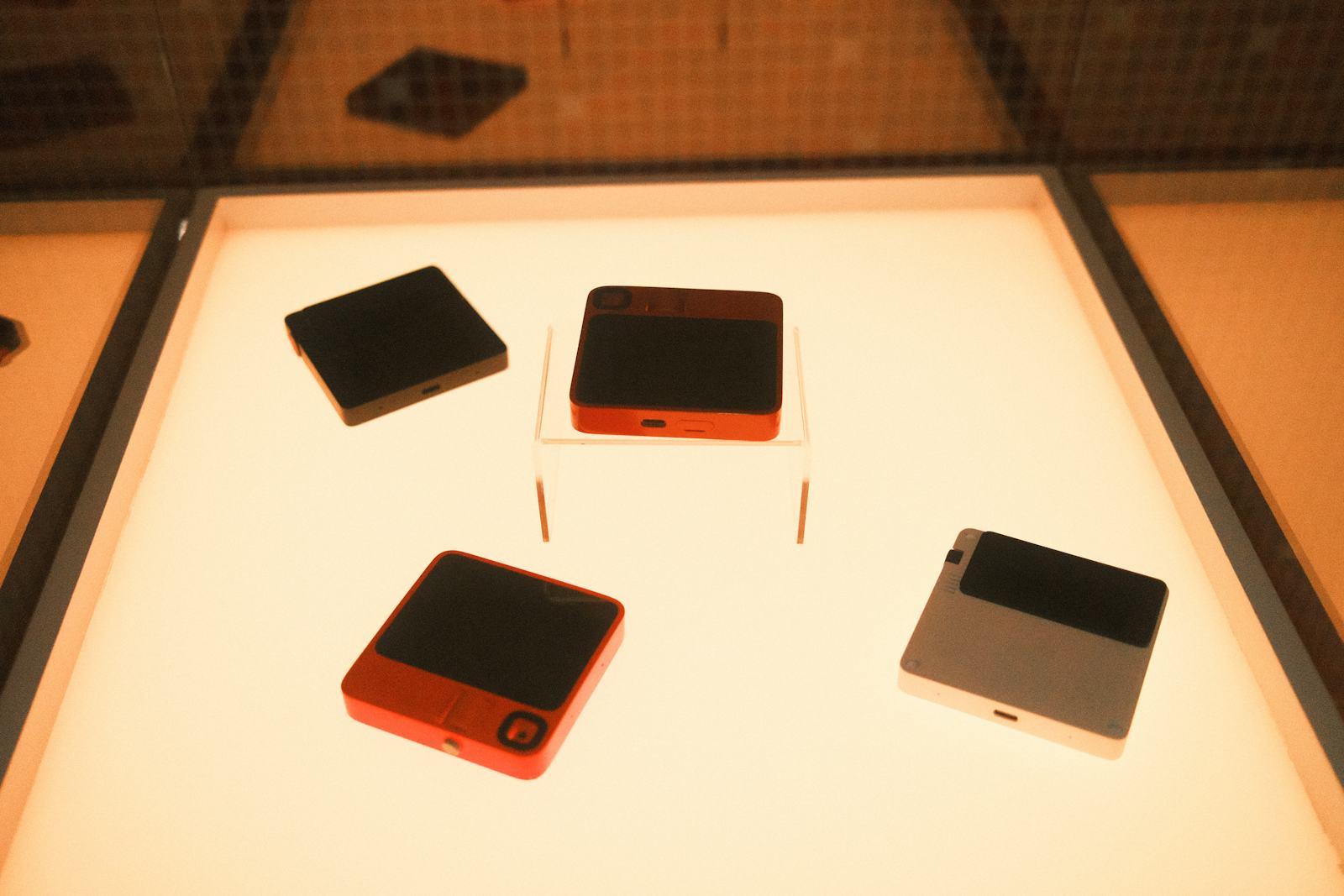
In a later design interview, Lyu explained that early-2000s hardware offered a wider variety of forms than today’s familiar rectangles. He wanted physical controls and a playful appearance. There is a practical theory underneath that preference: an object can suggest how to use it. A prominent button is a short instruction manual.
A party, followed by homework
Rabbit introduced the $199 r1 in January 2024. The proposition was unusually easy to picture: ask for an outcome, and let the device handle the software. Rabbit called the underlying approach a Large Action Model, or LAM. The name distinguished its ambition to perform tasks from the already familiar business of generating answers.
The first 10,000 units sold out within 24 hours, according to rabbit’s release history. In April, early customers gathered at the TWA Hotel at New York’s JFK airport for a pickup party. Lyu demonstrated the device and performed a synthesizer set. Few consumer electronics handovers give the chief executive a musical engagement immediately after the sales pitch.
The party contained the tension that would define the launch. A voice request can look wonderfully simple when it works. Each failed request sends the user back into the complexity the product promised to remove. Making that simplicity dependable became the company’s next assignment.
“I know exactly what to improve.”
Jesse Lyu, April 2024
Lyu said this while discussing early problems, including battery drain and incorrect clock settings. The mundane details matter. A device promising a different relationship with computing still has to tell the time correctly. The future, upon arrival, requires a settings menu.
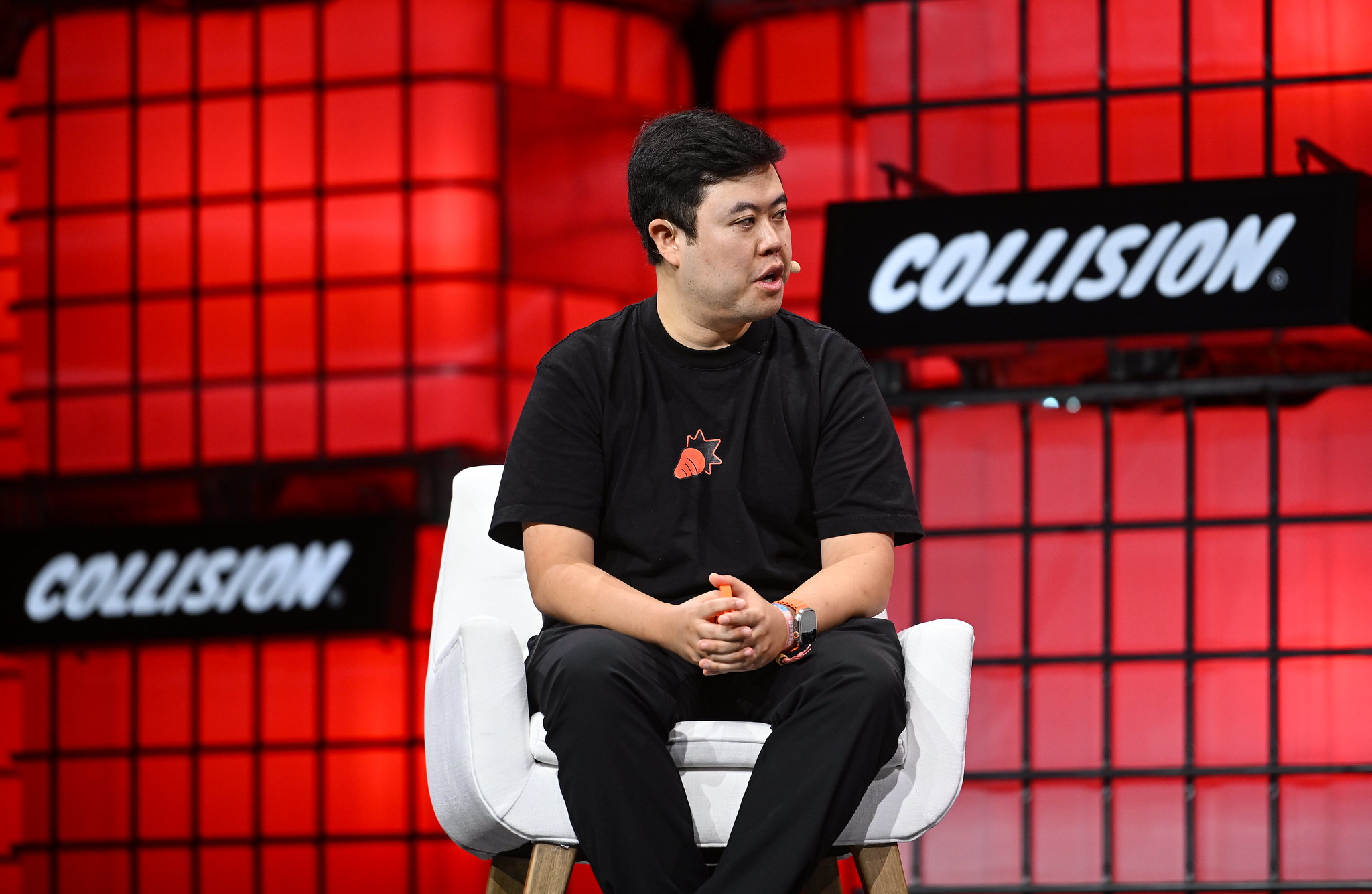
By September 2024, Lyu was describing a distinctly unglamorous habit: keeping a Notion document of criticism, down to timestamps in videos. The founder who had made the launch into a performance was also making a ledger of complaints. That is a more revealing image than a stage pose. It suggests someone prepared to spend time with objections in their least flattering form.
The complaints acquire release dates
Rabbit’s subsequent work made the original promise more specific. In November 2024, it opened teach mode beta to r1 owners. Users could demonstrate a task on a website and ask an agent to repeat it later. Rabbit explicitly described the feature as experimental, with trial and error part of the process.
The idea put the customer in an unusual position: sometimes you were the teacher, showing the assistant the route through the software. For Lyu, who wanted to reduce the learning required of people, this was an intermediate arrangement. The machine needed lessons before it could save its owner some.
In June 2025 came rabbit intern, a software agent intended to produce websites, research, presentations and other finished work. You did not need an r1 to use it. The company was broadening the ways people could reach its software, well before OS3 made that direction more explicit.
September’s rabbitOS 2 brought a redesigned card interface and creations, a way to request small tools and games through conversation. Lyu acknowledged the distance between what customers had expected and what the first software delivered. More than 30 over-the-air updates had preceded the overhaul, according to the announcement. The visible object stayed familiar while its behaviour was revised.
The r1’s January 2024 launch price, with no required monthly subscription for the device’s original service.
The hardware also received an iF Design Award and two Red Dot Best of the Best awards in 2025. Those honours recognised a different part of the undertaking from the day-to-day performance of its assistant. A device can communicate its purpose beautifully while still needing substantial work to fulfil it.
There were harder pressures too. In November 2025, employees and contractors reported unpaid compensation, and some employees had gone on strike. Lyu subsequently acknowledged the strike and said rabbit had secured further funding. The episode makes the costs of the long product revision concrete: a startup’s persistence is experienced by the people doing the work as well as its customers.
The rabbit finds another door
On September 22, 2026, rabbit released OS3. Its stated aim was to coordinate work across connected computers, using models selected by the user. The r1 became an optional physical way to reach it, alongside the web and messaging channels. Rabbit also described an upcoming cyberdeck, a separate hardware project for creating software with AI.
The shift changes the question attached to Lyu. In 2024, much of the discussion concerned whether anyone needed another device. By 2026, his company was offering access through equipment people already owned. The enduring wager concerned delegation: how much of a task could a person hand over, and how reliably would the work return?
On his personal website, Lyu describes himself with three words: “intuitive/sensitive/obsessive”. The final word fits the public record of repeated attempts, though repetition alone cannot settle the argument. He has given talking computers several bodies, collected their complaints and revised their instructions. The next useful answer will come when somebody presses a button, asks for something ordinary, and gets it done.
Keep the conversation going
Explore Lyu’s work, watch his demonstrations, and read the conversations behind the machines.