Before Gurshabd Singh Varaich had a finance startup, he had a high-school event budget to manage. As an organizer of a high-school hackathon, he managed a $10,000 budget, tracked expenses in Excel and dealt with vendors supplying materials, equipment and food. The event was about making things. His responsibilities included making sure the making could be paid for.
It is a pleasing place to begin the story of Definite’s co-founder and CEO. A hackathon encourages people to imagine what software might do. An event budget introduces a shorter conversation: what does it cost? Between those questions sits a great deal of work, usually conducted by someone with a spreadsheet open.
Varaich’s organizing stint ran from September 2021 to March 2022. The event brought together more than 150 students for 36 hours, and his sponsorship work helped attract more than 20 sponsors. Long before he was selling financial software, he had a modest reason to care whether a record was current and an expense accounted for.
A budget before a business
There is an earlier appearance in a financial institution’s paperwork. In December 2018, WFCU Credit Union named Gurshabd Varaich, a Grade 9 student at Vincent Massey Secondary School in Windsor, among its Harold Hewitt Scholarship recipients. His age group received $1,900 each toward further education.
That year’s submission topic asked applicants to imagine their community twenty years into the future. It gave a school student a rather longer planning horizon than most software roadmaps. The award belonged to a community education program; there is no need to turn it into a prophecy about his eventual business. It does put Windsor, school and an interest in what comes next into the same early frame.
By 2021, his name also appeared in Waterloo’s Hypatia mathematics contest results. A year later came a Math National Scholarship and a Loran finalist distinction, both listed in his professional profile. The sequence leads to computer science at the University of Waterloo, where his studies ran from 2022 to 2025.
The Hypatia contest asked students for full written solutions. In its introduction, Waterloo’s mathematics center stressed communication alongside calculation. That requirement makes the contest an apt early detail in this particular biography: a correct result still has to be explained. It would be a stretch to claim that a school competition caused a startup. The smaller connection is worth keeping. Both settings give the explanation a job of its own, beyond announcing that an answer has been reached.
The high-school hackathon budget Varaich managed in Excel. Vendors and sponsorships came with the job.
The factory spreadsheet gets a speaking part
In October 2023, Varaich and three teammates submitted Excelerate to Hack Dearborn. The project addressed an automotive-parts planning challenge from Yazaki. It combined heatmap visualizations, filtering and an AI interface so users could ask questions about their data.
The demo made a spreadsheet conversational. The team’s account of building it was more revealing: getting the information into a usable shape had been a principal difficulty. They tried putting columns into arrays, then moved to a dataframe. The cast of tools included Streamlit, LangChain and the OpenAI API. The sticking point was the material those tools were meant to work on.
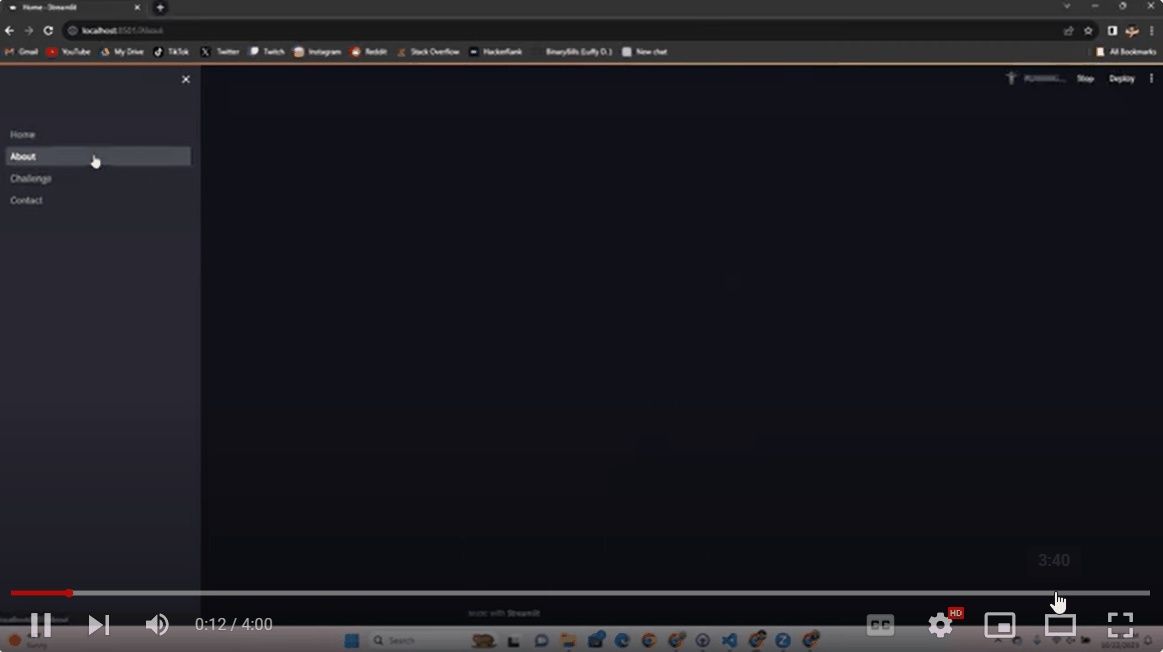
Excelerate was a student project, with a student project’s appetite for learning several new tools at once. Its significance here is specific: Varaich had already worked on the distance between stored business information and a person hoping to use it. An interface could invite a question. Preparing the records determined how well the invitation could be answered.
There is an ordinary lesson in the team’s technical detour. A column can look perfectly respectable on a screen and still be awkward raw material for a program. Much of software development consists of discovering that the information one has is adjacent to the information one needs. The conversion rarely gets a prominent place in the demonstration.
An apprenticeship in other people’s systems
His work placements covered more ground than a single industry. He began with a cybersecurity analyst role at Vehiqilla, then worked on media and infotainment software at Ford in late 2023. In the summer of 2024, his record lists embedded C++ development at Ford alongside infrastructure work at UW Blueprint.
Blueprint, a Waterloo student technology organization focused on social good, also lists him among its developer alumni. In early 2025 he interned at theScore. Later that year he went to BitGo as a software engineer intern. The succession moves from vehicles to student-built technology, sports software and digital-asset custody. It gives his background a practical variety that a job title alone would conceal.

Each placement was a finite assignment inside an organization somebody else had built. Joining such a system means learning its vocabulary, finding where responsibilities sit and working within decisions that predate one’s arrival. That is a useful setting in which to encounter business software. The person proposing a new tool is rarely entitled to start the whole organization over.
At BitGo, his work included wallet policy and approval controls before execution. Definite’s launch account adds another experience: asset attestations, intended to establish that customer assets matched ledger records, were prepared manually each period. Here was a task that came back, demanded evidence and could not be completed simply by sounding confident.
Windsor scholarship recipient
Excelerate at Hack Dearborn
Software internship at BitGo
Co-founder and CEO of Definite
Three classmates compare notes
Definite brought Varaich together with Mazin Al-Ani and Farhan Ur Rehman. They had met in first-year computer science at Waterloo. Al-Ani’s experience included Optiver and Boosted.ai; Rehman had worked on Instagram Reels recommendations at Meta. By 2026, the three were building a company backed by Y Combinator.
Their July launch focused on regulatory reporting. In that account, Varaich’s custody experience sat beside Al-Ani’s experience of financial checks and the need for evidence behind AI output. The proposed workflow put software to work preparing reports and checking calculations, with people reviewing the exceptions and signing the result.
This is where the founder’s earlier record acquires a useful coherence. The school-event organizer had needed reliable expenses. The hackathon builder had needed usable manufacturing data. The intern had encountered recurring attestations. These are different jobs, with different stakes. They all require information to become dependable enough for somebody else’s next step.
In a separate public post about his earlier Ledgix work, Varaich put his preference plainly: “I’m of the mindset that compliance shouldn't stop you from your everyday work.” The ambition was to make controls part of a working process. The phrasing is practical: people have work to finish, and the checking must fit inside it.
“I’m of the mindset that compliance shouldn't stop you from your everyday work.”
Gurshabd Singh Varaich, on his earlier Ledgix work
The four-hundred-dollar question
Definite’s current product gives that concern a wider setting. It connects finance systems into a shared model, with source access kept read-only. Instead of asking every workflow to reconstruct the business from scattered records, the company wants those workflows to use common definitions and relationships.
An example on its website shows how much judgment can hide inside an apparently simple answer. Two systems display $1,482,300. A third displays $1,481,900. The figures are illustrative, and the $400 disagreement remains visible. A selected rule can propose a working value, while an approver still has a decision to make.
That example helps explain what the company means by a financial model. Matching figures do not settle every issue; the team has to specify which records belong together and what rule governs the comparison. Even a small difference creates work if nobody can account for it. Four hundred dollars is quite capable of making itself expensive.
The product describes recorded inputs, rules and review decisions, so a previous run can be revisited. In that arrangement, the person checking a result needs more than a plausible sentence. They need enough of its history to decide whether it should be used. The design gives the history a place beside the answer.
For someone coming from software engineering, this creates an unusual division of labor. The program can gather and compare information, but the organization supplies the meaning of a decision. Two matching entries might be enough under one policy and insufficient under another. A finance team has to be able to express that distinction before automation can respect it. The work becomes partly technical and partly organizational: agreeing what a number means, who can approve it and which exceptions need another look.
Who gets to sign?
Varaich is now responsible for a company attempting to sell that arrangement to finance teams. The title is CEO; much of the underlying proposition concerns preparation. A new interface has to earn its place among systems that already carry obligations, habits and years of records. The ease of asking a question creates a corresponding duty to make the answer inspectable.
A CEO in this position also has to make the less visible work understandable. Data preparation is hard to photograph and rather harder to put on a celebratory slide. Yet the usefulness of the finished workflow depends on it. Varaich’s earlier project gives the subject a concrete vocabulary: columns, transformations, a dataframe, then an interface someone can use. The current business works at a different scale, with financial definitions and approval rules added to the task.
His path offers a grounded way to understand the choice. There was an event to organize, a manufacturing challenge to attempt, code to write in several workplaces and a recurring custody task to observe. The company comes after those encounters. Reading backward from its present product makes the earlier spreadsheet work look particularly apt, without requiring it to have been destiny.
A budget succeeds when the event can happen and the bills can be explained. A financial workflow has larger demands, but the person responsible still needs to know what happened. Varaich’s work has moved a long way from a school hackathon. The spreadsheet, meanwhile, has kept turning up with another question.