Volume XI · The Founder Files · 2026
Matthieu
Hafemeister.
He hired a finance ops person almost every week at a $2.1 billion startup, watched the spreadsheets multiply, and decided the answer was not more people.
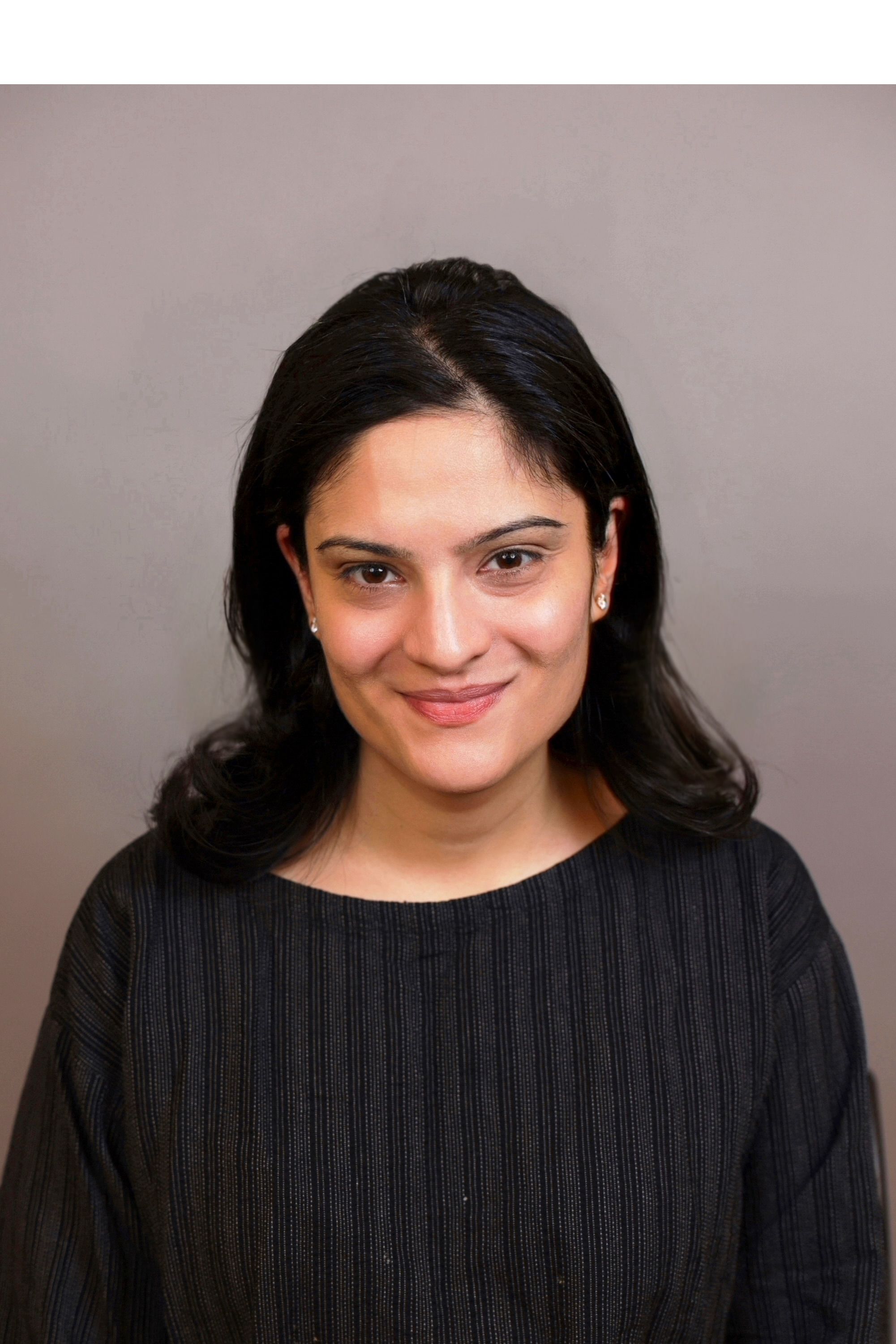
He hired a finance ops person almost every week at a $2.1 billion startup, watched the spreadsheets multiply, and decided the answer was not more people.
Matthieu Hafemeister runs a five-person AI startup in New York called Concourse. Its customers include Palo Alto Networks and Front. Its product connects to enterprise general ledgers. Its founding pitch, spoken in a French accent that has not softened, is that finance teams should stop hiring their way out of spreadsheet chaos.
Concourse builds AI agents for corporate finance teams. That is a fairly clean sentence in a category where sentences are often not clean. The unclean part is what those agents actually do, and Hafemeister has a specific answer to that: they open the ERP, read the billing system, cross-check the data warehouse, run the reconciliation, produce the variance analysis, and then, on a panel that appears next to every answer, show the raw SQL and Python they used to get there.
The transparency panel is a design choice, not an accident. Finance is not a domain that tolerates black boxes. "It's not allowed, effectively, to produce numbers that cannot be traced back," Hafemeister has said, which is the sort of line CFOs nod along to in demos and then quietly stress-test in production. The product's whole trust posture is built around that constraint. Every calculation shows its work. The audit trail is not an afterthought bolted on for compliance. It is the interface.
Hafemeister is thirty-something, born and raised in Paris, and holds a bachelor's degree in mathematics and economics from Claremont McKenna. In 2017 he joined Andreessen Horowitz on the corporate development team, working on late-stage investments across sectors and helping portfolio companies raise downstream capital. Two years later he moved onto the fintech investing team. By 2021 he was a partner. Then he quit.
The interesting thing about quitting a16z to become an operator is that most people do not do it. VCs like to talk about the operator path in the abstract - it is a very fashionable thing to have done - but the ones who actually do it are the ones who cannot shake the sense that the check-writing seat is the wrong seat for the problem they want to solve. Hafemeister joined Jeeves, a Y Combinator-backed corporate spend platform, as Head of Growth. He helped scale it past $100 million in annual recurring revenue. He also spent a lot of time watching the finance team try to keep up with itself.
Jeeves, at its peak growth rate, hit a valuation of $2.1 billion. The finance team, correspondingly, was under a specific kind of pressure. Hafemeister's account of what happened next is now the standard origin story of Concourse, and it goes like this: he hired a new finance ops person nearly every week. It did not work. More people meant more spreadsheets. More spreadsheets meant more reconciliation. More reconciliation meant more of what Hafemeister calls "the messy middle," the disconnected patchwork of tabs and formulas and Slack messages that sits between the raw data and the polished slide.
"At some point that breaks," he has said, which is a line that will land with anyone who has ever tried to close the books on a growing company. When large language models arrived in useful form, Hafemeister and his co-founder Ted Michaels saw the opportunity and moved fast. Concourse got underway in 2023. It went through Y Combinator's Winter 2024 batch and publicly launched later that year as, in Hafemeister's phrase, "the first AI Analyst for corporate finance teams."
In February 2026, Concourse announced a $12 million Series A led by Standard Capital, with a16z, CRV, Y Combinator, SV Angel and Ritual Capital participating. Total funding to date is roughly $27 million. The interesting names on the round are not on the fund side. They are on the angel side. The angel list includes the CFOs of OpenAI, Vercel, Cursor, Carta, 1Password and Brex.
When a startup selling to CFOs raises money from CFOs, it is telling you something about the sales cycle. The buyers are also the check-writers. If a finance chief at OpenAI thinks the tool is credible enough to put personal money into, the finance chief at the next enterprise is a much easier meeting. This is a fairly efficient use of the venture-capital-as-marketing-channel trick, and it is not by accident. Hafemeister spent four years at a16z. He knows what the cap table communicates.
What does the product do for a real customer? Concourse says teams cut manual work by more than 75% and produce six times more analysis than before. The company frames the marketing benefit as "10x their capacity." These are self-reported numbers, but the customer list is not: Tecovas, Front, Palo Alto Networks, Lightmatter. Fortune 500 and startup, side by side. The pitch does not require the buyer to rip out and replace their financial stack, which is the single largest objection that anyone selling into finance has to answer. "We act as an intelligent agent layer that integrates seamlessly with your existing stack," Hafemeister says. That is the version of the sentence you say in a keynote. The version you say in the boardroom is: you can keep your ERP.
Hafemeister has a public opinion, delivered in interviews with the sort of confidence that is either bracing or annoying depending on your priors, that prompting is the number-one skill professionals will need over the next ten years. He says this to controllers. The controllers are learning to prompt. If he is right, the org chart of the corporate finance function is about to look different in a specific and non-cosmetic way.
He is also on record with a competitive threat, which is that CFOs who wait will lose to CFOs who did not. "The longer CFOs wait, the more their competitors will have access to AI and be doing things with it," he says. This is the sort of statement that reads like sales copy and also happens to be, in the specific case of enterprise finance software adoption cycles, roughly correct. Concourse's competitive moat, in the version Hafemeister tells, is not a model. It is the integrations, the audit trail, and the specific muscle memory of enterprise finance software distribution.
The founder himself is honest about the parts that were hard. In an interview with Ramp about how the company got built, he offered up the moment he clearly remembers most: "This is really hard. No one wants to talk to me." That is the kind of quote founders volunteer only after they have shipped a product that people do, in fact, want to talk to them about. He follows it with something less quoted but more useful, which is his line about co-founders: "How important having a really great co-founder is." Ted Michaels, his co-founder, and the rest of the five-person team - Dhavan Katri, Nitya Kasturi, Paul Sukhanov - are the people around him now.
"Being able to just work on the same goal together, no egos, just solving problems, it's really fun," he says. This is a founder's-eye view of a small team, and it is easier to say when the team is five than when it is fifty, but it does describe a moment. Concourse is at that moment.
Hafemeister grew up in Paris. He studied on the other side of the country, at Claremont McKenna, a small liberal arts college in Southern California with an outsized presence in finance and consulting. He picked math and economics, a combination that reads more like the biography of a hedge-fund analyst than a pre-founder, and it is the sort of degree pairing that quietly signals: he came to this problem through the numbers, not through the branding.
The other biographical thing worth noting: he is, at the moment of writing, one of a small number of a16z investment partners who left the firm to found and then CEO a venture-scale company. There are ex-VCs at every YC batch, but partner-to-founder-to-CEO of the enterprise category the partner used to invest in is a very specific arc. Hafemeister sat on the fintech side of the a16z investment table. He is now on the other side, selling to some of the same portfolio companies he used to co-invest alongside.
The phrase Hafemeister returns to in interviews about AI adoption in finance is "inning one." He argues, in essence, that finance teams are only just starting the transition, and that most of the interesting product surface has not been built yet. Concourse's public roadmap is oriented around exactly that view. Natural language querying today. Automated reporting and variance analysis today. Financial forecasting and scenario modeling in the near term. Deeper ERP integration continually. If you want a sense of what a finance team looks like in the version of the future Hafemeister is selling, it is fewer people, more analyses, and a lot of transparency panels showing the SQL.
He is not a household name. He is not on the podcast circuit in the way that some of his peers are. He posts sparingly, more thoughtful than viral, on X as @matt_haf. His LinkedIn is a series of product launches and hires. The story of Concourse is being told through the product and the customer list and the cap table, which is how a former a16z partner probably prefers it. The pitch is that the software works, that the audit trail is honest, and that inning one has not ended.
The prospective bear case, as always in finance software, is distribution and depth of workflow. Enterprises take years to change. ERPs are sticky. AI accuracy has to be near-perfect for numbers that leadership acts on. Every one of those objections is a live conversation Concourse is having with its buyers, and the transparency panel is Hafemeister's answer to the last one. Whether the first two answers hold up will be the story of the next couple of rounds.
We're still very much in inning one.— Matthieu Hafemeister, on AI in corporate finance
Bars scaled against $27M total raised. Individual round sizes as reported by Concourse and AlleyWatch.
“This is really hard. No one wants to talk to me.”On the early days · Ramp Velocity
“It's not allowed, effectively, to produce numbers that cannot be traced back.”On AI accuracy in finance
“Our transparency panel surfaces the raw SQL and Python logic behind every calculation.”On product philosophy
“We act as an intelligent agent layer that integrates seamlessly with your existing stack.”On go-to-market
“The longer CFOs wait, the more their competitors will have access to AI and be doing things with it.”On urgency
“For me [prompting] is probably the number one skill you need to have in the next 10 years.”On the new controller
“Being able to just work on the same goal together, no egos, just solving problems. It's really fun.”On the team
“We're still very much in inning one.”On the market
He grew up in Paris. He runs Concourse in New York. The French accent has not softened.
He studied both mathematics and economics at Claremont McKenna, a combination that reads more like a hedge-fund analyst's biography than a startup founder's.
He is one of the small handful of a16z investment partners to leave the firm and go on to CEO a venture-scale company.
The entire Concourse founding team fits in one photo: Hafemeister, Dhavan Katri, Ted Michaels, Nitya Kasturi, Paul Sukhanov.
The product's most cited feature is a “transparency panel” that literally shows the SQL behind each answer — an unusual UI decision in a category dominated by black boxes.
The co-founder and CEO of Concourse, a New York AI startup building agents for corporate finance teams. He was previously a partner at Andreessen Horowitz and Head of Growth at Jeeves.
Concourse deploys AI agents that connect directly to a company's ERP, billing systems and data warehouses to automate financial analysis, reporting and reconciliation. Every calculation is accompanied by the raw SQL and Python it was generated from.
About $27M in total. The most recent round was a $12M Series A led by Standard Capital in February 2026, with a16z, CRV, Y Combinator and Ritual Capital participating.
He was born in France, studied at Claremont McKenna College in California, and now lives and works in New York.
Ted Michaels co-founded Concourse with him in 2023.