Jedidiah Yueh studied English, read Hemingway and worked on an epic fantasy novel. Then he became the founding CEO of a company that made data-backup software. The change of subject sounds abrupt. It becomes rather more intelligible when you consider how much of his subsequent career has involved noticing repetition, finding a pattern and deciding that something could be written differently.
“I’m an accidental entrepreneur,” he wrote in 2017. The accident had already produced Avamar, sold to EMC for $165 million in 2006, and Delphix, founded in 2008. He had arrived in a business where an English degree was an unusual introduction and the product descriptions were unlikely to trouble a novelist’s bestseller list. Data deduplication. Database virtualization. There was, however, a plot.
His companies addressed a surprisingly human problem inside large organizations: people waiting for something they needed. First came the expense of storing repeated information. Then came the difficulty of getting information into the hands of people building software. Today, as CEO of Antenna, he is asking another practical question: when companies pay for AI to help write software, how much useful work actually results?
A different use for an English degree
Before the acquisitions and conference stages, Yueh taught high school. At Harvard, he graduated magna cum laude and Phi Beta Kappa while working three jobs, including teaching at a local school. His academic distinction had started earlier: he was named a U.S. Presidential Scholar in 1992.
The classroom-to-company transition had a financial nudge. He has recalled a summer stint at a technology business that paid more than his annual teaching salary. That is a persuasive careers adviser. Yet the more lasting attraction was the work itself. Technology gave him a place to apply the sort of creativity he had associated with writing.
In a 2021 conversation, he described a connection between literary analysis and understanding technology. Both require attention to recurring themes, structures and changes beneath the surface. His argument gives the English degree a continuing job in the story. Reading closely can be useful even when the text happens to be a market.
There is a distinction here between knowing an industry’s vocabulary and understanding its habits. A newcomer may lack the former while being unusually alert to the latter. Yueh’s route suggests the advantage of asking an elementary question after everyone else has learned to treat the answer as settled.
- 1992Named a U.S. Presidential Scholar.
- 1999Avamar is founded.
- 2006EMC buys Avamar for $165 million.
- 2008Yueh founds Delphix.
The business of keeping less
Avamar’s opening came in backup and recovery. Its software used deduplication to avoid storing the same information repeatedly. For a reader outside enterprise computing, the basic appeal is easy to grasp: keeping another copy of information you already possess consumes space, and moving it again consumes time. Multiply that problem across an organization and repetition acquires a budget.
Yueh’s first fundraising efforts were less efficient. In his own account, the first four venture capital firms rejected him. The year was 2000, with the dot-com boom coming apart. He asked why they had passed, absorbed the answers and kept pitching. Later, three firms offered term sheets.
It is tempting to make those rejections into an uplifting montage. The useful detail is smaller: he sought an explanation. A refusal can be a closed door, but it can also contain information about the product, the pitch or the buyer. Yueh treated it as something to examine.
Avamar became a business substantial enough for EMC to acquire. Perforce’s later biography credits the product with more than 20,000 customers and $5 billion in cumulative sales. Those are product figures across its life, including the years after acquisition. They describe a technology that continued finding buyers long after its founder had begun looking at another problem.
“If you think about some of the things that you do as an English major…”
Jedidiah Yueh, on recognizing patterns in technology
The next problem was waiting in the first
Storage efficiency and ready access are different objectives. A backup can be safely tucked away while remaining awkward to use for another purpose. In explaining Delphix’s origins, Yueh has described customers who needed to restore information elsewhere before they could work with it. The saved data was there. The useful data still required a journey.
Delphix addressed that journey. Developers need realistic data to test an application before releasing a change. Traditionally, arranging that could involve administrators, copies, transfers and a queue of requests. Each handoff added another opportunity for delay. Sensitive information added another responsibility.
Yueh’s explanation of the business is refreshingly concrete: take data from enterprise applications and deliver it into development environments. Automating that process can reduce manual work while controlling access and protecting sensitive values. A faster software team still has to wait if the test environment cannot get the data it needs.
That makes Delphix’s position interesting. It works behind the products that customers see, closer to the plumbing than the shop window. Plumbing offers limited glamour and considerable influence over whether anyone can get on with their day. Yueh built a company around an obstruction that could be easy to overlook precisely because it was so familiar.
His executive role changed as the company grew. In 2016, Chris Cook became CEO and Yueh moved to executive chairman. Yueh returned as CEO in 2019. Perforce announced its agreement to acquire Delphix in February 2024; the business is now Perforce Delphix. Its current biography calls him founder and former CEO.
The novelist returns with a business book
In October 2017, Yueh published Disrupt or Die: What the World Needs to Learn from Silicon Valley to Survive the Digital Era. The would-be author had taken a lengthy detour through enterprise software and returned with material. Few writing residencies come with a storage acquisition.
The book gathered his ideas about product invention, building teams and scaling companies. He wanted to make the methods behind technology businesses understandable beyond the circle of people who already knew how to build them. His public writing argues that cloud infrastructure, open-source software and reusable services put more of the necessary tools within reach of small teams.
He even supplied a creature for this landscape: the “Appzilla,” an application capable of reshaping an industry. The name is cheerfully unsubtle. Beneath it sits an argument about accumulated tools. Each new product can use capabilities that earlier companies had to construct for themselves, allowing an idea to travel further with fewer people.
His enthusiasm carries a concern. Yueh has also argued that software can concentrate wealth and create consequences its makers did not intend. He wants innovation knowledge distributed more widely, and technology leaders to take responsibility for what their successful products do in the world. The same reach that makes software attractive makes its effects difficult to contain within a business plan.
A bigger brief for the technology chief
By 2022, that concern had taken an organizational form. Yueh was a founding director of SustainableIT.org, established by Delphix and technology leaders to advance sustainability. Its brief included practical frameworks, standards, training and education. The people responsible for technology were being asked to consider the environmental and societal consequences of running it.
“Sustainability is the megatrend of the century,” he said at its launch. The organization brought together executives from businesses including BNP Paribas, ADP and Morgan Stanley. His connections here are professional and specific: people with responsibility for large technology operations, gathered around the question of how those operations should change.
His leadership advice follows a similar expansion of responsibility. In a 2024 discussion with Hunter Muller, Yueh urged CIOs to think like business leaders, connecting technical understanding to company strategy. He emphasized a compelling vision and culture as ways to attract and retain talent. Someone has to decide what is worth building before the engineering organization can become better at building it.
There are smaller details in his public self-portrait, too. In 2018, he picked Philz Coffee off University Avenue in Palo Alto as a favorite meeting spot. Asked when he had last completely unplugged, he placed it more than twenty years earlier. His three-word career advice was “Invent the future.” A neat instruction, although it leaves the calendar rather full.
Now he wants the AI receipt
The latest chapter brings his attention back to software production. Software.com announced its change of name to Antenna on April 15, 2026, describing a focus on visibility into AI-driven development. Its stated concerns include rising tool costs, uncertain productivity gains and bottlenecks that keep additional activity from becoming additional output.
On June 29, 2026, Unisys announced a partnership with Antenna and identified Yueh as its founder and chief executive. The collaboration is intended to bring development benchmarks into Unisys services, helping customers examine AI’s impact, token consumption and delivery constraints. These are the announced aims of the partnership; the announcement does not establish what every customer will achieve.
The question fits his earlier work. An organization can buy more storage and still struggle to use its information. It can automate development tasks and still struggle to deliver a finished feature. The interesting measurement is what happens across the whole process, including the inconvenient places where work stops.
That is the thread running through Yueh’s unusual education in software. He keeps returning to the gap between possessing a capability and getting something useful from it. The English major learned to read the machinery closely. Decades later, with AI producing more of the text, he is still checking whether the story moves forward.
Keep reading, keep listening
- Perforce Delphix: Yueh’s biography and writing ↗
- Antenna: his current company ↗
- Jedidiah Yueh on LinkedIn ↗
- Jedidiah Yueh on X ↗
- Read: How I Went From English Major to Serial Software CEO ↗
- Watch on YouTube: Yueh in conversation with Hunter Muller ↗
- Watch on YouTube: Yueh and Michelin’s Yves Caseau ↗
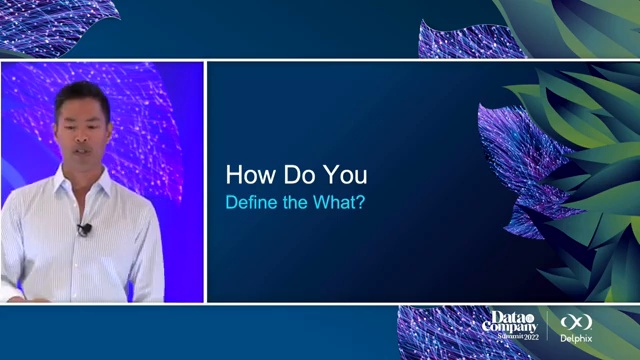
- Watch: the 2022 Data Company Summit keynote ↗
- Explore SustainableIT.org ↗
- Read: Unisys and Antenna’s June 2026 announcement ↗