Bob Hammer chose an unfashionable thing to believe in: the information people leave behind. The machinery would change. The software would change. Somewhere, an administrator would still have to recover a file that a colleague had confidently deleted. Hammer spent more than two decades building Commvault around that persistent, expensive human requirement.
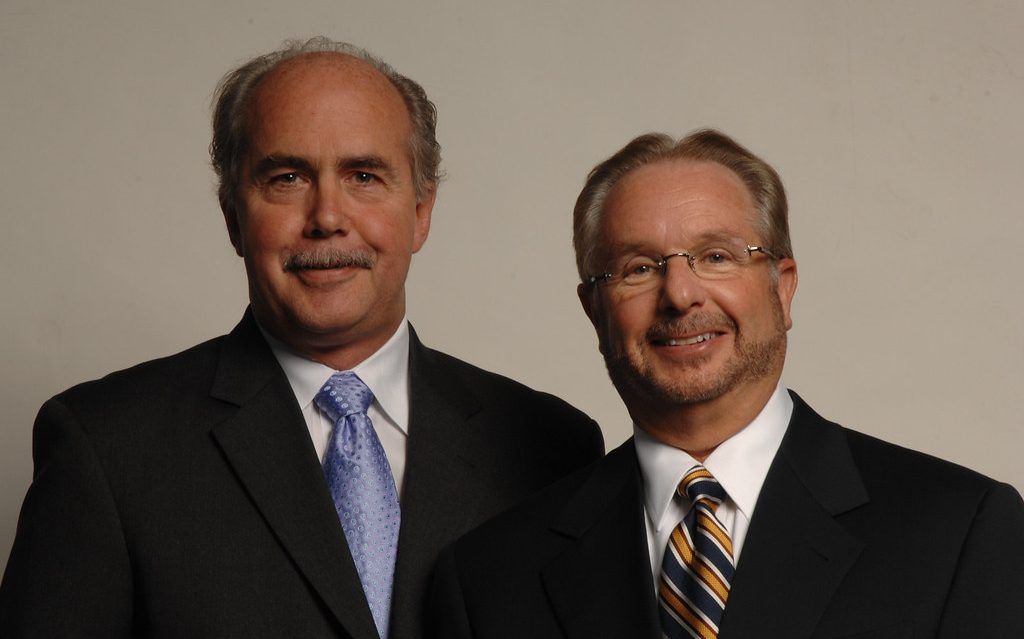
There is a photograph from the early days: Al Bunte on the left, Hammer on the right, both in suits, looking rather more like people about to discuss a loan than people betting on the future of computing. They were making a wager on accumulation. Businesses would produce more data, in more places, and keeping track of it would become a business in its own right.
The wager worked. Commvault reached the stock market in 2006. By the announcement of Hammer’s departure as chief executive in February 2019, the company had a market capitalization of $3.1 billion. Between those dates lay the less photogenic work: distribution, customer support, product decisions, pricing problems and competitors who declined to respect anyone’s seniority.
A career before the company
Hammer arrived at Commvault in March 1998 with considerable practice at being in charge. He had spent 15 years at Celanese, moving through sales, marketing and management to run its structural composites materials business. That background put him close to products that had to be manufactured and sold, with customers whose enthusiasm eventually had to appear on an invoice.
He subsequently led Material Progress and Telequest, then the portable computer maker Norand. He helped take Norand through a leveraged buyout and its 1993 initial public offering, before its acquisition by Western Atlas in 1997. By the time he confronted enterprise software, he had already dealt with several versions of the same managerial puzzle: finding a product’s commercial purpose and assembling a company capable of delivering it.
His venture partner role at Sprout Group, which ran from 1997 to 2003, added an investor’s perspective. Capital has a habit of asking questions that engineering enthusiasm would prefer to postpone. Who will buy this? How will it reach them? How much work will it take to keep them? These questions would matter at Commvault as much as the quality of its code.
Commvault itself had a history before Hammer. Its roots were in Bell Labs, and it became an independent company in 1996. The company later celebrated Hammer and Bunte as founders, while its corporate records date his arrival to 1998. The distinction matters. His contribution was the building of the independent business, rather than the invention of an enterprise from an empty room.
The unglamorous parts of a good bet
In 2005, Hammer received the Ernst & Young Entrepreneur Of The Year New Jersey award in the data services and software category. The strategy behind the recognition was strikingly practical: product value, customer support and distribution. A company could write useful software and still struggle if customers could neither obtain it conveniently nor get help when it misbehaved.
That emphasis suits the peculiar relationship between a backup supplier and its customer. A purchase may be made in an orderly meeting. The product’s reputation is often decided later, under far less orderly circumstances. Someone needs the missing information back. Good intentions are unlikely to be accepted as a substitute.
On September 22, 2006, Commvault announced an offering of 11,111,111 shares at $14.50 each. Just over 6.1 million shares were being sold by the company; the rest came from selling shareholders. The distinction separates money raised for the business from money going to existing owners. An IPO has an impressive ceremony attached, but the arithmetic still deserves a seat.
For Hammer, this was another public offering after Norand. For Commvault, it put a market price on years of work and introduced a more demanding audience. A thesis about growing data could attract capital. A public company would then have to turn that thesis into results, quarter after quarter, while the market underneath it continued to move.
“The core idea of the company never changed: the value is in the data.”
Bob Hammer
The line explains the breadth of his ambition. Backup was a starting point for managing information across a business. The commercial opportunity extended to archives, access, search and the movement of data between environments. Each additional use gave the company more to sell, while asking more of the platform and the people expected to operate it.
When the future arrives through a competitor
A sound long-term premise offers little protection against a badly timed product decision. By 2015, virtual infrastructure, cloud computing and new competitors were changing how customers bought data protection. Commvault had to respond to companies that could begin with a narrower problem and make buying a solution feel simpler.
Hammer was capable of acknowledging the damage. Discussing Veeam and other rivals in 2015, he gave Ratmir Timashev credit for finding room in the market. That is a revealing moment for an executive accustomed to defending a broad platform. The rival’s opportunity was real, even if Hammer remained convinced of his own architecture.
Commvault’s response involved changes to products, sales and distribution. Its platform evolved, cloud capabilities expanded and packaging had to catch up with the way customers wanted to buy. The practical lesson was uncomfortable: a company could understand the growing importance of data and still need to change how it charged for managing it.
At the 2017 customer conference, Hammer and Bunte put simplicity at the center of their presentation. There is a certain occupational hazard in enterprise software: the more a system can do, the longer the explanation becomes. Making a broad platform easy to understand is work in itself. Making it easy to buy and use demands rather more than a shorter slide deck.
Growth and pressure occupied the same balance sheet.
By 2018, the pressure included activist investor Elliott Management. Commvault announced its Advance transformation initiative and a search for Hammer’s successor. The business reported $699.4 million in revenue for that fiscal year, up 8%, alongside a GAAP net loss of $61.9 million. Scale was an achievement; it also left a large organization to reshape.
This part of his tenure resists a tidy founder legend. He helped build an independent software company that survived for decades, then faced calls to change its leadership and operating model. Both belong in the record. Customers, shareholders and executives can agree that a business has accomplished something substantial while disagreeing about what should happen next.
The executive who wandered into the room
Offstage, colleagues described a more accessible figure. At the 2017 conference in Maryland, Hammer moved casually through the Asia Pacific reception. Regional executive Dan Kieran described a chief executive who would join a room and talk with people without making his presence an occasion. The detail is small enough to be useful: authority without an entrance announcement.
His leisure interests suggested that he did occasionally leave the office. Asked about hobbies in 2014, he listed golf, fishing, hiking, cycling and motorcycles among them. Asked about retirement, he floated 90. The answer reads like a businessman negotiating with the calendar, with no intention of accepting its opening offer.
The actual change came sooner. Sanjay Mirchandani’s appointment was announced in February 2019. Hammer’s transition work ended in March; he relinquished the chair in April and resigned from the board on April 29. These were separate steps in a handover after more than 20 years, rather than one ceremonial exit.
The partnership with Bunte remained part of the company’s memory. Later that year, Bunte described their intention to build an enduring business rather than prepare a quick sale. A long tenure puts that ambition to a harder test than a slogan does. It requires staying through the periods when the market is less impressed.
Another wager, and a place to give back
Hammer founded Hammer Ventures in 2019, turning again toward investing. Its focus includes businesses with differentiated artificial intelligence technology. His subsequent activities include work with portfolio companies, a board role at AI video analytics company IronYun and involvement with Robo Global Ventures. Lytical Ventures also lists him as a venture partner.
The move has a familiar outline. He is again judging a technology’s prospects and the business that might grow around it. The questions have followed him from industrial materials to portable computers, from enterprise software to AI. Technology supplies a new vocabulary; customers and economics retain their veto.
There is another audience for his time and money. Girls Write Now honored Robert Hammer in May 2024 for supporting the next generation of writers and leaders. It places the investor among people working on something less easily expressed in a revenue forecast: helping others develop the confidence and ability to be heard.
His connection to education is personal. Hammer graduated from Columbia’s School of General Studies in 1965 and earned his MBA in 1967. He met Ann in an art appreciation night class. They established their family charitable foundation in 1982, with education a focus. His Columbia giving includes two endowed scholarships and support for the lobby of the new General Studies residence at 99 Claremont.
In October 2026, he described educational institutions as “islands of civilization in a chaotic world.” The phrase comes from someone whose career has depended on preserving useful things while circumstances change around them. Data, businesses, an opportunity to study: Hammer’s investments have repeatedly concerned what people will need later, even when later is difficult to picture.