Sovan Bin’s first substantial career decision arrived disguised as an administrative mistake. He had studied business. Capgemini put him on a technology project, apparently believing he had studied computer science. A year later, the misunderstanding surfaced. He could change departments. He stayed. Human resources had accidentally made a rather good introduction.
That choice led to Salesforce architecture and, eventually, Odaseva, the company he founded in 2012. Its subject is the information companies put into their cloud applications: keeping it safe, recovering it, managing it, and making it useful. Bin’s career has developed around the distance between buying software and accepting responsibility for everything inside it.
The wrong department, the right problem
The assignment at Capgemini involved Oracle Siebel CRM. Bin’s public career record describes work on EDF’s customer systems, including responsibility for a ten-consultant team. His business education and technical work were already meeting in the same place: a large organization trying to make its customer operations function.
At Salesforce in Paris, he became a lead technical architect. That role put him between enterprise ambitions and the machinery required to deliver them. His work included architecture, governance, release practices, and attention to whether customers were actually getting business value from their systems. A diagram could be elegant and still fail that last test.
He learned with mentor Jean-Luc Antoine, using exercises that included chess software and Sudoku solvers. He went on to become Europe’s first Salesforce Certified Technical Architect. The business graduate had accumulated a technical education through projects and practice. The original misunderstanding had become a reasonable description of his working life.
CRM delivery
founded
Series C
A customer large enough to change the question
Schneider Electric supplied the problem around which Odaseva formed. The industrial company was replacing more than 100 legacy systems with Salesforce. It wanted a level of data management comparable to what it had expected when its systems lived on premises. Moving the software had left some serious operational questions standing.
Bin worked with Schneider Electric on protecting the integrity and availability of its information. The relationship became Odaseva’s first customer engagement. The company’s starting point was unusually concrete: an enterprise already using the platform, already depending on its data, and already dissatisfied with the available answers.
That origin helps explain his enduring attention to responsibility. A cloud provider looks after its service; the customer still has obligations toward the information it puts there. The division can sound tidy until someone must decide how to recover a damaged application or fulfill a customer’s privacy request. Then each side of the arrangement needs an actual procedure.
By 2019, Odaseva had raised an $11.7 million Series A, following years of building around large customers. Bin was also advocating privacy by design: decisions about personal information should enter the construction of systems and everyday processes. Leaving them for a final legal inspection creates work for everyone, usually at an inconvenient hour.
The delicate business of forgetting
Consider the apparently simple request to remove a person’s information. In a 2018 conversation about GDPR, Bin described the practical distinctions an administrator must make. An attachment might contain personal details that need deleting. A record might contain business information that the company still needs. Other fields might be candidates for anonymization.
Deleting everything indiscriminately could disrupt reports. Keeping everything could defeat the purpose of the request. The work requires understanding the information and its relationships before deciding what should happen to it. Enterprise software has a gift for making a verb as ordinary as “forget” require an architecture meeting.
Bin discussed work with Toyota on the right to be forgotten and with Pathé Gaumont on retention. He also drew attention to development sandboxes, where copies of production information can become accessible under different conditions. His concern extended beyond the principal database to the less conspicuous places its contents might travel.
These examples give his technical work a human consequence without requiring a dramatic incident. A customer has asked a question. An employee has to answer it accurately. The software needs to make that possible without breaking the business records around it. Useful engineering often looks like preventing someone else’s difficult afternoon.
Who can read or change the information?
Can the business get it back and use it?
What should be kept, removed or shared?
Please do not trust the vendor
For a smaller company selling to a global enterprise, the trust question arrives early. The customer is handing over a consequential job. The vendor’s enthusiasm is unlikely to count as a security control. Bin’s response has included an architecture intended to reduce what Odaseva itself can see.
Odaseva describes this as no-view security: processing and protecting sensitive information without making it readable to the provider. In a 2024 conversation, Bin said implementing the approach while preserving scale and supporting the necessary operations took five years. The promise needed engineering behind it before it could become a sales argument.
His descriptions return to confidentiality, integrity, availability and compliance. Those words represent different ways a system can disappoint its owner. Information might be exposed, corrupted, inaccessible, or used inappropriately. Having a copy addresses only part of the problem. An enterprise also needs a workable recovery process and people who know how to run it.
In his February 2025 discussion of financial-sector resilience, Bin emphasized recovery testing and audits. He argued that organizations should look closely at their SaaS information, including files and metadata, and check for barriers to restoration. The recurring question is whether the business can recover in practice. A comforting checkbox has limited practical value during an outage.
The money arrived after the argument
Odaseva announced a $54 million Series C in June 2024. The company said the investment would support its enterprise data security and Zero Trust products. For Bin, the announcement also exposed a less theatrical part of fundraising: deciding whether to do it at all.
He said Odaseva had initially been staying away from a raise because the valuations were unattractive. The company was aiming to break even in early 2025. Approaches from investors prompted a reassessment. That was his account of the decision at the time; the target itself was a plan, rather than a reported financial result.
His stated priorities included improving operations in existing countries, getting closer to customers, and extending into regions where Salesforce already had a presence. Growth, in that telling, had an operational purpose. The company needed to deliver and support consequential software in the places its customers worked.
Salesforce users supported
Odaseva’s reported platform reach
Data protected
Company-reported scale
Odaseva now reports more than 100 million Salesforce users across hundreds of organizations and more than 12 petabytes protected. Those figures describe the company’s platform reach. They also help explain why Bin’s public conversations have broadened: the founder has to think about the organization doing the protecting as carefully as the software.
It is always night somewhere
In a 2026 conversation with Dave Vanz, Bin described a team of about 150 across four continents. The practical problem of getting everyone together is almost comically resistant to technological ambition. Somewhere, someone is asleep. He described rotating meeting times, holding monthly company meetings and making room for questions and feedback.
He also explained how hiring priorities change. Early on, shared values carried particular weight because a single hire could reshape a small company’s culture. As the business grew, the balance shifted toward the specific requirements of individual jobs. Skills and values both mattered, with their relative emphasis changing as the organization developed.
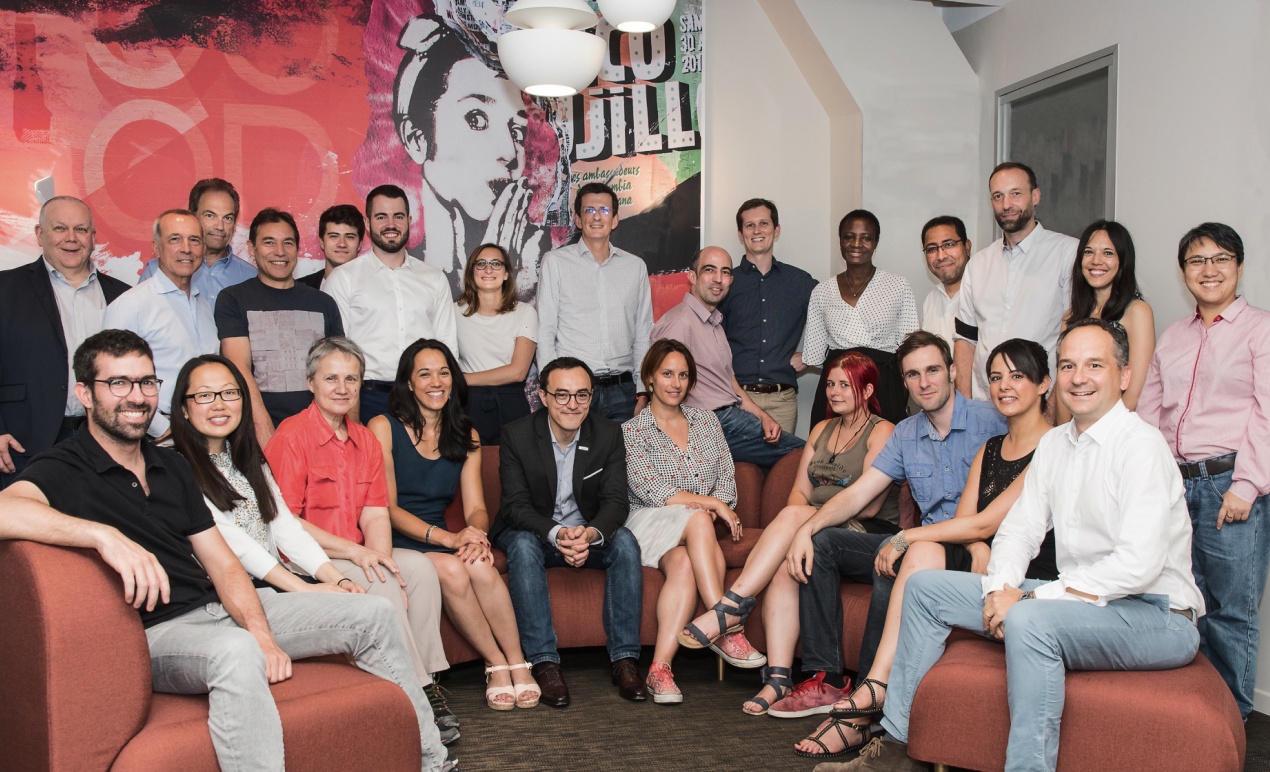
There is an employee’s view of that approach, too. Oscar Parra recalled meeting Bin during recruitment and talking about his earlier interest in neural networks and his route into Salesforce. Parra described an exchange of ideas rather than a formal interrogation. Other conversations during his recruitment explored his motivations and values alongside his technical ability.
That account gives the culture discussion a useful scale. A founder’s values eventually become somebody else’s interview, meeting schedule, or opportunity to ask a question. The test is whether the employee encounters them in ordinary work. Rotating the inconvenient call is a small decision; it is also a decision people remember.
The next use for yesterday’s data
Bin’s recent public work extends from protecting information to making it accessible for new uses. Odaseva’s Data Edge describes a hub for production and archived data, with connections beyond Salesforce and capabilities for analytics and AI. The product’s stated ambition brings another task into the picture: helping information travel usefully while keeping its controls attached.
A September 2026 notice highlighted his DM Radio conversation about securing SaaS data in the AI era. The setting has changed since the early customer projects. His recurring concern remains recognizable: businesses want more from their information, and the architecture must support that ambition responsibly.
There is room for a less solemn detail. Asked about his particular talent, Bin chose his homemade mayonnaise, seasoned with basil and pepper. He has also discussed reading Bobby Fischer and described his working approach with the word “Kaizen,” continuous improvement. An enterprise software founder is allowed an interest that does not need an integration.
“I believe I make an excellent mayonnaise with a touch of basil and pepper.”
Sovan Bin · January 2020
The mayonnaise answer is funny because the question invites a grand explanation of success. Bin offers lunch. Across his professional story, the more substantial answers arrive through particular jobs: a customer’s data problem, a system that needs recovery, a hiring decision, a meeting that someone must attend after dark. The accidental technologist has made a career out of staying with the details.
Continue the conversation
Interviews & further reading
- Ladies Be Architects: the career behind the certifications
- MarTech: work, books and basil mayonnaise
- Salesforce Admins: the practical work of data privacy
- diginomica: the early customer problem
- Salesforce Ben: the 2024 funding conversation
- theCUBE: designing no-view security
- QA Financial: recovery and resilience
- Dave Vanz: hiring and distributed teams
- Oscar Parra: an employee’s account
- Data Edge: the company’s product description
- FACC California: September 2026 interview update