Scott Holden's latest job lasted exactly one official day before it became another job. He had agreed to join Cursor as chief marketing officer, drawn to the AI coding product and the team behind it. Then, on day one, the acquisition closed. Cursor was part of SpaceX, and Holden was suddenly introducing himself as a builder at SpaceX AI. A career move that already looked daring had acquired rocket fuel, enormous compute and an org chart with fresh ink.
The surprise is new. The instinct is not. Holden has spent nearly three decades moving toward rooms where the story is unfinished: from banking to ecommerce logistics, from logistics to product marketing, from a vast Salesforce machine to a startup with no revenue, then through fintech, security and now AI. He does not seem allergic to success. He seems suspicious of comfort once it stops teaching him something.
That distinction matters. A résumé can make these jumps look like a smooth ascent through famous logos. Holden's own telling is messier and more useful. He has described taking pay cuts, dropping down the corporate ladder and trusting enthusiasm when the spreadsheet argued for staying put. His favorite move is often a step backward with a better view of the work.
Marketing was career number three
Holden graduated from Colgate University in 1997 with a degree that paired economics and philosophy, a tidy preview of the two languages he would later use at work: what can be measured, and what it means. He began in investment banking, first as a healthcare analyst at Chase and then in technology mergers and acquisitions at JPMorgan. His second career took him to Walmart.com, where he ran logistics and worked with product teams on internal software.
The conversion happened by observation. At Walmart.com, Holden noticed that the marketing team seemed to be having more fun. Product marketing offered the combination he wanted. It sat close enough to product management to satisfy his appetite for systems, while making room for creative judgment. He applied to business school with that role in mind, earned an MBA from Stanford, and found his first formal marketing job at Salesforce.
Salesforce was a formidable classroom. Across seven years, he led marketing for the platform, Sales Cloud, Chatter, industries, customers and community. He watched Dreamforce act as an annual deadline that forced the company to decide what mattered and tell a coherent story about it. By the time he left, he was responsible for marketing a billion-dollar product line and led more than 30 marketers. It was the sort of perch people spend a career trying to reach.
The recurring Holden move - toward the unfinished story
The forty-person decision
In 2014, Holden left that scale for ThoughtSpot. The analytics startup had 40 employees, three people in marketing and no revenue. By any conventional career arithmetic, it was an extravagant subtraction. Holden believed in the founding technical team and in a mission he understood from his earlier analyst years: make data usable by people who were not trained analysts.
The work lasted nine years. Holden became chief marketing officer and later added go-to-market operations. ThoughtSpot changed with the market, moving from on-premises software to cloud and SaaS, and expanding from a large-enterprise focus toward mid-market and smaller customers. When he left in 2023, he wrote that the company had grown to 1,000 people and $150 million in revenue.
The numbers tell the scale of the build. The language tells how he worked. Holden's positioning formula asks for differentiation, clarity, consistency and fidelity. He likes research, focus groups and advertising performance, but he also watches for the humble head nod when a slide lands. Another signal is theft of the flattering kind: salespeople begin borrowing the message for their own decks and profiles. Positioning has arrived when the company speaks it without being reminded.
The head-nod test.
Holden pairs formal message research with a human signal: watch which slide makes customers, partners and sellers nod. Then see whether the sales team repeats the language when marketing is not in the room.
His enduring ThoughtSpot promise was consumer-grade simplicity: analytics as easy as a favorite app. The line did more than claim that the product was easy. It changed the comparison. Instead of competing with other business intelligence interfaces on their terms, it asked enterprise software to meet the standard of products people choose to use at home.
A data analyst with a copywriter's ear
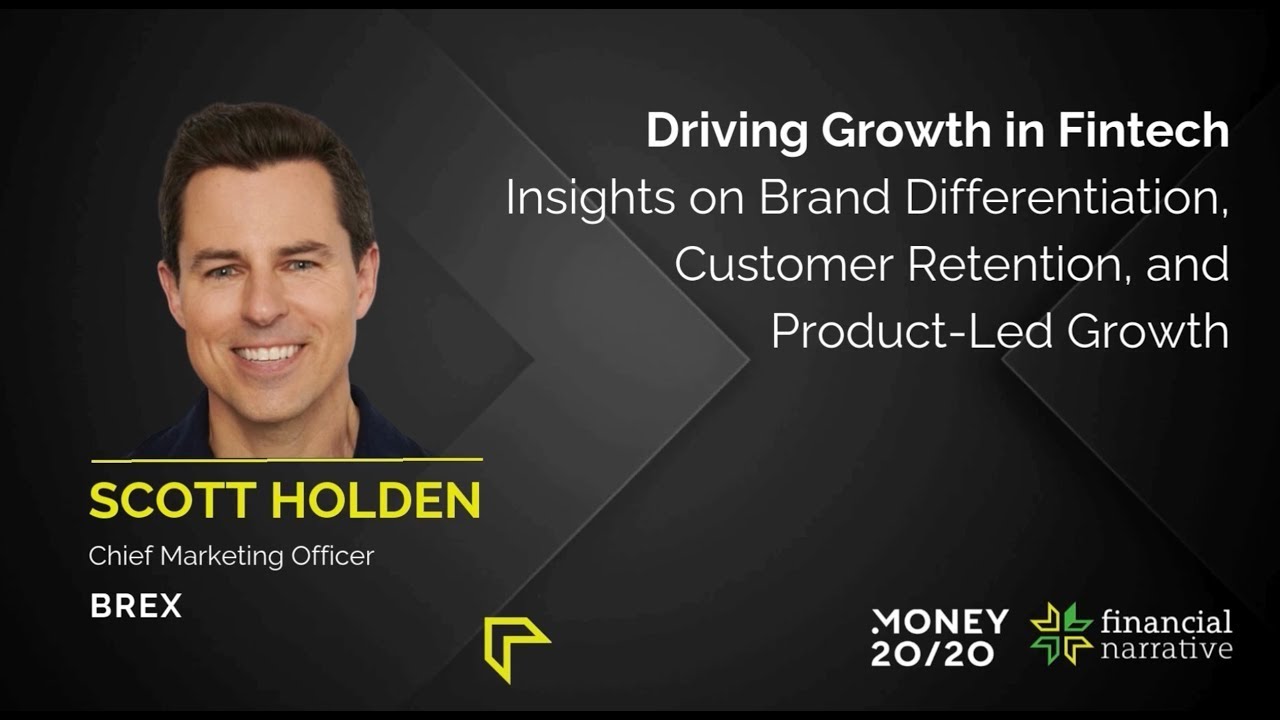
Holden's campaigns often carry a wink, but the joke is not the strategy. At Brex, where he became CMO in 2023, the “Concurghhh” campaign turned frustration with expense software into a groan people could recognize. Later work featured customers including DoorDash, Robinhood and the Boston Celtics. In his farewell, Holden reported that Brex's enterprise business had grown more than 90 percent in the prior year, with net revenue retention above 130 percent. Startup sign-ups had risen 70 percent while spend efficiency doubled.
Vanta offered another dry category with room for a pulse. Holden already knew the pain. In 2019 he had gone through SOC 2 compliance “the hard way” and found it miserable. A year later, a friend described Vanta's automation pitch and Holden wondered why he had not thought of it. Then came the billboard: “Compliance that doesn't SOC 2 much.” One remained a few blocks from his San Francisco home. He said it still made him smile.
He joined Vanta in July 2025 as its first CMO, charged with brand, product marketing, demand, growth, communications and field marketing. The company was expanding from its SOC 2 origins into a broader trust platform. Holden's team went looking for the emotional truth beneath enterprise security work. The answer was not another hooded figure in a dark room. It was the outward composure of security leaders carrying an inward list of risks. The resulting campaign called that state “Calm-pliance.”
There is a neat continuity here. “Concurghhh” names the sigh. “Calm-pliance” imagines its resolution. Both give technical software a human nervous system. Both also rely on the operator underneath the copy. Holden has argued that marketing earns permission for ambitious brand work by feeding sales, making measurement transparent and establishing the framework by which the function will be judged.
The last moat is allowed to have fingerprints
By 2026, Holden's subject had shifted from data-driven marketing to AI-saturated marketing. His argument is that greater machine polish increases the scarcity of recognizable human judgment. Corporate language loses force when every company can generate competent copy at unlimited volume. People, customers, creators and employees become more valuable because their voices retain edges.
For a lean modern team, he would begin with three profiles: a product marketer who understands the substance, a systems architect who connects the machinery, and a creator-style operator who can earn attention in public. It is an engineer's answer wrapped in a humanist concern. Use AI to build leverage, but do not let the output sand away the person speaking.
This tension has followed Holden from his economics-and-philosophy degree onward. He wants the data foundation clean and the sentence alive. He wants systems that compound and a brand willing to make a joke. He has said marketers must become polymaths as the borders between product marketing, campaigns and operations blur. His own path got there early, carrying banking's arithmetic and logistics' choreography into rooms full of writers and designers.
One more unfinished room
In August 2026, after a little more than a year at Vanta, Holden announced another departure. He praised the company, said work he was especially proud of had happened there and handed the CMO role to Sarah Scharf, Vanta's first product marketer and his close partner. He stayed on as an adviser. The tone resembled his departures from ThoughtSpot and Brex: specific gratitude, public credit and one eye already caught by the next intellectual problem.
Then he disclosed the improbable mechanics. He had been recruited as Cursor's CMO. The acquisition closed on his first official day. SpaceX AI suddenly combined the product and team that had drawn him with consumer reach, compute and a wider mission. Holden wrote that he was ready to learn and help shape what came next.
The temptation is to call this luck. There is luck in the timing, certainly. But one must first keep choosing the sort of doorway through which improbable things can walk. Holden's career has repeatedly placed him at the border between an excellent product and a market that does not yet have the words for it. His task is to build the measurement, find the sentence and persuade the company to repeat it.
When he left ThoughtSpot after nine years, Holden signed off with “Forever 2% done.” It reads like startup optimism with the battery permanently removed from its charger. It also explains why the comfortable job has never held him for long. Completion is a poor place to build from.