Founder • Author • Operator • Chicago
The man who told Silicon Valley to sit down, think smaller, and charge once.
Profile
In 1999, a web designer in Chicago who couldn't work for other people co-founded a consultancy and named it after a list of unconfirmed alien radio signals. Twenty-six years later, 37signals is still there, still profitable, still deliberately small - and Jason Fried is still arguing that the whole tech industry has it backwards.
He doesn't manage through midnight Slack spirals. He doesn't raise rounds or chase burn rates. He built Basecamp because the project management tools his firm used were terrible, and he needed something for himself. That's the whole story. He sold it to the world, and three million accounts later, he's still at it.
Fried's real product isn't software. It's a philosophy. The 40-hour workweek isn't laziness - it's discipline. Small is a destination, not a pit stop. Meetings are "the toxic group chat you can't leave." He's been saying these things since before they were cool, and the fact that a generation of founders now nods along only makes him sharper about it.
"Workaholics aren't heroes. They don't save the day, they just use it up. The real hero is home because she figured out a faster way."
- Jason FriedThe origin story is almost comically fitting. At the University of Arizona, studying finance and barely finishing it, Fried built a piece of software called Audiofile - a music cataloging app - and sold it on AOL for $20 a copy. That transaction taught him the entire loop before he graduated: build something, put it where people are, charge money for it. He never really needed a different lesson.
He bounced briefly through San Diego doing web design, concluded he was "not built to work for other people," and returned to Chicago to start 37signals with Carlos Segura and Ernest Kim. The name? Those 37 radio signals detected by astronomer Paul Horowitz as possible extraterrestrial contact - signals worth investigating even if nobody could prove they were anything. Fried liked the metaphor. He still does.
In 2001, a 20-year-old Danish programmer named David Heinemeier Hansson cold-emailed 37signals offering to help with PHP. Fried hired him, remotely, when remote was still something you explained to people. DHH calls it "the email that changed my life." That partnership - Fried's instinct for product and simplicity, DHH's engineering architecture - has been the engine of everything since.
DHH extracted the framework that powered Basecamp and released it to the world as Ruby on Rails. Fried backed the open-source release. Rails became one of the most influential web frameworks in history. Meanwhile, Basecamp itself launched publicly in 2004 and turned a consultancy into a product company. They never looked back.
"What you do is what matters, not what you think or say or plan."
- Jason Fried, ReworkIn 2006, Jeff Bezos - through his personal vehicle Bezos Expeditions - acquired a minority stake in 37signals. The detail worth sitting with: 37signals didn't need the money. They were profitable. They'd never raised outside capital. Bezos invested in a company that was already doing it its own way, and Fried kept doing it exactly that way.
That's been the consistent through-line. External validation arrives, and Fried keeps the controls. When HEY email launched in 2020 and Apple tried to block it from the App Store over payment processing rules, Fried and DHH didn't quietly comply. They went public, loud, and turned the dispute into a congressional-level conversation about big tech monopolies. Fried testified before Congress. He brought receipts.
Rework, published in 2010 with DHH, didn't feel like a business book. It felt like someone finally saying out loud what was obviously true but professionally unsayable: plans are guesses, workaholics are a liability, "scratch your own itch" beats market research, and funding your growth through customers beats funding it through investors. The New York Times and Wall Street Journal both called it a bestseller. It has over 176,000 ratings on Goodreads.
Remote: Office Not Required came in 2013 - seven years before a global pandemic made the argument for him. It Doesn't Have to Be Crazy at Work followed in 2018, codifying the "calm company" thesis into something businesses could actually try to build. Three books, same argument from three angles: the way most companies operate is a choice, not a law of nature, and you can choose differently.
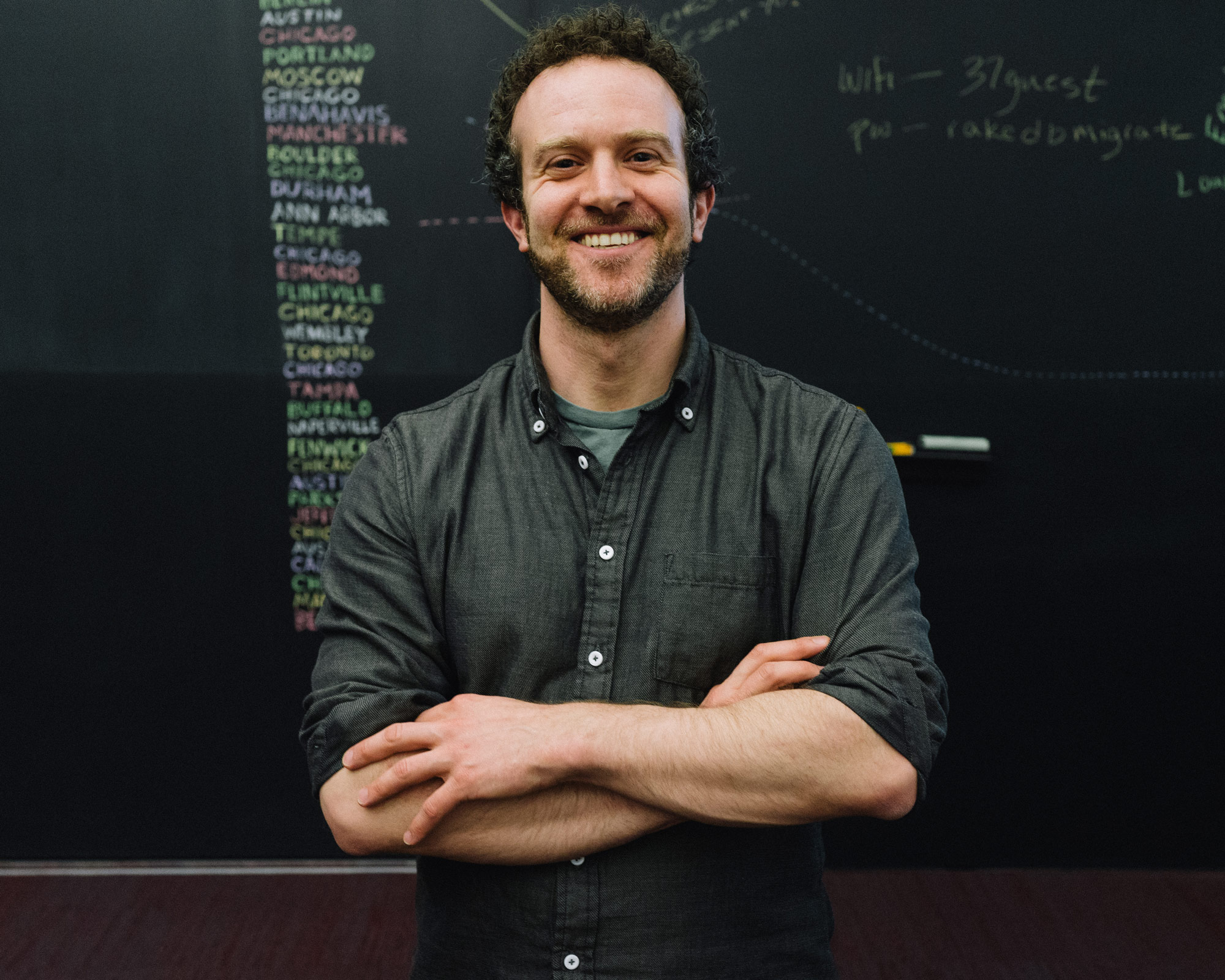
The Fried Doctrine
Sustained overwork is inefficiency with a good PR budget. A 40-hour week, fully focused, beats 60 distracted hours every time.
Stop planning. Start building. A real plan is something you can react to - not a document you defend.
Staying small is a choice, not a failure. A profitable company of 60 people beats a burning company of 600 every time.
A meeting is the group interruption you can't cancel. Replace it with writing. Writing forces clarity. Meetings avoid it.
VC money is someone else's agenda with your logo on it. Revenue from customers is the only money that comes without strings.
Feature bloat is a race to complexity nobody wins. Do less, do it better, charge for it honestly.
Writing
Each one a thin paperback with a thick argument. Co-authored with DHH, published without a traditional publisher for the early editions, distributed as PDFs before that was normal.
2006
Getting Real
Start with the interface, not the backend. Build less. Ship faster. Originally a free PDF download before it was a book.
Free online2010
Rework
The book that called plans "guesses," meetings "toxic," and workaholics "dangerous." NYT and WSJ bestseller. 176K+ ratings on Goodreads.
Bestseller2013
Remote: Office Not Required
The remote work argument in 2013. Seven years before COVID forced everyone to test the thesis. Prescient doesn't cover it.
Ahead of its time2018
It Doesn't Have to Be Crazy at Work
The calm company manifesto. A direct attack on hustle culture as a business strategy. Argues for sustainable pace as competitive advantage.
ManifestoThe Portfolio
Each product built because someone at 37signals needed it first. That's still the filter.
Project management that stays out of your way. 3M+ accounts. The product that turned a consultancy into a software company.
Email reimagined. Screener, imbox, paper trail. And the app that picked a public fight with Apple over App Store rules.
Pay once, own it forever. A direct counter to subscription fatigue. Software you buy, not rent.
Business chat, self-hosted, open source. You run it on your own hardware. No monthly bill.
Issue tracking under the ONCE model. The newest entry in the 37signals lineup of tools they built for themselves first.
The Pulpit
In November 2010, Fried walked onto a TEDxMidwest stage and told the audience that the office is one of the worst places to do actual work. Not a mildly provocative claim - a structured argument with a villain (M&Ms: Managers and Meetings) and a prescription (No-Talk Thursdays, async-first communication, fewer mandatory gatherings).
The talk has millions of views. It was the right argument at the right moment, from someone who'd been running a remote-friendly, async-first company for years already. He wasn't theorizing. He was reporting.
The three remedies he offered are laughably practical: (1) declare a "no-talk Thursday" once a month, (2) switch active meetings for passive, asynchronous communication tools, (3) stop defaulting to meetings when an email would do. Simple. Hard to actually implement. Most companies still haven't.
Fried published a blog post announcing policy changes at Basecamp: no political discussions in company forums, no diversity committees, end of certain benefits. The context was a long-running internal reckoning over a list of "funny" customer names, some of which were names of Asian and African origin - a practice that had prompted conversations about bias. Within days, roughly one-third of the company's ~60 employees resigned. The episode made national news. Fried issued a partial apology: "Last week was terrible... David and I completely own the consequences, and we're sorry." In a 2024 Bloomberg interview, he offered a "word of caution" to companies considering similar bans - more nuance than his original post contained.
Career Arc
A company built one decision at a time, over 25+ years, without a single venture round.
1996
Sells Audiofile music software on AOL for $20. Learns the full build-distribute-charge loop.
1999
Co-founds 37signals web design consultancy in Chicago with Carlos Segura and Ernest Kim.
2001
David Heinemeier Hansson cold-emails offering PHP help. Fried hires him, remotely.
2004
Launches Basecamp publicly. DHH releases Ruby on Rails as open source. Both change the web forever.
2006
Jeff Bezos acquires a minority stake in 37signals. Publishes Getting Real as a web book.
2010
Rework becomes a NYT and WSJ bestseller. TED Talk "Why Work Doesn't Happen at Work" goes wide.
2013
Publishes Remote: Office Not Required, seven years before COVID forced the world to test the argument.
2018
Publishes It Doesn't Have to Be Crazy at Work. The calm company manifesto lands.
2020
HEY email launches. Apple tries to block it. Fried takes the fight public. Testifies before Congress on big tech.
2021
Controversial policy changes lead to ~1/3 of staff resigning in a week. Public apology follows.
2022
Rebrands company back to 37signals. Begins cloud repatriation from AWS.
2023
Cloud move saves ~$1M. Launches ONCE: buy it once, own it forever.
2024-26
Relaunches Campfire as self-hosted software. Launches Fizzy issue tracker. Still at ~62 employees.
In His Own Words
"Sustained exhaustion is not a badge of honor, it's a mark of stupidity."
"Small is not just a stepping-stone. Small is a great destination itself."
"Innovation isn't the goal. Useful is the goal."
"When you don't know what you believe, everything becomes an argument. But when you stand for something, decisions are obvious."
"If you build software, every error message is marketing."
"I try to under-do the competition."
"I believe everything is simple and easy - until you make it complicated."
"What you do is what matters, not what you think or say or plan."
"Meetings are toxic. They break your day into small, unusable pieces."
The Details
The company name comes from 37 radio signals detected as possible extraterrestrial contact. Fried picked it because something worth investigating was hiding in plain sight.
37signals has run 4-day summer workweeks for years. Before it was a LinkedIn think-piece, it was just policy.
Jeff Bezos personally invested in 37signals in 2006. One of the very few outside investors the company has ever accepted. Fried kept doing things his way.
Moved off AWS to owned hardware. Saved $1M in under a year. Then wrote about it publicly so others could do the math for themselves.
Fried reportedly stopped following tech industry news as a deliberate choice. He's written about why. Most people haven't tried it.
ONCE is his answer to subscription fatigue. Buy software once. Own it. Run it. No recurring bill. A very old idea presented as radical.