Jared Spataro likes to look over shoulders on airplanes. Not in the alarming sense. He walks the aisle, catches the glow of laptop screens, and notices Word documents, Outlook inboxes, Teams windows and PowerPoint decks. The private satisfaction is that he helped shape the software inside so many of those rectangles. Billions of people communicate, calculate and organize with products that have passed through his part of Microsoft. A career can feel abstract inside a company of Microsoft’s size. An airplane cabin makes the scale visible, one tray table at a time.
Now the person at the keyboard is no longer the only user Spataro is designing for. Microsoft’s Chief Marketing Officer of AI at Work is preparing businesses for software that works without waiting to be clicked. An agent can receive an objective, make a plan, call other tools and carry a job across several systems. It may become the heaviest user of a company’s CRM or project-management software. It needs permission, context and a clear definition of done instead of a menu.
This makes Spataro’s current pitch less about a clever feature than a redesigned institution. He calls the destination a “frontier firm” - human-led and agent-operated. The phrase sounds clean. The consequences are untidy. If an agent drafts the analysis, updates the records and briefs the customer team, who specifies the work? Who spots a plausible error? Who signs their name to the result? The software can acquire capability quickly. Responsibility remains stubbornly human.
A career inside the workday
Spataro was educated as a computer scientist at Brigham Young University. His route into business ran through engineering, product management, product marketing, sales and an MBA at MIT. Before Microsoft, he worked at smaller technology companies, including Trados and OpenText. The combination matters now. He is a marketer who can discuss model routing and data layers, and a technical graduate who spent years learning how software becomes a business.
His life before Redmond was mobile. He grew up in a military family, with two stretches in Cold War Germany and time in the American South. At BYU he studied computer science, served a Chinese-speaking mission in New Zealand, taught at the Missionary Training Center and married Kimberly Kirby. After graduation, the couple moved to Beijing for his work. Movement, language and institutions arrived early in his education.
When he joined Microsoft in 2006, SharePoint still belonged to the era of giant software releases. Customers customized an installation, then hesitated to upgrade because the new version might disturb what they had built. Cloud software inverted the rhythm. Updates became continuous. Usage became observable. The product relationship stopped being a sale every few years and became a service that had to earn its place every day.
One career, four versions of work
- SharePoint: organize knowledge, portals and collaboration inside the enterprise.
- Office: turn familiar desktop tools into a continuously delivered service.
- Microsoft 365: connect productivity, communication and management in the cloud.
- AI at Work: move from tools people operate to systems people direct.
Spataro rose from director of SharePoint to senior director, then general manager of Office and corporate vice president of Microsoft 365. He ran commercial and consumer businesses, worked across Windows and Office 365, and led work around Teams during the pandemic. Each promotion widened the frame. The object of management moved from a product to a portfolio, then from a portfolio to the patterns by which work itself gets done.
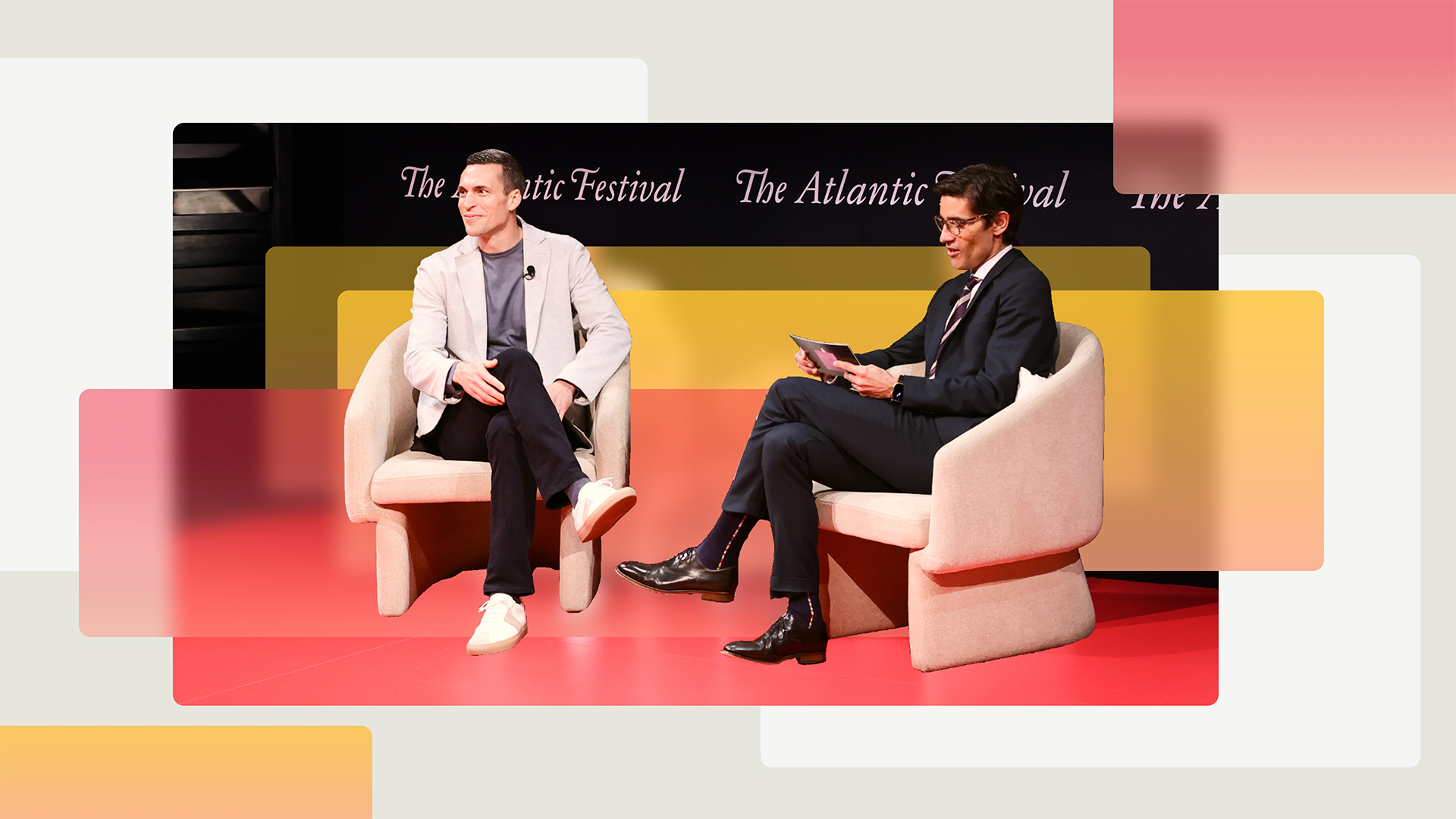
The calendar before the agent
There is a more personal productivity story beneath the corporate one. Early in his career, Spataro responded to a growing job by borrowing hours from sleep and home. He woke earlier, sometimes working at 3 a.m. and then 2 a.m. His wife eventually asked a question sharp enough to stop the pattern: when was he planning to ask for a divorce?
He was not. The mismatch was between what he said mattered and what his calendar funded. Spataro began to treat a week as a fixed budget of 10,080 minutes. The practice became timeboxing: choose the priorities, give each one a place, then keep the appointment. Work, family, faith and rest could not all be “important” in the vague language of intention. They needed actual minutes.
A week is finite. List the five things that matter, assign time to each before the week begins, and let the calendar expose the tradeoffs that a to-do list can hide.
That lesson follows him into AI. More capacity does not choose a priority. A machine can accelerate a bad process and produce an elegant answer to the wrong question. The deeper productivity skill is deciding what deserves to happen. When Spataro describes people moving “upstream,” he means they spend less time pushing the buttons and more time defining the outcome, setting the standard and checking whether the system met it.
“Power users go faster. Frontier Professionals change the work.”Jared Spataro
From author to orchestrator
Spataro’s team divides human-agent collaboration into four patterns. As an author, the person makes the thing and asks AI for help along the way. As an editor, the person sets intent and revises a machine draft. As a director, the person specifies a complete task and lets an agent execute it in the background. As an orchestrator, the person designs a system in which several agents run parts of a workflow, escalating exceptions when human judgment is needed.
The delegation ladder / human-agent collaboration
The progression is also a management curriculum. A good director cannot merely demand “make it better.” The brief must include constraints, evidence and a test for success. A good orchestrator has to know where the system might fail, which decisions can be reversed and when an exception deserves a person. AI makes vague management visible because the agent cannot quietly fill every gap with the shared context of a seasoned team.
Spataro calls the people developing these abilities Frontier Professionals. They encode expertise into systems and take ownership of how those systems perform. The title is less important than the change in posture. A lawyer, analyst, salesperson or operations manager becomes partly a designer of the process that produces the work. Their advantage comes from knowing what good looks like before execution starts.
This is also why he resists the idea that one universal super-app will do everything. His expectation is a network of specialized agents with domain knowledge, coordinated by a system that calls the right capability at the right moment. The image is closer to a conductor and an orchestra than a solitary chatbot. Microsoft’s opportunity is to provide the layer where those agents meet company data, tools and permissions.
The optimism has conditions
Spataro calls himself a tech optimist, but his public arguments contain a recurring condition: people must redesign the operating model, not merely buy the license. He has acknowledged that the commercial response to workplace AI can be uneven and that broad productivity gains are difficult to measure. A small experiment can prove that a team saves time. Showing that an entire company has become better is harder.
The earlier Teams years supplied a useful warning. Activity is not the same as accomplishment. During hybrid work, Microsoft’s research found a gap between employees who felt productive and leaders who could not see enough activity to trust that assessment. Spataro helped popularize the phrase “productivity paranoia” for that tension. AI can deepen the measurement problem: more drafts, faster replies and larger volumes may only prove that the machine is busy.
His preferred measures climb toward business outcomes. Did the workflow lower cost? Did it create value? Did it improve a decision? Did a person with domain expertise build a system that became more reliable over time? These questions are slower than counting prompts, but they connect the software to the institution paying for it.
“What will humans do? It’s the question I hear more than any other right now.”Jared Spataro
His answer is that people will do more, but differently. Earlier automation targeted repetitive execution. Generative AI reaches into work that appears to depend on experience and judgment. Spataro’s dividing line puts execution on the machine side and accountability on the human side. People define standards, evaluate outcomes, teach the system and own consequential decisions.
There is continuity in that answer. The computer-science student wanted to change the world within his circle of influence. The product manager learned how a continuous service changes a customer relationship. The executive learned that a calendar reveals real priorities. The church and family leader describes his most important work as happening outside Microsoft. Across those roles, tools matter because of the commitments they make easier to keep.
On the next airplane walk, the screens may look much the same. Word will still contain words. Excel will still contain numbers. Teams will still contain people. The hidden change will be who prepared the brief, gathered the evidence and moved the work between those windows. Spataro is betting that much of that motion belongs to agents. The human job begins earlier, with intent, and ends later, with responsibility.