Before Israel Krush was asking people to talk to computers, his parents had worked out how to get him away from one. There would be activities. There would be homework. Then there would be computer games. Half an hour of screen time was the prize at the end of a crowded day. Mario had acquired a small but useful role in family management.
His parents were immigrants from the Soviet Union, and their idea of an extracurricular programme was expansive. Chess, swimming, tennis, piano, origami and ballroom dancing all figured in his childhood. Magic made the list too. A child looking forward to a computer game had quite a few appointments to keep. In Krush’s telling, the bargain worked: he wanted the games badly enough to do the rest.
He remembers Super Mario 64, StarCraft, Age of Empires and Battlefield. Mario gets particular affection. These are the details that make his later interest in human-computer interaction feel less like a professional category and more like a continuing preoccupation. Long before there was a business to pitch, there was a person who kept finding reasons to sit in front of a machine.
It would be too tidy to turn every childhood hobby into a business lesson. Origami does not come with a term sheet. But the variety matters to the way Krush describes himself: someone accustomed to switching subjects, learning enough to participate and trying something unfamiliar. The adult job has a similar crowded timetable. The rewards have become more complicated.
Thirty teenagers, one young officer
Krush’s early experience of responsibility came in the Israeli military’s Unit 8200. At 21, he says, he was leading thirty 18-year-olds. The age gap was small; the responsibility was considerable. He remembers the environment as one in which difficult technical problems could be attempted rather than politely filed away. That combination of people and technology stayed with him.
His subsequent education put a formal structure around his interest in computers: a bachelor’s degree in computer science and statistics at Tel Aviv University, completed magna cum laude. Statistics pleased him on its own terms. He has described himself as a geek who likes the subject, which is a more convincing explanation than pretending every undergraduate decision anticipated the next wave of AI investment.
Intel was an early professional stop. Engineering and product roles at startups followed, including the head-of-product job at Zeekit, the virtual try-on business later acquired by Walmart. The range ran from cybersecurity to advertising technology to computer vision. Different products, different commercial settings, and repeated exposure to the problem of making sophisticated software usable.
He has identified human-computer interaction as the thread through that career. At Zeekit, the interface involved vision. At Hyro, it involves language. The continuity is useful: a founder can move across industries without arriving empty-handed. Krush brought experience of building software, managing people and translating between the people making a product and the people expected to use it.
An elective with consequences
In 2017, Krush moved to New York with his family to pursue an MBA at Cornell Tech. He already had a substantial technical career behind him. Business school offered a different setting, new people and a chance to build his entrepreneurial skills. It also left room for a machine-learning course he took out of interest, outside the obvious requirements of his degree.
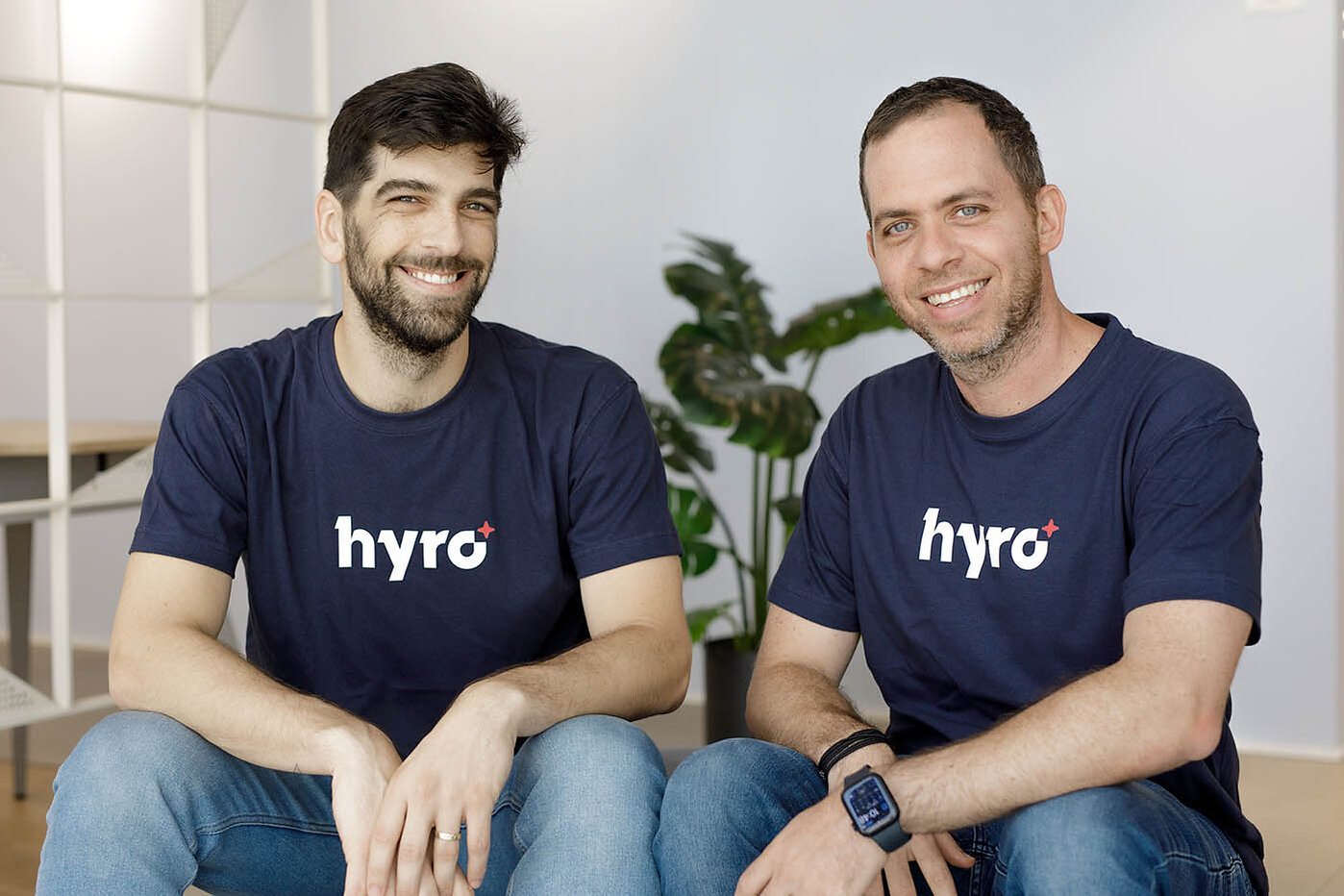
That class introduced him to Rom Cohen, who was studying for a master’s in computer science. The detail is pleasingly inconvenient for anyone seeking a reliable formula for finding a co-founder. Krush had travelled to study business. A technical elective supplied the relationship that would help turn his interest into a business. Curiosity had taken an unscheduled turn.
The two experimented with voice assistants, including an Echo in Krush’s Roosevelt Island apartment. They asked about directions, sports scores and family trivia involving American presidents. The questions were ordinary enough. The implication seemed larger: people might increasingly expect to ask technology for what they wanted, using words instead of learning another arrangement of menus.
The devices could be entertaining and disappointing in the same sitting. Krush and Cohen saw potential in natural language interfaces, along with the limits of what the products could then do. A talking speaker made the possibility tangible. Making that possibility useful inside an organisation would require a different kind of work, much of it less charming than asking a machine a trivia question.
A blazer enters the business plan
Cornell Tech’s Startup Studio gave the idea a place to develop. In 2018, the pair worked on making websites easier to navigate through AI. Krush later recalled a showcase populated by robotic arms, virtual-reality headsets and a generous supply of futuristic ambition. For the occasion, he wore a blazer, which he said he had not done in two years. Entrepreneurship occasionally requires formalwear.
The company took shape in 2018. Uri Valevski, whose background included Google Search and Duplex, joined the founding team. Entrepreneurs Roundtable Accelerator accepted the startup that June, and the team used Cornell Tech’s campus workspace. By 2019, Cornell was describing an eleven-person operation and a $4 million seed round. An experiment was becoming an employer.
That transition changes the meaning of a promising idea. Someone has to keep improving the product while someone else explains it, sells it and makes sure the organisation can deliver. The founders had moved beyond debating what a voice assistant ought to do. They now had a team and outside capital attached to the attempt.
Krush’s particular contribution sits at that intersection of technical and commercial work. An MBA did not erase his engineering background; it added another set of questions. Who needs the product? What must it connect to? How much work will it create for the organisation buying it? An interface can look effortless to its user while demanding a great deal from the people responsible for it.
The answer has to survive Tuesday
Hyro’s early approach involved drawing on an organisation’s existing information, arranging it in a knowledge graph and interpreting the language of a question to retrieve an answer. The idea was to reduce dependence on manually anticipating every conversational turn. Information already existed. Helping someone reach it was the task.
That distinction explains much of Krush’s interest in the practical side of AI. An organisation has changing information, existing systems and people who ask questions in ways its software designers may not have predicted. A demonstration has the luxury of a short script. Everyday use keeps adding awkward sentences. Tuesday arrives with another variation.
In a 2021 conversation about intent-less natural language understanding and knowledge management, he was already discussing these design choices. The timing matters. His work on conversational interfaces preceded the broad public fascination with generative AI. The more recent vocabulary arrived around a set of questions he had been working on for years.
By October 2025, Hyro had announced a $45 million growth round, bringing its disclosed total funding to $95 million. Those are company financing figures. For Krush, they also mark how far the undertaking had travelled from student experiments. A larger organisation can attempt more, and it has more promises to keep. The work of building the company grows alongside the work of building its software.
When the team arrived in costume
Asked for a favourite Hyro memory, Krush chose a party. It was Purim in 2021, the company had about 35 employees, and the theme was superheroes. Team members were known as SuperHyros. Batman and Wonder Woman were entirely consistent with the brief. A startup had found a fairly literal dress code.
What stayed with him was the realisation that the group had become a community. People had come together to build technology, and they were also making relationships, laughing and enjoying one another’s company. The recollection gives the organisational story a human scale. Thirty-five colleagues at a costume party are easier to picture than a slide about company culture.
There is an instructive contrast between the product’s language and the memory he chose. Software discussions can quickly fill with architectures, integrations and performance. His favourite moment involved noticing the people around him. A company becomes part of their lives as well as their résumés. For a founder, recognising that fact is its own milestone.
“we’d not only built a tech company but also created a community”Israel Krush, recalling Purim 2021
The interview after the polished answer
Krush’s preferred hiring conversation gets specific quickly. He asks candidates to examine a particular project in detail. His wider leadership vocabulary includes persistence and candour; he also acknowledges a tendency to focus on problems and a struggle with punctuality. There is something useful about a CEO allowing the untidy details into his own account.
The project question belongs to the same practical instinct as his interest in interfaces. A polished description can carry a conversation for a while. Details reveal whether the thing actually works. What did someone do? What happened next? The questions become less comfortable and more useful as they approach the actual work.
His stated ambition is to keep building Hyro as a much larger company, with the new management challenges that would bring. He is married and has four children; excellent coffee gets a prominent mention in his company biography. Alongside the plans and funding rounds, these remain ordinary human particulars. The childhood timetable was busy. The adult version appears to have retained that feature.
The bargain with his parents bought thirty minutes at a computer. Years later, an optional class opened a working partnership, an apartment experiment became a company, and a costume party made that company feel real in a different way. Krush keeps returning to the interaction: the person asking, the machine responding, the colleague explaining. The next useful question is rarely the last one on the schedule.