The airline ticket could be booked online. The customer still wanted to talk. For Ditto Anindita, who had worked to make the booking process straightforward, this was a persistent inconvenience with a useful secret inside it. A clean interface could remove steps. It could not remove the desire to ask someone a question.
Anindita had built travel software. He knew the transaction from the business side. Yet the people using it kept pulling another service into the purchase: conversation. The same booking system that promised convenience also produced work for customer-service staff. A website can be remarkably efficient at generating questions about the website.
In September 2016, he and his co-founders launched Botika. The company would build automated conversations, beginning with a problem he had encountered at close range. Its subsequent work would reach telecom customers, city administrators and railway passengers. The opening was smaller: could software help with the questions that kept coming back?
A developer before the chatbot
By then, Anindita had a substantial working history in Yogyakarta. A Sanata Dharma University alumnus, he founded RuangKerja Software Engineering in 2001. The business produced other ventures, including the ticket aggregator OkeTiket and payments service PPOB Nusantara. These were businesses concerned with getting things done: handling a payment, finding a flight, completing a transaction.
That background gives Botika’s beginnings their texture. Anindita was moving from business software into conversational software, carrying a customer-service problem with him. The earlier products had already put him in contact with the awkward space between a system’s capabilities and the help people request while using it.
The founding group also took shape through Indonesia’s startup community. At the 1000 Startup Digital programme in Yogyakarta in 2016, Anindita met developer Prima Yoga Kharisma, who joined the founders. Galuh Koco Sadewo and Vita Subiyakti were part of the early group. The technical work grew alongside a shared experience of answering customers.
Sadewo later recalled the founders’ businesses using Yahoo! Messenger to handle enquiries and complaints. Administrators worked eight-hour days; the incoming questions did not respect the office timetable. Many enquiries repeated a small set of concerns. That repetition offered the team something concrete to automate, and a way to explain why anyone might want it.
Five months to customer one
Botika’s launch did not produce an immediate queue of buyers. Its first customer arrived in mid-February 2017, roughly five months after the September launch. The founders were bootstrapping. Limited resources and access to customers were business problems alongside the technical ones.
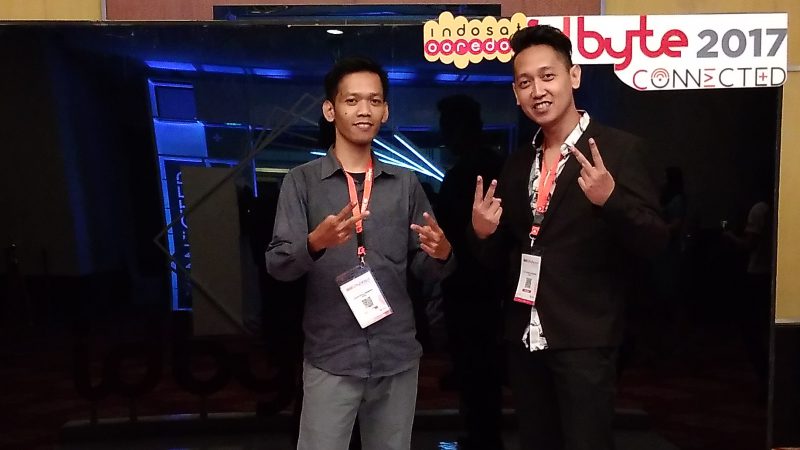
Early recognition helped put the company in view. Botika reached the final group of eight at the Bubu Awards in 2017 and was listed among the 20 finalists of The NextDev that year. Those milestones belong to the early effort to make a small company visible to people who might buy from it or help it grow.
Winning enterprise work required a less photogenic sequence. Anindita described approaching XL Axiata directly with a chatbot proposal. The telecom company had its own plans for customer-service automation. Botika went through pitching and procurement before being selected as the vendor. The initial project ran on Facebook Messenger; after that proof of concept succeeded, it extended to LINE.
XL’s assistant was called MAYA. Its job involved information and help around the operator’s products. For Anindita, the engagement showed that a tool born around ticket enquiries could enter another kind of service operation. It also made the route to market plain: an idea had to pass through purchasing decisions before it could answer anybody’s question.
Indonesian, as people actually type it
The language problem was specific. Botika worked on understanding everyday Indonesian, including informal expressions and abbreviations. In 2017, Anindita described training the system across standard language, regional language, slang and shortened forms. Customers were unlikely to become more formal simply because the recipient was software.
This is an appealingly ordinary difficulty. Businesses can write tidy answers. People can arrive with untidy questions. A conversational interface has to connect the two, without demanding that every user sound like a help manual. Local language knowledge sits inside that work, affecting whether a system can recognize what someone is trying to accomplish.
Botika’s early travel assistant had a limited, practical repertoire. Its listed categories included greetings, airline schedules, travel destinations, food recommendations and cancellations. The modest specificity is instructive. An assistant needed recognizable tasks before it could become useful to a travel business. A machine with something definite to help with has a better introduction than a machine announcing its cleverness.
- 01A person asksEveryday words, familiar channels.
- 02A system interpretsLanguage connects to a business task.
- 03Help moves forwardAn answer, an action or a human agent.
By 2023, Botika’s offering included chatbots, voice systems and tools for handling customer contact across channels. Anindita also made a qualification about the people doing customer service: complex questions still needed agents, whose time could be directed toward keeping customers. Automation, in that account, changed the allocation of work inside the service team.
The conversation leaves the screen
Anindita had been exploring speech well before the current rush of generative-AI products. In August 2019, he presented Widya Wicara at the Indonesia Artificial Intelligence Summit in Bali. The smart speaker combined voice and chatbot technology, with the ability to converse in Indonesian central to its pitch.
The change of interface mattered. A typed assistant waits inside a message window. A speaker invites someone to address the system aloud. Anindita’s work was following the same question into a different setting: how should a person ask a machine for something? The answer could involve a keyboard, a spoken request or, eventually, a face on a screen.
Another 2019 project moved the problem into government. In September, Botika collaborated with Jakarta’s provincial administration on chatbot technology to help collect information from residents. Anindita described gathering messages through one number and directing them to the relevant government departments. Administrators would have help dealing with large volumes of incoming messages.
Here, the business of conversation acquired a civic destination. A resident’s message needed to reach an office that could act on it. The useful part was the connection between the incoming words and the responsible department. Even a beautifully phrased reply would have limited appeal if the underlying issue never reached anyone’s desk.
By July 2022, Anindita was describing a platform that let other businesses build chatbots without starting from the beginning. Botika’s collaboration with Infomedia included INDITA, an assistant for IndiHome enquiries. The building tools offered drag-and-drop controls and the option of custom code for more complex arrangements.
That was another turn in the company’s work. The founders had first built an answer to their own repeated questions. Now they were offering other teams a way to assemble an assistant, configure its conversational flow and connect it to their operations. The software maker was making software for the next software maker. Customer service had developed quite a family tree.
Back to travel, this time with a face
In December 2023, Anindita announced work with Microsoft Indonesia on real-time virtual avatars for KAI railway customers. He identified stations in Jakarta, Bandung and Yogyakarta. The system brought together language technology, speech recognition, synthetic speech and video to support interaction through text and voice.
There is a pleasing return in that project. His earlier business dealt with airline tickets. Botika grew from the conversations surrounding travel. Years later, the company’s digital assistants were reaching railway stations, places where information has an immediate practical purpose. A passenger has somewhere to go; the interaction has to help them get on with it.
The avatar added a visible presence to the conversation. It also placed Anindita’s company in collaboration with a technology partner and a transport operator. His public announcement described the deployment through the participating organizations and the stations it would serve. The project’s setting made an abstract collection of AI capabilities easier to picture.
A ticket to Sydney, a role in voice
Yogyakarta remained Anindita’s base as his ambitions extended outward. In October 2024, he described a trip to Sydney as part of Baparekraf ScaleUp Champions, with Botika selected among the programme’s top five startups. The visit involved market research and meetings with startup organizations, mentors and companies.
He described expansion in Malaysia and plans to explore Europe and the United States next. Those were stated ambitions, with the Sydney visit supplying opportunities to learn. Encounters included Investment NSW, Haymarket HQ, Stone & Chalk and Canva, alongside attendance at SXSW Sydney. The trip put international growth into the unglamorous but necessary business of meeting people and studying a market.
In January 2026, his career added a strategic AI advisory role at Ailoov. His stated remit covers voice technology as an interface between people and machines, including product direction, partnerships and uses beyond conventional contact centres. In a subsequent demonstration he shared, voice cloning became a way to give a brand a recognizable sound.
That interest has continuity with the speaker he presented in 2019. Speech keeps opening another route into a system. Anindita’s work has followed it across devices, business applications and the identity a synthetic voice might carry.
Teaching people to ask better questions
Alongside selling AI, Anindita has discussed the need to understand it. In December 2023, he pointed to familiar applications such as photo filters and content recommendations, explaining that people may already use AI without recognizing it. He also urged care around misleading synthetic content.
The educational concern fits a career built around interfaces. People need help using a system, and they need judgment about its answers. Anindita has appeared in interviews and podcasts, including a 2020 episode of The Weekly Wrapper about AI, bringing those conversations beyond a sales presentation.
“Lakukan yang terbaik dalam setiap pekerjaan dan secepat mungkin.”
Ditto Anindita, 2018. Translation: Do your best in every task, and as quickly as possible.
His working principle, offered in 2018, was concise enough to survive a crowded day. Do the work well. Move quickly. In the same interview, he described opening a Jakarta branch to reach clients more efficiently. The sentiment had a practical address.
The customers who preferred to chat gave Anindita something worth attending to. Their questions interrupted the smooth booking journey he had designed. He made room for them. Across the businesses and interfaces that followed, that remains the recognizable beginning: someone asking for help, and a developer deciding that the request deserved a better answer.