The website was supposed to make buying an airline ticket simple. Ditto Anindita had worked on the booking process, stripped away friction and put the transaction online. Customers still wanted to talk to customer service. Their preference became the opening for Botika, an Indonesian company built around an awkward truth for software sellers: people do not always want to serve themselves.
Botika now offers chatbots, voice automation, digital human avatars and tools that gather customer messages into a shared workspace. Its original insight remains more interesting than the catalogue. An enquiry that irritates one business owner may be a product opportunity if enough other businesses are answering it too.
The company’s pitch begins with language, particularly everyday Indonesian, and ends with work: locating a shipment, answering a passenger, passing a complaint to someone who can act. A convincing sentence is useful. A resolved enquiry is what the customer came for.
First came the questions. Then came the wait.
Botika’s beginnings reach back to 2016. In a later interview with the national 1000 Startup Digital programme, co-founder Galuh Koco Sadewo recalled businesses fielding sales enquiries and complaints through Yahoo! Messenger. Administrators worked eight-hour days. Customers kept producing questions. The team saw repetition where a service desk saw an expanding queue.
Its founding group included Anindita, Sadewo, Prima Yoga Kharisma, Eri Kuncoro and Vita Subiyakti. The startup programme helped bring people together; Kharisma took responsibility for technology. This was a business problem seeking a technical answer, with customer conversations supplying the brief.
Getting paid took longer. Contemporary reporting dated Botika’s launch to September 2016 and its first customer to mid-February 2017. That is roughly five months between opening the doors and finding customer one. The first assumption to disappoint was that a simpler website would satisfy everyone. The next constraint was money.
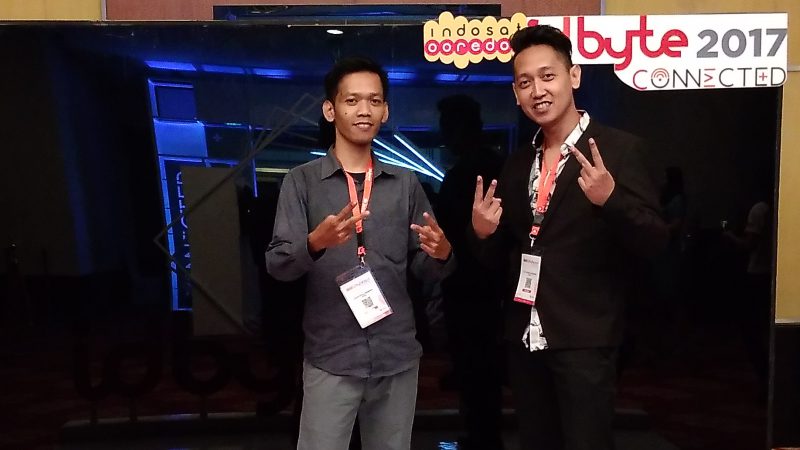
Telkomsel’s early account described founders working with little capital and without pay. They entered The NextDev 2017, reached the finals and gained access to its academy, with training in customer research, product development and business models. UMG Idealab backing was publicly documented by December 2018. The company had to learn how to sell the solution while building it.
The shift toward enterprise work followed enquiries from larger companies. Anindita later described businesses asking for the same language technology the team had developed for its own booking service. That changed the proposition: the internal fix could become the main offering.
Indonesian as people actually use it
Botika built its early identity around natural language processing in Bahasa Indonesia, including conversational phrasing and abbreviations. The distinction matters at a service desk. A customer typing quickly into a messaging app is unlikely to write a textbook sentence just to accommodate the software.
Localization therefore belongs inside the product, alongside the connection to a company’s information. The words have to make sense; so does the answer. A bot that understands a request but cannot reach the relevant business system leaves the customer with another step to complete.
This is a contested market. Kata.ai also emphasizes Indonesian, slang and transfers to live agents. Qiscus offers a shared inbox, messaging integrations and AI assistance. Botika’s position is best understood as a combination of local language work, custom business integrations and several interfaces - text, voice and a visible avatar. Buyers have alternatives for each part.
“human interaction is critical to personalize customer service and experience”
Ditto Anindita, founder and CEO, 2023
That qualification is central to Anindita’s account of automation. Routine questions can move to software while agents spend time on difficult cases and customer retention. In 2023 he reported customer-service cost savings of 30-40% among customers after automation. It is a company-reported outcome from that period, not a guaranteed saving for the next buyer.
The shipment, the passport and the shared inbox
Botika’s customer examples give the technology a useful job description. Seiya, its shipping assistant for Sealand, lists shipment tracking, schedules, payments and demurrage and detention among its functions. WhatsApp and Facebook Messenger are the interfaces. The cargo business supplies the questions; the assistant helps people navigate them.
At the Indonesian consulate in Johor Bahru, the company describes WhatsApp access to passport information, emergency travel-document information, complaints and online self-reporting. Those are specific administrative tasks. Their value depends on getting a person to the right information or process with fewer detours.
Illustrative workflow, not a performance measurement.
Omnibotika handles the surrounding service operation. Its advertised features include ticket transfers between agents, ticket histories, downloadable reports, chat logs and call recordings. It also describes tracking a customer’s journey across channels. The practical benefit is continuity: the conversation should survive a change of channel or the arrival of another staff member.
The company’s separate WhatsApp Business Solution offers reusable message templates, a broadcast interface, reporting and mobile access. A business can use those tools to organize outbound updates as well as incoming questions. Botika consequently occupies space between a chatbot vendor and the software running the service desk.
A monthly subscription is only one price
There are several ways to buy that work. Omnibotika advertises a Lite plan at Rp299,000 per month, including two omnichannel IDs, ticketing and an extra 1,000 conversations. Its Pro tier adds capabilities such as chatbot integration and asks prospective customers to contact the company.
The WhatsApp product separately advertises a Rp299,000 monthly Lite plan. Identical headline prices do not make these the same purchase. A buyer needs to match the product and its allowances to the actual job: managing messages, automating answers or commissioning a system that reaches into other software.
Omnibotika Lite
Advertised subscription
Enterprise chatbot projects
Reported in October 2019
Different scope and dates. These figures are not a price trend or a like-for-like comparison.
The historical enterprise figures make the distinction tangible. In October 2019, Botika quoted chatbot projects starting at Rp100 million and custom voice chatbots from Rp200 million. Those were project prices reported at the time, not today’s quotations. They illustrate how far a tailored implementation can sit from a small monthly subscription.
Botika also publishes usage rates for its language-model API: Rp34,000 per million input tokens and Rp66,000 per million output tokens. These measure text processed, not completed customer cases. Model usage, subscription access and implementation effort belong in different lines of a purchasing decision.
Now the answer has a face
Nilam brought Botika’s conversational technology into railway stations. The digital human assistant began appearing on December 22, 2023, at Gambir in Jakarta, Bandung, Yogyakarta and Surabaya Gubeng. Public accounts described a vertical television display that passengers could activate through touch or voice.
Developed with KAI and Microsoft, Nilam used Azure OpenAI Service and Azure Cognitive Service to respond through text and speech. It gave the company a concrete example of the avatar format: an information point in a place where people have somewhere else to be.
Botika markets its broader Digital Human AI for websites, mobile applications, kiosks and displays. Speech recognition, voice synthesis and connections to external services sit beneath the visible character. The face attracts attention, but its usefulness still depends on the service behind it.
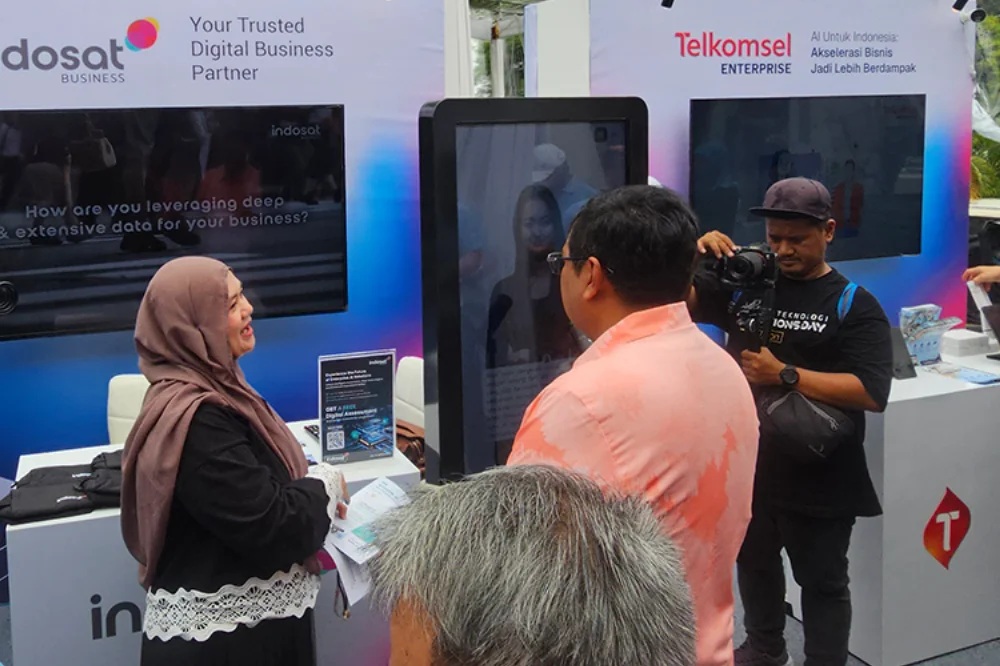
Its voice tools also work without an avatar. The public text-to-speech page lets visitors try synthetic speech and includes an aircraft seat-belt announcement among the examples. The speech-to-text page offers recording and upload controls, with use cases for meeting notes, interview transcripts and billing-related notes. These are approachable ways to understand the underlying tools before imagining a talking kiosk.
The useful lesson is hiding in the queue
Botika’s path suggests a practical starting point for another business: examine the questions customers already ask. Identify which answers repeat, which require a lookup and which demand judgment. That is an editorial inference from its history, not a promise that every service desk should buy a bot.
A sensible evaluation would use real, anonymized enquiries in the language customers use. Require a correct answer, a working connection to the necessary information and a clear route to a person. Count completed cases and repeat contacts. An impressive demonstration can make all of this look easier than daily operations will be.
Botika’s own product material addresses that difficulty through retrieval from knowledge bases, feedback, updates and fallback mechanisms for low-confidence responses. Those choices imply continuing maintenance. If the underlying information is stale, the required integration is absent or nobody can receive an escalated case, a fluent answer will not complete the job.
The company continues taking the idea into public settings. In September 2026 it promoted a Digital Human AI appearance with DPD ASKI DIY-Jateng at Jogja Coffee Week. A coffee exhibition is a different room from a railway station. The test remains familiar: someone approaches with a question, and the technology has to earn the next minute of their attention.
Try the conversation
Explore the products, watch the dashboard demo or follow Botika’s next appearance.