In 2016, a Berkeley game shop was preparing to move. A student design competition asked what its next chapter should look like. The winning team’s answer began with restraint: Games of Berkeley already had a character worth keeping. Interviews persuaded the students to build around the shop’s peculiar, sociable appeal. Their proposed marketing included playable posters, a paper fortune-teller and a custom deck of cards. The work invited people to linger.
The competition was CMYK, sponsored by Innovative Design. One participant, Liz Lee, had arrived chiefly to learn. She left having contributed to a winning entry. That small journey helps explain the organization behind the event. A client needs something made. A student needs an opportunity to make something that matters to somebody else. InnoD puts those needs in the same room.
“My teammates were seriously my mentors during this challenge.”
Liz Lee · 2016 CMYK participant
A place to begin, with somewhere to go
Founded by Jeff Fan in 2008, Innovative Design is an ASUC-sponsored undergraduate organization at UC Berkeley. It supplies graphic design, photography and web work while teaching students how to do that work. The modest geography of its motto, “Make Berkeley Beautiful,” is useful. A campus gives a creative agency a ready supply of people with practical problems and a reason to care about the results.
Think of the ordinary campus flyer. Someone must decide what a stranger should notice first, which information can wait and how much text is too much. The assignment may be small, but those are design decisions. Put a student in charge of one and the lesson acquires an audience. The poster has to make sense to people who did not sit through the critique.
InnoD organizes that learning across experience levels. Its current design tracks move from typography and layout toward collaborative branding and experienced client work. Web beginners explore Figma, wireframes and user research; more comfortable designers work on richer prototypes and client projects. The structure gives beginners a defined place to start without making their first attempt carry every responsibility of an advanced assignment.
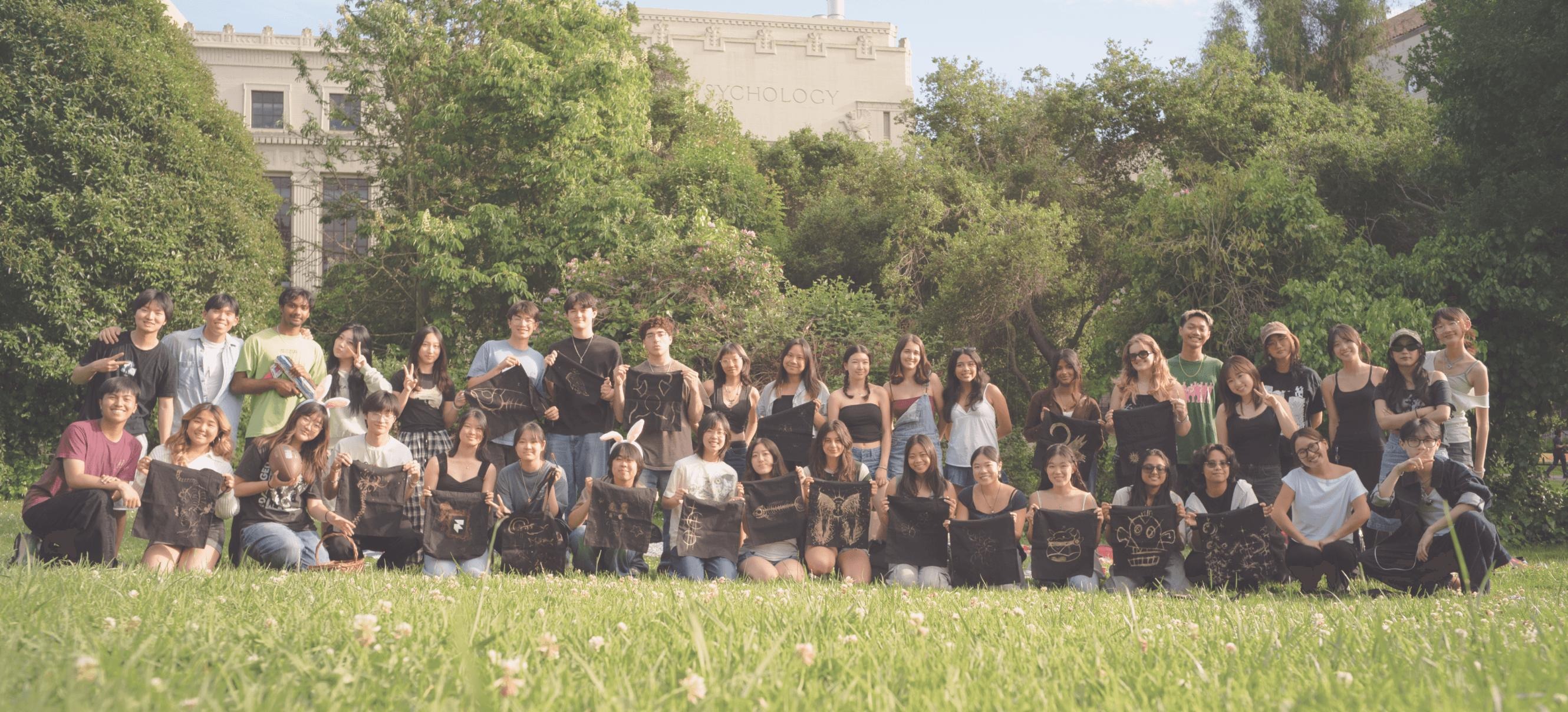
The people who need the poster
The customers are close enough to recognize. Student groups need identities, event coverage and websites. Local businesses can bring branding briefs. The Jacobs Institute’s campus directory points people toward InnoD for everything from a flyer to a photo shoot. This is the part of the design market where a useful deliverable can be quite specific: help people recognize our group, understand our event or find us online.
Wave Makers of Berkeley offers a concrete example. Its own history credits Innovative Design with helping establish an independent brand in spring 2019. The group wanted students to recognize it as a student organization rather than simply a scholarship program. It reported that the new identity helped recruitment and visibility. A logo, in that setting, clarifies what people are being invited to join.
Another published project is a 2024 logo for Kickboxing at Berkeley. InnoD’s longer record includes a photography credit in Berkeley Engineering’s 2010 coverage of the BEAM mentoring program. These are different assignments with a shared feature: someone on campus has a story to communicate. The creative work gives that story a form other people can see.
Free work has a time budget
InnoD’s published model combines pro bono or low-cost campus services with paid outside-client projects. Earlier team descriptions explicitly assign free campus design to Gold and paid branding for local businesses and startups to Blue. Those distinctions explain the model; a prospective client should still confirm the terms of a particular request.
A zero-dollar design fee does not eliminate the work. Somebody writes the brief, supplies the photographs, checks the spelling and answers questions. For a client, the practical preparation is straightforward: name the audience, list the deliverables, identify a decision-maker and state the deadline. Sending a folder of assets and a clear purpose gives a student team something firmer to work with than “make it pop.”
The arrangement makes sense when the assignment fits the students’ time and experience, and when both sides can participate in feedback. A business needing continuous production coverage or an urgent, open-ended launch should assess those requirements before commissioning a semester-based team. Educational value and client value can coexist, but they still need a workable scope.
When the designers had a design problem
InnoD’s own identity supplies a useful account of growing pains. In a case study published in 2017, designer Alice Pang described an organization that had expanded from one visual-design team to roughly a dozen teams across disciplines. Some of the other teams felt overshadowed. An identity associated too closely with one kind of creative work was failing to represent the people doing the rest.
The response included separate brandmarks for different disciplines. The palette also moved from red to cyan, shedding an unwelcome association with Stanford. Even a color swatch can get caught in a college rivalry. Pang described another requirement: members needed enough freedom to play with the identity after the branding team had finished.
There is something worth copying here. Ask whether the public description of an organization still fits the people inside it. Growth can leave a name, image or habit attached to an earlier version of the group. InnoD’s designers treated representation as part of the brief. The problem was visible in the artwork, but it began with how members felt about their place.
Learning can leave the meeting room
Photography adds another dimension to this environment. Beginners work toward film photographs and a zine. More experienced members can explore studio sessions, portraits, event work and their own artistic direction. A shared publication gives individual pictures a second job: they must work alongside one another. Selection, sequence and presentation become part of the assignment.
The educational offer also extends beyond team membership. CalLink lists DeCals in Photoshop and Illustrator, graphic design principles and photography principles. The course descriptions combine practical tools with subjects such as composition, color and critique. They give students another route into making things, with the current semester’s enrollment details determining the route available.

Events widen that circle again. In 2020, the CMYKxBART designathon asked teams to reinterpret familiar transit imagery for merchandise. Trains and system maps became material for shirts, stickers and mugs. Berkeley’s MDes program documented a student team’s second-place finish. The exercise brought a recognizable public subject into a format small enough to explore in a day.
That sits alongside HEX creative workshops and RGB speaker programming in InnoD’s event history. Its current events page describes two events per semester and directs the campus community to Instagram for announcements. The common thread is an invitation to encounter design through doing, watching or discussing it.
The useful thing to borrow
Berkeley has other routes into creative work. Berkeley Innovation emphasizes human-centered design consulting. Freelancers and commercial studios offer another way to commission a finished piece. InnoD occupies a particular intersection: accessible creative instruction, campus service and projects that let students practice together. The choice depends on whether someone wants a deliverable, an education or a setting that joins the two.
For someone building a similar organization, the transferable unit is small. Find a real, manageable need. Give beginners appropriate instruction. Put someone in a position to offer feedback. Finish a piece that can reach its audience. Then examine both outcomes: what the client received and what the maker can now do.
There is room for ambition in that sequence, but also room for a first attempt. A useful poster may be the visible result. The student who can explain why it works is another result worth keeping.
Find your way into InnoD
Explore Innovative Design, browse its teams and DeCals, or use the client request links. Follow announcements on Instagram, connect on LinkedIn or visit Facebook.
For a closer look at the work: student projects on Behance, the Games of Berkeley competition story and the BART designathon recap.