A water district has a peculiar communication problem. Its work matters long before anyone thinks to admire its logo. The useful question is whether a resident can recognize the organization, understand its role, and find what they need. For the creative agency 789, Inc., that apparently unglamorous assignment is fertile ground.
Consider Upper Water. The agency’s project began with the Upper San Gabriel Valley Municipal Water District and extended through naming, positioning, a visual identity, a website, signage, video, and presentations. Even internal messaging formed part of the work. The short public-facing name was one piece of a much larger effort to make an institution easier to meet.
That is a good way into this Covina shop. Its portfolio suggests a recurring interest in organizations whose operations are more complicated than their public explanations ought to be. Water, waste, local government, university research: plenty to explain, limited patience on the receiving end.
01 / The brochure has a job
Athens Services supplies an especially practical example. Over a relationship the agency describes as lasting years, 789 has worked on the waste and recycling company’s website, facility promotion, signage, video, and printed materials. The assignment includes mobile access to sustainability information alongside brochures and flyers. Someone scrolling on a phone and someone holding a handout should be able to recognize the same organization.
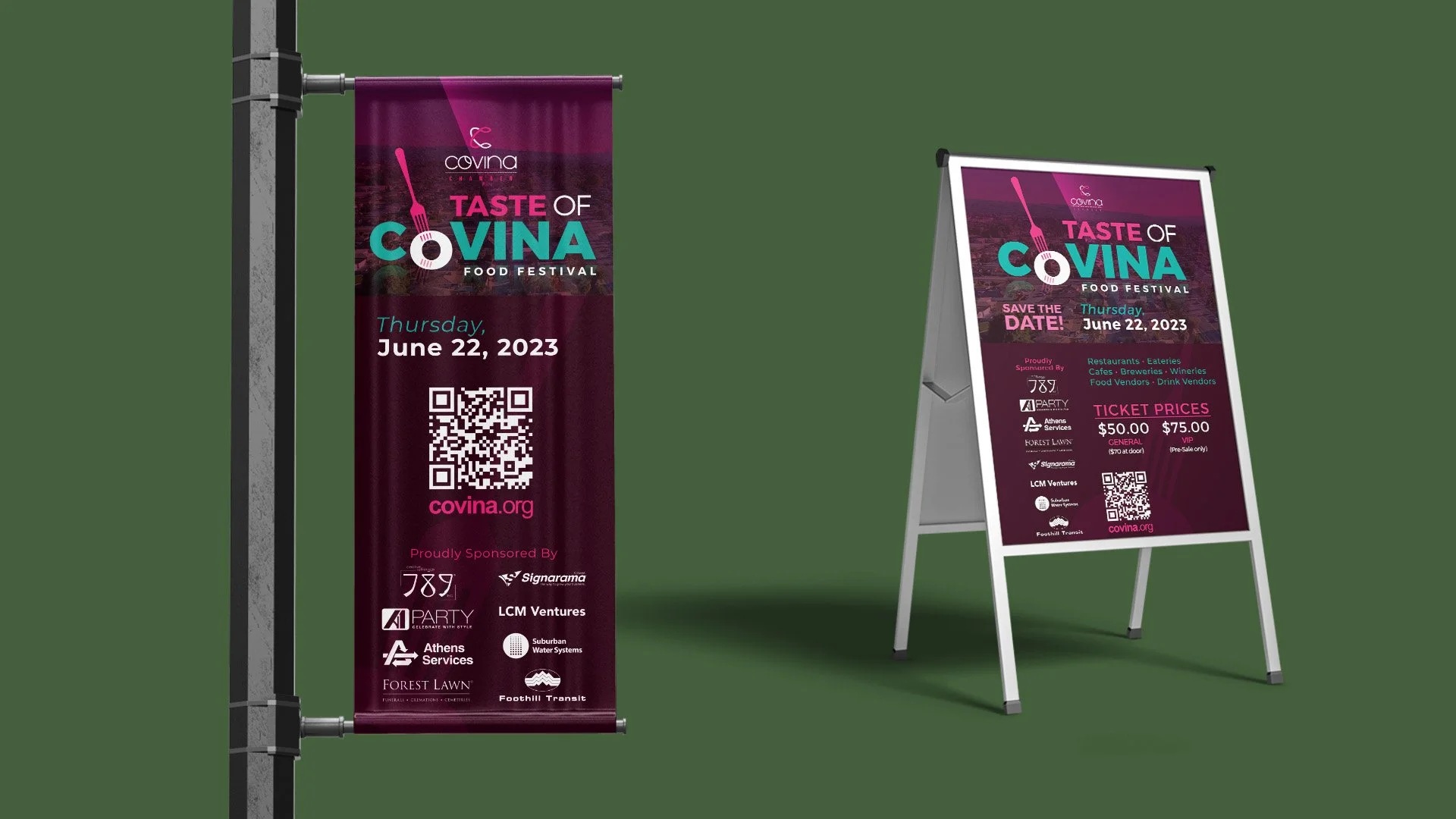
The City of Covina provided a sharper deadline. For its 2015 economic-development appearance at the International Council of Shopping Centers, 789 says it produced coordinated messaging and materials in five weeks. The package included a brochure, signage, property information, an outreach kit, and USB business cards. Remember USB business cards? A miniature souvenir of an era when a file could also be a handshake.
Those objects had a destination and an audience. That detail matters. A design conversation becomes much more useful when somebody can say where the thing will go, who will pick it up, and what they should do next.
02 / One idea, several places to put it
For Microsoft’s Silicon Valley campus launch, 789 connected “Together” with “To Get Here.” The agency describes a campaign celebrating the campus redevelopment, using illustration, a coordinated color palette, and materials for both physical and digital settings. The wordplay gave a workplace milestone a social meaning: people had helped bring it into being.
UCLA DataX required another kind of translation. The case study describes brand strategy and messaging carried into digital assets, wall graphics, launch video, social campaigns, and installations in Murphy Hall. The audience was being invited into a research initiative through an environment as well as a name.
Santa Fe Springs shows the less theatrical, equally necessary side of that work. There, 789 describes refining and finalizing a city identity and brand guide, then applying it to newsletters, the Community Guide, signage, and departmental materials. A civic identity earns its keep through repeated use by different people. The design must survive an ordinary working Tuesday.
03 / The invoice is part of the story
789 sells creative services to clients. Its menu spans strategy, positioning, identity, product launches, websites, UX/UI, content, illustration, and production. Public relations, translation, and outreach add ways to get the resulting work into circulation. That breadth places it among full-service creative agencies, with alternatives ranging from specialist studios to an organization’s own internal team.
One public record makes the business model tangible. Upper Water’s January 28, 2026 board packet lists a $5,750 invoice to 789 for January branding and creative services. This describes one month’s services for one client. Treating it as the price of a complete rebrand would be a mistake.
Upper Water · January 2026
Branding and creative services
For a prospective buyer, the useful comparison is the scope: which deliverables, which audiences, how many applications, and what continuing support? A logo assignment and a continuing institutional communications assignment consume different kinds of attention. Price becomes informative when those boundaries are explicit.
04 / Two desks, then a decision
Charley Bell founded 789 as a side business in 2009. In a 2017 interview, he described committing to it full time in 2014, starting with a 200-square-foot office, two desks, and two computers. The first three months brought the anxiety of finding clients; then a large contract helped shift the business’s prospects.
The decision followed frustration with corporate advancement and encouragement from his wife. It is a recognizable entrepreneurial sequence: build something alongside a job, then decide to give it the hours previously spent on somebody else’s business.
“My heart is in this city”Charley Bell, announcing the Covina studio in 2014
The local connection remains visible. Covina Chamber of Commerce lists Bell as chairperson and 789 among its Diamond supporters. The agency also worked on the Chamber’s rebrand, beginning with an audit and a strategy intended to reflect its changing role. Here, the community relationship extends beyond a name on a client list.
05 / A little nerdiness, applied carefully
The studio calls its culture Creative SyNERDgy. Its team page pairs conventional roles with playful descriptions, including designers, developers, video specialists, and an events producer. Richard Silva is listed as vice president and art director; Bell as president and chief creative officer. There is also a company cat, Seven Ocho Neuf. Someone clearly enjoyed that naming brief.
The playfulness has a practical counterpart. For the bilingual ¡Oh Sí! library campaign, 789 worked with a Southern California communications firm and Orange County Public Libraries on a website, video, and visuals for young people and families. The agency says tight timing and budget influenced its use of AI-assisted illustrations, which people then refined. Technology was a production choice within a specific assignment.
Another collaboration illustrates its place in the agency market. Westbound Communications led Monte Vista Water District’s bilingual “Water You Doing?” campaign, while 789 developed creative concepts, identity elements, and advertising layouts. Sometimes the client buys a whole agency relationship; sometimes another agency brings in a creative partner for a defined part.
06 / Write the brief for the person walking past
Mattur’s portable-energy work offers a useful closing test. 789 describes product renderings, contextual mockups, sales materials, and touchscreen and trade-show concepts aimed at making the system understandable in under 60 seconds. That is a design intention, not a measured conversion result. But it puts a wonderfully concrete constraint on the work: explain this before the visitor moves on.
The transferable lesson is to make the brief specific enough to disagree with. Name the person who needs the information. Name the decision. Name the setting. Then ask whether the same idea remains intelligible in a sentence, on a phone, and across a physical space.
This approach needs a client willing to resolve those questions and carry the answer into daily use. If departments cannot agree on what an organization offers, or nobody takes responsibility for maintaining the materials, an identity system has little to hold it together. The reader’s task is wonderfully ordinary: pick one confusing explanation your organization uses, and make it easier for the next person to act on.
Follow the work
Explore the studio’s projects, meet its team, and follow the next assignment.