The most revealing thing about Hub101 is what it hopes will happen to a successful tenant: eventually, the tenant leaves. A startup that needs more desks, more employees, and an office of its own has given this university-run workspace something to celebrate. That makes for an unusual relationship with the people paying to sit there.
“We want them to grow and then outgrow the space,” Cal Lutheran School of Management dean Gerhard Apfelthaler told the Business Journal in 2019. PureSpectrum, the market-research technology business, was his example: a founder arrived, built a company, hired students, and moved on. The desk was useful. The connections around it helped explain why the desk mattered.
Hub101 operates in Westlake Village as part of California Lutheran University’s Steven Dorfman Center for Innovation & Entrepreneurship. It combines coworking with startup education, mentoring, and events. Its audience includes students and outside founders, people testing an idea and people already trying to sell something. The interesting part is how those groups meet.
A university with the doors open
The physical ingredients are familiar: shared work areas, conference rooms, private offices, a kitchen, and an outdoor courtyard. Hub101 advertises more than 10,000 square feet and member access around the clock. The university connection adds another purpose to the floor plan. Founders need help building businesses; students need opportunities to see business decisions being made.
That arrangement developed in stages. Cal Lutheran opened its entrepreneurship center and coworking space in 2014. The university subsequently took over operations from a contractor. In 2016, Daniel Ball and Greg Monterrosa joined to run programming and the community as Hub101 introduced an incubator. Ball brought startup-program experience; Monterrosa had co-founded MyLLC.com and mentored entrepreneurs abroad.
The first cohort’s June 2016 Demo Day featured nine teams. More than 25 mentors had contributed to the 13-week program, according to the university’s event announcement. Its invitation extended beyond investors to developers, lawyers, designers, and the merely curious. That was a practical choice: a young company can need a useful introduction long before it needs a funding announcement.
Then the tech crowd worked from home
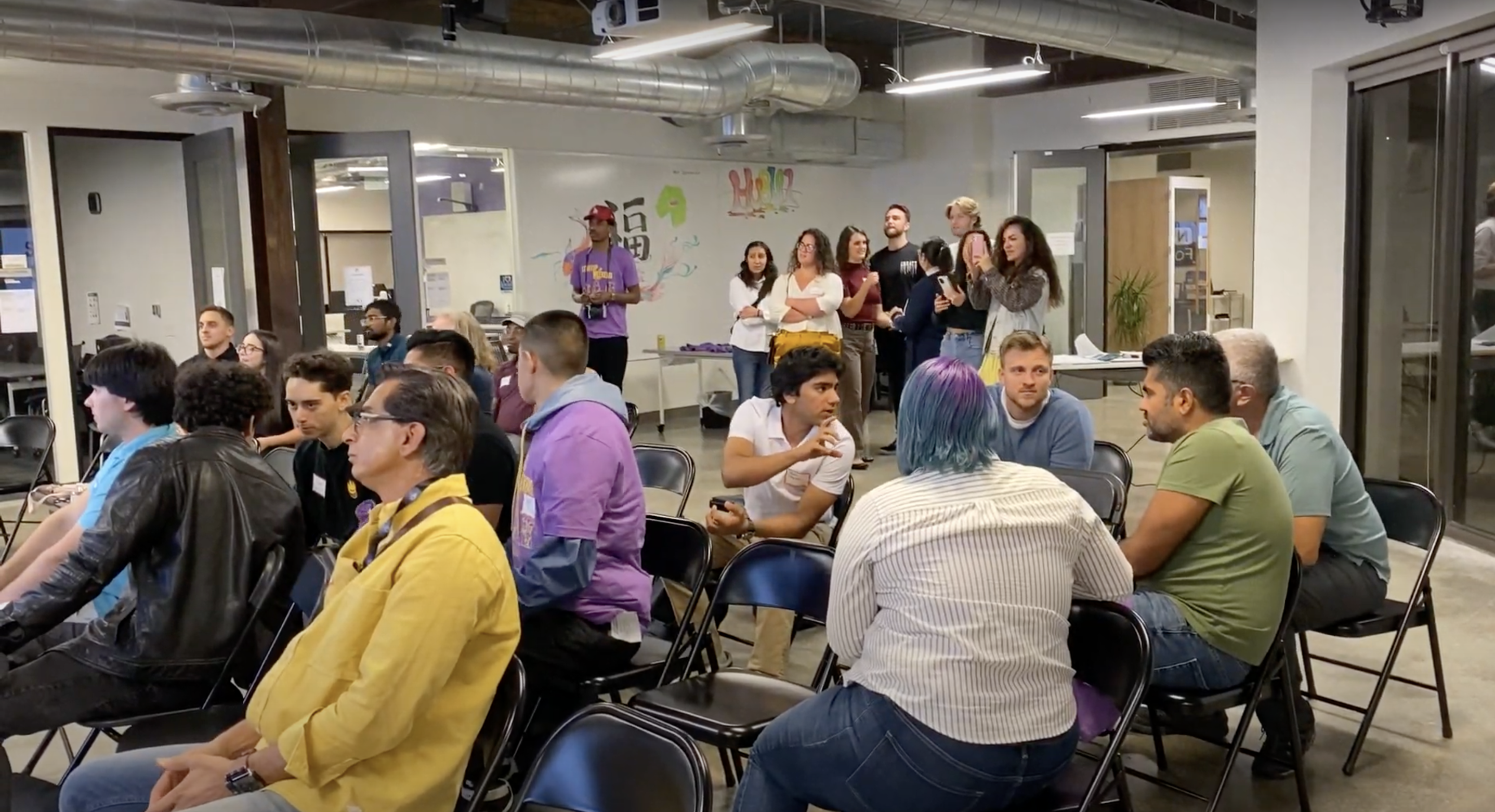
The pandemic challenged the original proposition. As Inside the Valley reported in April 2025, technology founders adopted remote work, fewer people came to the workspace, and event attendance declined. The pressure was on the gathering itself: an office built around encounters has a problem when people stop encountering one another.
Michael Panesis, the center’s executive director, described a broader constituency emerging around its programs. Some students wanted venture-backed companies. Others wanted viable small businesses and had family obligations that made an all-consuming startup gamble unrealistic. The center’s teaching increasingly made room for those circumstances.
The distinction matters when choosing an incubator. A founder looking for customers for a local business needs different advice from someone preparing to sell equity in a fast-growing technology company. Hub101’s evolution suggests a useful test for entrepreneurial education: can the program help with the business a person is actually building?
The desk has a price. So does the time.
Hub101’s published membership menu starts at $99 a month for part-time access, allowing ten hours a week. Full access is $199; a dedicated desk is listed at $249, with a waitlist. Cal Lutheran students have a free option. A $24 day pass offers a smaller experiment for someone deciding whether the setting helps them work.
The full-access plan includes meeting-room and phone-booth bookings, Wi-Fi, mentorship and expert office hours, and member events. Private offices accommodate teams of roughly one to five, depending on the room. Classrooms and the main pavilion can also be rented. These are several different purchases: a place to concentrate, a place to gather, and access to people who can help.
For structured business development, IdeaToDo advertises a 14-week program priced at $999 for individuals or $399 for enrolled Cal Lutheran students. Six months of part-time coworking are included. Participants get weekly sessions, office hours, mentor matching, and a concluding Demo Day. The published page describes the closed Fall 2025 cohort, so those details should guide an inquiry about a future intake.
The larger commitment is the calendar: about ten hours of business work a week, or roughly 140 hours across the program. Kristin Bell leads the course, which covers customer validation, business models, prototypes, sales, and fundraising. A founder who cannot make room to test an idea between sessions will struggle to use what the program offers.
A dog-treat company changes its name
A March 2026 Cal Lutheran account supplies a pleasantly specific example. Rosie Baker and Princesa Martinez developed a business making dog treats from cosmetically imperfect produce. Their venture participated in Hub101 and IdeaToDo after taking shape through an MBA course. It also received Dorfman Incubator Grants.
The team originally called the company Misfit Munchies. During IdeaToDo, the founders discovered another company was using that name and renamed their business UpPup. That is a small, visible correction with consequences for every label, customer introduction, and marketing decision that follows.
The lesson readers can borrow is to examine basic assumptions while changes remain manageable. A name, a target buyer, or a sales pitch can feel settled simply because it has been repeated. Bringing it into a room with other people gives it a chance to be questioned before it travels further.
Four weeks that end with a reckoning
WAM offers a shorter rhythm. Its standard published price is $49 per four-week cycle, with hybrid attendance. An expert session opens the cycle; a peer roundtable follows; then come individual office hours and a closing discussion of progress, setbacks, and lessons. The format gives a founder a reason to return with something more useful than good intentions.
- 01Learn
Expert session - 02Make a plan
Peer roundtable - 03Get help
Office hours - 04Review
Wins and setbacks
The 2026 second-quarter calendar illustrates the range: go-to-market strategy in April, a free open cycle in May, and social-media strategy in June. A reader could borrow that cadence without renting a desk: select one business question, agree on an action, get feedback, and return to discuss the evidence. The crucial ingredient is another person expecting an answer.
Pitch Relief addresses a narrower problem: explaining the company. Its weekly hybrid Lab gives participants a 20-minute slot to present a pitch, work through slides, or concentrate on one section and receive feedback. A polished deck is unnecessary. The program also describes workshops and individual support, with public Spotlight events listed as coming soon.
This is useful beyond fundraising. A founder may be recruiting a teammate or trying to make a prospective customer understand the offer. Practicing on people who can identify a missing explanation is a modest intervention, but it makes the next conversation less of a guessing game.
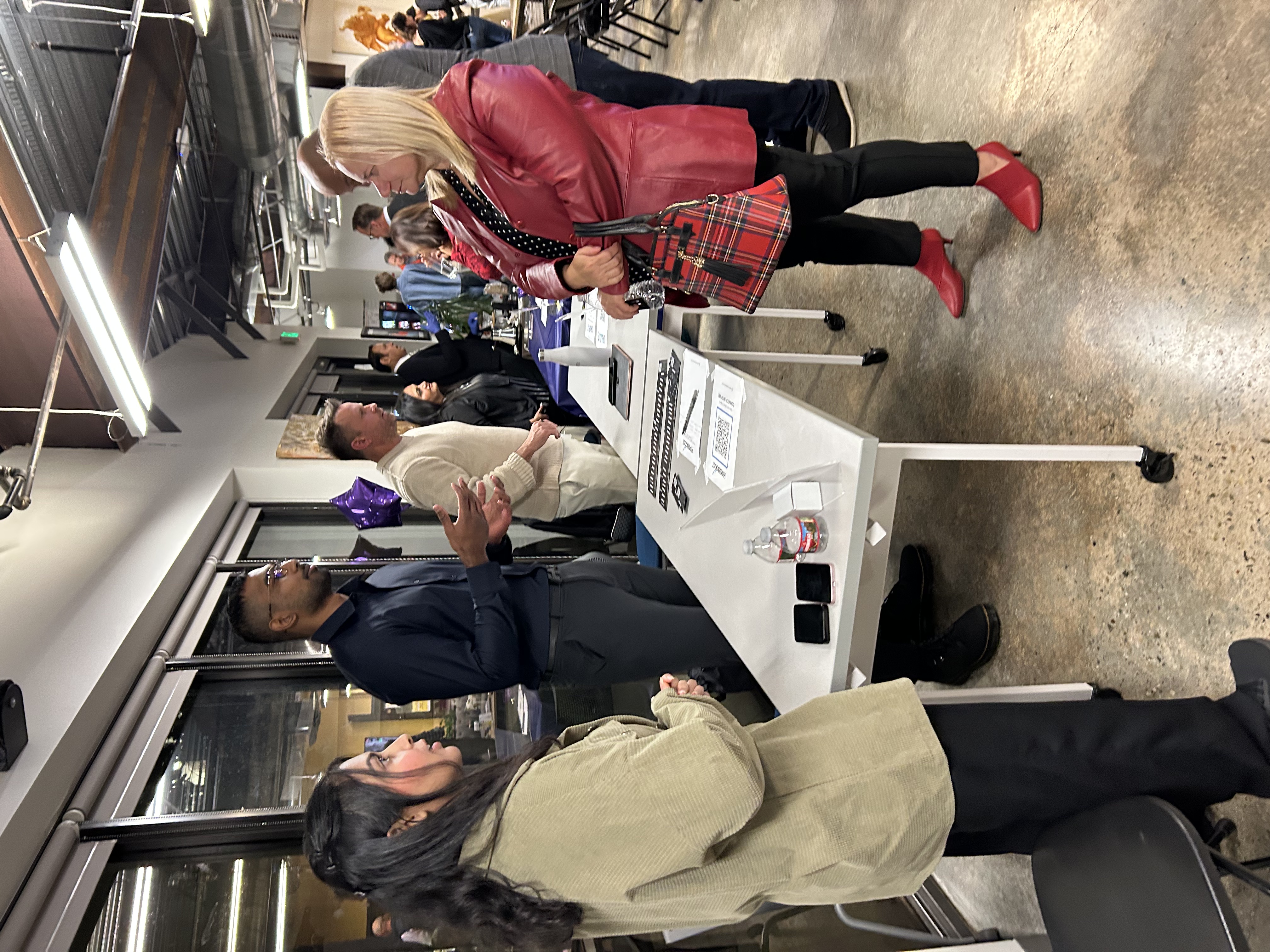
Demo Day gives that preparation a public deadline. At the June 2022 IdeaToDo event, Hub101 reported about 45 people attending in person and another 50 online. Founders could demonstrate products and meet the community across both settings. The hybrid format also made participation possible for people who could not be in the building that evening.
A January 2023 showcase brought Ecosys Health360, Librico, MMA BetClub, and Xiana before about 50 community members. The university’s account describes discussion as well as pitches. For a prospective participant, that is a useful detail to investigate: who will be listening, what questions can they answer, and how much time is there to talk after the presentation? An audience becomes more useful when a founder knows what help to ask it for.
The students help run the experiment
Hub101 calls its student interns Doers. Their work includes social content, marketing, blogs, and event organization. They help operate the place where other entrepreneurs are working, which gives the university relationship an everyday expression. Someone has to organize the gathering, communicate the invitation, and make the event happen.
In a testimonial on Hub101’s site, former Doer Lorena Montoya Cáceres says she secured a project-management job at Steady Solutions before completing her MBA and later became operations manager. It is one person’s account, but it makes the employment connection concrete. An introduction can become a job, as well as a customer lead or a mentor relationship.
The connected Dorfman Incubator Grants program also ties startup support to education. It offers non-dilutive funding and expects participation involving Cal Lutheran students or alumni and shared lessons. It is a separate application process. Renting a desk does not buy a grant, and grant money received by a participant is not revenue raised by Hub101.
“We want them to grow and then outgrow the space.”
Gerhard Apfelthaler • 2019
Count the conversations. Watch what follows.
Hub101’s 2025 recap reports more than 290 direct mentorship meetings, over 400 entrepreneurs supported, 12 WAM cycles, and ten founders in IdeaToDo. It also reports more than 1,040 event attendances. These are self-reported measures of participation, useful for understanding the work’s scale; they do not establish how many businesses became profitable.
The events span subjects and partners. The recap describes angel-investing and biotechnology gatherings with Tech Coast Angels Venture Group: Los Angeles, with BioScience Alliance also involved in the biotech panel. A sustainable-fashion festival and Global Game Jam brought other kinds of builders into the mix.
That gives Hub101 a particular place in the market: a regional workspace with university teaching, student participation, and repeated opportunities to ask for help. Its value depends on whether a founder uses those opportunities. Someone who only needs a quiet desk can compare office features. Someone with an unresolved business question has another reason to visit - and a reason to bring the question along.