Himanshu Anand built a business around a curious possibility: an investment bank could become a customer instead of a competitor. For someone who had already worked inside investment banking, that was a consequential change of position. The banker’s familiar task was to help a transaction happen. The entrepreneur’s opportunity was to help the people doing that task. Anplify, the company he founded in 2014, put research, financial analysis and execution support at the center of that relationship.
There is a certain appeal to the deal announcement. Names appear together. An acquisition has a price. A company has raised capital. The announcement is compact because the work behind it rarely is. Before anyone can celebrate, someone must understand the business, examine its numbers and explain why the proposed transaction makes sense. Anand chose to build a company that could take on that work. The handshake gets the photograph; the spreadsheet has usually done a longer shift.
Before the pitch book, a chemical engineering degree
His route into finance began elsewhere. Anand studied chemical engineering at Thapar Institute of Engineering and Technology from 1997 to 2001. His early experience included internships at National Fertilizers Limited and Unilever, followed by a senior engineering role at Henkel. He then moved to Infosys as an analyst. Manufacturing, technology and finance appear in his career as actual workplaces, rather than as sectors collected for a presentation.
An MBA in finance at XLRI Jamshedpur followed, completed in 2007. He went on to Meghraj Capital as a senior associate, with responsibilities spanning deal sourcing, execution, closure and business development. At SMC Capitals, he became an associate vice president. By the time he started Anplify, he had worked on both the analytical and commercial sides of transactions. His career had moved from engineering through information technology into corporate finance.
- 1997-2001Chemical engineering
Thapar - 2001-2006Henkel, then Infosys
Engineering & technology - 2006-2007MBA in finance
XLRI Jamshedpur - 2007-2014Meghraj & SMC
Investment banking - 2014Anplify
Founder & CEO
The sequence is revealing without requiring a heroic origin story. A financial adviser must be able to discuss what a company does as well as what it earns. Engineering and technology sit alongside banking in Anand’s professional history. They give his biography a wider frame than a succession of finance titles. The company he would eventually build also crosses boundaries, serving businesses themselves and the advisers working with them.
The analyst his colleagues remembered
Rajeev Kalambi, who worked with Anand in investment banking, described him as “at heart an analyst.” His recommendation singled out Anand’s ability to sift through data and identify value in a business. It also remembered discussions and debates about business models. That is a more particular description than a list of completed transactions: a colleague recalling the way someone helped him understand a company.
Another colleague, Sonal Shah, called him “hardworking, methodical and detail oriented.” These are assessments from people who worked with him. They fit the kind of work that Anplify sells, where an error in an assumption can travel through a model with impressive efficiency. A polished presentation can make a weak argument look comfortable. Good analysis makes the argument earn its chair.
Anand’s subsequent move into entrepreneurship prompted Kalambi to connect the new business with those analytical strengths. The continuity matters. Founding Anplify changed Anand’s role and responsibilities, but the opportunity still involved understanding businesses and helping others evaluate them. A founder can change the commercial setting of his expertise without abandoning the expertise itself. In this case, a colleague explicitly recognized that connection.
“We support investment banks by providing research and analysis”
Himanshu Anand, in an interview on Anplify’s approach
Move one seat over, change the customer
Anplify Services Private Limited was incorporated in July 2014. Anand’s founder and CEO role dates from August that year. His explanation of the business model emphasized neutrality: providing analysis could turn investment banks into clients. The company could assist with the research and execution while the bank concentrated on its own customer relationships and transactions. This was a deliberate choice about where to participate in the work.
In an early interview, Anand described an ambition to invest in technology for investment businesses. The account also described a learning fund for knowledge creation and sharing. Those details belong to the company’s early development. They show that its plans extended beyond supplying another pair of hands: the founding business was thinking about how work would be improved, how knowledge would circulate and how technology might support delivery.
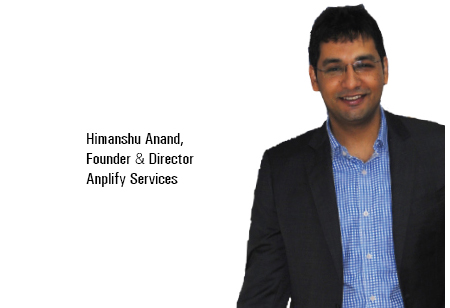
There is a useful business question inside that choice. When several organizations contribute to a transaction, which part should each own? Anplify’s place is defined by analytical work and support. It can serve a company seeking capital or a professional adviser handling a transaction. The potential customer is therefore identified by the work required, rather than by a single position in the investment ecosystem.
The work before the handshake
By June 2016, a company post under Anand’s name described transaction support for startups, corporations and investment banks. It presented a team of bankers and business analysts working across the transaction process. The wording placed execution squarely in the company’s offer. Helping a client prepare for a transaction was part of the business, alongside assisting as that transaction progressed.
Today, Anplify’s service range includes research, financial modeling, valuation and deal materials. A model organizes assumptions about a business. A valuation examines what those assumptions imply for its worth. A presentation brings the argument into a form another person can interrogate. These are connected tasks. The attractiveness of a slide cannot settle a question that remains unresolved in the figures underneath it.
One service is a confidential information memorandum, a document setting out a business for potential investors or buyers. Another is support for identifying prospective investors and counterparties. The company also offers financial due diligence for acquisitions. Each addresses a different question: what is this business, who might be interested, and what should a buyer examine? Anand’s company has organized services around those practical questions.
The customer’s need may also be temporary. Anplify offers dedicated analysts on monthly, quarterly or annual engagements. That gives a client a way to add analytical capacity for a period of work. The commercial detail is significant: a firm may need recurring support, an extra analyst or help with a particular assignment. Anplify’s offer allows several shapes of relationship within the same business.
Two countries, several kinds of customer
Anand is based in the Greater Tampa Bay Area. Anplify lists offices in Florida and New Delhi, and its operating model includes teams in India and the United States. Geography enters the offer through the possibility of using time differences to support delivery. A team extension must still produce work a client can use. The clock provides an opportunity; the quality of the handoff decides its value.
The range of customers gives the business another kind of breadth. Investment banks, private equity funds, research houses, startups and corporations appear among Anplify’s client groups. A founder preparing for a capital raise and an adviser supporting an acquisition can require related analytical skills, even when their immediate objectives differ. Serving both requires attention to the purpose of the assignment, rather than simply delivering the same document twice.
Client testimonials illustrate that distinction. An Australian online gifting business praised the team for listening to its concept and filling gaps in its financial understanding. A Singapore SaaS provider described help with models, financial analysis and pitch presentations, including testing assumptions. A UK advisory firm emphasized communication and deadlines. These are company-level testimonials, but their subjects are concrete: understanding, scrutiny and dependable delivery.
A company built to keep learning
Anplify’s recruitment language gives learning a practical place in the business. It describes early responsibility, interaction with clients, online training, professional events and work toward certifications. Its co-founder, Aditya Ahluwalia, leads strategy and business development. The company thus combines Anand’s founder and CEO role with a separate leadership responsibility for developing the business. It is a working organization with different specialties.
Its published hiring priorities include initiative, curiosity, customer focus and ethics. These are stated expectations, rather than proof of how every assignment unfolds. Yet they explain what the company asks of people joining it. A research business depends on analysts who can question an answer as well as produce one. A junior employee’s useful question may arrive without an impressive title attached.
Technology is also part of the company’s ongoing subject matter. In 2019, Anplify published Sakshi More’s article on artificial intelligence in financial services, examining automation and decision making. The distinction in authorship matters: this was a team publication. It sits within a broader business concerned with analysis and execution, the same areas where changing tools can alter how professionals spend their time.
There is also a chessboard
Away from work, Anand enjoys cycling, swimming, travel and chess. The list supplies a welcome human detail to a career described mostly through institutions and assignments. Chess belongs here as an interest, without being made to explain his entire personality. Plenty of people enjoy a chessboard without approaching every meeting as a contest between black and white pieces.
His professional story has a more specific organizing idea. He moved through engineering, technology and banking, then founded a company that helps businesses and advisers carry out financial work. The change made room for a different customer relationship: people operating in his former industry could buy his team’s support. Before a deal becomes a headline, there is a business to understand and an argument to test. Anand made that interval his business.