Skip McGee had found a way to make the working day longer without moving the hands of the clock. In Houston, while building his new firm in 2015, he was fitting in two or three breakfasts each morning. An energy banker can buy new office furniture. He cannot order thirty years of acquaintances from the same catalogue. McGee was returning to the people he knew, one appointment at a time.
He had recently been CEO of Barclays in the Americas. Now he and Christopher Winchenbaugh were starting Intrepid Financial Partners, an energy merchant bank with offices in Houston and New York. The change invites a familiar interpretation: the senior executive who escapes the machinery of a large institution to go back to work he enjoys. Eleven years later, Intrepid's advisory business has become part of Houlihan Lokey. That second move makes the first more interesting.
Read the two decisions together and a question emerges. How much institution does a banker need around him? McGee's career offers several answers, each belonging to a different moment. The consistent thread is energy, and the work of finding money, buyers, partners and a workable next step for the companies inside it.
A Houston education, with two detours
McGee grew up in Houston, then took an academic route that looks unusually practical for someone whose working life would be spent in finance. He graduated from Princeton in 1981 with a civil engineering degree, summa cum laude. In 1984 he earned a law degree with honors from the University of Texas. Engineering asks whether a structure can bear its load. Law asks who is responsible when it cannot. The combination makes an appealing lens through which to consider his later career, though a degree alone explains nobody's decisions.
After working at First Boston and Wasserstein Perella, he joined Lehman Brothers in 1993. Energy and natural resources became his territory. In 2002, he moved into the leadership of Lehman's global investment banking division, a role he held until 2008. A Houston specialty had become a job with a much wider field of responsibility.
His transaction history reaches across that field. It includes work on Exxon Mobil's $41 billion acquisition of XTO Energy and Verizon's $135 billion purchase of the remaining Verizon Wireless stake from Vodafone. Those are transaction values, rather than sums McGee personally earned or invested. They describe the scale of the questions on the table: ownership, financing, negotiation and the future shape of an enterprise.
- 1993Joins Lehman Brothers.
- 2002Leads global investment banking.
- 2015Co-founds Intrepid.
- 2026Intrepid's advisory team joins Houlihan Lokey.
When the institution gives way
Lehman filed for bankruptcy in September 2008. McGee was a senior executive and executive committee member at the firm when it failed. Any account of his rise has to carry that fact along with the deals and promotions. A banking career can accumulate achievements inside an institution whose ending changes the meaning of everything that came before.
He joined Barclays that September, helping negotiate the transfer of roughly 10,000 former Lehman employees. The work had shifted from advising companies on their combinations to negotiating a transition for the business around him. It is an awkward sort of professional symmetry: the transaction becomes your own workplace, and the people affected are your colleagues.
At Barclays, his responsibilities eventually extended beyond investment banking to corporate banking, credit cards and wealth and investment management in the Americas. He became the region's CEO in 2013 and left in 2014. This was a substantial distance from a specialist's original patch. By the time he launched Intrepid, he had experience both building an energy franchise and overseeing a much broader financial operation.
A name chosen at home
Intrepid's founding announcement arrived on May 18, 2015. McGee and Winchenbaugh paired advisory work with investing: the firm would advise on mergers and restructurings, make debt and equity investments, and invest its own capital alongside clients. Their starting territory was American natural resources and power.
Their timing was part of the proposition. Changing technologies and geopolitical conditions were altering energy supply and prices. In that environment, a company might need financing, a buyer, or a different arrangement with its lenders. The same industry knowledge could be useful in each conversation. The founders were assembling a business around those overlapping needs.
Winchenbaugh brought experience as Barclays Americas' chief operating officer and in debt capital markets. The partnership put two former colleagues back together with a narrower brief. A specialist firm still needs organization; even a deliberately smaller bank requires someone to make the parts work together.
Choosing the name involved McGee's wife and three children. They settled on Intrepid after the hunt for an available name exhausted the obvious candidates. The grand business plan had a domestic committee. There is something reassuringly ordinary about that: before clients encounter the letterhead, somebody at home has to decide whether it sounds ridiculous.
“I have two or three breakfasts every morning.”
Skip McGee, on recruiting in Houston in 2015
The breakfast remark supplies a better picture of the launch than a conventional ribbon cutting. A new firm begins with calls returned, meetings accepted and people willing to hear the proposal. McGee could change his employer; his prior relationships came into the room with him. Breakfast, apparently, was a renewable resource.
Independence had room for partners
By October 2018, Intrepid's advisory business had advised on more than $70 billion of announced transactions. That month it formed an alliance with Rothschild & Co to offer restructuring and debt advice to energy companies and investors in the United States and Canada. The arrangement joined Intrepid's sector relationships with another firm's international network and restructuring experience.
That is a useful complication in the story of a banker going independent. Independence can involve choosing who joins you on an assignment. A specialist can keep its focus while reaching for expertise elsewhere. For clients, the practical question is whether the people assembled can handle the problem in front of them.
Restructuring also deserves a place beside the acquisition headlines. It concerns what happens when obligations and available money no longer fit comfortably together. A buyer may be part of the answer. So may fresh capital or negotiations with creditors. The work can be less photogenic than a deal announcement, but it belongs to the same professional world.
Intrepid later expanded its alliance with Cowen through a dedicated energy innovation and transition partnership in 2020. The firm's field was changing, and its partnerships were following. Energy expertise could serve established producers while also helping companies considering new technologies and different uses for capital.
The oil patch, wired for measurement
Energy transition entered McGee's story through specific businesses. In February 2022, funds managed by Intrepid Investment Management made a strategic investment in ECOTEC, a company providing emissions detection instruments and software. Its products served natural gas, biogas and other markets, with expansion into oil and gas.
McGee said Intrepid had known members of ECOTEC's management for almost two decades. That detail connects the newer investment territory to the older relationship business. A technology investment may depend on unfamiliar equipment; the people building it can be familiar. He described the partnership in terms of helping construct a lower-carbon future.
In October 2024, Intrepid participated as an existing investor in Andium's $21.7 million Series B financing, led by Aramco Ventures. Andium combines software with sensors and cameras for remote industrial monitoring, including detecting methane leaks and equipment problems. McGee's public comments placed the investment within Intrepid's venture fund strategy.
These examples give the phrase energy transition something tangible to stand on. There are instruments to manufacture, software to develop and operations to monitor. Financing helps companies attempt that work; it does not guarantee the outcome. The connection to McGee's earlier career lies in knowing an industry's participants and bringing capital to a particular business proposition.
The other Houston rooms
Houston appears in McGee's public life beyond energy transactions. He and Susie were honorees at the Texas Exes Houston Chapter's April 2024 scholarship gala at River Oaks Country Club. The event drew 300 supporters and raised $325,000. Those are the evening's results, shared across an organization and its guests, rather than a personal donation attributed to the couple.
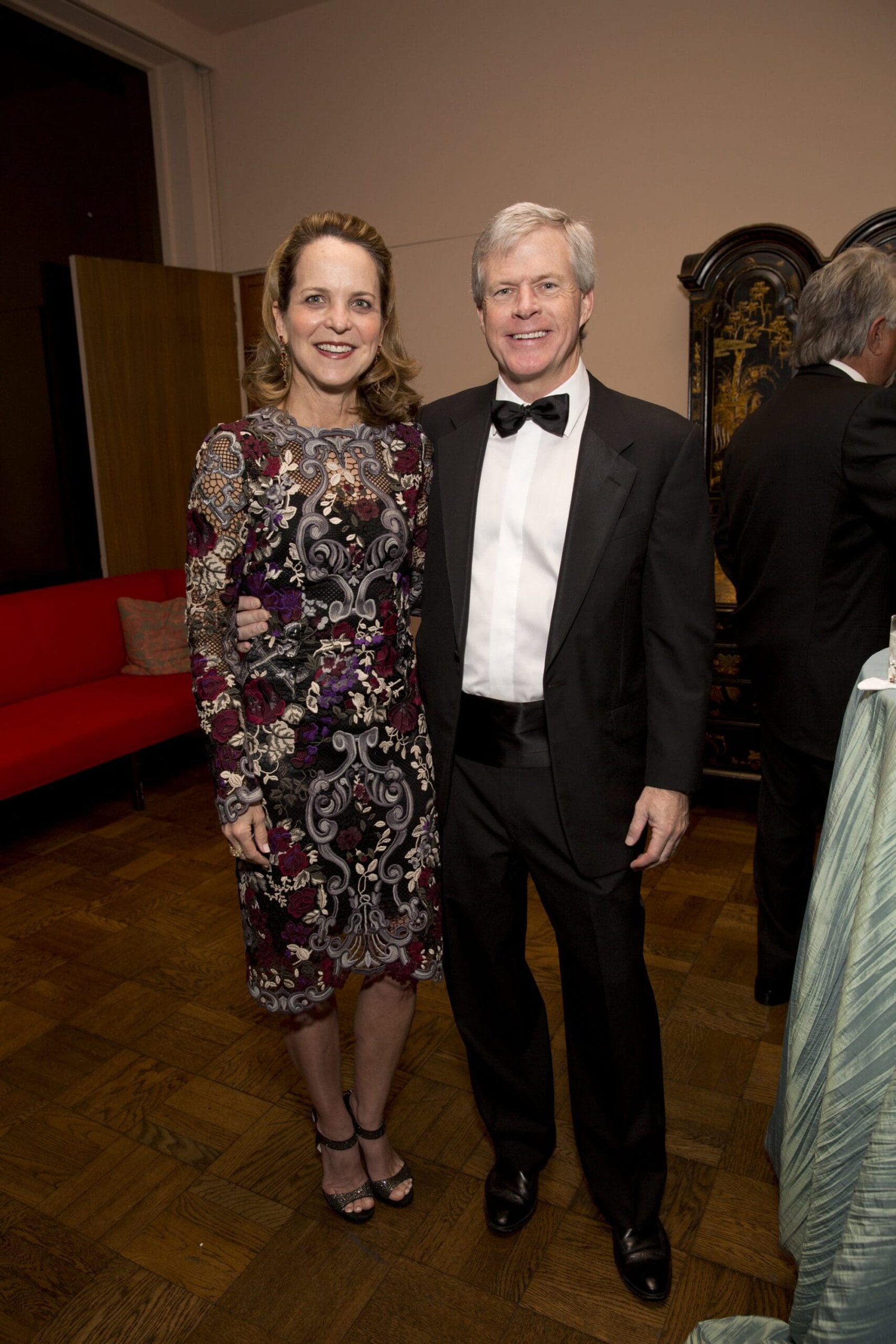
The couple have also participated in Houston's arts circles, including Rienzi Society gatherings at the Museum of Fine Arts, Houston's house museum. They were among the chairs of the society's 2014 dinner. Scholarship supporters and museum patrons form a different set of relationships from bankers and energy executives, although in a city like Houston the rooms can overlap.
McGee's university connections have continued too. His institutional biography lists advisory roles with the University of Texas's McCombs School of Business and Princeton's Bendheim Center for Finance. Cottage Club lists him on its graduate board. The student who went north for engineering and returned to Texas for law has kept connections to both places.
Eleven years later, another combination
Houlihan Lokey announced its agreement to acquire Intrepid Financial Partners in June 2026. By then, Intrepid had advised on more than 120 energy transactions totaling over $215 billion. McGee would join as a managing director and global chairman of Oil & Gas; Winchenbaugh would become a managing director and global co-head alongside J.P. Hanson.
Value of energy transactions advised on by Intrepid since its founding, reported at the June 2026 acquisition announcement.
The acquisition closed in September. Houlihan Lokey's combined global Oil & Gas team numbered more than 70 financial professionals. Intrepid Investment Management was excluded from the transaction and would continue separately. The distinction matters: the advisory business found a new institutional home while the investing business retained its own.
McGee explained the combination through the additional services and reach it would make available to clients. That gives his career's latest turn a recognizable logic. A smaller firm had allowed him to concentrate on energy and client work. Joining a larger advisory organization could widen what that team offered without asking it to abandon its field.
There is no tidy finish here. There is a banker making another decision about where his work belongs, after years spent helping other people make comparable decisions. Intrepid began with a family naming exercise and a crowded breakfast schedule. Its next chapter places that specialist business inside a larger one. McGee's career keeps returning to the same practical question: who should be at the table when the next problem arrives?