financial-modeling
(20)
Gilmartin Group and the business of being believed
A healthcare breakthrough needs an investor who understands it. Gilmartin Group works on the awkward space between a company’s evidence, its promises, and the people writing the checks.

Tegus Put Wall Street’s Homework in One Search Box
Tegus turned the expert call from an expensive one-off into searchable institutional memory. Now folded into AlphaSense, its real trick is making qualitative gossip and quantitative homework sit at the same desk.

Causal Took the Spreadsheet Apart and Kept the Good Bits
Most finance software asks you to love the spreadsheet or leave it. Causal chose the more interesting option: keep the grid, retire the cell-address archaeology, and let the whole company touch the forecast without breaking it.

Daloopa Makes the Spreadsheet Sweat Less
The dullest hour in equity research is also the easiest to get wrong. Daloopa wants to give it back, one source-linked cell at a time.

The Campus Club That Built a Private-Market Apprenticeship
Georgetown students learn private equity and venture capital by doing the work - then trade that trained capacity for access, feedback and a closer look at how private markets actually operate.
Keye
Keye is a New York-based AI company (YC F24) building a due diligence platform exclusively for private equity. It converts raw deal files into structured, audit-ready analyses, using what the company calls deterministic AI - natural-language understanding paired with code-based execution - so that every number ties back to a source, formula, or quote. Funds representing more than $1.4T in AUM use it to cut days off each deal.

o11
o11 is a Y Combinator (W26) startup building AI agents that live inside the enterprise apps finance teams already use - Excel, PowerPoint, Word, and Google Workspace. Rather than answering questions in a sidebar, its agents do the work: generating three-statement models, investment committee memos, CIMs, buyer lists, and decks from natural-language prompts. Its customers include investment banks, private equity firms, hedge funds, and asset managers.

Pivot (YC S22)
Pivot (YC S22) is a San Francisco startup building an AI FP&A analyst - an 'AI workforce' that helps founders and finance teams visualize, analyze, and model company financial data faster than Excel. Founded by Raimie Tang and backed by Y Combinator's Summer 2022 batch, Pivot turns raw transaction-level data into reports and dashboards in minutes, automating the grunt work of financial planning and analysis for early-stage companies trying to scale.
YC Partners
YC Partners is a Frederick, Maryland based fractional CFO firm that embeds licensed CPAs and finance executives into small and mid-market companies, typically in the $10M-$50M revenue range. Founded and led by CPA Nicole Sithithavorn, the firm delivers strategic financial leadership, GAAP reporting, forecasting, and M&A support on month-to-month terms, positioned as roughly 80% of the value of a full-time CFO at 20-40% of the cost.
Aleph
Aleph is an AI-native financial planning and analysis (FP&A) platform that lets finance teams keep working in the spreadsheets they already know while syncing live data from 150+ source systems. Founded in 2020 by Albert Gozzi and Santiago Perez De Rosso and part of Y Combinator's Summer 2021 batch, the New York company pairs a web-based data platform with Excel and Google Sheets add-ins and AI that automates data cleaning, variance analysis, and reporting. Backed by Khosla Ventures, Bain Capital Ventures, Picus Capital, and Y Combinator, Aleph serves customers including Webflow, Turo, Notion, Zapier, Harvey, and Chess.com.

Straterix
Straterix is a New Jersey-based fintech that builds AI-driven scenario generation and stress-testing software for banks, insurers, pension funds, corporates and regulators. Founded in 2015 by Alla Gil, Joseph Dafni and Dan Galai, its platform uses machine learning and data mining to generate thousands of forward-looking economic scenarios, letting institutions run reverse stress tests, optimize capital and liquidity, and turn regulatory compliance exercises into strategic planning tools.

The Backflip Group
The Backflip Group is a boutique strategy consulting firm in New York that helps lean technology teams turn great products into scalable businesses. Founded by Ceylan Conger and Madeleine Ormond, both former in-house operators and consultants at companies including Meta, Etsy and Spotify, the firm specializes in bridging the gap between strategy and execution across SaaS, eCommerce, AI, digital media and D2C. Services span go-to-market strategy, pricing and packaging, upmarket expansion, new product incubation, financial modeling and fundraising materials, delivered by a small core team backed by a network of specialist experts.

Madeleine Ormond
Madeleine Ormond is a New York based business strategist and co-founder of The Backflip Group, a boutique consulting firm built to move companies from strategy to reality. She spent more than a decade working inside tech startups and larger technology companies before co-founding the firm, where she leads on product strategy, financial modeling, go-to-market planning, and the kind of hands-on execution that turns a plan into a working operation. Her work centers on helping growing companies test ideas at low risk, sharpen their thinking, and build foundations that scale.

Drivetrain
Drivetrain is an AI-native financial planning and analysis (FP&A) platform that helps CFOs and finance teams at mid-market and enterprise companies plan, forecast, and report with a spreadsheet-like interface. Founded in 2021 by former Google and Elevation Capital operators, it connects to 800+ business systems (ERP, CRM, HRIS, billing, data warehouses) and uses its Drive AI suite - model generation, an AI analyst, anomaly detection, and natural-language data transforms - to turn raw data into live financial models. In 2025 it shipped the first Model Context Protocol (MCP) server for finance, letting teams query permission-controlled financial data through assistants like Claude and ChatGPT.

Rogo
Rogo is a generative AI platform purpose-built for finance. Founded in 2021 by three former junior bankers, it trains finance-specific models and deploys autonomous AI agents - including its flagship agent Felix - to handle the slow, repetitive work of investment banking, private equity, and hedge funds: searching filings, building comparable-company analyses, drafting investment memos, generating Excel models, and running data-room diligence. More than 35,000 finance professionals at 250+ institutions use it, and a $160M Series D in April 2026 valued the company at roughly $2 billion.
Farsight
Farsight is a New York-based AI company building a full-stack execution engine for finance. It automates the time-consuming, high-stakes workflows that fill the days of investment bankers, private equity associates, hedge fund analysts and wealth managers - pitch decks, financial models, buyer lists, investment memos and valuation analysis - directly inside the tools teams already use like Excel and PowerPoint, tailored to each firm's brand, style guide, compliance rules and security standards. Founded in 2022 by three MIT graduates, Farsight raised a $16M Series A led by SignalFire in June 2025.
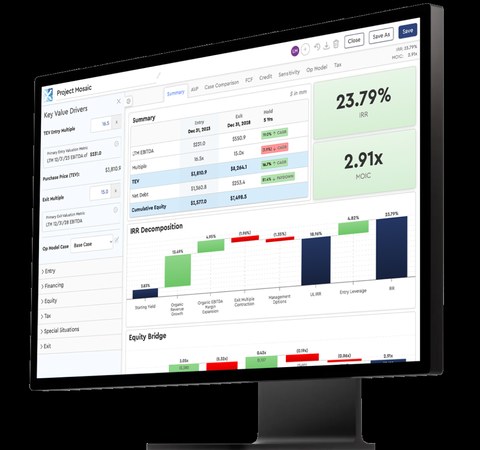
Mosaic
Mosaic is an AI-driven operating system for deal makers in private markets. The New York-based company automates the financial modeling work that investment professionals traditionally grind out in Excel - leveraged buyouts, discounted cash flows, scenario analysis - turning a process that once took a week into roughly ten minutes. Its platform pairs rules-based calculation engines with generative AI tools like Mosaic Vision and Mosaic Autopilot to read deal documents and draft accurate, downloadable Excel models. Backed by an $18M Series A led by Radical Ventures, Mosaic counts five of the top ten global private equity firms among its customers.

Ian Gutwinski
Ian Gutwinski is the founder and CEO of Mosaic, a New York company rebuilding private-equity deal modeling for the AI era. A former Onex Partners principal turned self-taught coder, he started the product as an MIT class project during his Harvard MBA and now counts five of the world's top ten PE firms among its users. In April 2026 Mosaic raised an $18M Series A led by Radical Ventures to turn deal math into software so investors can spend less time linking cells and more time thinking.
Vanessa Kruze
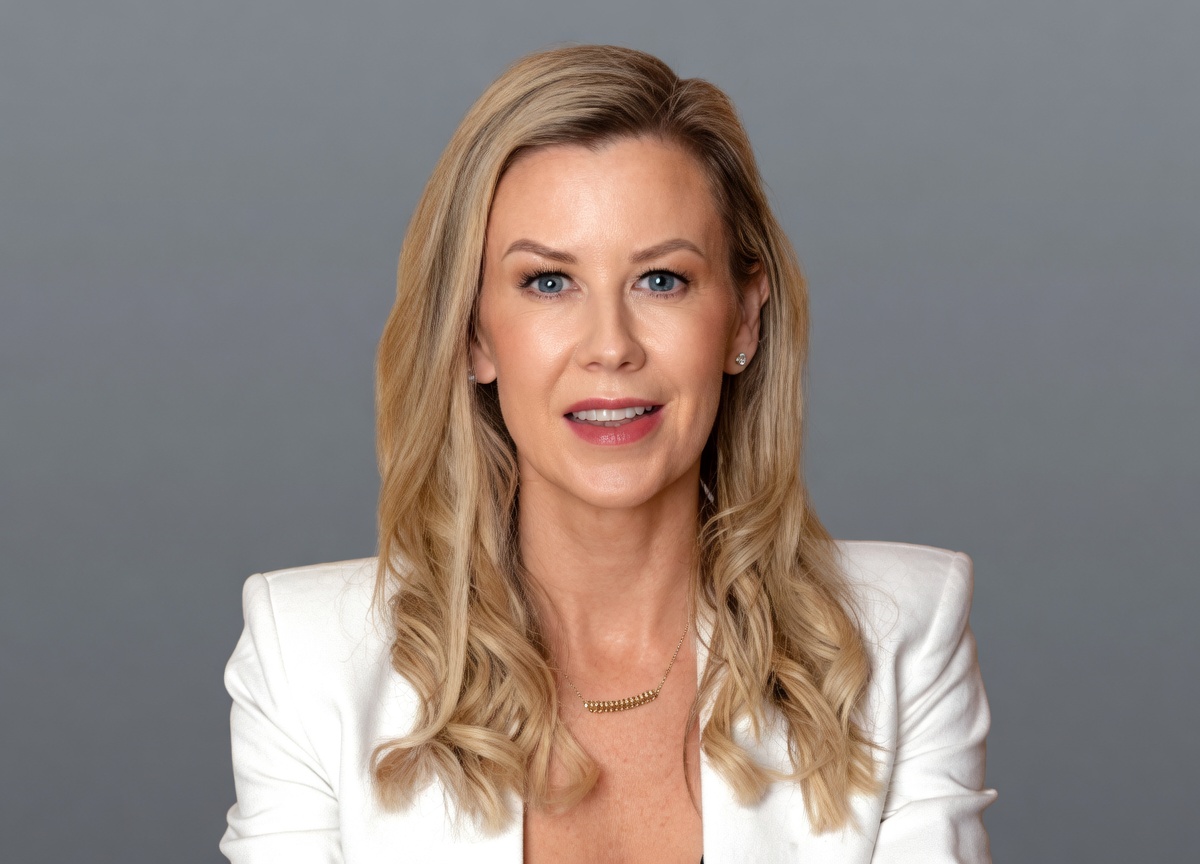
Vanessa Kruze is the founder and CEO of Kruze Consulting, a San Francisco-based accounting and finance firm exclusively serving venture-capital-backed startups. A CPA and Deloitte Tax alum, she launched Kruze in 2012 after working as a startup controller and spotting a gap in the market for specialized, tech-forward financial services for founders. Today, the firm has served 800+ startups that have collectively raised over $15 billion in VC funding, earned seven consecutive Inc 5000 honors, and is known in Silicon Valley as the go-to accounting partner for early- and growth-stage companies.

Isfandiyar Shaheen
Isfandiyar 'Asfi' Shaheen is a serial entrepreneur and investment professional known for his work in global connectivity and financial modeling. After a successful career in Pakistan's industrial sector, he served as the first Entrepreneur in Residence at Facebook Connectivity, where he worked on innovative methods to deploy fiber optics. He is currently focused on the intersection of AI and financial analysis, building tools to empower modelers through code.