Founder & CEO / Mosaic
Ian Gutwinski
A senior managing director once asked him how big a deal would be at exit. He had no idea. So he built the software that would always know.
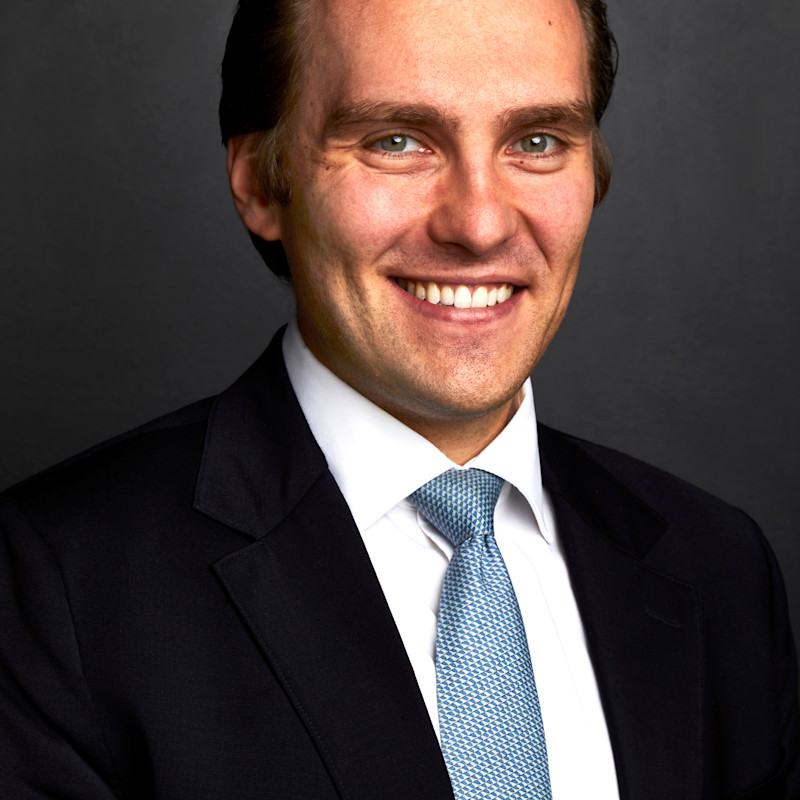
The associate who decided the spreadsheet had to go.
A senior managing director once asked him how big a deal would be at exit. He had no idea. So he built the software that would always know.
In a New York office where the smartest money on earth still wrestles with linked cells, Ian Gutwinski runs the company trying to end the wrestling match. Mosaic, his deal-modeling platform, was used in 2025 by five of the top ten global private equity firms. In April 2026 it raised an $18 million Series A led by Radical Ventures. The pitch fits on a napkin: stop rebuilding the same Excel model from scratch on every deal.
He says it more plainly than the deck does. "We built Mosaic so investors and bankers can spend less time linking and more time thinking." That is the whole thesis. Private equity hires expensive, analytical people and then has them spend their nights auditing formulas. Gutwinski watched the misallocation up close, did it himself for six years, and decided it was a software problem.
What makes the story unusual is who is telling it. This is not a career engineer who read about finance. It is a CPA with two accounting degrees who taught himself to code, then wrote the first version of the product by hand. He is also a licensed private pilot, which is a useful tell. People who fly small planes tend to trust checklists, deterministic systems, and the idea that human judgment works best when the mechanical parts are handled by something that does not get tired.
One of the senior managing directors was like, "Well, how big is this business at exit, Ian?" And I had no idea.
// Ian Gutwinski, on the moment that became a companyThe origin is a small humiliation. As a young associate at Onex Partners, Gutwinski had ground through an Excel model of a business with six wildly different segments. At the end, a senior managing director asked the one question that mattered - how big is this at exit - and the answer was not there. Not because he was lazy. Because the time had gone into the plumbing, not the thinking.
That is the gap Mosaic was built to close. Early in his career, he has said, the proportion of time spent reasoning about key assumptions versus auditing spreadsheet formulas was badly misaligned with where investors actually create value. The fix was not a better template. It was a different category of tool - one that treats deal math as software, not as a fresh act of manual labor every time.
Mosaic did not start as a startup. It started as a class project. While earning his MBA at Harvard Business School from 2019 to 2021, Gutwinski cross-registered at MIT and built the first prototype there. It was a side experiment that happened to answer a question he had been carrying around since his Onex days.
The architecture reflects the builder. Mosaic combines deterministic, rules-based calculations - the kind that do not hallucinate - with AI-driven ingestion and agentic workflows. The deterministic core means the numbers are auditable and replicable. The AI layer means the grunt work of reading documents and populating models stops eating analysts alive. It is a deliberately boring promise wrapped in a flashy one: the math is trustworthy, and getting to it is fast.
Ian and his team possess the mix needed to change embedded behavior unchanged for 50 years. - Troy Pospisil, Mosaic's first investor
The clearest expression of the idea has a name. Mosaic Autopilot runs on an agentic AI the team calls "Mo." A user emails Mo a deal memo - a CIM, the dense confidential document that opens most processes. Mo reads it, applies the firm's own default assumptions, and returns what Mosaic calls an "MD-ready" model in about five minutes. Work that once consumed a weekend now arrives before the coffee cools. Users report finishing analyses up to 20 times faster.
Note what Mo does not do. It does not invent the answer. The judgment - which assumptions, which scenarios, which exit - stays with the human. Mo handles the linking. The investor does the thinking. That division of labor is the entire product philosophy compressed into one workflow.
The customer list reads like a who's-who of the asset class: Warburg Pincus, CVC, Bridgepoint, New Mountain Capital, The Riverside Company, and Ontario Teachers' Pension Plan among them. In 2025 Mosaic also crossed a line most finance software never reaches - it announced a strategic partnership with Evercore, one of the leaders in global M&A advisory, planting a flag in investment banking. Two of the world's most prolific banks were selected to reimagine how they model transactions for clients.
The Series A is fuel for that expansion. The plan is to deepen private equity workflows and push into adjacent markets - investment banking and private credit - where the same Excel pain shows up in different costumes. Radical Ventures led; partner Ryan Shannon and Ontra founder Troy Pospisil joined the board, and John Megrue, vice chairman of Radical and a former Apax chief, came on as a strategic adviser. The company expects to grow past 40 people by the end of 2026.
Mosaic enables expensive talent to focus on the crucial decisions separating good investments from great ones.
// Ryan Shannon, Radical VenturesPlenty of founders sell to private equity. Few have sat in the chair, missed the question, and felt the silence. Gutwinski's six years at Onex are not a line on a resume - they are the reason the product knows where the bodies are buried. He is candid about the founding mistake in a way most CEOs scrub from their narratives, and that candor is the credential. He is not pitching investors a future he imagines. He is fixing a past he lived.
Away from the screen the same temperament shows up. He plays squash and beach volleyball, follows motorsports, and flies planes - pursuits that reward precision, fast reads, and a tolerance for systems that punish sloppiness. It is not a coincidence that he built a company whose whole point is to remove the sloppiness from the most important number in any deal.
Fifty years of unchanged behavior is a long bet to take on. The spreadsheet is not just a tool in finance; it is a culture, a rite of passage, the thing every analyst earns their stripes inside. Gutwinski is wagering that the rite was never the point - that the value was always in the judgment the spreadsheet kept people from. So far, the firms that pay for both are agreeing with him.
Six years in private equity at Onex Partners in New York, rising to Principal - and absorbing the spreadsheet problem firsthand.
Conceives the first Mosaic prototype as a class project while cross-registered at MIT during his Harvard MBA.
Finishes the HBS MBA and commits to building Mosaic full time.
Unveils the next-generation Digital Deal Modeling platform and Mosaic Vision, billed as an AI-powered financial model reader.
Selected by five of the top ten global PE firms; partners with Evercore; releases the agentic deal-modeling agent, Mo.
Raises $18M Series A led by Radical Ventures to expand into investment banking and private credit.
A licensed private pilot. Checklists and deterministic systems are a worldview, not a hobby.
BAcc and MAcc from Waterloo, plus a CPA - then he taught himself to code anyway.
Squash, beach volleyball, and motorsports. Fast reads, hard scoring, no sloppiness.
You start a financial model by emailing an agent called "Mo." It reads the memo, you keep the judgment.