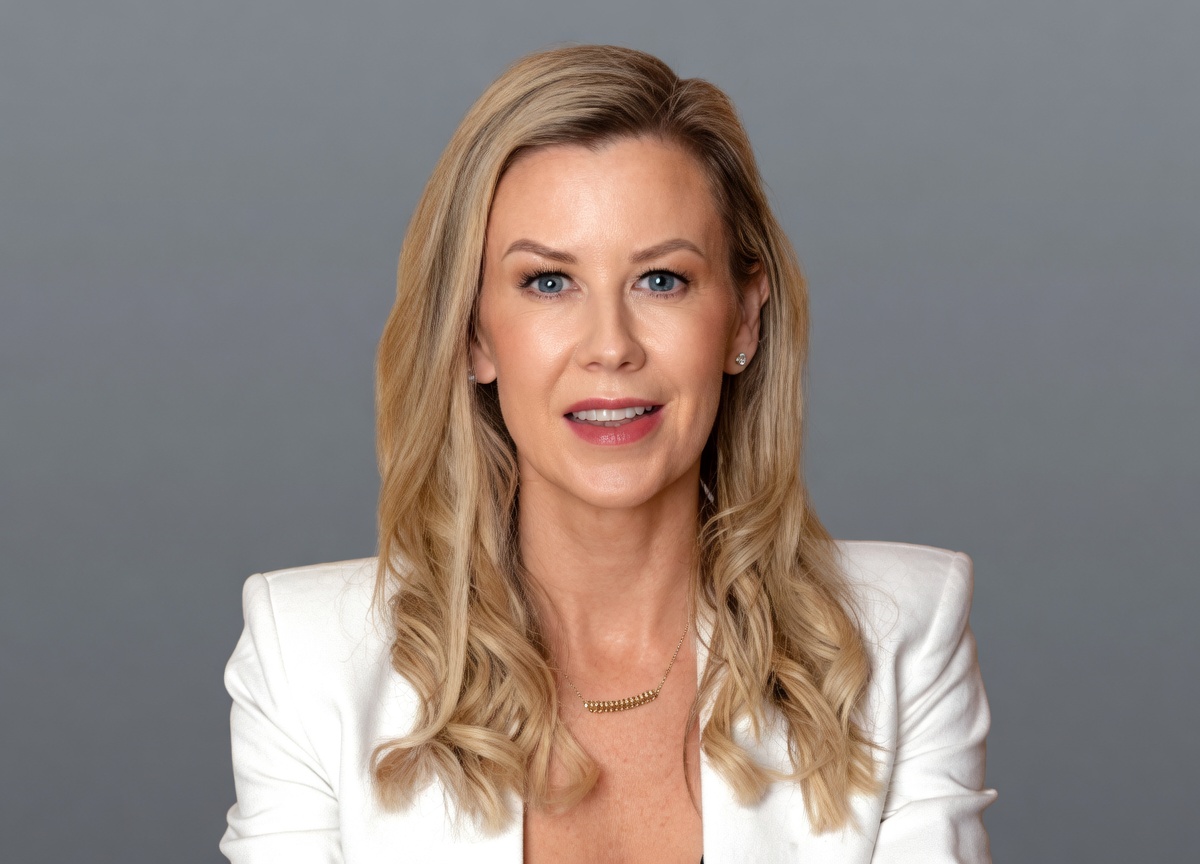
The Accountant Who Ate Silicon Valley's Books for Breakfast
The morning a startup closes its Series A, the first call isn't to the lawyer. It's not to the PR firm. In a growing number of cases, it's to Vanessa Kruze. That's not an accident - it's the result of fourteen years spent building the only accounting firm in America that has bet everything on one type of client: venture-backed startups, full stop.
Right now, somewhere in San Francisco's financial district, a founder is staring at a cap table they don't understand, a Delaware franchise tax bill they didn't see coming, and an R&D tax credit they didn't know they were eligible for. Vanessa Kruze's firm handles all three before lunch.
Kruze Consulting isn't just an accounting firm that happens to like startups. It's a firm built on the premise that the startup ecosystem needs its own financial infrastructure - one that speaks the language of term sheets, understands the pressure of runway calculations, and can hand investor-grade financials to a Series B due diligence team without blinking. That premise, held firm since 2012, is why 800+ companies have passed through Kruze's doors.
"Startups are all we do."- Vanessa Kruze, Founder & CEO, Kruze Consulting
It's a deceptively simple sentence. Most accounting firms will take any paying client. Vanessa decided to do the opposite - and that single decision shaped everything: the team she hired, the technology she adopted, the pricing model she built, and the reputation she earned. Specialization, it turns out, is a growth strategy.
From Deloitte to Downtown SF
Vanessa started her career where serious CPAs start: Deloitte Tax, advising Fortune 500 companies on the kinds of tax structures that require flowcharts to explain. She learned the craft at the highest level - the audit trails, the compliance frameworks, the institutional rigor that makes big-firm accounting what it is.
Then she went the other direction entirely.
She left the Fortune 500 world to join a scrappy startup as its controller. Over two and a half years, she watched that company grow from $5 million to $20 million in revenue, managing a team of 120+ people, navigating every financial complexity a fast-scaling company can throw at you. What she noticed was the gap: founders desperately needed the kind of financial expertise she had, but they couldn't afford a full-time CFO and traditional accounting firms didn't understand their world.
In 2012, she did something about it. She founded Kruze Consulting.
Kruze Consulting serves the venture-backed startup world - and has never taken a dollar of venture funding itself. Vanessa built a $20M+ revenue firm, serving 800+ clients who've collectively raised $15 billion, entirely on her own terms.
The Technology Bet Nobody Else Was Making
In 2012, QuickBooks Online was still a novelty. Most accounting firms ran their practices on desktop software, manual processes, and the kind of file-cabinet-and-fax-machine infrastructure that hadn't changed since the 1990s. Vanessa looked at cloud accounting technology and saw a competitive weapon.
She bet the firm on automation early. Not as a cost-cutting measure - as a service quality measure. By automating the routine work, her team of CPAs could spend their time on the work that actually moved the needle for founders: R&D tax credit analysis, 409A valuations, fundraising-ready financial models, investor reporting. The technology didn't replace the accountants; it freed them to be better ones.
Today, Kruze's tech stack reads like a who's-who of startup finance tools: QuickBooks Online, Gusto, BILL, Expensify, Ramp, Brex, Rippling. The firm doesn't just use these platforms - it helped pioneer their adoption at scale in professional services. In 2016, Expensify named Kruze its Emerging Partner of the Year. By then, Vanessa had already moved on to the next tool on the list.
My team and I pioneered the use of cloud accounting technologies to deliver quality accounting and innovative consulting services using a highly automated process.
Technology has been part of the Kruze DNA from the beginning.
Founder compensation is one of the most sensitive decisions in any startup's budget.
What the Numbers Actually Say
The best evidence for Kruze Consulting's impact isn't revenue or headcount. It's a data point that would make any VC sit up straight: Kruze clients are acquired at an 11.5% rate. The industry average for startups, per Carta data, is 5.2%. That's more than double.
The explanation isn't mystical. When a startup's books are clean, its financial models are investor-grade, its compliance is airtight, and its team has a trusted financial partner who's been through dozens of due diligence processes - that startup is simply more acquirable. Kruze's work shows up on the balance sheet, and eventually, in the exit.
Between 2020 and today, Vanessa's firm helped startups raise more than $500 million in a single twelve-month stretch. The firm diligently tracks this because it matters: clean books don't just survive fundraising rounds, they enable them. Kruze clients walk into Series A meetings with the kind of financial credibility that takes some startups two rounds to develop.
The Frank Sinatra of Accounting
There's a nickname floating around Silicon Valley's financial circles: Vanessa Kruze is "the Frank Sinatra of accounting." It's the kind of label that sounds like a joke until you understand what it means. Sinatra didn't just sing the standards - he owned the room, defined a genre, and made everyone else measure themselves against him. Vanessa does that for startup finance.
She writes for Accounting Today. She publishes in American Banker. She's a top contributor on Quora for startup finance questions, the kind of place where real founders go when their accountant doesn't know what a SAFE note is. She co-runs the Founders & Friends podcast with her husband Scott Orn, who is also Kruze's COO - because apparently running a 130-person firm with your spouse wasn't complicated enough already.
The podcast itself is a window into Kruze's culture. It's not a marketing vehicle. It's a genuine attempt to give founders the financial literacy they need to survive and thrive - the same motivation that drove Vanessa to start the firm in the first place.
The Firm at Scale
By 2025, Kruze Consulting had crossed a threshold that most bootstrapped professional services firms never reach: 130 employees, $20 million in annual revenue, and a client roster covering startups from pre-seed to Series D. The team isn't junior accountants grinding through bank reconciliations. The average Kruze employee has eleven years of experience. Many are former IRS agents, ex-VCs, and former operating executives who chose to join a specialized practice over a traditional firm.
The model works because it's consistent. Kruze doesn't dabble in corporate tax work for a law firm or audit a manufacturing company between startup engagements. Every hour billed, every template built, every process refined - it's all for founders. That institutional focus compounds over time in ways that generalist firms can't replicate.
The Inc 5000 has noticed. Seven consecutive appearances on the list of America's fastest-growing private companies isn't something you stumble into. It requires a business model that actually scales, clients who stay and refer, and leadership that resists the temptation to expand in ways that would dilute the core product. Vanessa has resisted all of it.
Running It Without a Playbook
No one taught Vanessa Kruze how to build a startup accounting firm. There wasn't a playbook in 2012. The cloud accounting software was immature. The startup ecosystem was still recovering from 2008. VC deal flow was a fraction of what it would become. She built the playbook herself - through client work, through iteration, through the kind of deep attention to what founders actually needed versus what accountants traditionally provided.
What she built is, in many ways, a startup that happens to serve startups. Kruze Consulting has the culture, the technology-first mindset, and the founder's scrappiness of the companies it serves. That alignment isn't accidental - it's what makes Vanessa's clients feel understood in a way that a Big Four engagement never quite manages.
She describes her aspiration simply: to be the financial backbone that founders can rely on from their first angel check to their acquisition close. The data suggests she's well on her way. Her clients have collectively raised $15 billion. One to three of them get acquired every month. The number compounds, the reputation spreads, and the referrals come in.
Not bad for someone who started with a spreadsheet, a niche, and a firm conviction that startups deserve better than generic accounting.
Career Arc
4