The most important order in Henson Tsai's first startup never arrived through the app. It landed somewhere far less elegant: WhatsApp. TasteOut, his Hong Kong takeaway platform, gave office workers discounted meals and gave restaurants another tablet to ignore. When an order sat unseen, Tsai's team messaged the restaurant to make sure lunch actually happened. The app was supposed to remove friction. Instead, the manual reminder became the interesting part.
TasteOut closed in 2019. Tsai had left the safety of banking and consulting, hired eight people and put his savings into a market where thin margins and established rivals allowed little room for a newcomer. Six employees were let go. He later recalled walking with his girlfriend and crying as the loss became real. Two software engineers remained. So did a clue: merchants did not want another order terminal. They wanted help managing the customers already contacting them through messages.
The distinction would become SleekFlow. Yet even the better idea began with the wrong customer.
The useful thing hiding inside a bad idea
Tsai did not arrive at entrepreneurship by drifting away from numbers. He studied Mathematics with Statistics for Finance at Imperial College London, graduating in 2017. University gave him quantum physics tutorials, chess-inflected life lessons from professor Jonathan Mestel and long cycling climbs around Box Hill. It also gave him an early taste of building: before graduating, he developed and sold a smart-home device idea for a five-figure sum.
After Imperial came investment banking at HSBC and data-oriented management consulting at EY in Hong Kong. The jobs funded his ambition, but TasteOut tested it. A spreadsheet could explain the delivery market after the damage was done. The restaurants had been explaining it all along.
Tsai and the two engineers first shaped their all-in-one communications product for hotels. The logic sounded tidy: travelers use different messaging apps, so hotels need one place to answer them. At a startup exhibition, the market replied with silence. Hotel inquiries did not materialize. Retail and e-commerce visitors, however, kept appearing. The team changed its leaflets, backdrop and sales target the next day.
The pivot was not a grand retreat. It was office stationery, rewritten overnight.The SleekFlow retail reset
That one-day switch says more about Tsai than any heroic account of stubborn vision. He persists at the level of the problem, not the first answer. His father's example helped set the pattern. The elder Tsai built a laser-engraving business and attended hundreds of trade shows before a merchant, familiar with seeing his printers again and again, placed a 1,000-unit order. Henson took from the story a practical theory of luck: it tends to appear after somebody has kept showing up.
Showing up, however, is not the same as repeating yourself. SleekFlow's team called prospects, listened and revised. Tsai has given different interview counts from different stages of the early work, from more than 500 prospective users to more than 1,000 conversations. The stable fact is the method. During one burst, he and his early colleagues made more than 100 cold calls a day. Four months produced a Flutter prototype. A few months later came a beta, launched in November 2019.
The pivot, stripped of founder folklore
A roadmap with an inbox
The early SleekFlow proposition was easy to recognize in a busy shop: put WhatsApp, Instagram, Facebook Messenger, SMS and other channels into one workspace, then add routing and automated workflows. Customer conversations stopped being scattered private errands and became shared operating data. Sales, support and marketing could see the same person moving through the business.
Tsai described SleekFlow in 2022 as a sales accelerator. The phrase was deliberately commercial. This was not messaging for messaging's sake. Retailers could move from a social-media question to a recommendation, a payment and a later campaign without losing the thread. At the time, he said the system processed more than 20 million messages a month and that 80 percent of its features had originated in customer suggestions.
The percentage belongs to that moment in the company's life, but the posture still travels well. Many founders treat customer requests as interruptions to the roadmap. Tsai treated them as raw material for it. The first Malaysian customer accepted a product missing basic features because the promised value was clear enough to justify waiting. SleekFlow's job was to close the gap before patience expired.
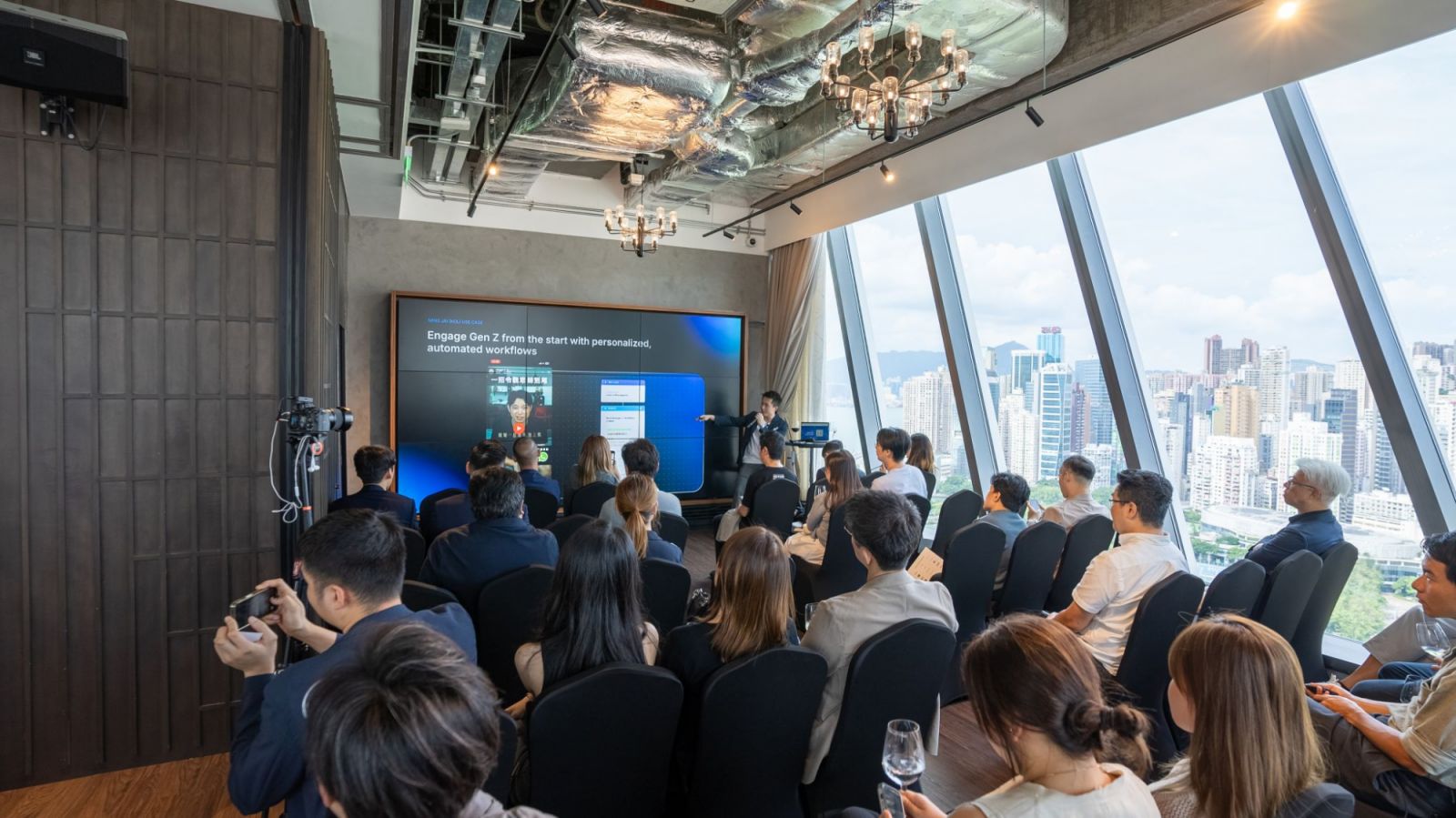
Expansion followed the same local-partner logic. SleekFlow entered Singapore, then Malaysia and Indonesia, while adding teams across several markets. In public accounts Tsai repeatedly returns to people who can build a market rather than merely inherit one. Asnawi Jufrie left Salesforce to lead the Southeast Asian effort from its first meetings through a regional team. In 2026, Tsai said Jufrie would work beside him on expansion in the United States.
“I focus on building a great company rather than fundraising itself.”Henson Tsai on the work behind a round
Capital follows the corrections
The fundraising history arrived in visible steps: institutional backing from Alibaba Hong Kong Entrepreneurs Fund in 2021; an US$8 million Series A led by Tiger Global in 2022; and an US$7 million Series A+ led by Atinum Investment in 2024. In June 2025, SleekFlow announced additional financing that took its reported total to US$23.5 million. The company used the capital to deepen engineering, enter markets and move beyond a shared inbox.
Tsai's view of investors hardened with experience. He looks for people who understand the product and mission, not only a quarter's metrics. He has also said he once spent too much attention on round-specific terms and too little on the durability of the relationship. A valuation belongs to one financing. A partner remains in the room.
Six years of changing the answer
Three people launch SleekFlow's beta after the retail pivot.
Alibaba-backed institutional funding supports Southeast Asian growth.
Tiger Global leads the US$8 million Series A.
Atinum leads a US$7 million Series A+ for product and market expansion.
AgentFlow launches; total announced funding reaches US$23.5 million.
Tsai emphasizes compact AI-native teams and a new US push.
When the inbox starts answering back
SleekFlow now describes itself as an AI suite for revenue-driving conversations. AgentFlow, launched in July 2025, lets businesses create specialized agents that can qualify a lead, retrieve information, recommend products, book an appointment or resolve a request across a customer journey. The old product gathered messages. The new ambition is to let software reason and act inside them, with human review and enterprise controls.
This is a larger technical bet, but it grows from the same merchant problem. A customer does not care which department owns Instagram, whether the order history lives in Shopify or which employee happens to be online. The customer remembers one conversation. SleekFlow wants the business to remember it too.
AI has also altered Tsai's idea of an effective team. Writing in 2026, he argued that engineering leads should remain player-coaches because tools and methods change too fast for managers to direct work they no longer perform. He favors people who can write a brief, build, discover the error and revise by Friday. The mathematics graduate even reaches for a coordination formula: communication paths multiply as a team grows. Small groups with broad ownership can move while larger ones are still arranging the meeting.
There is a neat circle here. Tsai's first company suffered because its polished app asked restaurants to adopt one more isolated workflow. His current company argues that the useful system is the one that crosses boundaries: channels, databases, tasks and human handoffs. The product changed because the founder learned to distrust tidy compartments.
Improvement, with the receipt attached
Tsai is unusually candid about the emotional bill for learning. TasteOut did not become a charming failure until later; at the time it was lost money, layoffs and embarrassment. His advice is therefore less romantic than the usual instruction to take risks. Choose a growing market. Research it. Hire people whose strengths cover your gaps. Move fast enough to collect evidence. Change what yesterday's evidence no longer supports.
Outside work, the habits fit the philosophy. He has talked about cycling as a way to focus under pressure and celebrate small wins. He recommends Atomic Habits. Asked about purpose, he has said he pursues improvement and growth because happiness is harder to define. Even his favorite university memories involve common rooms where mathematics and computer-science students traded ideas beyond the syllabus.
SleekFlow's future is less settled. AI-agent platforms are crowded, the technical standards move weekly and expansion into the United States gives the company another market with its own habits and competitors. Tsai's advantage is not certainty. His career suggests a practiced willingness to find out where he is wrong while there is still time to print new leaflets.
The failed takeaway app supplied the expensive first draft. The unanswered hotel pitch supplied the edit. The retailers supplied the audience. Henson Tsai kept listening, and eventually the conversation became the company.
Keep the conversation going
Follow Tsai's operating notes, explore SleekFlow's product, or watch the short platform introduction.