Hemant Madaan remembers a trip to Goa as a moment when the business proved something to him. His managers ran everything while he was away. For a founder, that is a peculiar sort of triumph: discovering that the organization can get through the day perfectly well without its chief protagonist. Some people collect awards. Here was a more practical pleasure - being able to leave.
He has described that memory while discussing leadership and the continuing importance of people in an age of AI. It is a useful entrance to a career that can otherwise disappear beneath a thicket of initials: IT, IoT, AR, VR, AI. Madaan founded OTS Solutions in 2002 and later founded JumpGrowth. Across the changing technology, a recurring concern emerges: getting capable people and complicated systems to work together.
Six years of family backing
The beginning had a decidedly human source of capital. Madaan came from a business family, and family money supported OTS for its first six years. Bank financing in India followed. That history gives the founding story a different texture from the familiar sprint through investor meetings. The company had to develop customers, delivery habits and a reason for people to return while its financial support changed.
By 2013, its work included publishing, retail, distribution and manufacturing. One project involved a Japanese multinational that wanted a central portal for employees around the world. OTS customized Microsoft SharePoint for communication and company information; the resulting system was being used by more than 3,000 employees.
There is little theatrical glamour in an employee portal. Its success consists partly in becoming ordinary: a place people can find what they need and get on with their work. Yet that sort of brief helps explain the business Madaan was building. Software had to fit an organization already full of people, routines and expectations.
Employees using a SharePoint portal built by OTS for a Japanese multinational.
Madaan’s responsibilities have also included corporate alliances and working closely with business development. Understanding a complicated client requirement is one part of that job; proposing a suitable combination of services and delivery arrangements is another. The commercial conversation and the technical conversation have to meet somewhere. His experience serving large international companies put both within the same leadership brief, with revenue and delivery tied to decisions made before a project could begin.
A business learns to travel
OTS’s American expansion was underway well before Dallas became a prominent part of its identity. In November 2009, the company announced that its regional sales office was moving from Burbank to Glendale, California. Madaan, then identified as director and CEO, linked the move to reaching potential customers and serving existing ones. The geography was part of the service.
It is an unromantic but important chapter. Selling software services across borders requires more than an internet connection and a confident proposal. Customers need access to people who understand the problem, can answer questions and will still be available when the project becomes difficult. Moving an office is one visible piece of that arrangement.
In August 2018, OTS announced a Dallas office to complement its other US locations. Madaan’s explanation centered on the unusual technical problems in the local market. His pitch was practical: a concentration of technology users meant a concentration of work worth doing. Dallas offered a place to apply experience accumulated elsewhere.
“Over time, OTS has proven itself adept at solving uncommon problems.”
Hemant Madaan · Dallas office announcement, 2018
A second name, a different brief
That same year brought JumpGrowth. The new brand focused on startups and small to midsize businesses, adding a distinct route into software development alongside OTS’s enterprise work. Its brief included mobile and web applications, with capabilities extending into cloud technology, machine learning and immersive applications.
The distinction matters because customers arrive with different kinds of uncertainty. An established organization may need a new system to coexist with years of existing machinery. A startup may still be working out exactly what its product ought to do. Both need engineering, but the surrounding decisions can be very different. A separate brand gives those conversations a clearer starting point.
Today, JumpGrowth lists Madaan as CEO, Naval Madaan as chief operating officer and Jignesh Jayaswal as financial controller. The company describes delivery teams across the United States, India, Canada, Mexico and Colombia. That structure gives the Goa memory some organizational substance: leadership includes operations and finance, alongside the founder.
Back to class, then back to the long view
In 2021, nearly nineteen years after founding OTS, Madaan completed Wharton Executive Education’s Scaling Ventures program. The course’s full title is admirably direct: Developing the Playbook for Profitable Growth. A founder with years of operating experience brings a substantial collection of questions to a subject like that. Growth has already stopped being an abstract noun.
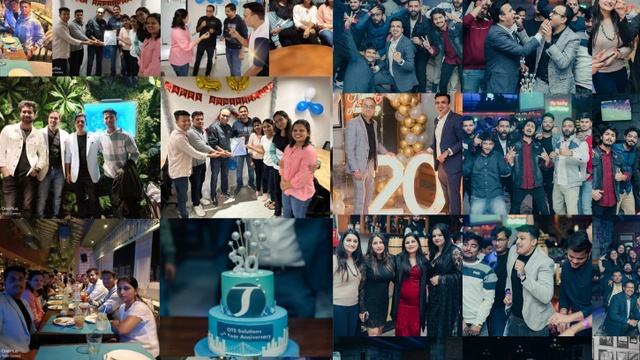
OTS reached its twentieth anniversary in December 2022. Celebrations took place with employees in Gurgaon and Pune. In the anniversary announcement published the following February, Madaan described an ambition to grow the business to 100 times its then-current level over ten years. It was a stated ambition, with all the work of achieving it still ahead.
The juxtaposition is revealing. There is the large numerical goal, and there is the much smaller test of managers carrying on during a holiday. One concerns scale; the other concerns how a company behaves. An organization hoping to become much larger has to confront both questions, however much more attractive the first may look on a presentation slide.
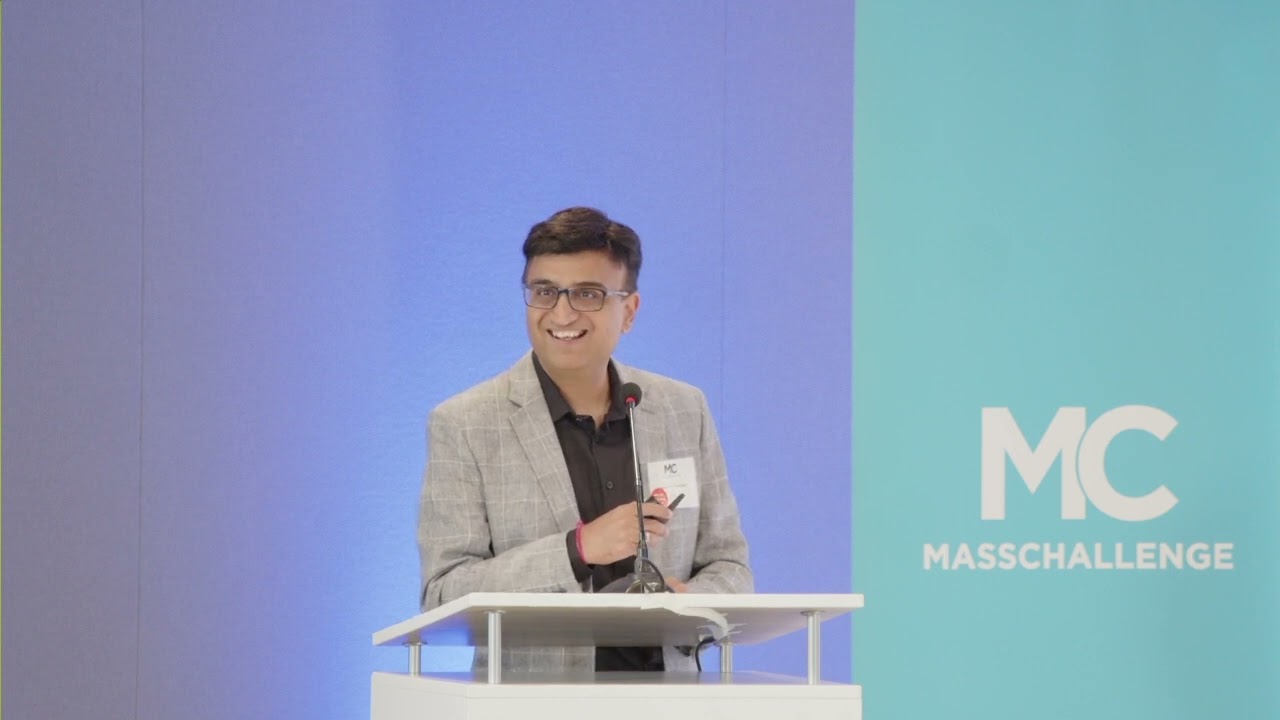
In 2024, Madaan took the long view to MassChallenge’s Innovate event. The Dallas speaker lineup included him alongside entrepreneurs and accelerator leaders. He subsequently shared a recording of his talk about sustainable long-term business vision. It is a fitting subject for someone whose company had already lived through several changes in what customers wanted software to accomplish.
 ▶ WATCH THE TALK
The machine must show its workings
His writing about AI becomes most interesting when it gets specific. In a February 2025 article on explainable AI, Madaan described a retail customer segmentation project. A deep learning model could identify customer groups, but the client also needed to understand why those groups were less likely to engage. A prediction alone did not settle the business question.
The team incorporated SHAP, a method for examining how different inputs contribute to a model’s prediction. Purchase history and browsing patterns could then be shown as factors influencing the result. Madaan acknowledged the added computational overhead. Explanation had a cost; it also gave the client something useful to work with.
This is the sort of detail that brings an executive’s technology argument down to desk height. Someone has to decide what to do with the result. The work becomes more usable when the person making that decision can see which information mattered. An answer delivered with perfect confidence can still require a rather awkward follow-up question.
His published example connects a model’s output to the factors behind it. No performance figures are implied.
A March 2025 article turned to combining AI systems. Madaan argued for selecting tools according to business needs, rather than expecting one general model to handle every task. He described a project connecting ChatGPT to an internal recommendation engine through APIs, enabling responses informed by inventory data.
That example puts integration at the center of the story. A conversational interface has something more useful to say when it can work with the relevant business information. The challenge includes making the systems communicate without damaging performance. The conversational flourish may attract attention; the connection behind it does much of the work.
He also recommended starting with one area of business need and expanding as the organization learns. Customer support could come first, followed by other work such as sales forecasting or supply chain optimization. In that account, adopting AI is a sequence of choices about where it helps. The first useful deployment provides information for the next decision, rather than obliging a company to replace everything at once.
His May article on spatial computing offered another practical account. For a US client’s virtual collaboration platform, the team worked on synchronizing users’ actions, authentication and smooth playback of 360-degree Vimeo videos. Madaan identified Photon Unity Engine and Firebase among the tools used to address those needs.
The platform combined visual information from virtual environments, spatial information from user interactions and text used in authentication. Getting those pieces to coexist was part of enabling real-time collaboration. The description is a reminder of how many separate requirements can sit beneath a simple promise that colleagues will be able to meet and work together.
A virtual meeting may sound wonderfully futuristic until two participants see different things happening at different times. Then the future has a coordination problem. These details make his interest in immersive technology more concrete: shared spaces depend on the quiet engineering that allows people to use them together.
The useful art of stepping away
Across these examples, Madaan keeps returning to the space between a technical capability and an organization’s ability to use it. His December 2024 writing on language models addressed guardrails, oversight and the boundaries businesses need around automated outputs. The questions extend beyond whether a system can generate an answer to how it should operate inside a working company.
His career has moved from outsourced software development through digital products to AI and virtual collaboration. The vocabulary has become more elaborate. The practical obligations remain recognizable: understand the customer, assemble the right people, connect the moving parts and make the result dependable enough to use.
Then there is Goa. The memory is appealing because the achievement looks so ordinary from outside. A founder goes away; managers do their jobs. Inside a growing business, that can represent years of decisions about responsibility and trust. For Madaan, it was a moment worth remembering. A company that can continue without a founder’s constant intervention has given him something valuable: room to think about what comes next.
Follow the work
COMPANIES & CONVERSATIONS
HIS WRITING & CAREER COVERAGE