The awkward number in Guy Ironi’s turnaround story is 80 percent. That was the share of revenue tied to the manufacturing work his company was preparing to stop. Beverage production was the substantial, familiar business. Shipping products to people’s homes was the smaller activity with a future worth pursuing. A spreadsheet can accommodate that change in a moment. A company takes rather longer.
Ironi became chief executive of NutriFresh in 2016, charged with turning around a distressed business on behalf of an investing family office. Today he runs ColdTrack, the company that emerged from that process. Its work concerns refrigerated and frozen orders, warehouses, software, and the passage from a food brand’s promise to a customer’s front door. The story begins with an executive deciding that keeping busy could be an expensive habit.
The business inside the business
NutriFresh had begun in Edison, New Jersey, in 2014 as a contract manufacturer and high-pressure processor. The logistics pivot followed in 2018. That distinction is useful: Ironi’s appointment and the company’s change of direction were separate events. A turnaround appointment begins an examination; it does not arrive with the answer printed on the business card.
In his account of the transition, Ironi identified picking, packing, and home delivery as strengths worth concentrating on. He also remembered his own hesitation and the need to let experienced colleagues take responsibility. He had packed boxes beside employees during the difficult period. Looking back, he wished he had moved sooner. The retrospective is unusually practical for a business transformation story: fewer heroic certainties, more decisions about the work.
“I would probably do things faster.”
Guy Ironi, reflecting on the pivot
Watches, toys, and a different sort of delivery
ColdTrack followed a career with an improbable assortment of merchandise. Ironi worked in leadership at DiMODOLO International / Raymond Weil USA, the watch business; became president of Ronco, associated with Ron Popeil’s infomercial products; and ran Small World Toys. A watch, a kitchen gadget, and a toy make a rather crowded desk. They also offer different views of the same commercial journey: getting something made, distributed, and bought.
His work included debt restructuring and new investment at Ronco and Small World Toys. He also created BITD Group in 2010 to help product developers and manufacturers enter the American market. Those assignments place the later turnaround in context. ColdTrack’s CEO had already spent years dealing with companies whose next chapter depended on practical changes to their operations and finances.
There was a technical beginning, too: a database team leader role at iMesh in 2000, followed by the consumer-brand posts. His Columbia Business School MBA added finance and strategic management to that background. The combination gives his career its particular shape: technology, consumer products, and operating responsibility keep meeting, although the contents of the box change considerably.

A New Jersey address, a wider map
Ironi is a Tel Aviv native who moved to the United States in 2003. He lives in Cresskill, New Jersey, and serves on the Israeli-American Council’s New Jersey regional council. His working life connects him to the broader New York area. The geography of his adult career therefore has a local anchor even as the businesses concern national distribution.
He earned his MBA at Columbia Business School in 2005-2006. Later, in 2019, he joined WeWork Food Labs as a strategic growth mentor. The mentoring role sits naturally beside his operating work: younger food businesses face questions about distribution and scale long before they can afford to answer every one with a department of their own.
ColdTrack’s expanding footprint made those questions physical. The company added California capacity in 2021 through Stockton Cold Storage and a Patterson facility. Indianapolis followed in 2025. For an executive who had worked across consumer brands, the map became another part of the operating problem: where an order starts affects the options for getting it to the buyer.
The new sign came later
NutriFresh announced the ColdTrack name in February 2023. Ironi described the identity change as marking the completion of a years-long transition from co-manufacturing and storage to perishable e-commerce fulfillment. The sequence gives the announcement some substance. The business had been doing the difficult work before it changed the lettering.
The same announcement detailed investment in technology staff, warehouse management systems, learning systems, and proprietary software. ColdTrack Pack covered pick-and-pack operations; ColdTrack Ship addressed shipping services; ColdTrack Live gave brands access to fulfillment information. The labels separated jobs that a customer experiences together when an order arrives.
That is a useful way to read Ironi’s role. His company has to make physical handling and digital decisions agree. A dashboard can show an order’s progress; someone still has to prepare the parcel. A warehouse can hold inventory; a brand still needs to understand what is available. The new identity put one name over those connected responsibilities.
The customer opens the evidence
Ironi’s writing gets down to the contents of those responsibilities. In a November 2025 article, he discussed carton selection, carrier rates, expiration dates, scanning, and software that helps determine coolant requirements. These are small decisions with a cumulative effect. An unnecessarily large box, a poor inventory choice, or an unsuitable delivery service can each make an order more costly to fulfill.
The business logic is straightforward. Distribution centers closer to buyers can make ground delivery more practical. Order management tools can help choose packaging and services. Warehouse systems can guide the selection of inventory. None of these observations requires a glamorous illustration. A correctly prepared parcel is quite capable of making its own argument.
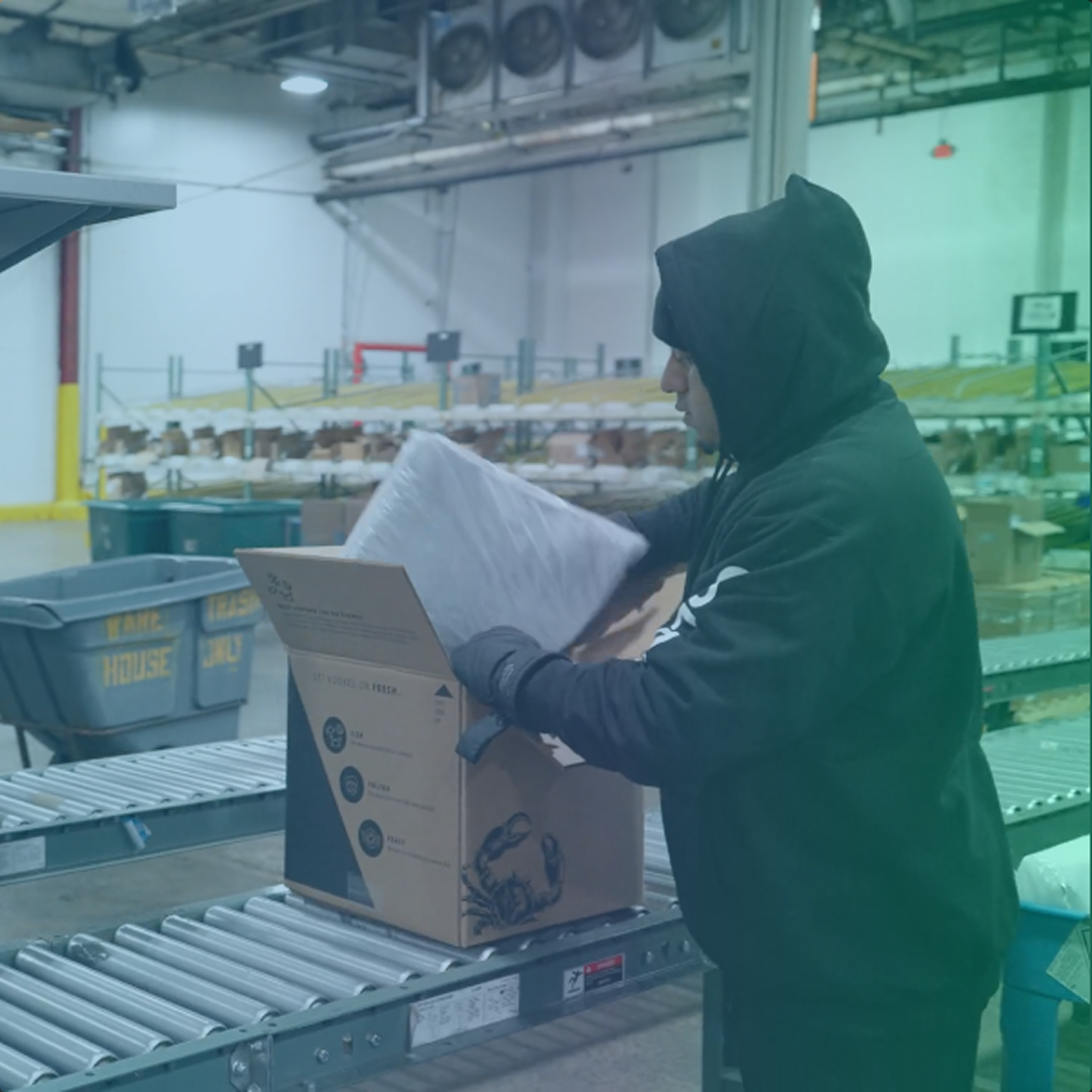
In a 2026 discussion of direct-to-consumer delivery, Ironi connected fulfillment errors to refunds, replacement shipments, and damaged customer relationships. ColdTrack described a platform organized around scanning, inventory controls, exceptions, and temperature modeling. The commercial consequence extends beyond the warehouse: a brand’s customer encounters the result, whether or not that customer has ever heard the fulfillment company’s name.
Ironi works with a leadership team that includes chief financial officer Josh Abramson, chief operating officer Luke Vaccaro, chief strategy officer Andy Gabriel, and chief revenue officer Warner Siebert. Garret Richardson leads digital products and technology. The division of responsibilities gives those parcels a substantial supporting cast. Finance, operations, commercial relationships, and software each have a place in the organization. For a business that sells a coordinated service, the coordination has to begin inside the company, before a customer’s order ever reaches the packing line.
Planning for the day things go wrong
Asked in March 2026 what brands should seek in a fulfillment partner, Ironi concentrated on capacity and accountability. A surge in orders should have somewhere to go. Inventory visibility should give a brand time to replenish. Support should include people who understand the customer’s program. The answers describe a service through its difficult days as much as its ordinary ones.
He was equally explicit about disruption: pickups get missed, weather intervenes, systems fail. His emphasis was on preparing a response and keeping management close enough to warehouse execution to act quickly. For a prospective customer, that offers a concrete line of inquiry. Ask who makes the decision when an order is in trouble, and how that decision reaches the people handling it.
Florida changes the journey
In August 2026, the company announced Jacksonville as its fifth fulfillment campus. The Southeast, particularly southern Florida, presented a clear distribution challenge. Putting inventory in Jacksonville expanded the available one-day ground routes and shortened the journey for customers in that region. The new operation brought storage, fulfillment systems, and carrier connections into the same plan.
The site was the second ColdTrack had launched within a year. Ironi described further expansion as part of the ambition. Speaking about the network that month, he identified remaining markets to complete, including possibilities in Texas, the mountain region, and the Pacific Northwest. These were directions for future development, rather than announcements of finished facilities.
“Jacksonville won’t be the last stop in this expansion.”
Guy Ironi, August 2026
His LinkedIn activity offers a smaller view of that expanding organization. He has shared colleagues’ updates, welcomed a new team member, and passed along news from the Patterson operation, where a celebration included an ice cream sundae bar. In a company concerned with temperature, at least the refreshments were on theme. These are modest glimpses of working life around the larger announcements: people joining, colleagues marking progress, and a chief executive helping circulate their news. They give the network a human scale that a map of facilities cannot supply on its own.
Leave room for the next order
Recognition followed the turnaround. ColdTrack reported four consecutive Inc. 5000 appearances from 2021 through 2024, and Ironi was honored at Goldman Sachs’ 2024 Builders and Innovators Summit. In acknowledging that recognition, he credited his team and recalled the skepticism surrounding the earlier effort. The business had acquired a more comfortable subject for conversation than its original distress.
His public presence remains close to the work: industry conversations, fulfillment questions, and trade events. An invitation to meet at Natural Products Expo West in 2025 was cheerfully brief. There is a certain economy to that approach. An executive whose company handles other brands’ deliveries has plenty to discuss without turning himself into the merchandise.
The career now stretches from watches and toys to the unassuming parcel on a doorstep. ColdTrack’s next facilities will add to the map; the customer will still judge the contents of a single box. Ironi’s earlier decision gave the company a narrower job to do. Keeping that job dependable, across more places and more orders, provides quite enough work for the next chapter.