A trailer is easy to overlook. The tractor gets the grille, the driver, the mythology. Behind it sits a box. Yet that box has to survive forklifts, weather, loading docks and the persistent human talent for hitting things. Wabash built a business around taking the box seriously. Now it is asking a more interesting question: what if the customer would rather buy the useful hours than manage the box?
- Proprietary composite walls turn materials engineering into a fleet purchasing argument.
- Trailer subscriptions bundle equipment with maintenance, insurance and operating support.
- Growing services offer another revenue stream, while manufacturing remains exposed to freight cycles.
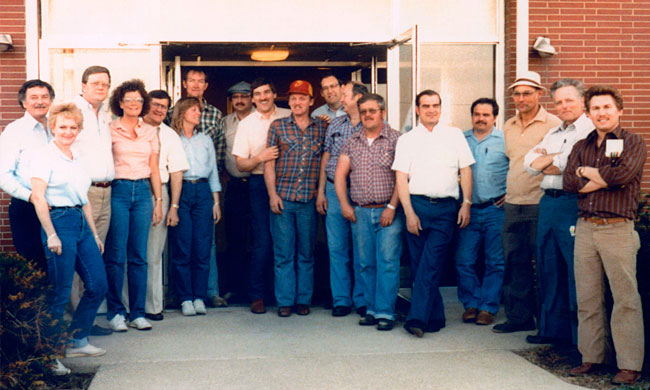
The company began in 1985, when Donald J. “Jerry” Ehrlich and fellow transportation professionals set out to build better semi-trailers. Its first trailer went to Sears. That customer makes the origin feel wonderfully specific: before the digital storefront, there was the physical problem of getting merchandise to a store.
The wall is doing two jobs
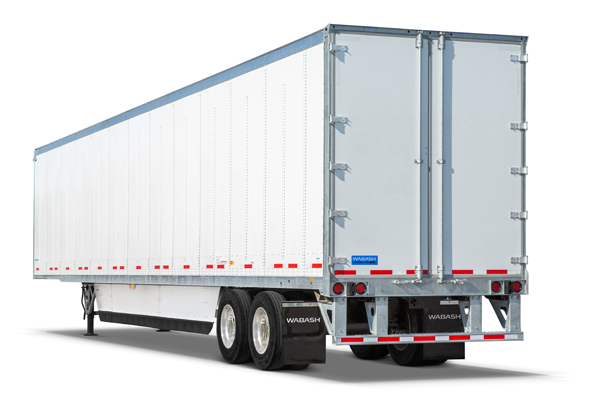
Wabash’s signature idea is DuraPlate, introduced in 1996. Put a polyethylene core between steel skins and thermally bond the sandwich. The resulting panel serves as both wall surface and structure. For a buyer, the attraction is practical: resistance to damage without carrying unnecessary weight.
The current DuraPlate Cell Core dry van specification claims a 300-pound reduction per 53-foot trailer. Three hundred pounds sounds unimpressive beside a loaded truck. But a fleet manager buys repeated trips. Where freight reaches weight limits, lighter equipment can leave room for cargo; elsewhere, the benefit depends on operating conditions.
This puts Wabash in a crowded North American equipment market alongside manufacturers such as Great Dane, Utility and Hyundai Translead. Its argument rests on proprietary materials, equipment design and support across the asset’s life. A fleet still has to compare purchase price, repairs, payload and resale value. A clever wall needs to earn its keep. The relevant calculation belongs to the buyer’s routes, loading patterns and repair history, which makes specification sheets a starting point for a purchasing decision.
A $342 million turn toward your doorstep
The box comes in several forms. Wabash makes dry and refrigerated trailers, flatbeds, tank trailers and delivery truck bodies. Its industrial equipment includes tanks, silos and mixers. Buyers range from long-haul carriers and leasing companies to private fleets and processors.
E-commerce helped redirect the company. In announcing its 2017 Supreme Industries acquisition, Wabash described a logistics model changing with online shopping. Supreme supplied light- and medium-duty truck bodies and a regional manufacturing footprint. The announced enterprise value was $342 million; equity value was $364 million. Those figures measure different things.
Materials offered another route into delivery. EcoNex uses an insulating foam core enclosed in a reinforced polymer shell and protective gel coat. Keeping heat and moisture out matters when the cargo is refrigerated. In 2022, Wabash announced another $20 million for EcoNex production capacity in Minnesota. The investment purchased manufacturing capability; customer savings still depend on actual use.
One bonded panel. Surface and structure.
Subscribe to the boring bits
Equipment sales create a familiar relationship: manufacture, deliver, wait for the next order. Trailers as a Service, launched with FreightVana in 2022, stretches that relationship. A customer subscribes to capacity with maintenance, telematics and fleet support wrapped around it. Insurance and loaner provisions are part of the advertised offering, with coverage governed by terms.
For a logistics provider, the appeal is avoiding a separate operational project every time trailer capacity grows. The digital marketplace connects this offering with parts and service access. In 2024, autonomous-trucking company Kodiak selected TaaS. Even a truck designed to drive itself needs someone responsible for the trailer’s condition.
“It is unbelievable, the amount of abuse that a Wabash trailer can take.”Jeff Frost, OW Logistics
What does the subscription cost? Wabash publishes an illustrative comparison showing $985 a month for TaaS, assuming 100,000 miles annually. That is a marketing calculation, not a universal quote. A useful buying exercise would compare the actual contract with ownership or leasing, including maintenance staff, downtime, insurance and replacement equipment. A fleet with underused trailers or an efficient repair operation may reach a different answer.
The operating challenge lives in the network. Offering a loaner is easy to write into a sales presentation; making one available near a stranded customer requires coordination, inventory and service partners. Wabash already sells through dealers and supports an aftermarket network. Turning those relationships into dependable subscribed capacity is an execution problem measured in individual interrupted trips.
The factory still has a vote
Services can soften dependence on new equipment orders. They cannot empty a factory’s cost base when production slows. Wabash’s fourth-quarter 2025 report identified lower-than-expected truck-body production as a cause of operating inefficiencies and earnings below expectations. Diversification had added products; it had also added operations that needed sufficient volume.
The split remained visible in the second quarter of 2026. Transportation Solutions recorded a $13.9 million operating loss. Parts & Services earned $6.0 million, with sales rising 6.1% from a year earlier. That smaller segment includes more than subscriptions, so its results cannot establish TaaS profitability. The company overall still reported an operating loss of about $25 million.
Inside the company, the stated values emphasize curiosity, a growth mindset and teams. Those phrases become more concrete when a manufacturer must coordinate engineering, dealers, parts distribution and digital tools. Careers materials describe training, mentoring and tuition assistance. The strategic need is clear: an organization built to ship equipment now also needs people who can keep an ongoing service promise.
Move the calendar, too
One of Wabash’s more instructive changes required no new material. In July 2026, it opened orders for 2027 dry van production ahead of the customary fall cycle. Management cited months of conversations with customers already arranging budgets, tractor orders and routes. The buying calendar had moved. Wabash moved with it.
That is the useful lesson for another manufacturer: follow the customer’s work beyond the purchase. Build around the maintenance burden, the budgeting deadline, the part that needs replacing. Then test whether the service earns enough to support its promises. Wabash’s experiment begins with a durable wall, but its commercial question is about everything that happens around it.