Consider the chicken. Before it becomes dinner, it creates a transportation problem rather different from a pallet of paper towels. Feed must reach farms. Live birds must reach processing plants. Equipment, schedules and handling have to fit an operation that cannot simply pause. In April 2023, Covenant bought Lew Thompson & Son, a carrier specializing in poultry feed and live haul. The closing enterprise value was about $100 million, with up to $30 million more tied to performance. That is an expensive way to announce what kind of trucking company you want to become.
- Four businesses: expedited, dedicated, managed freight and warehousing.
- The bet: specialized work and committed capacity make customers harder to lose.
- The catch: more revenue does not automatically produce more profit.
Covenant’s proposition begins with an awkward truth about trucks: customers can compare them. When too much capacity chases too little freight, a perfectly capable carrier can find itself negotiating against someone with an emptier trailer. Specialized work changes the conversation. The question becomes whether another carrier understands the job well enough to take it over.
Two people in the cab
David and Jacqueline Parker started Covenant Transport in 1986 with 25 trucks and 50 trailers. The original business emphasized expedited freight, using two-person driving teams on long routes. One driver can rest while the other drives, within applicable hours-of-service rules. For a customer with a narrow delivery window, the extra person is part of the product.
The arrangement also contains a trade-off. Two drivers cost more than one. Their truck needs enough productive work to justify that expense. Covenant’s annual report describes the balance: teams generally cover longer distances and fewer non-revenue miles, while single-driver operations run shorter routes with different revenue and labor economics. Reliability has a cost structure.
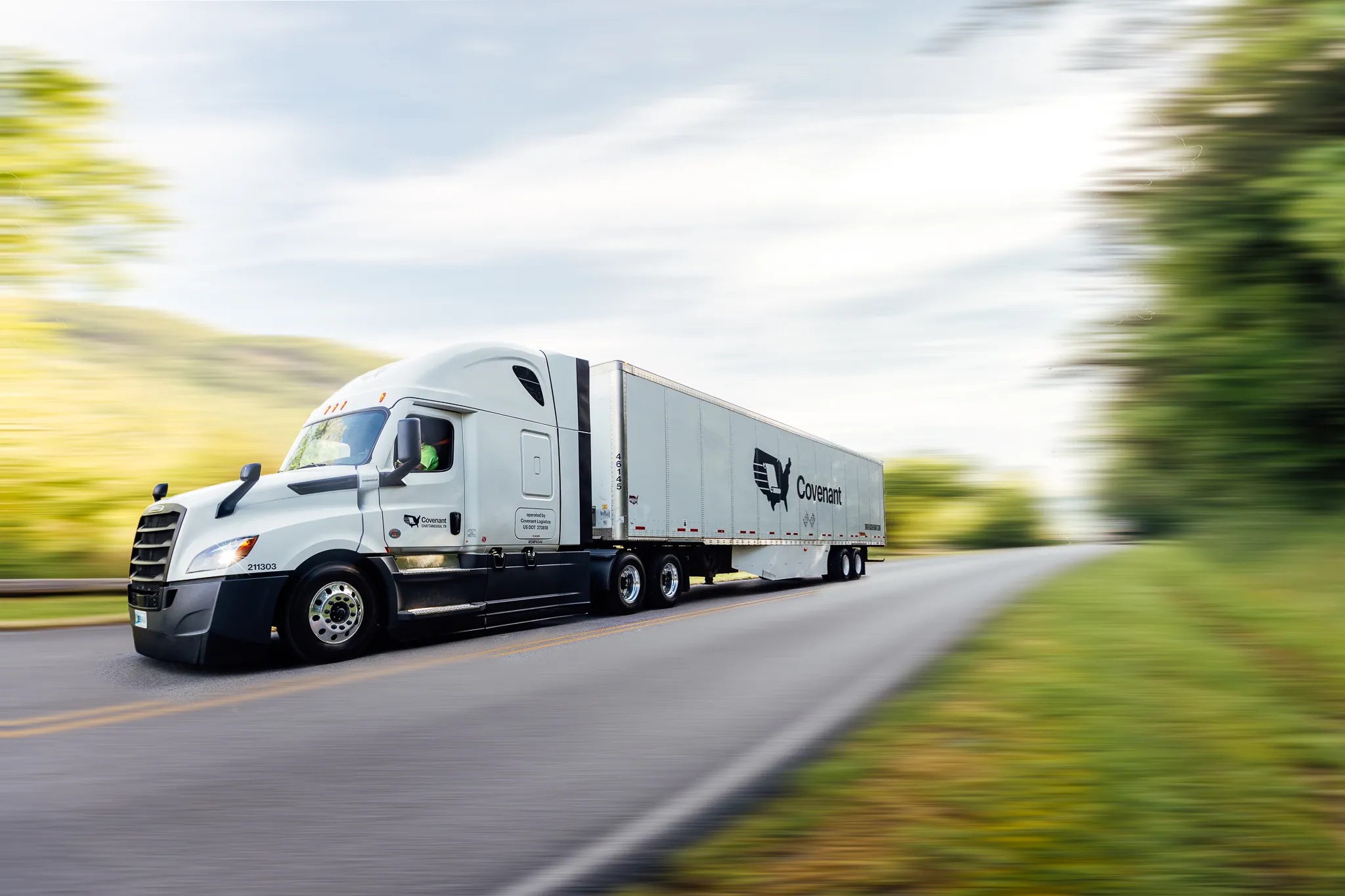
The name came from Parker’s religious commitment at the company’s founding. Its published values are empathy, servanthood and virtue. Those are unusually explicit principles for a freight operator, although customers still need the operational evidence: available drivers, sound equipment and a delivery that arrives when promised.
The customer’s problem starts before the road
Today’s Covenant sells four connected services. Expedited handles time-sensitive truckloads. Dedicated assigns capacity to particular customers and operations. Managed Freight arranges outside carriers and manages transportation. Warehousing runs the inventory and distribution work around the freight. A shipper can buy a movement, a fleet or a larger slice of its daily operation.
Dedicated service takes on tasks a manufacturer might otherwise perform itself: hiring drivers, maintaining vehicles, planning routes and tracking shipments. That can spare the customer fleet investment and managerial work. Covenant, meanwhile, gains a closer relationship and committed business. The attraction depends on both sides agreeing what capacity is worth.
FedUp Foods supplies a concrete example. In Covenant’s published case study, the beverage manufacturer needed logistics that could accommodate shifting production and expansion. Covenant describes running 10 to 12 daily truckload transfers between production and storage, spending two weeks onsite during onboarding, and coordinating cold-chain storage through a Lineage relationship in Charlotte. These are supplier-reported results, but they make the service legible: someone has to learn the customer’s working day.
- 01Production
- 02Dedicated fleet
- 03Warehouse
- 04Next delivery
Buying a place inside the operation
The acquisition trail shows how Covenant broadened that knowledge. Landair, acquired in 2018, brought dedicated trucking and warehouse operations. AAT Carriers added expertise in regulated government freight in 2022. Lew Thompson added poultry transportation in 2023. Each purchase supplied capabilities that a larger collection of ordinary trucks would not necessarily provide.
Landair also illustrates what expansion costs before it produces a return. The announced 2018 transaction involved $83 million in cash and the assumption of $15.5 million in debt. Covenant was acquiring a business that already knew how to operate distribution facilities, along with its carrier capacity. Buying that competence accelerated the move into work that happens when a truck is parked.
Then came brokerage assets acquired in October 2025 and operated as Star Logistics Solutions. The annual report records a net purchase price of approximately $27.2 million, including contingent consideration. Star brought exposure to consumer retail and disaster relief. Brokerage lets Covenant arrange capacity without buying every truck needed to handle a surge.
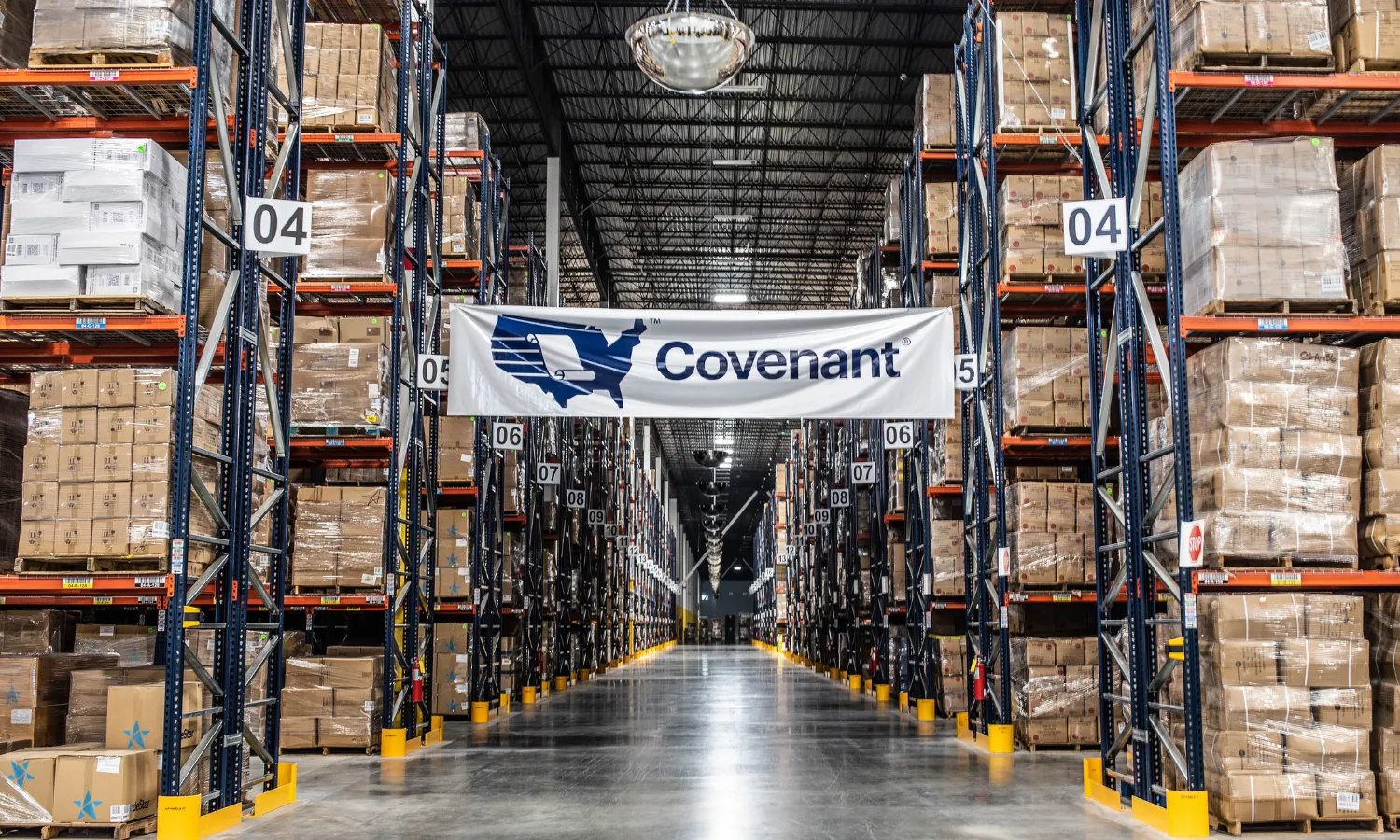
These businesses place Covenant among contract carriers and outsourced logistics providers. Dedicated fleet specialists, truckload operators, brokers and warehouse managers all compete for pieces of the same budget. Covenant’s case rests on connecting those pieces and knowing particular kinds of freight. Integration is useful when it removes handoffs; its value has to be demonstrated in the customer’s operation.
The invoice still has to add up
Specialization does not eliminate bad contracts or idle equipment. In its third-quarter 2025 report, Covenant described lower utilization and costs associated with leaving a large Managed Freight contract and planning exits from insufficient-return Dedicated contracts. Severance and abandoned facilities and systems contributed $3.7 million of expenses. Work can be technically demanding and still fail to earn enough.
“Our costs disappointed us in the quarter.”David R. Parker · Q2 2026 results
The second quarter of 2026 made the distinction measurable. Total revenue rose 9.9% to $332.9 million, while operating income fell from $11.6 million to $8.8 million. Management’s response emphasized committed contracts and controllable costs. A fuller order book is useful; the expense of serving it decides how much survives.
There is another constraint: a long commitment can preserve yesterday’s price as costs rise. Management said in July 2026 that contract renewals would phase in over the coming quarters. That creates a lag between a stronger freight market and the rates a contracted fleet actually collects. The same agreement that helps protect capacity and service can slow the financial benefit of a recovery.
The useful lesson travels beyond trucking. Learn an operational problem deeply enough that replacing you requires effort. Price the work to cover the learning, equipment and people. This approach is less persuasive for irregular, easily substituted freight, or when a customer will not commit enough volume to support dedicated capacity. Covenant’s difficult loads offer a way out of price-only competition. Making them pay remains a daily assignment.