A beverage factory has an awkward habit: it produces beverages. Once bottled, they need somewhere to go. For FedUp Foods, growing demand meant shifting production locations, fluctuating volumes and new shipping lanes. Jonathan Milkovich, its logistics and distribution supervisor, described the predicament in a Covenant customer interview: “We always were making plans that changed every day.” A business can have an excellent product and still spend its afternoons rearranging tomorrow.
- Covenant combines trucks, warehouse operations and freight coordination.
- Its specialty businesses handle everything from poultry to food-grade ingredients.
- Longer customer commitments offer predictability; equipment and insurance still demand their due.
The beverage maker and the moving target
Covenant’s answer was unusually physical. People came on site, walked the operation and examined the work. According to the published account, the relationship now includes 10 to 12 daily transfers between FedUp Foods’ production facility in Marshall, North Carolina, and its warehouse in Erwin, Tennessee. Finished goods, raw materials and labels all travel through this system. Cold storage coordination extends the arrangement to Charlotte partners.
That is a useful way to understand Covenant Logistics. Its customers are buying the ability to keep a production schedule connected to a distribution schedule. The truck matters, certainly. So does knowing who will answer when the plan changes. A refrigerated drink has little sympathy for organizational charts.
A promise acquires a balance sheet
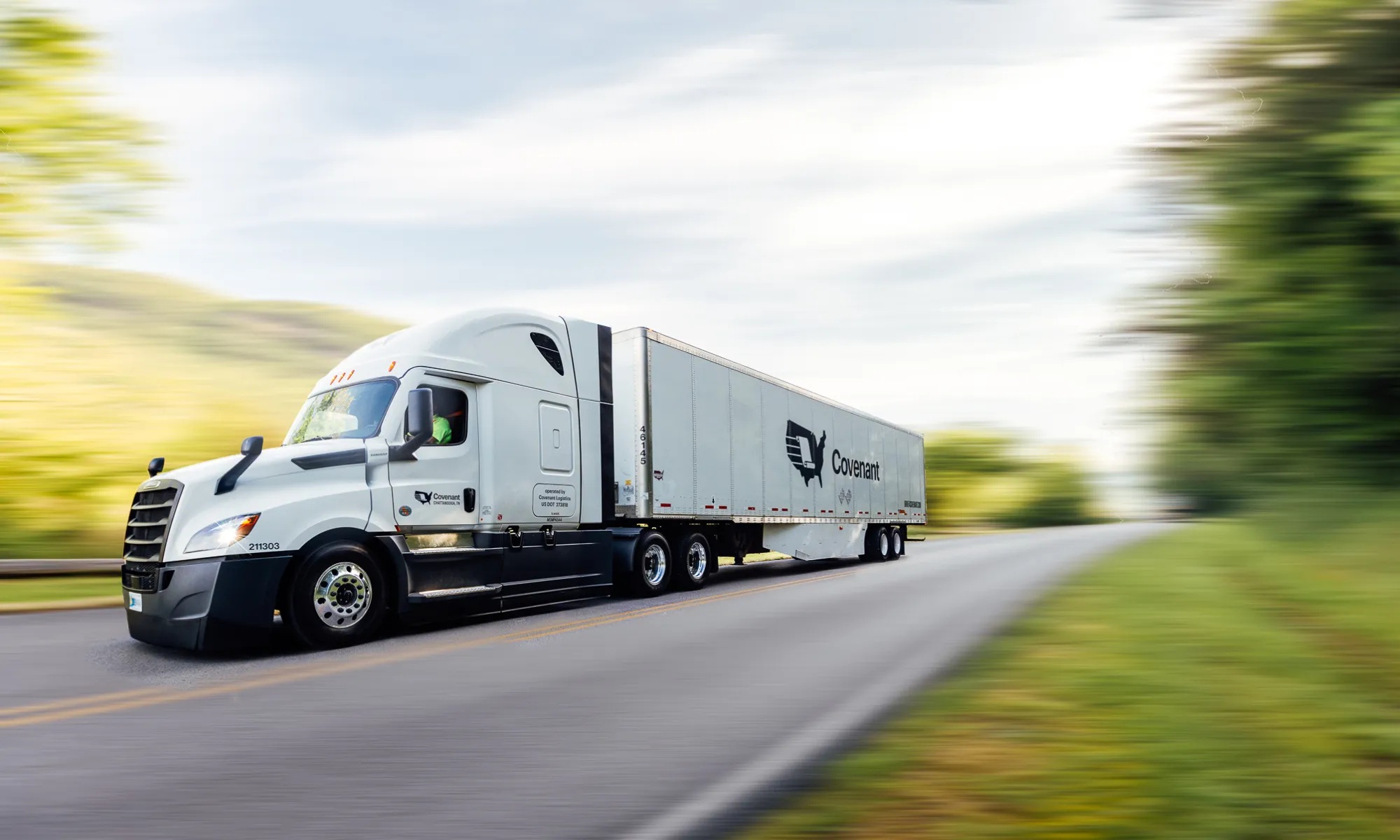
David and Jacqueline Parker began Covenant Transport in 1986 with 25 trucks and 50 trailers. David had grown up around his father’s trucking business. The name came from a religious undertaking: he would operate the company properly, trusting God to provide. The company’s stated values remain empathy, servanthood and virtue. Parker also says he has never sought to impose his personal religious beliefs on employees.
Those beginnings now sit beside public-company arithmetic. Covenant became publicly traded in 1994; its Class A shares trade on the NYSE as CVLG. In 2025, total revenue reached approximately $1.16 billion, including fuel surcharges. The promise has acquired warehouses, subsidiaries and a considerable appetite for capital.

Buying the warehouse door
The 2018 acquisition of Landair changed the range of problems Covenant could accept. Landair brought dedicated trucking and distribution facilities. At closing, Covenant disclosed approximately $83 million for the shares and $15.5 million to refinance debt. A later preliminary filing put the cash to sellers at $91.2 million and consideration including debt at $106.7 million, subject to further adjustments. Capability has a purchase price, and sometimes more than one announcement.
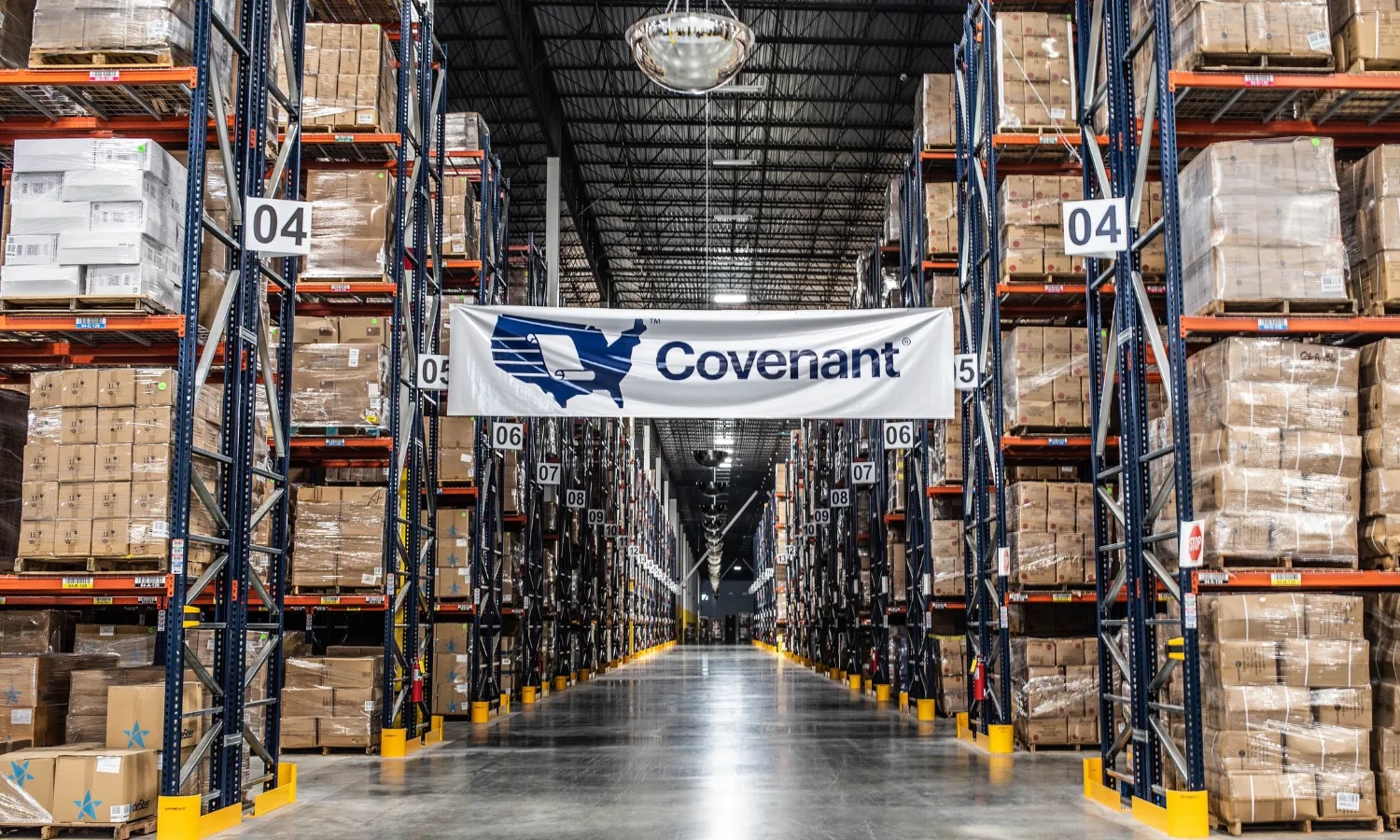
The practical change was straightforward: Covenant could take responsibility inside the warehouse as well as outside its door. Today its distribution offering covers inventory, fulfillment, kitting and shuttle operations. Dedicated contract carriage supplies customer-specific drivers and equipment, with route planning and fleet management. A manufacturer can outsource these responsibilities rather than hire, train and maintain a private fleet itself.
Managed transportation adds carrier selection, visibility, freight auditing and claims administration. Together, these services address an unglamorous source of delay: the handoff. If the warehouse and the transport provider each believe the other owns the problem, the pallet remains perfectly stationary.
Poultry, peanuts and the price of expertise
Covenant’s acquisitions have also made it more particular. Lew Thompson & Son, acquired in 2023, participates across the poultry chain, from feed deliveries to live hauling and finished product. Sims Transport specializes in edible nuts and raw ingredients. Its description emphasizes food-grade requirements and trailer acceptance. A peanut load can demand more expertise than its modest appearance suggests.
Expedited trucking handles time-sensitive, high-value and hazardous cargo, supported by dispatch and shipment visibility. The newer Star Logistics business adds emergency response and complex project coordination across North America. These are different assignments with different economics. Covenant occupies the space between an asset-owning carrier and a logistics operator, assembling services around the customer’s actual work.
Its rivals depend on the assignment: another dedicated carrier, a warehouse specialist, a freight broker, or the shipper’s own fleet. The useful distinction is its combination of operations and specialty knowledge. That combination deserves scrutiny against a customer’s needs; breadth alone does not make a quotation attractive.
When better freight meets bigger bills
The pressure behind Covenant’s selectivity is visible in its fourth-quarter 2025 results. Impairment charges and elevated insurance expense helped produce a loss of $0.73 per diluted share. Management’s ensuing plan included exiting unprofitable relationships and moving capital toward better-returning operations. The public record describes a commercial reassessment, rather than a single moment of revelation.
“our costs disappointed us in the quarter”David R. Parker · Second-quarter 2026 results
By the second quarter of 2026, Covenant had moved approximately 15% of its expedited fleet to committed contracts. Combined truckload revenue per tractor per week improved sequentially, but margins failed to expand as maintenance, insurance and other expenses pressed upward. Its brokerage business faced another squeeze: purchased capacity became more expensive faster than customer rates increased. A signed contract can stabilize demand while making repricing slower.
More revenue per mile, fewer miles. Read the two together.
A lesson you can borrow before hiring a truck
Start by mapping recurring movements, their timing and their handoffs. Then ask whether one operator should own the interfaces. Covenant’s Marine Corps Exchange case study reports coordination across more than 1,800 vendors and nearly 15% lower freight costs since the relationship began. It is a company-reported result, not a universal discount.
For a prospective customer, that suggests a practical first conversation. Bring shipment volumes, delivery windows, warehouse constraints and the lanes that repeatedly cause trouble. Ask how the proposed operation handles a late production run, an unavailable driver or a rejected trailer. Compare the service commitments with the price. A provider’s familiarity with your particular failure points is more revealing than a long list of available services.
Dedicated capacity makes more sense when repeated demand justifies reserved resources. An occasional load, unpredictable volumes or a purchase decided entirely by the lowest immediate rate may suit a different arrangement. The copyable lesson is to price the whole job: equipment, labor, coordination and the cost of interruption. Before celebrating a cheaper truck, make sure the factory can afford to wait for it.
Company website · Dedicated fleets · Customer stories · FedUp Foods interview · Latest quarterly results · Company insights · Annual reports · Company history · Sims Transport · Star Logistics
LinkedIn · Instagram · Facebook · YouTube · Watch: Covenant × FedUp Foods