There is an awkward thing about a truck sitting outside a repair shop. It can look perfectly capable of doing its job. The tires are enormous. The cab is intact. Somewhere, a customer still expects a delivery. Yet the machine’s earning power has fallen to zero. For International, the manufacturer formerly called Navistar, that interval between looking useful and being useful has become the center of the business.
- International builds work trucks, engines, and IC Bus school buses.
- Its pitch now extends through financing, diagnostics, parts, and service.
- The test is ownership cost and time on the road, measured against each fleet’s actual work.
In October 2024, Navistar became International Motors. The badge on the truck had outlasted the name on the corporation. Bringing them together was tidy. The more consequential promise was to make buying, operating, and repairing a commercial vehicle feel like one continuous relationship.
This is a manufacturer with an unusually long memory. Its lineage reaches back to Cyrus McCormick’s mechanical reaper; International Harvester emerged from a five-company merger in 1902. The agricultural business eventually went elsewhere. In 1986, the remaining truck and engine company became Navistar. International stayed on the grille. Even the old name, it turns out, understood the value of remaining in service.
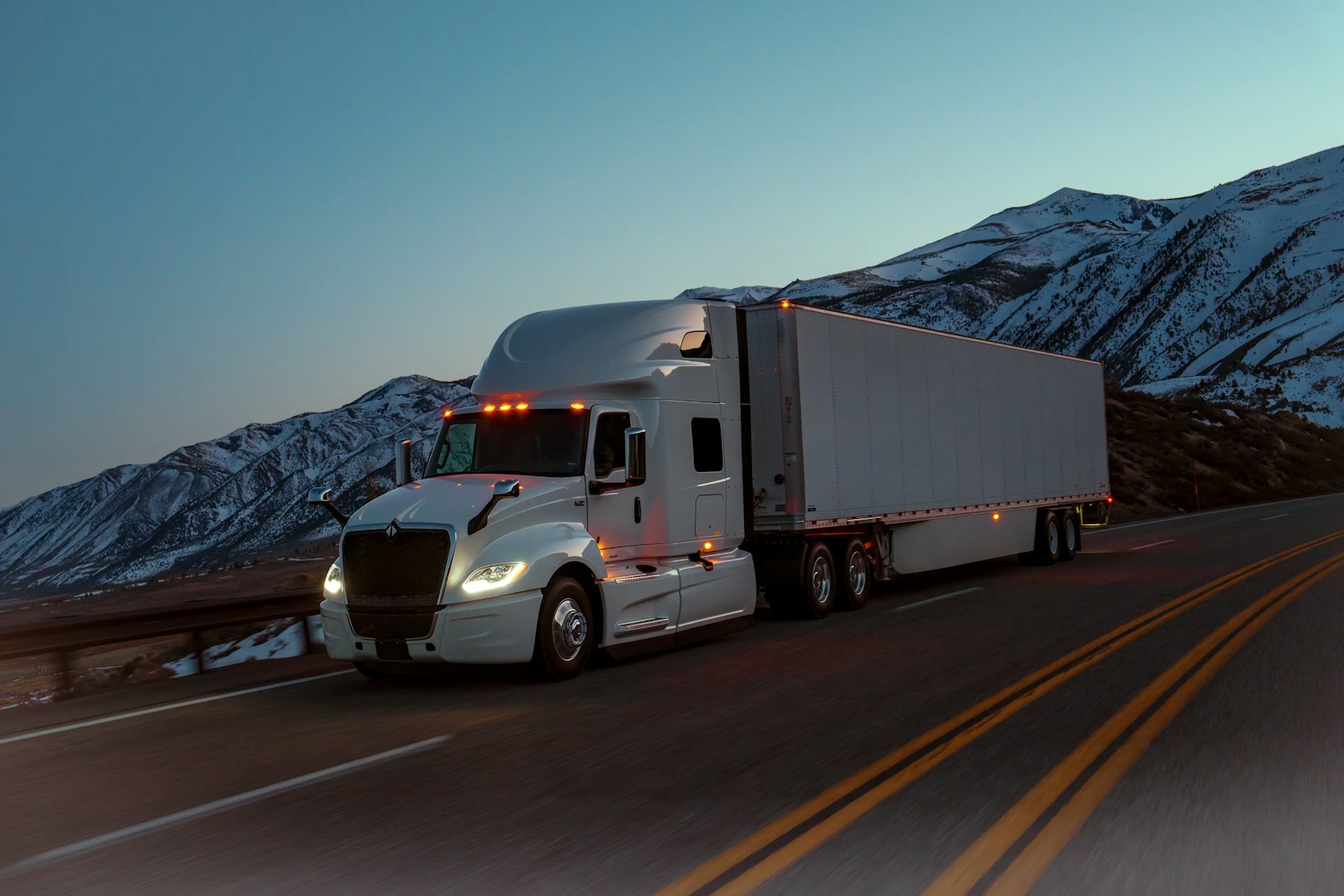
The engine that changed the argument
To understand the current pitch, consider an earlier attempt to simplify trucking. Navistar pursued an exhaust-gas-recirculation-only approach to diesel emissions. The attraction was straightforward: meet the standard without adding the urea-based selective catalytic reduction equipment competitors used.
The difficulty arrived where an engineering proposition meets a regulator. Navistar could not meet the required emissions standard with that approach without credits. Its 2012 annual report identified the strategy as a significant contributor to deteriorating performance. The company switched course that July and signed agreements with Cummins for engines and exhaust-treatment technology.
Spent developing EGR-only technology from 2001 through 2012, according to Navistar’s account cited in a court filing.
That figure is the development spending cited in the filing, rather than a complete bill for the consequences. The sharper lesson concerns the decision rule. A technology intended to remove complexity for buyers had become a source of complexity for the manufacturer. Certification difficulties made the premise untenable. Changing direction meant accepting the technology path rivals had already taken.
Three pieces, one job
TRATON completed its roughly $3.7 billion purchase of Navistar in 2021. International joined the group containing Scania, MAN, and Volkswagen Truck & Bus. That ownership brought access to shared engineering, an important distinction from trying to solve every problem inside one American manufacturer.
The S13 Integrated Powertrain, introduced in 2022, makes the collaboration tangible. It combines an engine, a T14 automated transmission, and dual-stage exhaust treatment. The design gives combustion and emissions cleanup distinct jobs. It removes the EGR cooler and treats nitrogen oxides downstream.
International competes with Freightliner, Kenworth, Peterbilt, Volvo, and Mack. Integrated powertrains are hardly exclusive to this company. The useful comparison is the whole operating bill. International’s published head-to-head testing claims at least a 5% fuel-economy advantage against specified aerodynamic competitors, while also disclosing higher diesel-exhaust-fluid consumption. A fleet needs both sides of that arithmetic, plus its own payloads, routes, and maintenance experience.
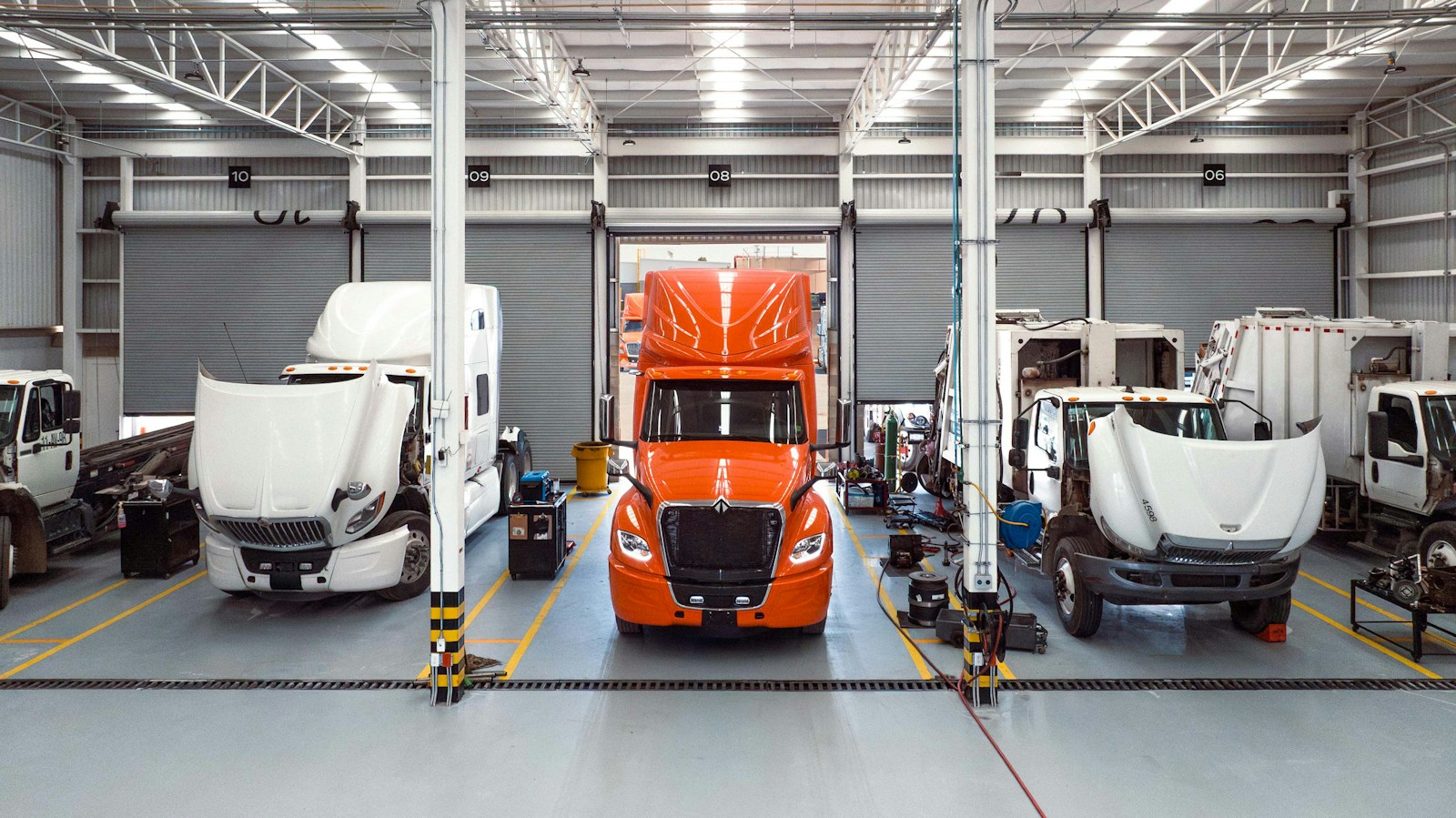
The waiting is part of the product
The customers are practical people with different clocks. Freight fleets count deliveries. Construction operators need trucks suited to job sites. School districts and student-transport companies need buses ready for the morning run. Repair shops need the correct part. International sells vehicles and parts, then earns further business through service contracts, connectivity, and financing.
In April 2026, it introduced My International, combining fleet monitoring and dealer communication in a portal and app. The system connects vehicle-health information with service scheduling, repair status, and warranty visibility. Five years of access came standard with new International trucks and IC Bus models at launch.
“This is a simplified way of doing business with us.”
Fabio Souza / EVP, Service Solutions
The October 2026 launch of Fleetrite.com attacks another delay. Its catalog covers more than 400,000 OEM and all-makes parts, showing availability across dealer shelves, distribution centers, and online inventory. Orders run through more than 600 International and IC Bus dealer locations. A mixed-fleet operator can buy parts for several makes through the same transaction.
These changes reveal the strategy better than a refreshed logo does. Information has value when it shortens a physical wait. A diagnostic alert needs a repair appointment; a parts search needs stock. International is trying to connect those moments, with dealers doing the physical work.
The route gets a vote
The same discipline applies to electrification. International announced its Class 8 eRH regional tractor in April 2025 with a stated range of up to 300 miles, depending on configuration and use. For a buyer, that qualification is central. Route length, payload, charging access, electricity costs, and depot schedules determine whether the vehicle fits. An electric truck cannot rescue a charging plan that leaves it unavailable when work begins.
Autonomy is receiving a similarly specific test. A March 2026 pilot with Ryder put a PlusAI-equipped International truck on a daily 600-mile Texas freight route. Early results included 92% autonomous route coverage under a human safety driver’s supervision. This remains a trial, with operational questions still being tested.
Year-over-year unit sales change. Bar lengths show 2025 sales relative to 2024; trucks at 63%, buses at 121% (scaled to fit).
Nor does a connected service business abolish the cycle. International’s vehicle sales fell 30% in 2025, while bus sales rose 21%. TRATON attributed the difficult North American market to freight weakness and tariff uncertainty. The group reported an adjusted operating margin of just 0.1% for International.
The idea another business can copy is concrete: follow the customer through the waiting. Find the stalled handoff, give somebody responsibility, and connect the information to the person who can act. For International, that person may be at a dealer counter. The strategy succeeds only when the truck leaves.