Before there was a Blue Bird, there was a bus coming apart. In 1925, Georgia Ford dealer Albert Luce mounted a purchased wooden body on a truck for a customer. The roads supplied the verdict. The body began rattling apart before the customer had finished paying. By 1927, Luce had built a replacement with a steel framework. That bus, Blue Bird No. 1, survives in The Henry Ford collection.
It is a useful beginning for a company selling change to people who cannot afford much disruption. A school district can debate propulsion for months. On Monday morning, the vehicle still has to arrive. Blue Bird’s modern business lives inside that awkward gap between an appealing improvement and a dependable routine.
- Blue Bird builds buses; districts and contractors run the routes.
- Electric is one choice alongside propane, gasoline and diesel.
- The purchase price starts a longer calculation about infrastructure and upkeep.
The buyer is purchasing a Tuesday morning
Consider what the customer actually needs. There are children to collect, drivers to train, mechanics to equip and a school board to convince. Blue Bird serves public and private school systems and transportation contractors with several vehicle families. The hooded Vision is its Type C bus. The flat-front All American is Type D. Micro Bird covers smaller school and commercial buses.
These distinctions matter more to a transportation director than an abstract commitment to innovation. Capacity, visibility, accessibility and maintenance access become specifications. A familiar silhouette can contain very different machinery. Blue Bird offers multiple powertrains because districts face different distances, fuel supplies and budgets.
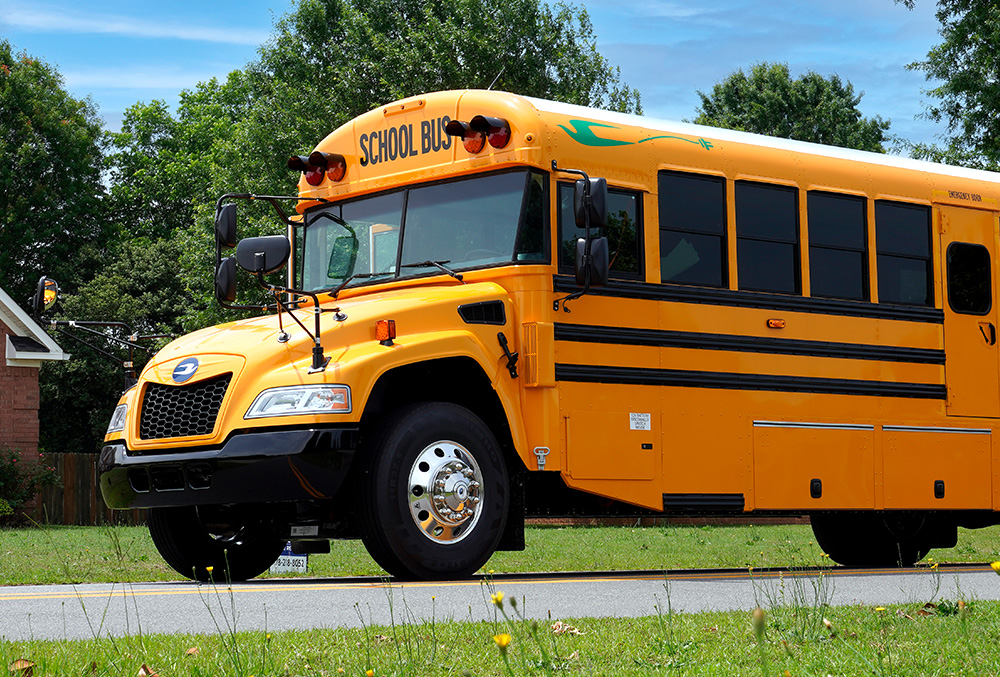
The company earns money selling buses and replacement parts, with dealers handling much of the connection to buyers. That distribution system is part of the offer: local expertise, service and help finding the right configuration. Blue Bird’s promise includes a refreshingly measurable sentence: “We will be easy to do business with.” A stranded vehicle makes that promise easy to test.
Its main competitors are Thomas Built Buses and IC Bus. Both sell electric school buses, too. Blue Bird’s argument therefore reaches beyond the battery: fuel choice, vehicle design, safety equipment and the strength of the service relationship. Buyers have alternatives. A yellow paint job settles very little.
Some of the differentiation sits in the seats. Working with restraint specialist IMMI, Blue Bird made driver airbags standard on Vision school buses from October 2025. IMMI also opened a Macon plant supporting Blue Bird’s seating and safety upgrades. It is the kind of change a parent might never spot from the curb, but a purchasing committee can put directly into its requirements.
Its propane and gasoline offerings rest on another long relationship: Ford supplies the engine and ROUSH CleanTech integrates the powertrain. The partners extended their collaboration through 2030. Building the bus includes deciding which specialist should build the pieces.
The $248,250 question
A 2026 Kentucky school-bus purchasing guide puts the decision in dollars. It lists a 72-seat Blue Bird Type C electric configuration at $406,045. A 72-seat propane configuration is $157,795. The difference is $248,250. These are specific listed configurations, rather than universal prices or a complete comparison of ownership costs.
Listed base prices · Kentucky 2026 guide · Options and infrastructure require their own budget.
Electric buses eliminate tailpipe emissions. They also move part of the operating problem into the depot. Charging equipment, electrical capacity and the timetable become purchasing questions. Grants can change the upfront arithmetic; electricity rates and maintenance affect the years afterward. A district needs its own calculation, including utility work and realistic energy use.
Blue Bird’s electric product literature describes overnight charging and route-dependent range. The practical inference is straightforward: predictable trips and time parked can make charging manageable. Long routes, winter heating demands or delayed electrical upgrades complicate it. A manufacturer’s maximum range is a starting point for questions, rather than a promise about every route.
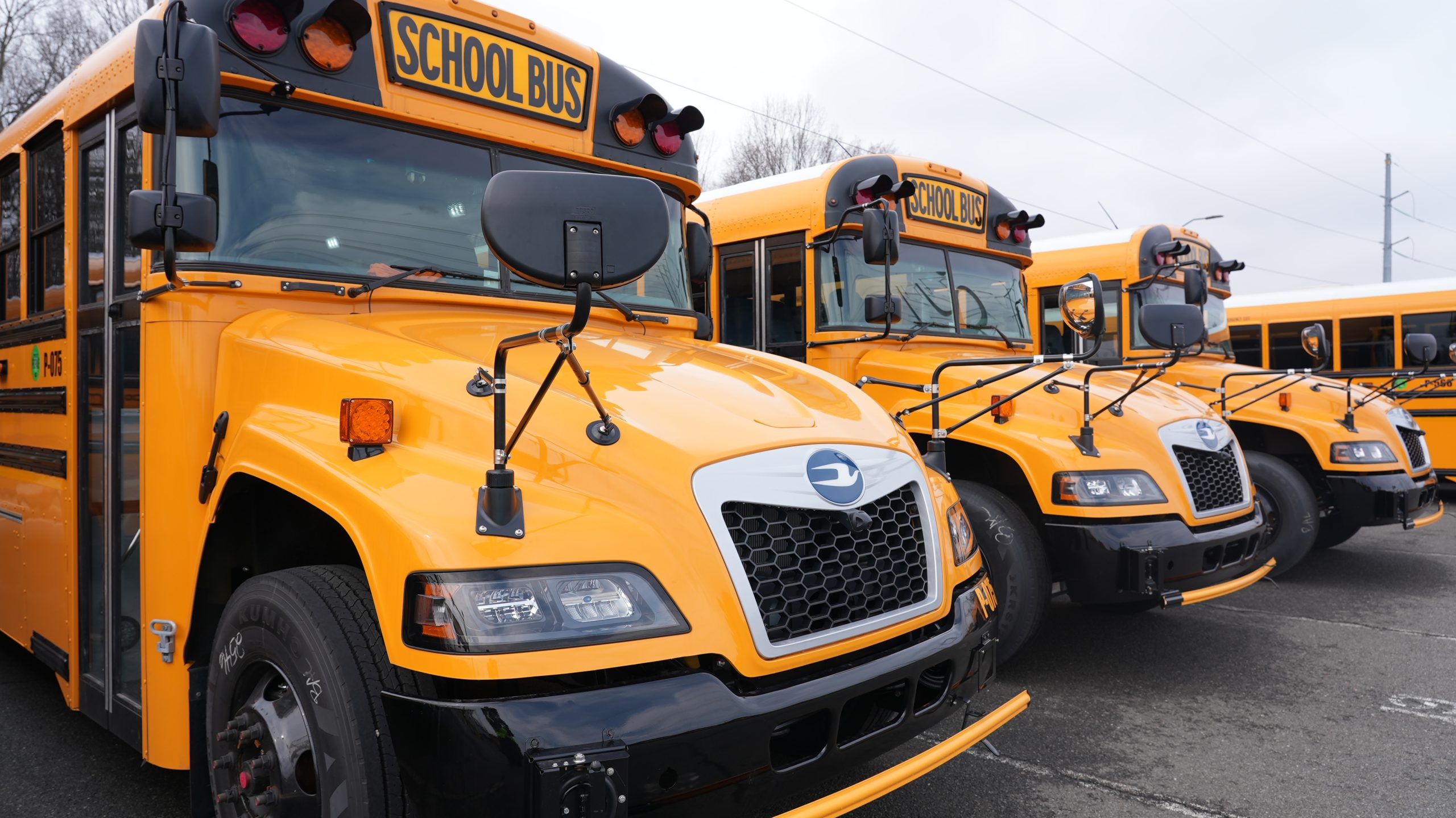
Propane gives the company another conversation to have. In March 2026, Prince William County Public Schools unveiled 62 new propane Blue Bird buses with driver airbags. The district aims to move 50-60% of its fleet to propane by 2030. Cleaner transportation can arrive through several purchase orders, written for different circumstances.
Orders were not the missing ingredient
Blue Bird has already learned that wanting buses and delivering them profitably are separate problems. In its second fiscal quarter of 2022, the company reported more than 6,600 buses in firm backlog and a $12.1 million net loss. Component shortages delayed vehicles while material, freight and labor costs climbed.
The uncomfortable detail was timing. Many buses had been ordered nearly a year earlier. Blue Bird honored those prices to protect dealer and customer relationships, even as production became more expensive. It diversified suppliers for critical components and raised prices on subsequent business. By May 2022, announced increases totaled more than 25% over ten months.
“We will be easy to do business with.”Blue Bird’s company promise
The episode offers a lesson other manufacturers can copy: examine the age and economics of the order book, alongside its size. Demand cannot supply a missing component. An old selling price cannot automatically absorb a new input cost. Customer goodwill has value, but keeping it can carry an immediate bill.
A bigger company underneath the same paint
Making that recovery also means paying attention to the people building the vehicles. In May 2024, United Steelworkers members ratified their first three-year contract with Blue Bird. The agreement included wage increases, retirement contributions and profit sharing. For a buyer weighing factory capacity, the workforce belongs in the picture alongside machinery and supplier agreements. Every finished bus depends on all three working together.
Fiscal 2025 produced $1.4801 billion in revenue and 9,409 buses sold, including 901 electric buses. That last number helps keep the story honest. Electric vehicles are consequential to Blue Bird’s direction; they remain one portion of the vehicles it delivers.
Electric buses / all buses sold in fiscal 2025
About 9.6% of unit sales
In April 2026, Blue Bird acquired Micro Bird’s remaining half. Consideration for the acquired stake totaled $205.9 million, including preliminary adjustments, split between cash and equity. In August it announced a Ford collaboration for next-generation F-53/F-59 commercial stripped chassis, with production anticipated in early 2028. These moves extend its manufacturing business beyond a single school-bus format.
For a district, the useful next step remains smaller: bring a dealer the actual route, passenger needs, depot constraints and budget. Ask for a configuration and a full operating calculation. Luce’s original customer had supplied a demanding test: survive the roads. Nearly a century later, the test has more variables. It still starts with the journey.