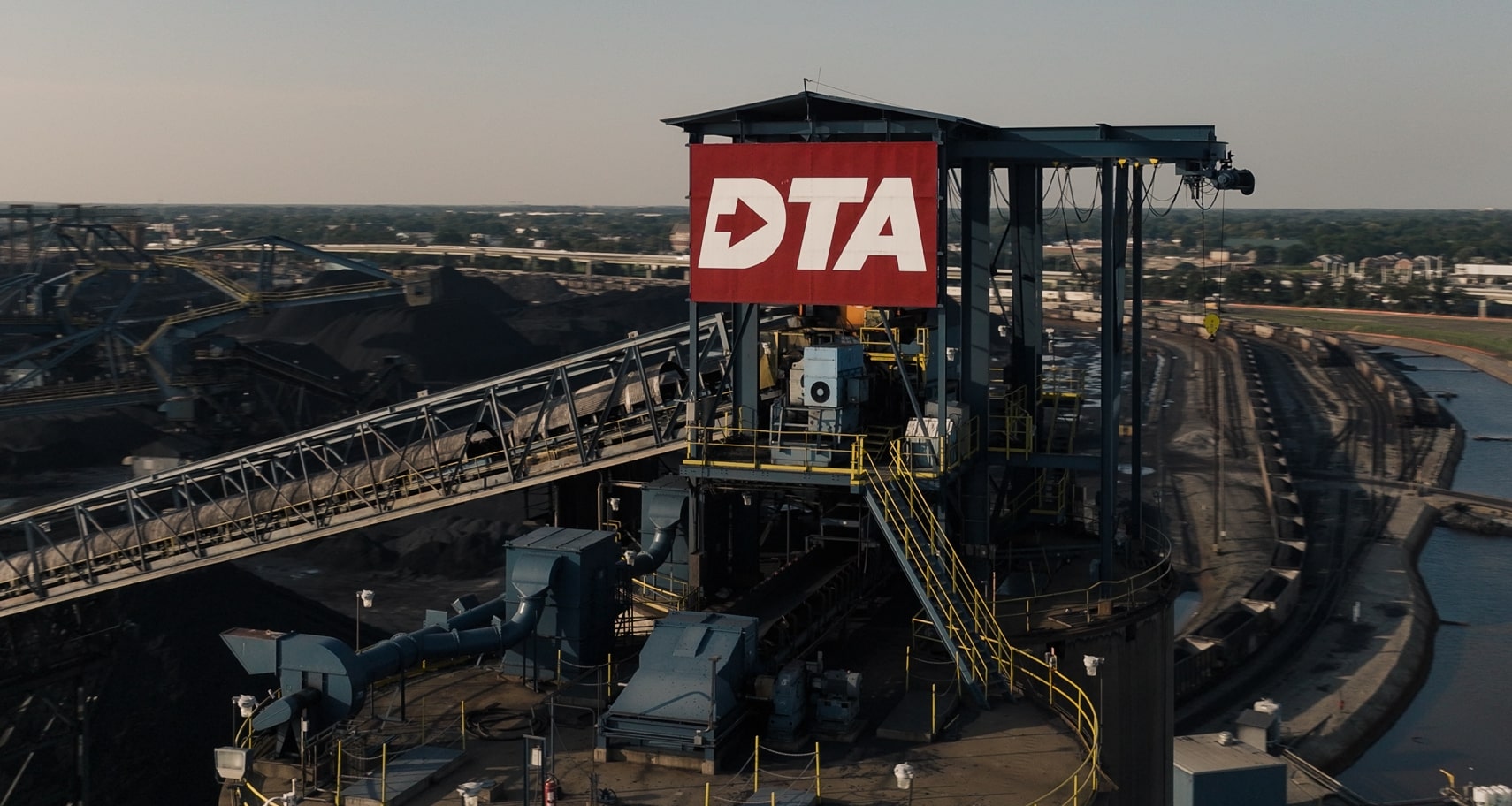
The trouble arrived at the end of the journey. On June 14, 2026, wind gusts exceeding 80 miles an hour hit Dominion Terminal Associates in Newport News, Virginia. One of its two stacker reclaimers, machines that move coal into and out of stockpiles, became inoperable. Alpha Metallurgical Resources owned 65% of the terminal and used it for most of its exports. Coal could still come out of the mountains. Getting it onto ships had become harder.
- Mine and blend Appalachian coal for steelmakers.
- Own export access to reach overseas customers.
- Protect the business when prices and shipping disappoint.
That machine is a useful place to begin understanding Alpha. The company sells a material extracted underground and at the surface in Virginia and West Virginia. But its commercial promise stretches much farther: a particular coal, in a particular blend, delivered where a steel customer needs it. A breakdown anywhere along that route can change the economics of everything upstream.
A recipe, sold by the ton
To see the appeal, follow the coal into a steelworks. Metallurgical coal can be converted into coke, which helps remove oxygen from iron ore in a blast furnace. It also supplies heat and supports the furnace burden. Thermal coal, familiar from power stations, has a different primary job. The distinction explains why Alpha chose to put “Metallurgical” in its name.
Its buyers include steel producers and coke manufacturers. They need coal suited to their production process, rather than an interchangeable black lump. Alpha offers blending and tailoring, supported by a portfolio of coal qualities. Its sales expertise includes coordinating rail, barge, and ocean transport. For a purchasing team, that makes the conversation about specifications and delivered supply.
- 01Mine
- 02Prepare + blend
- 03Rail + terminal
- 04Steel customer
Alpha supplied customers in 19 countries across five continents in 2025. DTA adds stockpiling and blending to its route overseas. The combination of a coal portfolio and terminal access is a concrete selling point. It faces alternatives, including Appalachian producer Ramaco Resources and Alabama-based Warrior Met Coal, whose export route runs through Mobile. The buyer still has to compare quality, delivery, and cost.
The expensive art of narrowing the business
Alpha’s modern history begins with creditors. Contura Energy started operations in July 2016 after acquiring core assets from Alpha Natural Resources during that company’s bankruptcy restructuring. A group of first-lien lenders formed and majority-owned the new business. This was an industrial reassembly, with mines, reserves, employees, and obligations already attached.
Contura subsequently combined with Alpha businesses in 2018. Then came a sharper choice about what to keep. In December 2020, it transferred the Cumberland thermal mining complex in Pennsylvania to Iron Senergy. The transaction included approximately $50 million of consideration transferred to the buyer. Selling an operation could require paying to hand it over.
The same transaction released Alpha from reclamation obligations representing $169 million in undiscounted future cash flows. Those numbers measure different things; subtracting one from the other would disguise timing and accounting differences. They do explain why disposal proceeds alone make a poor scorecard for a mining exit. In February 2021, Contura became Alpha Metallurgical Resources, putting its strategic focus on the letterhead.
The space between price and profit
A narrower identity does not confer control over the market. Alpha’s annual revenue fell from approximately $2.96 billion in 2024 to $2.13 billion in 2025. It reported a roughly $61.7 million net loss for 2025. Weaker global steel demand pushed coal pricing down, while sales volumes also declined.
There is another trap in the numbers. For the second quarter of 2026, Alpha reported a realized Met segment price of $118.71 per ton and a cost of $103.07 per ton. Both are company-defined non-GAAP measures. Their difference is not net profit: costs outside that calculation still need paying. The quarter ended with a $12.3 million net loss.

His August explanation was plain: shipments came in below expectations, costs above them.
Management reduced its shipment outlook and raised its cost guidance. The damaged terminal, persistent supply costs, and fewer expected tons informed the revision. Alpha planned to use capacity at other East Coast terminals to soften the disruption. Owning the main route helped; having another route mattered.
The work cannot outrun the worker
Underground, the constraints are more consequential than a missed shipment. Alpha’s published policy gives employees authority to stop work they believe is unsafe. Mine rescue teams train for first aid, firefighting, ventilation, and difficult decisions. Managers rehearse emergencies. The stated principle is unusually direct:
“Any task that cannot be performed safely shall not be performed.”Alpha’s published safety policy
That policy must be read alongside outcomes. In April 2026, Alpha disclosed that Aaron Warrix, a 53-year-old shuttle car operator, died after a rock struck him at Horse Creek Eagle Mine. The company said it was working with federal and state investigators. Training and rules have to withstand the conditions workers actually encounter.
Environmental work also continues beyond extraction. Alpha describes regular audits, water monitoring, and reclamation. It reports planting more than 5.5 million trees since 2016. Restoring mined land belongs inside the operating model, with obligations that can outlast a mine’s productive years.
Keep a second route to the customer
The transferable lesson is practical: understand the customer’s specification, then examine every dependency required to deliver it. A backup shipping arrangement deserves scrutiny before the primary equipment fails. Alpha’s terminal disruption makes that lesson tangible.
The limits are equally tangible. Alternate terminals cannot repair weak steel demand or make an unsuitable coal blend useful. Electric arc furnaces, which commonly rely on scrap and electricity, follow a different raw-material route. Alpha’s opportunity rests on serving the steelmaking processes that need its coal, at a delivered cost those customers will accept.