Consider the ignition coil. It is small enough to disappear into the visual clutter beneath a hood. When it works, nobody writes about it. When it fails, a much larger and more expensive machine can run badly. For a replacement-parts manufacturer, that imbalance is the opportunity: a modest component can have an outsized claim on someone’s attention, time, and money.
- A century of ignition expertise is moving into sensors, safety, and thermal management.
- Nissens gave SMP a larger European business for approximately $390 million.
- Distribution and technician training help turn a component into a completed repair.
Standard Motor Products has spent more than a century in that gap. Founded in New York in 1919 by Elias Fife and Ralph Van Allen, SMP began with ignition and electrical products. Today its business reaches from replacement sensors and fuel injectors to air-conditioning compressors and custom components for equipment manufacturers. The interesting question is how a company built around yesterday’s engine makes itself useful to tomorrow’s vehicle.
01A catalog is a promise
SMP’s direct customers include retailers and wholesale distributors such as AutoZone, O’Reilly Auto Parts, and Genuine Parts Company’s NAPA network. Repair professionals and vehicle owners sit farther along the chain. In its Engineered Solutions business, customers include vehicle and equipment manufacturers such as Caterpillar and Daimler Truck. One business supplies a repair; the other helps build a machine.
The aftermarket proposition depends on breadth. Standard, its flagship vehicle-control brand, advertises more than 60,000 products. Four Seasons covers heating and air conditioning. Blue Streak occupies the premium end of the replacement-parts shelf. SMP also supplies private-label products. This is a business that earns revenue by manufacturing, sourcing, and distributing physical components, with catalog coverage and availability doing much of the selling.
Those details matter because the customer’s problem is specific. A shop needs a part for a particular application, with the correct fit and dependable operation. A broad catalog is useful only if the right item arrives. SMP competes with full-line and specialist suppliers, automakers’ service-parts operations, and retailers’ direct imports. Its case rests on engineering, coverage, distribution, and technical support rather than price alone.
02The engine is losing its monopoly
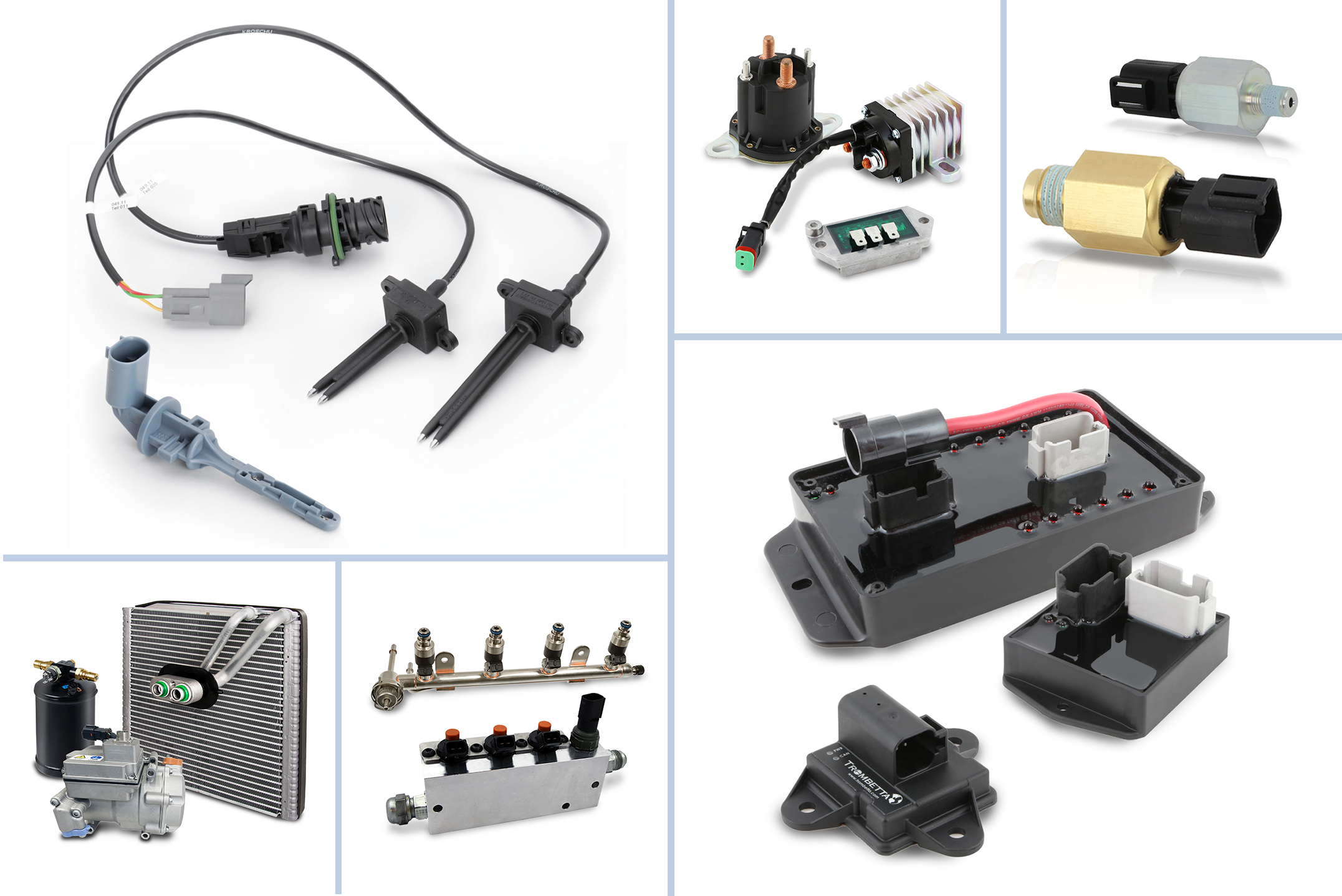
An electric vehicle has no use for an ignition coil. It still needs temperature control, electrical switching, and information about what its components are doing. SMP’s Vehicle Control business now includes more than 165 powertrain-neutral categories. Its thermal products extend beyond cabin comfort to temperature management for engines, transmissions, electric drive motors, and batteries.
The change is visible in the company’s vocabulary. In 2023, it announced that Engine Management would become Vehicle Control. That broader name describes the commercial problem more accurately: follow the systems that vehicles need, even when propulsion changes. Advanced driver-assistance components and tire-pressure sensors give the catalog jobs beyond managing combustion.
There is a practical engineering story here, too. Standard says its engineers examine original-equipment ignition-coil failures, then change sealing or internal designs to address moisture and heat. That is a useful example of where product development can begin: inspect what stopped working in the field. The promise belongs to individual designs and applications; it does not establish that every replacement outlasts every original.
Three functions that cross powertrain boundaries. Exact products and fitment vary.
03The $390 million crossing
In November 2024, SMP bought Nissens Automotive for approximately $390 million, net of cash and assumed debt and subject to closing adjustments. The sellers were Axcel and the Nissen family. Based in Denmark, Nissens brought European aftermarket distribution and products in engine cooling, air conditioning, and engine efficiency. Expansion here meant buying an existing route to customers.
The accounting makes the scale of that decision plain. SMP reported $1.79 billion in 2025 sales, up 22.4%. Excluding Nissens, growth was 4.0%. Nissens contributed $305.4 million during its first full calendar year inside SMP. Reading only the headline growth rate would miss how much of the leap came from the acquisition.
There are costs beyond the purchase price. Net debt ended 2025 at $546.7 million. Management’s integration plan targets $8 million to $12 million in cost reductions within 24 months, including purchasing and product-cost opportunities. Those are targets, not completed savings. The acquisition gives SMP reach; integration has to make that reach pay.
Different reporting scopes. The gap reflects Nissens’ contribution; these are not separate business margins.
04The classroom behind the parts counter
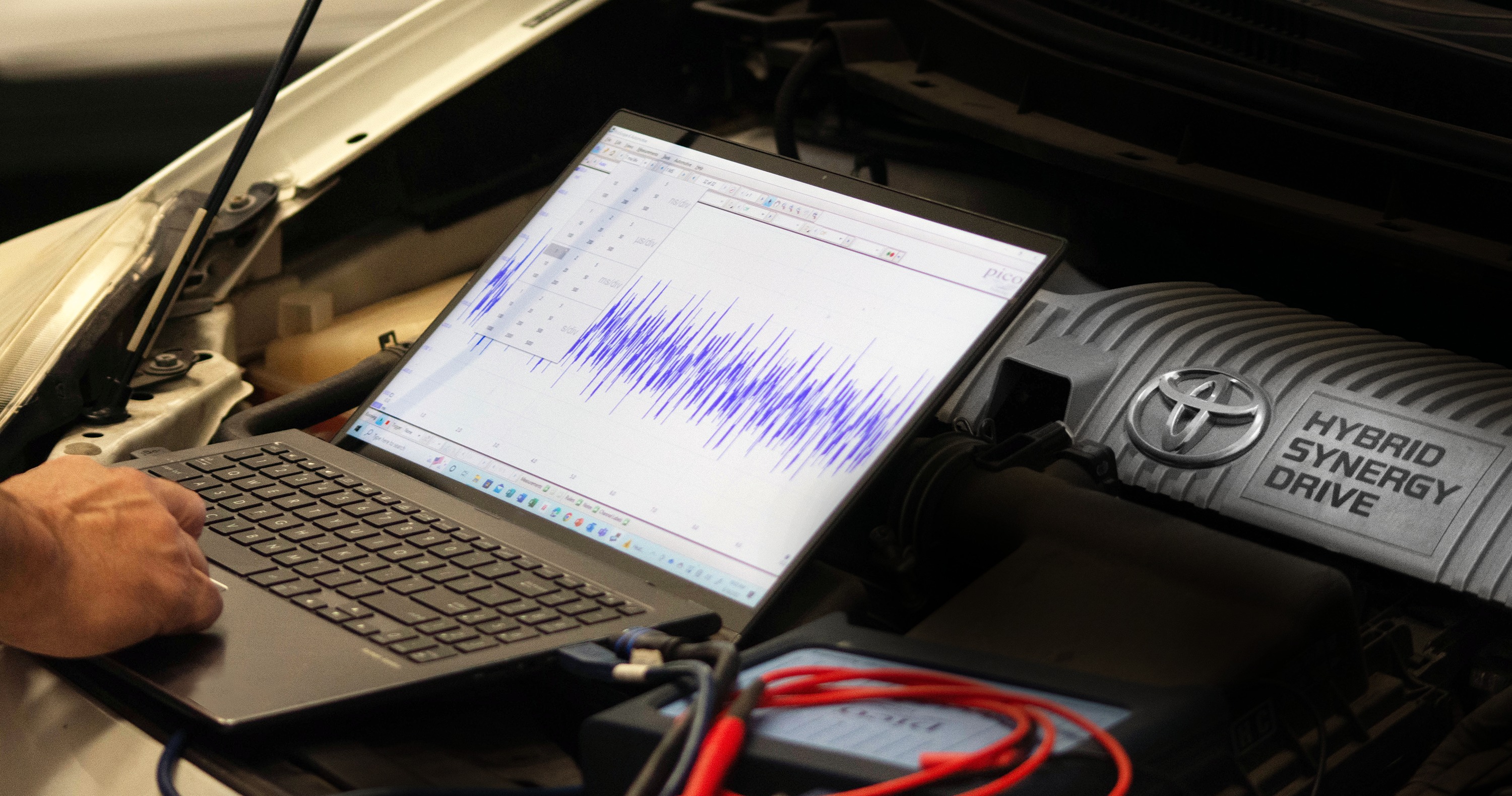
SMP introduced technician training clinics in 1979 and opened a corporate training center in Irving, Texas, in 1995. That history helps explain a less obvious achievement. In May 2026, Standard’s YouTube channel passed 100,000 subscribers, with more than 780 videos published since its 2010 launch. The programming includes diagnostics, repair tips, and installation procedures.
Training makes commercial sense. A component operates inside a system, and replacing it requires more knowledge than recognizing its shape. Technicians can use the catalog to identify an application and the training material to understand the job. Equipment manufacturers can approach Engineered Solutions for custom work. For a driver, the practical route is usually a parts retailer or repair shop.
Eric Sills, chairman and CEO, is founder Elias Fife’s great-grandson and became CEO in 2016. The company describes its culture with one word: “Respect.” Its long-running 25 Year Club recognizes lengthy employee service. The relevant connection is continuity: knowledge about products, customers, and failure patterns can accumulate across careers, provided the organization keeps updating what that knowledge is for.
A broad catalog is useful only if the right item arrives.
05What the next repair teaches
The risks are already visible. In second-quarter 2026 results, SMP reported a significant decline in wire sets, reflecting secular contraction and customers reducing inventory. Engineered Solutions sales fell 3.8% in 2025 amid weak end markets. Weather affects air-conditioning demand. Diversification creates several sources of revenue, but each comes with its own rhythm.
Supply decisions are changing as well. In July 2026, SMP announced a 50/50 sensor-manufacturing venture with Techstrong in Thailand. The stated aims include greater control over development, quality, and delivery, and reduced reliance on China. This is a concrete response to supply-chain exposure; it also requires capital and operational coordination.
The transferable lesson is to study the customer’s enduring problem before defending a familiar product. Then support the replacement with distribution and instruction. That approach needs engineering competence, enough demand to justify inventory, and customers willing to pay for dependable service. It becomes harder when old categories shrink faster than new ones grow. SMP’s next chapter will be measured in those ordinary, demanding transactions: a fault found, a part delivered, a vehicle running again.
Go to the parts counter
Find the application. Study the job. Follow what changes next.