A coal mine has a peculiar problem: some of what comes out of it is worth money, but can also explode. Methane must be removed to keep underground conditions safe. Once that happens, an awkward choice remains. Release the gas, or find a way to capture, clean and sell it. CNX has made the second choice part of its business.
- Produce the gas. Appalachian shale remains the core business.
- Control the connections. Gathering, processing and water infrastructure support the wells.
- Find value in the waste. Captured mine methane earns fuel revenue and qualifying environmental attributes.
That combination makes CNX interesting. The company carries an Appalachian corporate lineage back to 1864, yet its present identity emerged from the 2017 separation of the coal business. Today it is a natural gas producer with a technology sideline and an unusually useful inheritance: rights, infrastructure and knowledge accumulated in the same region over generations.
The pipes make the difference
Start with the ordinary business. CNX develops the Marcellus and Utica shales, produces gas and liquids, and gets them to market. Its annual filing says it markets natural gas primarily to U.S. wholesalers. This is the upstream end of the energy system: commercial buyers purchase supply, while gathering and water customers buy services. A household encounters the result through its utility, rather than a CNX shopping cart.
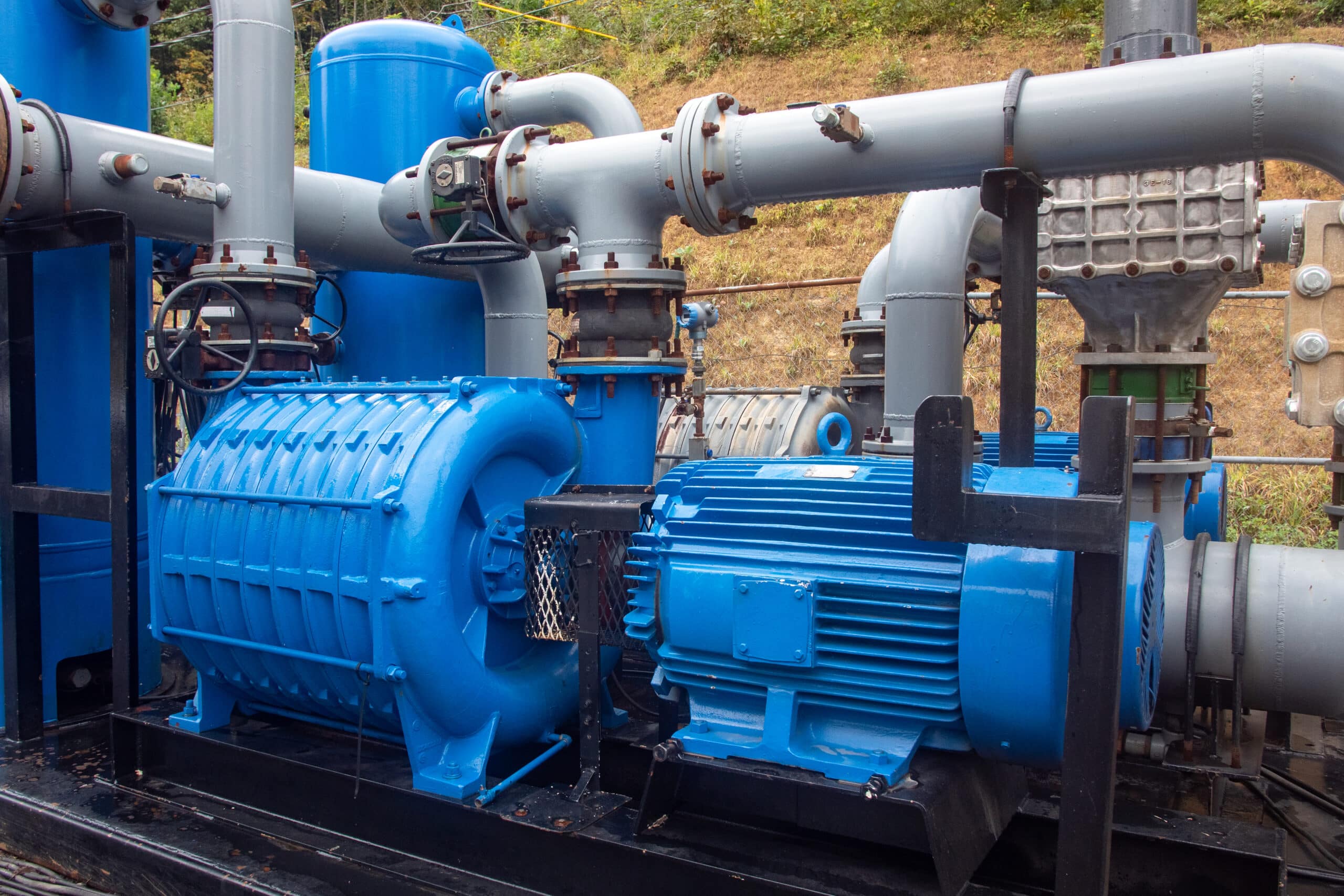
The company reports about 2,600 miles of gas gathering pipelines and 1,400 miles of water pipelines. Those connections matter because a productive well is only the beginning. Gas has to meet specifications and reach a buyer. Water has to arrive and move through operations. Owning more of that system gives CNX more choices about how the pieces fit.
PROCESS / GATHER
Consider gas quality. CNX describes blending nearby lower- and higher-heating-value gas through its connected system, sometimes avoiding additional processing. It also develops formations stacked beneath the same acreage, reusing pads and infrastructure. These are practical economies of coordination. Against Appalachian peers such as EQT, Range and Antero, the relevant comparison includes what happens between drilling a well and collecting payment.
A second price for the same gas
Mine methane adds another calculation. CNX calls its captured, upgraded product Remediated Mine Gas, or RMG. The molecule is useful fuel. The avoided release can also have commercial value under qualifying environmental programs. The argument depends on a counterfactual: what would have reached the atmosphere without capture? That baseline, along with leakage, processing and eventual combustion, matters to the climate accounting.
The company’s Q2 2026 operating account reported approximately $13 million in net environmental-attribute sales tied to roughly four billion cubic feet of RMG. These are attribute sales, separate from the ordinary sale of gas. The distinction is essential: production volume alone cannot explain the economics, and a price attached to an environmental benefit requires rules that recognize that benefit.
Newlight offers a different destination. In 2022, it signed a 15-year agreement with CNX supporting Aircarbon, a material produced using microorganisms. The agreement describes contractual rights to captured methane delivered through new and existing pipelines. Think carefully about that wording. A contractual allocation through shared infrastructure is different from a dedicated pipe carrying a particular batch from one mine to one factory.
CNX also turns operating problems into possible products. Its 2024 AutoSep venture with Deep Well Services targets flowback, the early production phase when fluids and solids return from a well. The partners say the sealed, automated system reduces labor needs, exposure and methane releases. DWS operates the venture. The transferable idea is sensible: test an engineering fix internally, then pair the technology with a partner equipped to serve other operators.
The day eleven wells could wait
The clearest test of this business came when near-term gas economics weakened. In March 2024, CNX elected to delay completions on three Marcellus pads containing 11 wells. Its prepared remarks put the reduction in projected annual production at about 30 billion cubic feet equivalent, with approximately $50 million of capital spending deferred. The drilling opportunity remained. The immediate price made waiting more attractive.
“we will continue to follow the math.”CNX · Q1 2024 prepared remarks
That is a more useful lesson than a blanket instruction to grow. It also puts the costs in perspective. CNX later paid approximately $518 million for Apex’s upstream and associated midstream business, according to its 2025 filing. Infrastructure and neighboring inventory require substantial capital. Through Q2 2026, CNX reported 26 consecutive quarters of positive free cash flow, a company-defined non-GAAP measure. That record rewards examination of spending and hedging alongside production.
March 2024 decision. Deferred spending is a timing change, not a permanent saving.
A million readings, and a harder question
Operational confidence is only one audience’s concern. Neighbors want to know what reaches their air and water. CNX’s Radical Transparency collaboration with Pennsylvania publishes monitoring information; DEP announced an independent well-pad air study in May 2025. In September 2026, CNX announced an expansion into continuous ambient gamma radiation monitoring and greater disclosure of waste radiation surveys. This makes specific measurements more accessible.
Access is useful; interpretation still takes work. Environmental Health Project has challenged the reach of CNX’s health conclusions, including the limited pollutants monitored. A site reading answers a bounded question about a substance, place and time. Broader health questions need broader evidence. Meanwhile, CNX’s Mentorship Academy connects high school students to regional careers without requiring a four-year degree, a concrete expression of its local-investment culture.
The lesson to copy is a sequence: understand a costly handoff, build control around it, and spend only when the economics justify it. The limits are equally concrete. Mine-gas capture needs rights, equipment, pipeline access and credible emissions accounting. Attribute revenue depends on eligible activity and market prices. CNX’s approach makes the most sense where those pieces already meet. Its inheritance helps explain both the opportunity and why copying the whole company would be difficult.
Follow the gas
Explore CNX, its company newsroom and investor updates. Follow LinkedIn, X and the CNX Foundation on Facebook.
Watch: Inside the Mentorship Academy More from CNX on YouTube ↗