A bus with a pulse
It is 6:50 a.m. in Oakland and a school bus pulls away from the yard without a drop of diesel in it. On a phone three miles away, a parent watches a small icon roll down the street. When her son taps his RFID card at the door, she gets a notification before he has found a seat. The bus is quiet. It is also, in a sense, a power plant on wheels - and tonight it will sell electricity back to the grid. This is what Zūm did to the school run: it made it visible, it made it electric, and it made it boring in the best possible way.
Zūm is not a gadget. It is the company that took the slowest-moving corner of education - student transportation - and rebuilt it around software, data, and clean energy. Roughly 4,500 schools and districts run on it. About 139 million rides have gone through it. And the part that surprises people most is that the same buses ferrying eight-year-olds to homeroom are quietly becoming infrastructure.
“The school bus is the largest form of mass transit in America. Almost nobody was treating it like technology.”
An industry stuck in 1975
Here is a fact that should not be true: for decades, the average school district had less real-time data about a bus carrying its children than a pizza chain had about a pepperoni delivery. Routes were drawn by hand. Attendance was a paper sheet. When a bus was late, parents stood at the corner and guessed. The yellow bus is the most regulated, most ubiquitous vehicle in the country, and it was running on radios and clipboards.
That gap was not a small inconvenience. It was a daily anxiety for millions of families, an operational headache for districts, and - with diesel engines idling outside elementary schools - a public health problem hiding in plain sight. The industry knew it. It simply had no incentive to change, which is the most comfortable kind of broken.
“Let's act now to reinvent student mobility for the future that we want to live, learn and travel in.”
A working mother's math
Ritu Narayan had spent twenty years building software at Oracle, Yahoo, IBM and eBay. She also had two young children and a problem that no product manager could route around: getting them safely to and from school without sacrificing her career. Her own mother had given up a career to raise four kids. Narayan decided the school bus was a harder, more worthwhile problem than anything on her resume - which, given the resume, is saying something.
In 2015 she co-founded Zūm with Vivek Garg and Abhishek Garg. The bet was deceptively simple: treat student transportation as a technology and energy platform, not a fleet of trucks. Win the contract, run the buses, instrument everything, and then - the part nobody else was brave enough to fund - electrify the whole thing and turn the fleet into a grid asset.
2015, Redwood City, California
Ritu Narayan, Vivek Garg, Abhishek Garg
B2B / B2G contracted transportation + software + energy
GIC, Sequoia, SoftBank Vision Fund 2, BMW i Ventures, Climate Investment
Software, then steel, then electrons
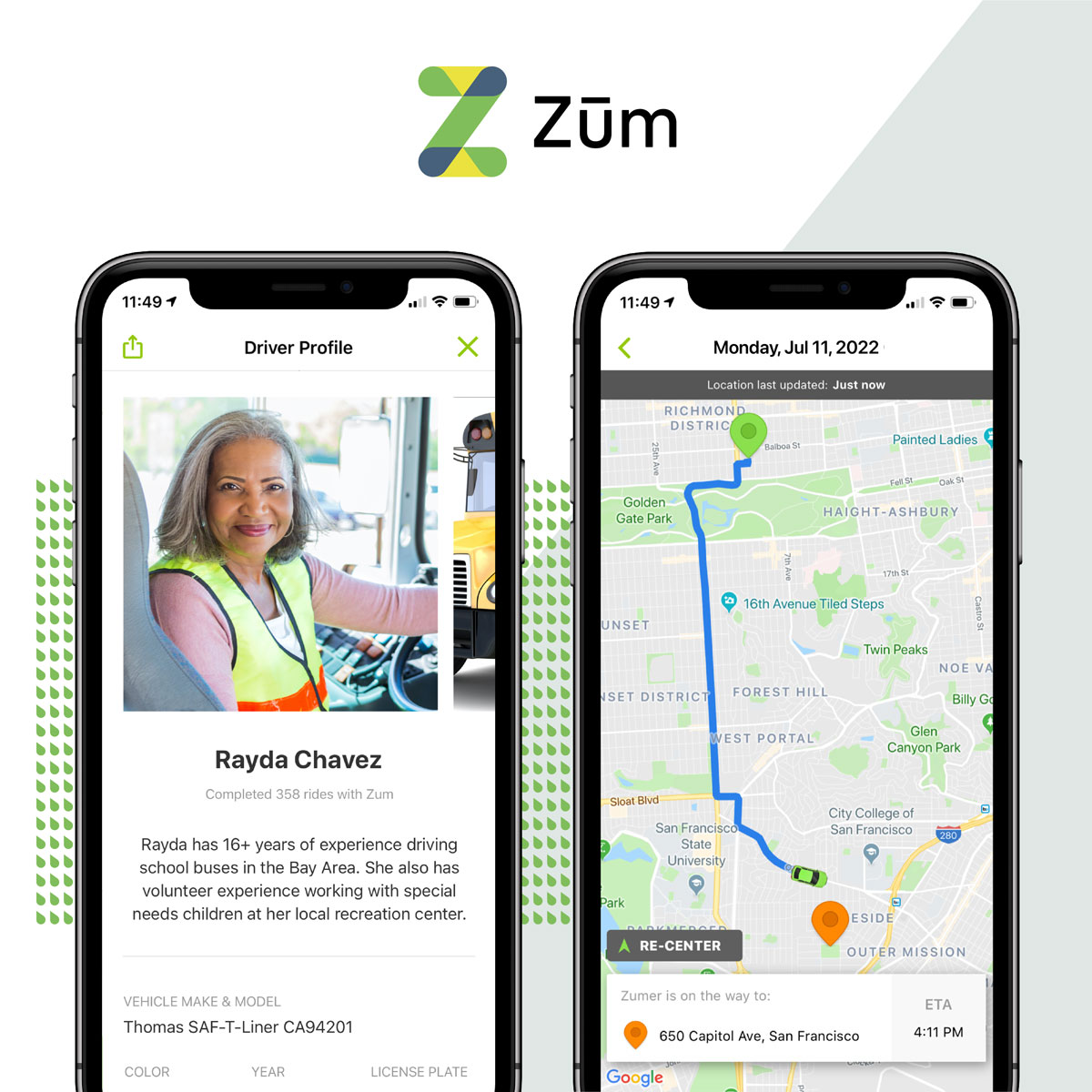
At the center is the Connected Mobility Experience - a platform that ties parents, drivers, schools and districts into one live system. AI plans the routes and adjusts them on the fly. Parents get live tracking and per-trip alerts. Drivers get turn-by-turn apps and student care instructions. Districts get a dashboard that finally tells them where every bus and every child is. The clipboard, mercifully, retired.
“A school bus that knows where it is, who's on it, and how much power it can give back. That's the whole pitch.”
The Zūm milestone reel
Numbers that argue back
Vision is cheap. Contracts are not. Zūm's case is built on the unglamorous evidence of signed districts and deployed buses: San Francisco, Los Angeles, Oakland, Seattle, Howard County in Maryland. Oakland Unified became the first major U.S. district to run a 100% electric school bus fleet. The EPA put $32 million behind electrifying fleets nationwide. And the funding ladder kept climbing as the thesis kept proving out.
The investor list reads like a vote of confidence from people who do not vote lightly. Sequoia Capital came in early. SoftBank Vision Fund 2 led the round that scaled the company nationally. BMW i Ventures saw a transportation play; GIC, the Singapore sovereign wealth fund, led the 2024 round that minted the unicorn; Climate Investment saw an energy play. They were, in their way, all correct - Zūm is several companies wearing one coat of yellow paint.
The recognition followed the contracts. Zūm has been named a Fast Company World's Most Innovative Company three times, landed on the Inc. 5000 list of fastest-growing companies three times, and earned a spot on CNBC's 2025 Disruptor 50. Narayan herself has been honored as a CNBC Changemaker and an EY Entrepreneur Of The Year finalist. Awards are not revenue, but they are a useful tell: the rest of the world stopped seeing a bus company and started seeing a platform.
Funding, round by round
“One school district decided to plug its buses into the grid. Then it powered the neighborhood.”
Safety, on-time, and a cleaner sky
Zūm's stated mission is to bring student transportation into a new era of safety, reliability, efficiency and sustainability. In practice that means three promises stacked on top of each other: a parent should always know where their child is; a district should never have to guess where a bus is; and the air outside the school door should be cleaner than it was the year before. The electrification piece is not a side project - it is the part that turns a transportation company into a climate one.
The grid math is the surprise ending. In San Francisco, Zūm's bidirectional fleet is designed to return roughly 3 gigawatt-hours of clean energy a year - enough to power around 1.2 million homes for a few hours during peak demand. A vehicle that sits idle most of the day becomes, in the off-hours, a battery for the city. The 104-bus deployment planned for August 2026 is set to be the largest bidirectional electric school bus fleet in the country, with plans to reach 238 vehicles by the 2027-2028 school year.
None of this works without people, which is the part technology profiles tend to skip. Zūm employs roughly 560 people and is Great Place to Work Certified, organized around four stated values: customer obsession, innovative execution, integrity, and community building. It is a useful reminder that behind the dashboards are drivers who learn a child's name, a route, and the specific instruction that this kid needs the front seat. The software is the easy part. The trust is the product.
Why it matters tomorrowThe 6:50 a.m. test
Go back to that quiet bus pulling out of the Oakland yard. A decade ago that scene was impossible in every detail: the silence, the live dot on the parent's phone, the card tap, the energy flowing back to the grid at night. Zūm did not invent the school bus. It noticed that everyone had stopped looking at it - and that the most ordinary vehicle in America was also the most overlooked opportunity.
If the bet keeps paying off, the boring miracle becomes invisible: kids get to school, parents stop worrying, districts stop guessing, and the grid gets a little greener every afternoon. The yellow bus stays yellow. Almost everything else about it changes.