A missing tag can make a surprisingly effective business partner. An online order goes out complete, returns incomplete, and leaves a retailer with a question that a refund cannot answer: what happens to the object now? Eric Williams helped build eJOOV around that awkward question. Somewhere between a perfectly usable product and an unprofitable pile of cardboard, there is work to do.
Williams is the Louisville company's president, CEO and co-founder. His professional route runs through manufacturing, depot management and distribution. By the time he became a founder in 2020, he had spent years in businesses where inventory needed both a destination and someone accountable for getting it there. Starting a logistics company meant bringing that experience to customers whose problems arrived in boxes.
A founder with a distribution education
His career began at Cummins Cumberland as an account manager in 1998. In 2001, he moved to Ford Motor Company, working in material planning and logistics management. CNH followed in 2007, with responsibilities spanning operations, depot management and North American logistics leadership. Each move kept him close to the relationship between a plan and the physical goods that must obey it.
In 2013, Williams became vice president of distribution operations at Chegg in Kentucky. From 2014 to 2017, he served as president and operating partner at Williams Industries. The progression matters: his experience reached from managing an account to managing operations to running a business. Entrepreneurship came after those jobs, with their different views of cost, service and responsibility.
His qualifications fit that path. He holds a business administration degree from Spalding University and a master's in industrial engineering from the University of Louisville. He earned a Lean Six Sigma Black Belt in 2012 and attended a strategic leadership program at the University of Wisconsin-Milwaukee in 2012-2013. Business, engineering and leadership form a useful collection for someone whose work must satisfy a warehouse floor and a balance sheet.
The value inside the inconvenience
eJOOV identifies Williams, Mike Lewis and Brendan Manion as its founders. The company's early focus on ecommerce returns gave it a specific problem to address. Missing packaging, pieces or tags could leave merchandise difficult to resell, even when the underlying product still had value. A sale had been reversed; the expense of dealing with it remained very much in force.
Williams has developed that argument in his own writing. He estimates that about 80 percent of returned merchandise across product types is already suitable, or can be made suitable, for retail resale. That is his estimate, rather than a measured recovery rate for every eJOOV customer. His point is that the condition of a returned item deserves examination before anyone decides its commercial life is over.
The practical choices include inspection, refurbishment, repackaging and restocking. Some items justify repair; others do not. In Williams' account, the same reasoning extends into industrial parts, where overseas shipping costs and the weight of a component can make local inspection and rework attractive. The economics depend on the item. A new carton and a complicated repair should never have identical approval processes.
when commercially suitable
The first year put numbers on the idea
By June 2021, eJOOV was adding Louisville warehouse space and considering expansion westward. The young company was already generating revenue in the multimillion-dollar range. That is a meaningful early marker, though revenue alone does not describe a warehouse business's profitability. A busy loading dock still has wages, space and equipment to pay for.
In December of that year, eJOOV secured $936,200 through a convertible note as it looked to introduce more automation. It was seeking a total of $3.5 million on the way toward a Series A round. The distinction is useful: the smaller sum was secured; the larger figure was a fundraising ambition. An investor presentation and money received belong in different columns.
The financing placed a familiar operating question in front of a new company: which parts of the work should machines take on? Automation requires capital, and physical operations offer plenty of ways to spend it. The announcement established the direction of travel. It did not make every future improvement a completed achievement.
A service desk within walking distance
There is a revealing detail in eJOOV's service model. Its customer-service team works in the warehouse. That arrangement puts the people answering questions near the goods those questions concern. When an order needs attention, the distance between a conversation and a physical check can matter. The warehouse becomes part of the answer, rather than a place a message must eventually reach.
Williams' colleagues describe a compatible management style. In a public recommendation, Julio Garamvolgyi calls him hands-on and says he leads by example. David Nation highlights planning, follow-through and team building. These are colleagues' assessments of his work, and they offer a more concrete picture of his professional character than a string of executive adjectives would.
The company also offers month-to-month standard contracts and upfront pricing for requested work. The arrangement puts a regular renewal decision in the customer's hands. Keeping the relationship therefore requires ongoing usefulness. There is something bracing about a business model that gives its own performance a monthly appointment.
For Williams, that creates a practical connection between the promises made in a sales conversation and the decisions made during a working day. A client who can leave needs reasons to stay. Clear charges and accessible service are part of the proposition; executing the work is the recurring examination.
The software has a warehouse address
eJOOV's technology offering includes integrations with ecommerce, inventory and enterprise resource planning systems. An in-house engineering team handles custom integration needs. Its customer portal provides receiving, inventory and order information, including historical data and daily order progress. These are the details a customer needs when a delivery promise depends on knowing what is actually available.
That kind of visibility gives the relationship another working surface. A customer can check a status without reconstructing it through several conversations. The company describes scanning technology, monitoring and lean methods as tools for reducing errors and improving efficiency. Those are operating aims, rather than a reason to pretend warehouses can become immune to mistakes.
The interesting part of Williams' business is the conjunction of these two environments. Software records movement; people handle the goods. A useful integration keeps the record close to the physical event. The screen may be tidy, but its credibility rests on something rather less decorative: whether the count is right.
From Louisville to the automotive waterfront
The company's work now includes customized fulfillment, subscription boxes and kitting, alongside specialized services. Automotive support brings Williams back toward an industry he encountered at Ford and CNH. Distilled-spirits storage and shipping add another set of handling requirements. These services give the business several ways to work with customers whose goods need more attention than an empty shelf provides.
Packaging is part of that attention. eJOOV offers branded presentation, promotional inserts and assembled kits. Its services approach emphasizes choosing customers whose requirements fit its operating model and building longer relationships with them. That is a choice about what work to accept as well as how to perform it. A custom service becomes difficult to sustain when every new assignment is accepted without regard for fit.
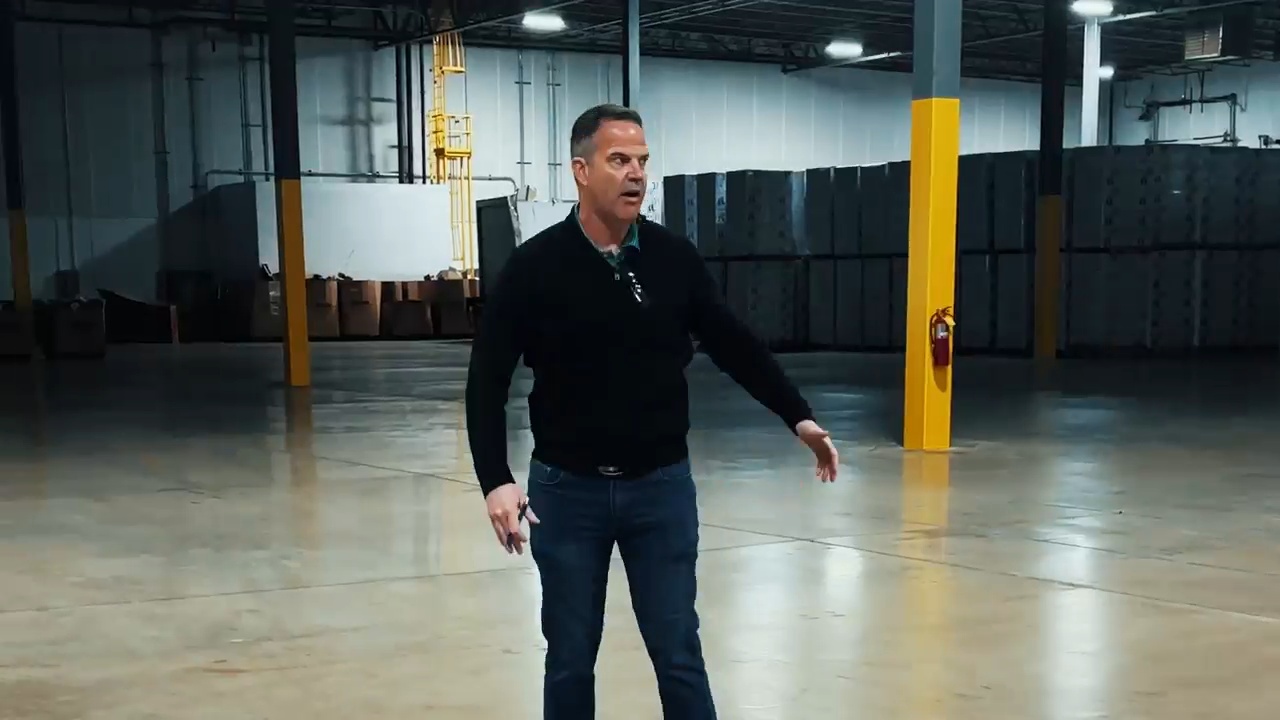
In a video about the company's Suffolk, Virginia, facility, Williams describes an automotive focus connected to the Port of Virginia. His aspiration is explicit: grow around the port and domestically. The location is a means to serve existing customers and meet prospective ones. The Virginia Maritime Association also lists him with EJOOV Holdings among its warehouse and distribution-center members.
A September 2026 legal notice names Williams and Manion as managers of eJoov Holdings. It records the company's intention to apply for distilled-spirits and wine licensing at a Louisville location on Cane Run Road. That is an application intention, with its own process ahead. It offers a concrete glimpse of continuing activity in the company's specialized logistics work.
What growth asks of the operator
Williams has been candid about the difference between having momentum and having the resources to expand. In a testimonial about Liberty Hill Equity Partners, he credits the partnership with capital, discipline and insight. The remark gives the growth story a useful human dimension: experience does not remove the need for help.
“We had the momentum but not the means to scale.”
Eric Williams / on partnering with Liberty Hill
His responsibilities also extend beyond the company. BLUE, a Louisville initiative centered on construction trades and entrepreneurship, lists him as treasurer. Its work connects training with opportunities to build a working life in the trades. His LinkedIn profile records board service with Dismas Charities beginning in October 2020. Both roles sit alongside the business he was helping establish that year.
Williams' career gives the returned package a longer backstory. Account management, manufacturing logistics, depots, distribution and executive responsibility all precede eJOOV. The company brings those experiences into contact with a deceptively ordinary commercial problem. Somebody has sent something back. Before the next decision becomes routine, an operator has to look closely enough to make it worth taking.