The revealing number in Dean Foods’ story is a quantity of milk: 55 million gallons. That is how much private-label volume the company said it lost beginning in the second half of 2018 in connection with Walmart’s new Indiana processing plant. A customer had acquired the means to do part of Dean’s job. The estimate for a full year was 125 million gallons. Behind those gallons sat plants, trucks and delivery routes. Dean’s 2018 filing.
- Dean processed milk and delivered it under familiar brands and retailers’ own labels.
- Falling volume put pressure on an expensive physical network.
- Bankruptcy ended the old operating business; many brands continued under new owners.
A national company with local names
Dean’s ancestry reaches back to 1925, when Sam Dean established an evaporated-milk business in Pecatonica, Illinois. Acquisitions gradually expanded its territory. Then, in 2001, Dallas-based rival Suiza Foods bought Dean and took its name. The company that later filled supermarket refrigerators was therefore a combination of businesses, assembled across generations. Its corporate name concealed a collection of local loyalties. The company’s early history.
Consumers encountered Alta Dena, Garelick Farms, Mayfield, Meadow Gold or Oak Farms. Retail buyers encountered a processor capable of supplying their own labels, too. Dean sold fluid milk, ice cream, creamers, cultured products and ice cream mix to stores, distributors, foodservice operators, schools and government customers. For a household, the product was breakfast. For an institution, it was a recurring supply requirement. Dean occupied the space between raw milk and a stocked refrigerator. Its 2019 product mix.
That position required expertise in processing, packaging, quality control and refrigerated delivery. The unromantic part mattered: getting a perishable product to a particular shelf reliably. Dean’s competitive proposition combined recognizable brands with manufacturing and distribution capacity. Its rivals included other dairy processors and cooperatives, but also retailers operating their own dairies. The buyer across the negotiating table could have manufacturing ambitions of its own. The processing market.
One name. A thousand little changes.
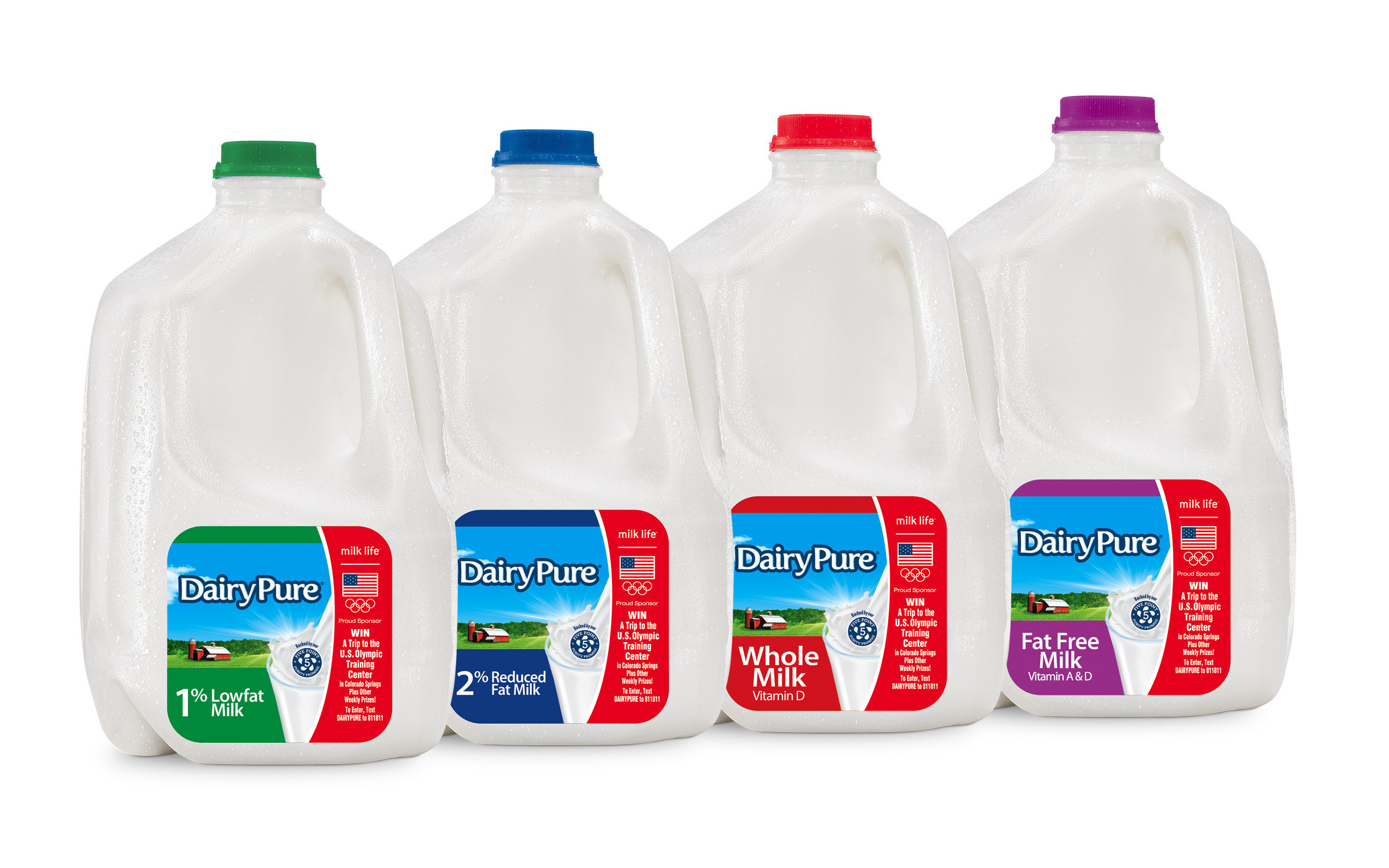
In 2015, Dean tried to give that dispersed operation a common consumer identity. DairyPure appeared alongside regional names on fresh white milk. Its five-point promise covered antibiotic testing, continuing quality checks, cows’ diets, cold shipping and milk without artificial growth hormones. The announcement also carried the necessary qualification: no significant difference had been shown between milk from treated and untreated cows. The promise was a marketing framework for familiar milk. The DairyPure launch.
The operational work was more interesting than the name. More than 1,000 SKUs had to transition. Retailer feedback led to one national UPC, simplifying administration and national promotions. Dean could buy national advertising while preserving the regional name on the package. Marketing spending was described as millions of dollars; the exact sum was withheld. This was a specific, copyable idea: standardize the machinery customers struggle with while keeping the identity they recognize. Inside the rollout.
The customer who learned the recipe
A barcode could simplify selling milk. It could not guarantee demand for it. Walmart and its subsidiaries represented 15.3% of Dean’s 2018 net sales; its five largest customers represented roughly 29%. When Walmart opened its own Fort Wayne processing facility in 2018, some business moved inside the retailer. A substantial customer relationship had also become a source of competitive pressure. The customer figures.
The resulting problem is easy to picture, although this is an economic interpretation rather than a disclosed route calculation. A truck carrying fewer gallons still needs a driver. A processing site still needs maintenance. Unless costs fall with volume, each remaining gallon carries more of the burden. A national footprint offers advantages when its capacity is useful. Shrinking demand can leave the same footprint expensive to support.
One buyer. A meaningful share of the business.
Nor had Dean simply ignored other kinds of beverages. It once owned WhiteWave, associated with Silk and Horizon Organic, before separating that business in 2013. Later investments included Good Karma and Uncle Matt’s. Those moves complicate the easy explanation that plant-based milk arrived and Dean forgot to respond. The company changed its portfolio. The remaining dairy operation still faced difficult economics. The WhiteWave separation. The later investments.
September’s plan met November’s cash needs
On September 6, 2019, Dean announced that its strategic review had ended. The board chose a standalone operating plan under recently appointed chief executive Eric Beringause. On November 12, the company filed for Chapter 11. The public explanation pointed to declining milk consumption and a difficult operating environment despite efforts to cut costs. Its lenders, led by Rabobank, committed approximately $850 million in bankruptcy financing. That was a commitment to support operations through the process. September’s decision. November’s announcement.
“Despite our best efforts to make our business more agile and cost-efficient”
Eric Beringause, announcing Chapter 11, November 2019
The record identifies the immediate constraint more clearly than any story about executives’ private doubts could. By spring 2020, Dean told the bankruptcy court it could not be certain it could keep processing beyond May or pay farmers for raw milk. School and restaurant demand had also fallen during the pandemic. The auction was accelerated. Cash and time were running short before the physical need for milk disappeared. The auction’s urgency.
The plants still had a job
DFA’s winning transaction covered assets relating to 44 facilities for $433 million. Other buyers included Prairie Farms and Producers Dairy. Dean announced the principal closings in May 2020. The purchases kept many operations serving customers, but they also raised competition questions. The Justice Department required divestitures involving plants in Illinois, Wisconsin and Massachusetts. Preserving processing capacity and preserving competition required separate attention. The sale announcement. The competition conditions.
Assets relating to 44 facilities.
Purchase consideration, not a company valuation.
For operators, Dean offers a useful pair of questions: can the customer replace you, and can your costs adjust if it does? Its national-label strategy remains worth studying where regional trust and shared administration coexist. It offers less protection where buyers can bring processing in-house or category volume keeps declining. Today, DFA’s directory includes DairyPure, Dean’s Dairy and TruMoo. The labels still have work to do. They do it inside a different corporate structure. Find the brands.