The humble buy button has excellent public relations. Press it and a tidy confirmation appears; a box arrives days later. Behind that small rectangle, however, stock is being argued over by warehouses, tax is changing by postcode, a loyalty account is looking for its owner, and an ERP last updated during a different presidency is clearing its throat. Guidance made a business out of that argument. Since 1993, the California agency has designed, rebuilt and connected commerce systems for retailers and manufacturers whose online shops carry more baggage than a carousel at LAX.
That history matters because Guidance is no longer a standalone shop in the old sense. OneMagnify acquired the company in February 2025, and guidance.com now sends visitors to OneMagnify's eCommerce practice. The name survives on LinkedIn and in a deep case-study archive, while the operating offer sits inside a larger group covering data, AI, digital experience and marketing. Anyone evaluating Guidance today is really evaluating that combined practice, with the acquired team's commerce record as the useful bit of inherited evidence.
For the team whose simple store stopped being simple
Guidance is aimed at mid-market and enterprise merchants in B2C and B2B. The strongest fit is a business facing a migration, several regional storefronts, negotiated B2B prices, a crowded integration map, or an awkward mix of content and transactions. A manufacturer connecting buyers to an ERP belongs here. So does a retailer trying to share services across brands without making every site look cloned.
A small founder launching a first catalog will probably find the model oversized. There is no self-serve dashboard, public rate card or free tier. Guidance sells expert time, delivery discipline and technical judgment through scoped engagements. That makes comparison slower, but it also reflects the work: the difficult questions usually concern ownership, data and operational risk rather than the color of an add-to-cart button.
The actual product is orchestration
The service begins with discovery: business requirements, customer behavior, journey mapping, architecture, platform choice and measurable goals. It then stretches through UX, visual design, development, migration, systems integration and post-launch optimization. The current OneMagnify practice says it works platform-agnostically, naming Shopify, BigCommerce, Salesforce and Adobe among its options. Guidance's archive adds Optimizely and plenty of custom connective tissue.
The work hiding behind “launch”
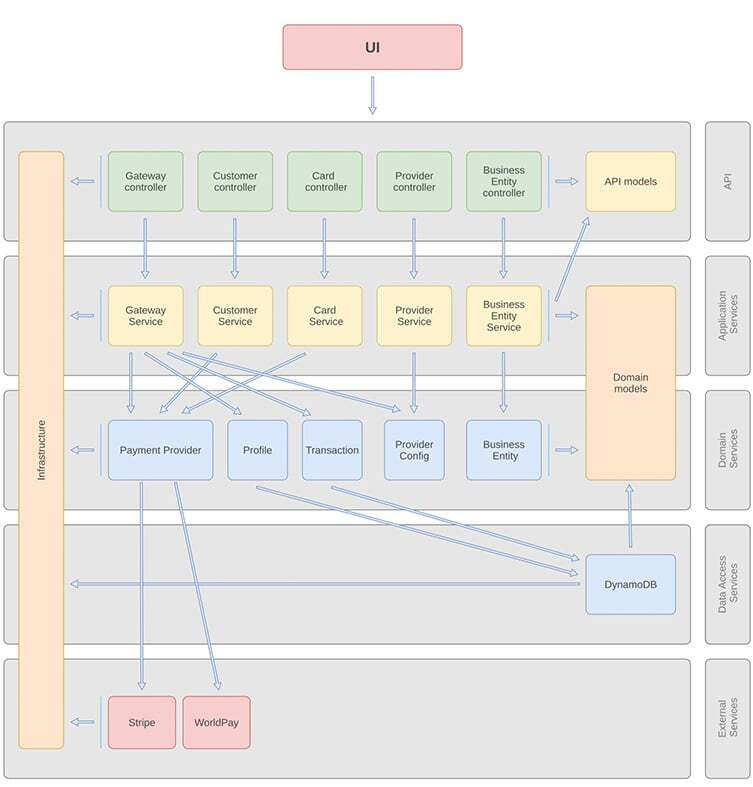
The connective tissue is where the portfolio becomes persuasive. Guidance's SmileDirectClub project replaced parts of a rigid monolith with .NET Core microservices running in Amazon ECS and defined through Terraform. The team connected payment options including Stripe, SEPA and Worldpay, moved more than five million records into Salesforce Health Cloud, and reported migrating 900TB of data. Boomi, Amazon SQS and TrueVault also appear in the case file. It reads less like a storefront makeover and more like open-heart surgery conducted next to a checkout queue.
“Guidance understands our culture and what we want to achieve.”Carmen Lux, then VP Software Engineering, SmileDirectClub
Case files from the checkout basement
The older Foot Locker work is a useful snapshot of Guidance's instincts. The agency built eight mobile sites in less than 90 days on a shared architecture, while supporting wish lists, international orders, stored cards and carts shared between desktop and mobile. Its case study reported mobile conversion increases of 325 percent for Foot Locker and 125 percent for Eastbay. The stack has aged, as stacks do, but the design problem remains current: centralize the machinery, preserve the brands, and keep a shopper's cart from developing amnesia.
K-Swiss supplied another variation. Guidance and the retailer launched nine sites across three regions in eight weeks, connecting distinct regional ERP systems and meeting the arrival of GDPR. The first US store served as the live proving ground before eight more launches followed in the final three weeks. According to the case study, all went live on time without downtime affecting revenue. It is the sort of achievement that sounds boring only to people who have never launched one store.

Hoonigan offers the flashier numbers. The motorsport and apparel brand already used Shopify, but its growing video library was fighting store performance. Guidance upgraded the site to Shopify Plus and built a custom content approach with closed shortcodes, a rich-text editor and YouTube integration. The agency reported post-launch increases of 52.17 percent in revenue, 35.24 percent in transactions, 12.51 percent in average order value and 26.01 percent in conversion rate. They are vendor-published figures, worth treating as case evidence rather than a promise.
| Need | What the record shows | What to test in the pitch |
|---|---|---|
| Multi-brand rollout | Foot Locker and K-Swiss shared architectures across several storefronts. | How much autonomy does each regional team retain? |
| Headless commerce | Fitbit paired AEM with a global cart; CareerStep paired WordPress and BigCommerce. | What is the operating cost after the launch team leaves? |
| B2B complexity | Baker Hughes, Plaid and current OneMagnify services cover wholesale and enterprise integrations. | Ask for a workflow demo using your ugliest pricing rule. |
| Conversion work | Hoonigan, Relax the Back and SOL case studies publish outcome metrics. | Agree on baselines, attribution and measurement windows in writing. |
Where the offer gets fuzzier
The acquisition creates the most obvious buyer question. OneMagnify says Guidance's platform partnerships and commerce experience now combine with a broader team in analytics, customer insight and AI-powered marketing. That can be useful when a program crosses organizational borders. It can also make accountability harder to see. Buyers should ask which people came from the Guidance practice, who owns delivery, which work is handled by partner teams, and whether the named specialists will still be there after discovery.
Public independent customer feedback is thin. Clutch and Agency List maintain profiles, but neither supplied a useful body of project reviews during our check. The available customer voice mostly lives in Guidance and OneMagnify's own case studies. Those quotes are specific and named, which beats anonymous praise, yet a serious procurement process should still request recent references for the same platform, commercial model and level of integration.
There is also no public price list. That is unsurprising for enterprise delivery, where a catalog migration and a nine-country rebuild share very little except vocabulary. Still, opacity carries a cost. Ask for the discovery fee, delivery assumptions, change-order rules, blended rates, software costs, support terms and an exit plan. The cheapest proposal can become expensive after six months of “small” exclusions.

How to buy the work without buying fog
Start with the business constraint, not a preferred platform. Guidance's useful case studies are full of tradeoffs: content against speed, shared code against regional control, convenience against compliance. Give the team real order volumes, integration owners, release freezes, failure histories and the exceptions your clean diagram politely omits. Then ask for two architectures: the sensible minimum and the ambitious version. The gap will reveal more than a parade of partner badges.
A proof of concept should attack one dangerous seam: a pricing rule, a catalog sync, a regional payment, or a content workflow. A polished homepage proves taste. A reliable inventory update proves the team understands the business. Define acceptance criteria around both customer behavior and operational load, with named owners for every external system.
The YesPress take
Guidance's appeal is accumulated scar tissue. The portfolio shows a team accustomed to complicated commerce programs, tight rollout calendars and integrations that cannot be wished away. Its move into OneMagnify adds range and removes some clarity about the boundary of the old agency. For an enterprise buyer, the right next step is a tightly scoped conversation with the actual delivery leads and two or three recent reference calls. For a small merchant seeking a quick storefront, this is more machinery than the job needs.
The enduring lesson in Guidance's archive is pleasingly unfashionable: commerce succeeds through details. A cart remembers. A currency matches. The warehouse receives the right order. The marketing team can publish without summoning an engineer. The shopper never learns how many systems shook hands. Thirty-three years after Guidance opened, that invisible competence remains the thing worth buying.