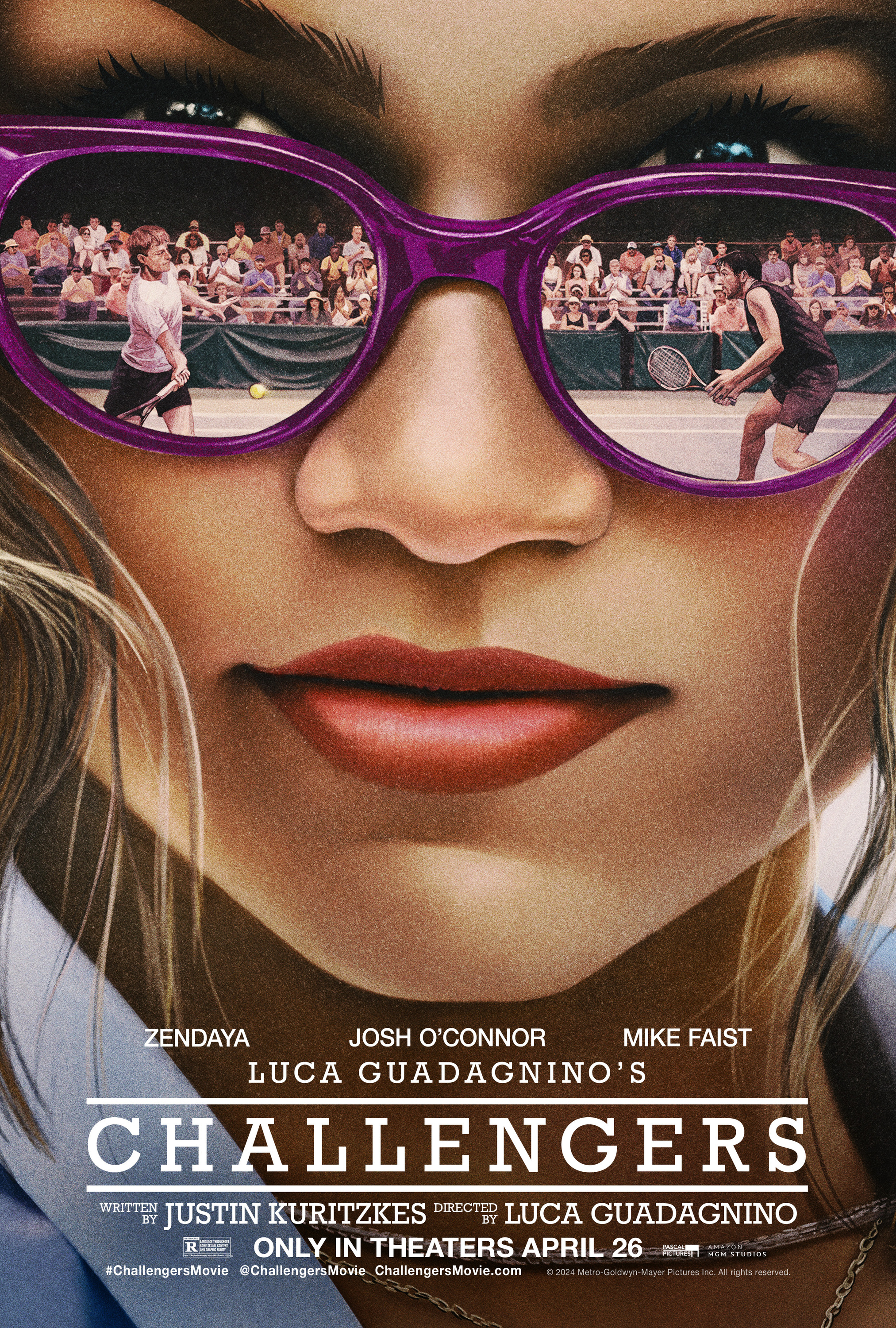
Zendaya looks out through sunglasses. In the lenses, two men face each other across a tennis court. The Challengers poster has a celebrity, a sport and a relationship problem packed into one face. It is the sort of image that makes an apparently simple assignment - advertise a movie - look deceptively easy. Behind it is Gravillis, a Los Angeles creative agency whose work often arrives before the audience knows much about the film.
The poster rewards a second glance. The face catches your attention; the reflections complicate it. That combination helps explain the agency’s place in entertainment marketing. Gravillis makes key art, the central imagery around which a release can build its public identity. Its broader practice includes album covers, motion graphics, audiovisual content, social campaigns and branding. The common task is to give a story an image people can recognize before they have experienced the story itself.
A portfolio can become a cage
Kenny and DeAnna Gravillis founded the studio in 2000. The business began in music packaging, a natural extension of Kenny’s record-industry career. He had worked at Def Jam and MCA, designing for musicians whose visual identities mattered alongside their sound. His earlier credits include work on the Notorious B.I.G.’s Ready to Die, under Cey Adams’s art direction, and the Roots’ Things Fall Apart.
The path into that work was untidy. Kenny told PRINT that he was fired four times during his early New York design career. Packaging assignments did not connect with his interests. A Columbia Records executive looked at his portfolio and challenged him to make album covers if that was the work he wanted. He spent two weeks doing just that. Those speculative designs helped him get a job at Def Jam.
The practical lesson survives the romance of the story: show a prospective employer evidence of the work you want to do. Waiting for the appropriate commission would have left him showing the same packaging portfolio. Making his own examples gave someone a different reason to hire him.
Later, shrinking music-design budgets pushed the company toward film. But Hollywood saw the music background and imposed a narrow label. Kenny recalled being treated as an “urban” specialist. Independent films helped widen that perception. By 2009, the portfolio included Avatar, Inglourious Basterds and Alvin and the Chipmunks. That is an unusually effective rebuttal to a pigeonhole: blue aliens, Tarantino and singing rodents.
The Chipmunks made a serious point
The Squeakquel assignment remains a touchstone for Kenny. The team took a Lite-Brite-inspired approach, giving a familiar family property a different visual treatment. Fox executive Tony Sella supported the idea. In Kenny’s telling to MUBI, seeing that poster in a bus shelter helped convince him the agency had something to contribute to the industry.
The episode also exposes a commercial condition behind adventurous design. An agency can propose an unexpected route, but someone on the buying side must be willing to carry it through. The artwork has to survive meetings that the designer may never attend. Client judgment is part of the finished object, even when the client’s name does not appear in the credits.
That is a useful way to understand Gravillis’s range. A recognizable house style can be valuable, but entertainment clients arrive with different audiences and different promises. A horror film, a family comedy and a political documentary cannot all borrow the same emotional temperature. The agency’s portfolio argues for a consistent appetite for an idea, with the visual treatment changing to fit the assignment.
Hundreds of ways to hear “almost”
The customer is usually a studio, distributor, streaming service or other organization with something to launch. Gravillis has worked for companies including Netflix, Disney, Warner Bros., Amazon, HBO and Magnolia. It sells commissioned creative work: the thinking, design and production needed to take a campaign from a brief to usable assets. Its market sits among specialist entertainment agencies such as BLT Communications and MOCEAN, alongside the work clients can assign internally.
Kenny’s explanation to TVREV makes the process tangible. A studio calls with a film. The agency reads the script and may arrange photography, or work with images supplied from the production. Designers develop options, the client responds, and the work goes back and forth until something is selected. The poster that looks inevitable in a theater lobby is the survivor of that process.
“Round one is ours. After that, it becomes a dance.”
Kenny Gravillis, The Talks
In that interview, Kenny said a big film can involve 300 or 400 versions, including changes and revisions. That is a description of what some projects demand, rather than an average. It explains why a single finished image can represent a considerable amount of labor. For a buyer planning a commission, review rounds, photography and the number of final formats belong in the brief from the beginning.
Creative confidence has limits inside a studio approval process. A proposed The Revenant image that covered Leonardo DiCaprio’s face with a goat mask was rejected. Kenny has also described social campaigns as a place where more experimental artwork can find a home. An idea’s usefulness can depend on its placement: the image introducing the whole release faces different demands from a piece aimed at people already following it.
- 01Read the storyScript, brief, audience
- 02Make the optionsPhotography, concepts, design
- 03Work the revisionsClient and filmmaker feedback
- 04Reach the finishThe selected campaign image
When the reference becomes the collaborator
Gravillis’s relationship with Spike Lee shows another kind of expertise: knowing whose work belongs in the conversation. For Da 5 Bloods, the agency struggled with how to represent the experience of Black soldiers in Vietnam. Kenny turned to the work of Emory Douglas, the former Black Panther Party minister of culture. Lee helped bring Douglas into the project.
The collaboration drew on Douglas’s 1969 image of a crying soldier. It connected the film’s historical setting with a designer who had made politically charged images during that period. A meeting between Lee and Douglas also became documentary content released by Netflix. The marketing could introduce audiences to the person and history behind the image.
There is a method worth borrowing here. Research need not end with a folder of visual references. It can identify a living collaborator whose experience changes the work. The conditions matter: this project had a director invested in the subject, an artist willing to participate and a distributor supporting the campaign. A mood board alone would not have produced that relationship.
The Oscars needed more than a poster
The agency’s branding work extends the same discipline across more surfaces. For the 96th Academy Awards, Gravillis explored concentric circles and saturated color, developing rings that formed an O. The finished identity included horizontal, vertical and square artwork, plus motion transitions, animated title cards and on-air announcements. Four color options gave the system variation without abandoning its central idea.
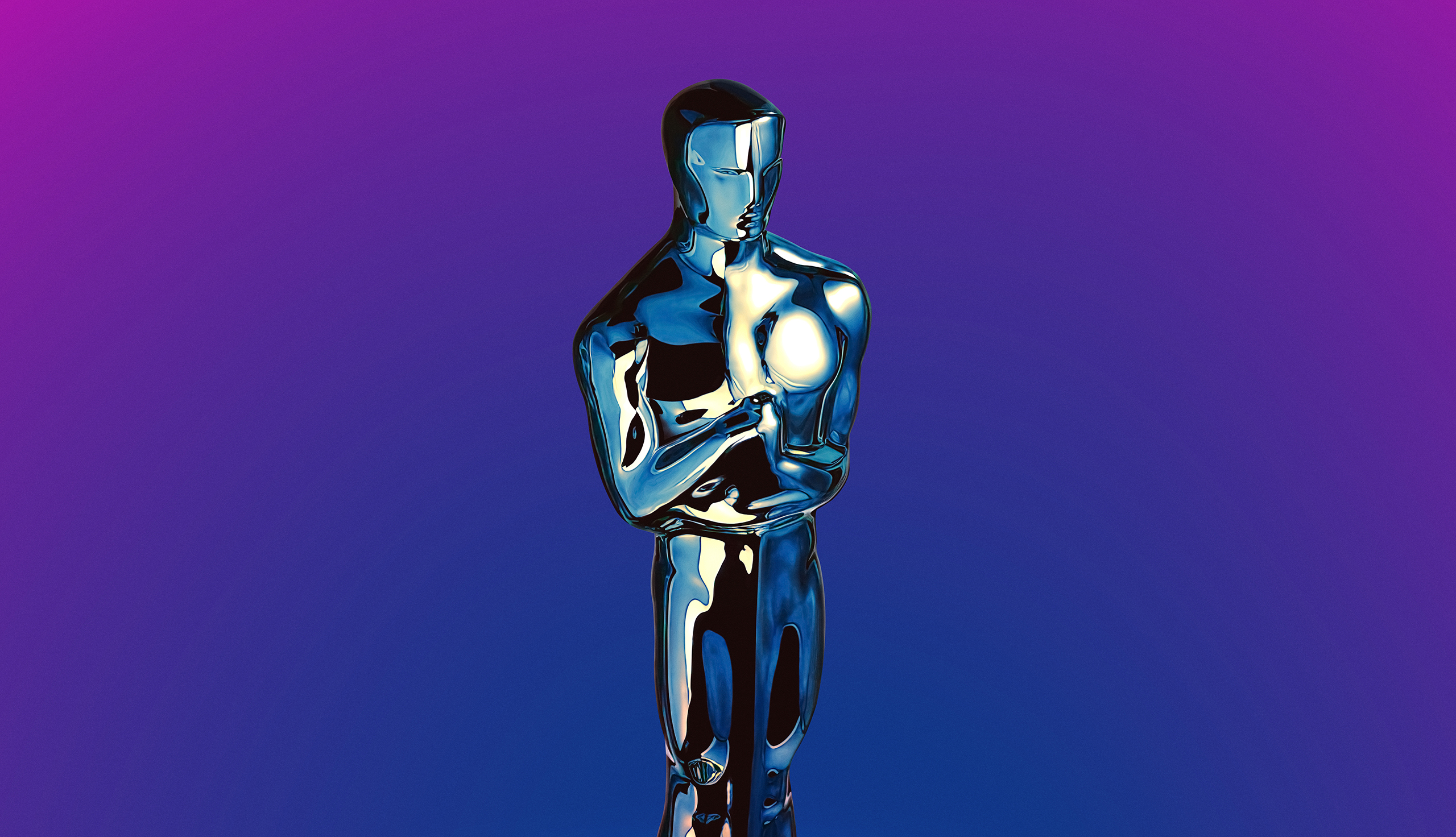
For the client, that coordination is the product. A strong standalone image solves one problem; a design that holds together across a broadcast and its promotion solves several. Gravillis’s Orion project similarly shows identity work developing into motion, rethinking the studio’s familiar association with space.
In 2025, Kenny described OK, the agency’s branding division, as a way to give existing brand work a clearer identity and expand beyond entertainment. The progression is visible in the portfolio: the Academy, cultural institutions and commercial brands all need recognizable visual systems. In December that year, Gravillis appointed former Skydance operations executive KaLynn Jenkins as COO, with responsibilities including financial management, operations and growth.
A route into the room
The company’s stated culture emphasizes individuality and inclusion. A more concrete expression is the Access program at Otis College of Art and Design, developed with Netflix. Kenny Gravillis and BLT’s Dawn Baillie helped initiate the effort. It addresses a basic obstacle: talented people may not know entertainment advertising exists as a career, much less how to enter it.
The program combines 14 months of academic study with a six-month paid apprenticeship. Tuition, equipment and required materials are covered. Students still have to pay for housing, meals and transport, and support themselves during the academic portion. Free instruction removes a major expense while leaving a substantial Los Angeles living-cost problem.
20 months connecting classroom work to agency experience.
Netflix x Otis Access program structure. Living expenses remain the student’s responsibility.Otis reported in July 2025 that the first intake selected 18 students from more than 300 applicants, and that ten were already working part- or full-time in the industry. Gravillis was among the participating agencies. These are program-wide results, but they give the effort something more useful than a statement of intent: a count of people reaching work.
For a prospective client, Gravillis offers a practiced way to turn a release into a visual proposition. For a designer, its history suggests making the portfolio you need, learning how decisions get approved and finding collaborators with something specific to contribute. The agency’s own symbol began with a photograph of its founders’ hungry nine-month-old. Decades later, the expression still fits a business that has to keep finding its next idea.
Look closer
Explore the portfolio, studio news and commissioning contacts. Follow Instagram, LinkedIn, X or Facebook.
Watch Kenny on The Art School Graduate Podcast and in BlackFilm’s interview, or browse the studio’s Vimeo work.