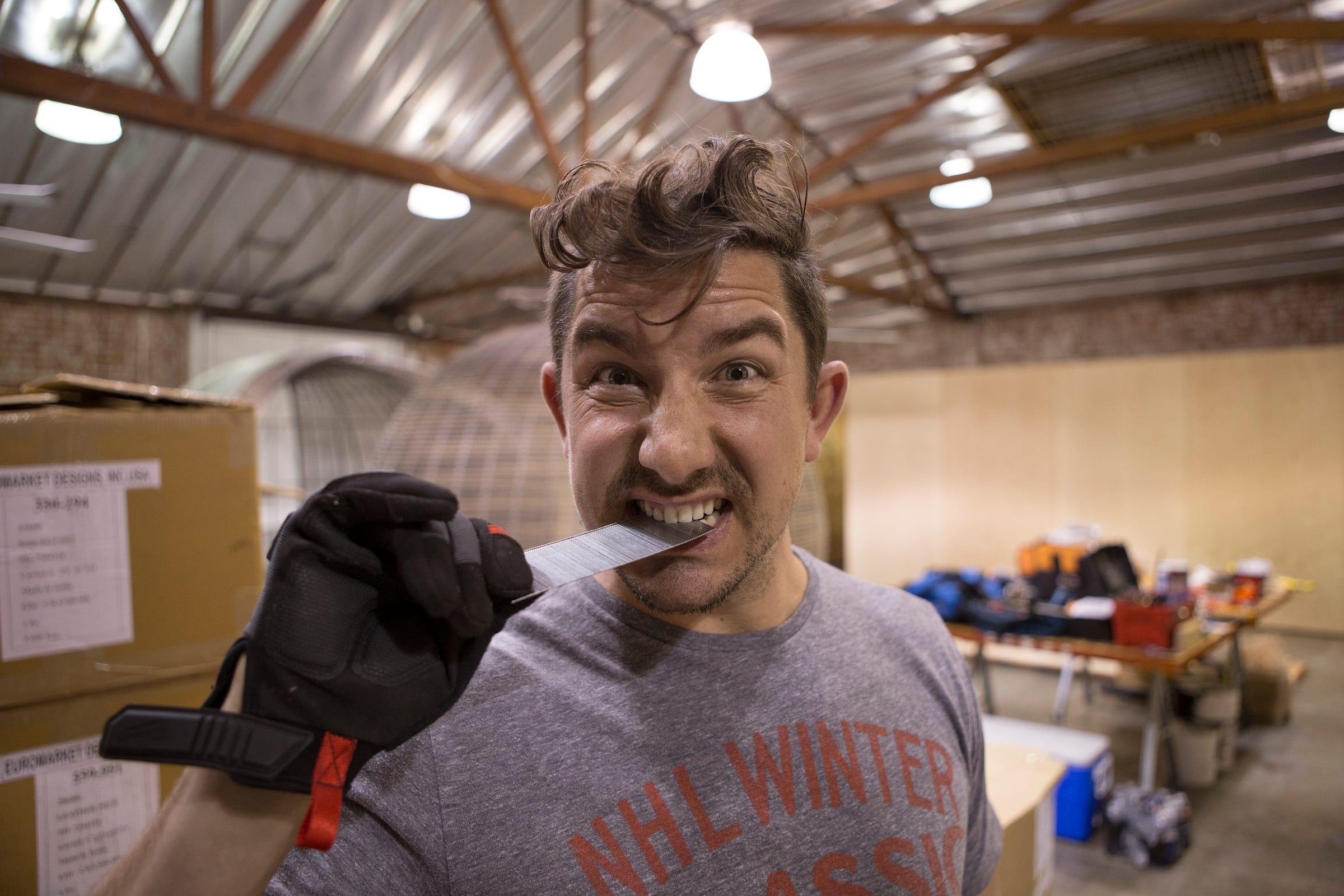
Kevin Williams appears in an early WC+A photograph with a strip of nails between his teeth. He is wearing a work glove and making a face at the camera. Anyone expecting the solemn expression of an agency founder contemplating the future will have to settle for a more useful activity: getting the office built.
There is something pleasing about meeting a designer this way. Finished advertising has little patience for the mess that precedes it. The image must be ready, the type must sit properly, the campaign must leave the building. Here, for once, the building itself is the assignment.
Williams co-founded WC+A with John Corsi in 2015. Their business would make promotional images for entertainment, work designed to introduce someone else’s story. His own has an unusually physical beginning: a kitchen, an unfinished studio and the problem of making enough room.
A kitchen with room to grow
Williams earned his BFA at the University of Michigan in 1995. He then worked as a freelance junior designer for major studios and became a creative director at The Walt Disney Company. Before setting up WC+A, he was a vice president and creative director at another design agency.
That route gave him experience on both sides of an advertising assignment. He had been the designer working for a studio and the creative executive inside one. Starting an agency added another responsibility: making a business in which other people could do those jobs.
WC+A began in his kitchen. An early studio followed in a brick building near USC. His brother Brian came from Michigan to lead construction; the interior took around three weeks to complete. There were walls to frame, outlets to install and plywood to put up. The founder’s work glove had a reason to be there.
The office got larger. The details stayed small.
By June 2018, WC+A was planning a move to ROW DTLA. The new lease covered 12,000 square feet for five years. The company was leaving a space of less than 5,000 square feet south of downtown. Netflix, Hallmark Channel and NBCUniversal were already among its clients.
Williams’s explanation for the move included the offices themselves and the campus’s food, shopping and cultural events. Those are ordinary considerations, which makes them revealing. A workplace is also the neighborhood people inhabit between assignments. Lunch happens there. So does the walk back to the desk.
A bigger office cannot supply an idea. It can supply room for several people to try one. That distinction matters in an agency, where a founder’s taste has to coexist with the judgment of the people hired to make the work.
Jerome Boroff, WC+A’s creative director, had known Williams as both client and colleague. By 2021, their working relationship stretched back more than a decade. Boroff connected their approach to a shared beginning in production. WC+A’s Netflix relationship had also started with a production assignment and developed from there.
Production is the place where an idea acquires obligations. A visual needs to work in the form in which someone will actually see it. Boroff described the pressure of smaller screens: elaborate posters had to give way to images that remained arresting and legible at a reduced scale.
“I learned from Kevin early on that you should let creatives have their voice in the art.”
Jerome Boroff, WC+A creative director · 2021
Boroff’s account of Williams’s influence combined boundaries with freedom. Establish parameters, then let artists contribute their own interpretations. The brief could be shared; the answers could differ. For a founder whose career included directing creative work, that is a consequential choice about where authority ends.
A chair for the next designer
In 2024, students from Stamps in Color came to Los Angeles to visit creative businesses. At WC+A they met Williams, a fellow Michigan art graduate, now the agency’s founder and president. Their trip included seven companies and opportunities to talk with people already working in the fields they hoped to enter.
WC+A was among the businesses that invited students to send résumés and portfolios for feedback. The invitation was modest and specific. An aspiring designer could bring a piece of work into a professional conversation and receive a response.
For a student, an agency visit has a different meaning from an agency website. The website presents completed work. A visit puts the people who make it within speaking distance. It offers a chance to ask how an assignment becomes a job, or how someone gets from an art degree to a working desk.
Williams also appears on the University of Michigan’s Southern California Campaign Council, where he identifies the Stamps School of Art & Design as an area he supports. His connection to the school reaches beyond the graduation year on a biography.
That connection has a more personal counterpart in former WC+A production design intern Ligaya Galang’s account of her time there. Galang thanked Williams and Alyssa Heisten for conversations and mentorship coffee chats. She had been working with the Netflix team, localizing assets for global projects in Photoshop.
Her description gives the workplace several dimensions at once. There was production training with Teri Osato and Susi McCollam. There were résumé and portfolio workshops with Viet Vu. There were colleagues offering guidance, Monday meals and a company Dodgers outing organized by Brandi Nichele Richard.
Williams appears within that group, giving time to an intern’s questions. The detail is useful precisely because it is small. Mentorship often arrives without a podium. Sometimes it has a coffee cup beside it and another task waiting afterward.
The work outgrows the founder’s name
Williams’s public professional activity also gives space to the people responsible for keeping an agency functioning. He shared WC+A announcements celebrating promotions in project management and IT. Siroon Parseghian’s work on processes and complex assignments received attention alongside Cole Sakamoto’s technical support and collaboration.
A recommendation from former colleague Daniel Hyun Lim describes Williams as attentive to detail, productive and able to work with clients. Such praise is one colleague’s assessment. It fits a professional record in which the making of the work and the organization around it repeatedly appear together.
There is a visible result of that collective work in WC+A’s 2025 Clio Entertainment recognition. Williams Creative Associates received Silver in Key Art Craft, Graphic Design, for The Fantastic Four: First Steps 4/4 Key Art. The animated version reached the shortlist in the motion-poster category.
The Fantastic Four: First Steps
4/4 Key Art · Graphic Design
The distinction belongs to the agency. It recognizes a particular piece of graphic design rather than every contribution to a film’s promotion. Reading the credit carefully makes the accomplishment more tangible: a defined assignment, a finished image, an acknowledgment of its craft.
For audiences, promotional art is often encountered before the entertainment itself. Its job is to give someone enough of a feeling to become interested. The studio producing it has to accommodate both artistic judgment and the practical demands of delivery. Williams’s career has passed through each side of that arrangement.
The less visible business appears in MACH27’s operating history. The agency moved toward Scoro in 2022 after using separate systems for project management, time tracking, reporting and accounting. Historical project costs could then help inform future estimates. Account managers could prepare invoices from information already attached to the work.
Those changes concern a basic agency problem: deciding what a promise will cost to keep. Better information about previous assignments makes the next estimate more informed. A beautiful image still needs a business capable of paying the people who made it.
A plus sign, an ampersand, another chapter
WC+A and ...and company now have a shared agency identity: MACH27. Williams’s LinkedIn profile lists MACH27. A June 2026 account of the business names Alyssa Heisten as CEO, a later leadership picture than the WC+A chief-executive title Williams held in 2020.
MACH27 explains the number in its name through the ampersand, historically treated as the alphabet’s twenty-seventh letter. The agency uses it to signify connection. After WC+A’s plus sign and ...and company’s conjunction, the punctuation has had a remarkably steady career.
The new agency presents work across branding, campaigns, digital, social, experiential and motion. Its name now holds several kinds of work and several histories. Williams’s kitchen belongs to one of them.
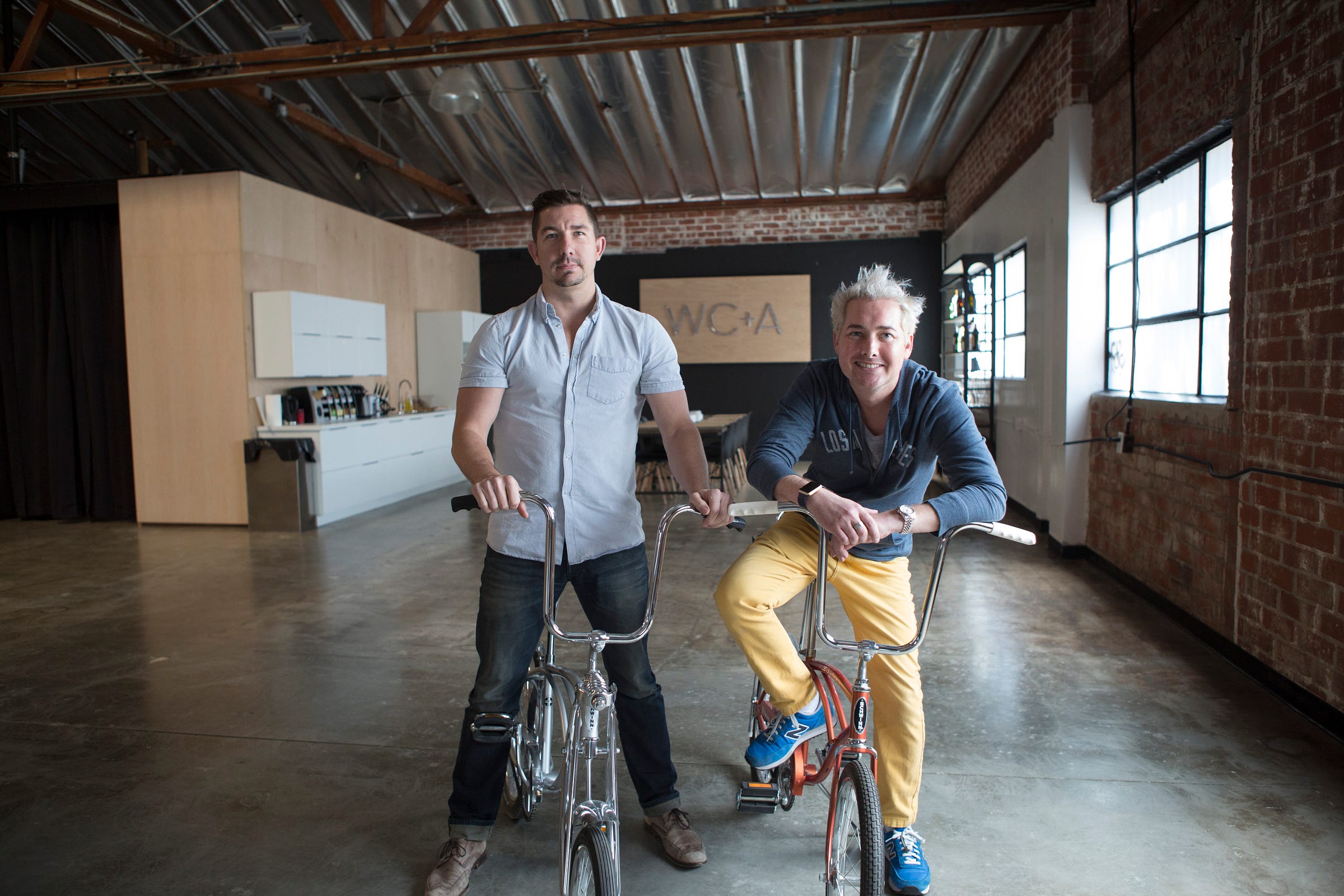
Return to the photograph of Williams and Corsi on bicycles inside that early studio. The exposed roof, brick walls and generous patch of concrete give the scene a certain informality. The sign behind them says WC+A. The company is young enough for its newly usable space to be part of the occasion.
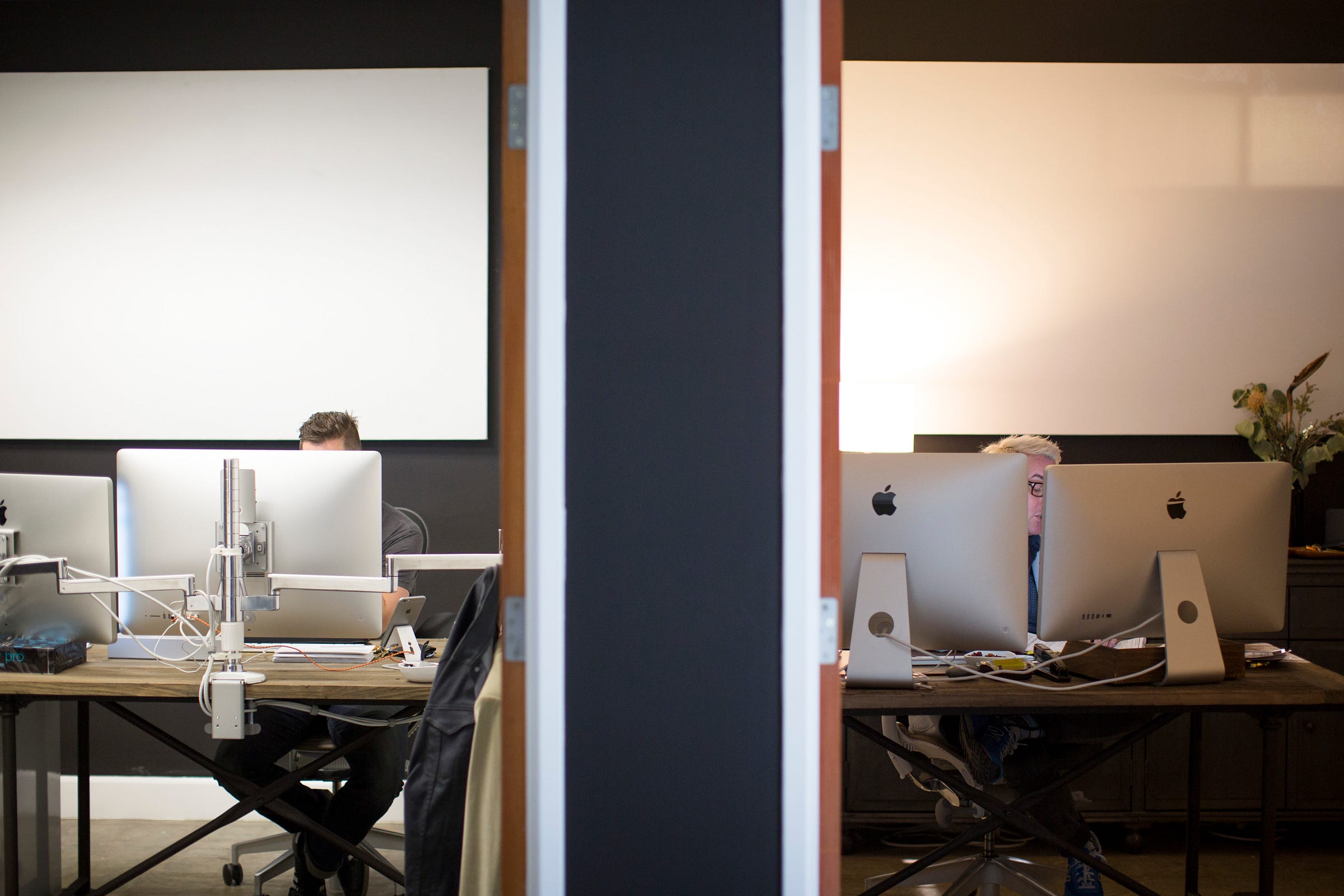
Another photograph puts the founders behind their computer monitors. The room is ready; the work has resumed. Between those two pictures sits the practical shape of Williams’s story: build a place, bring people into it, and give them something worth working on.