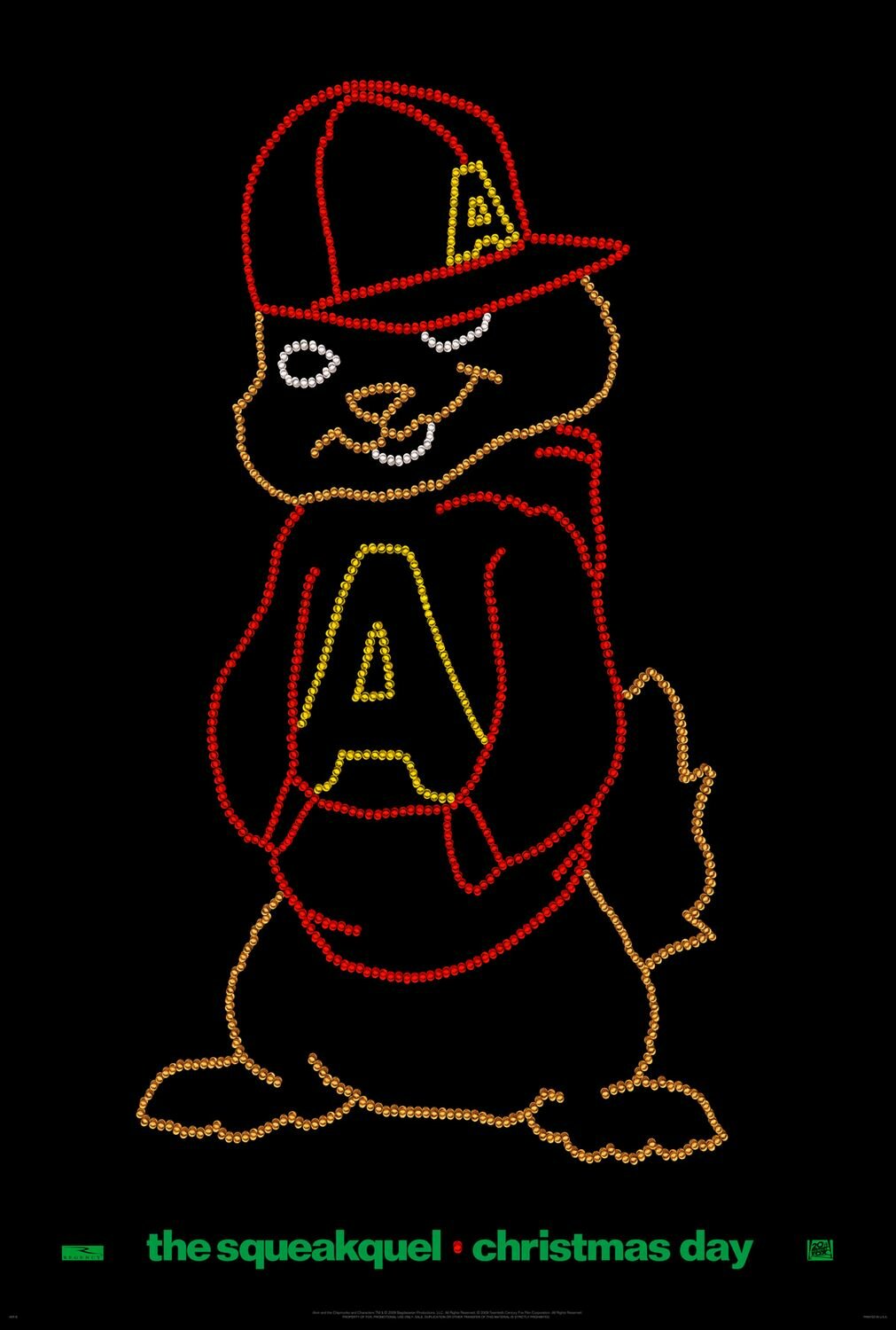
A chipmunk helped Kenny Gravillis feel he belonged in Hollywood. The poster was for Alvin and the Chipmunks: The Squeakquel, a title unlikely to appear in anyone’s solemn account of artistic awakening. There was Alvin, picked out in little colored lights against black. A children’s sequel had acquired the confidence of a concert announcement. Gravillis saw it in a bus shelter and recognized something: his studio had a point of view that could survive outside the record shop.
By then, he had already designed for Public Enemy and LL Cool J. He had worked on records people carried home, studied, and kept. Yet film advertising had required him to start explaining himself again. The music credentials that opened one conversation could close another. Hollywood wanted evidence that he could work in its language. Alvin, wearing his illuminated baseball cap, was a surprisingly persuasive interpreter.
The summer that refused to end
Gravillis grew up in East London. At about fourteen, he visited a cousin’s graphic-design workplace in the Docklands. Drawing boards filled the room; people were making jokes. Here was a job with an atmosphere he wanted to inhabit. For a boy who associated an ordinary working future with a bank, the discovery mattered. Design became imaginable because he had actually seen people doing it.
He studied at East Ham College of Technology, completed a two-year diploma, and graduated in 1987. A summer visit to his father in New York followed. He packed his portfolio. That detail gives the trip its peculiar suspense: a holiday with evidence of another possible life tucked into the luggage.
The visit became a move. Packaging jobs came first. The useful lesson from those early years was less glamorous than a sudden discovery. Getting hired did not mean he had found his place. He still needed to get close to the things he cared about. New York supplied opportunities, along with a fairly vigorous education in disappointment.
A record sleeve gets him through the door
Def Jam gave that search a direction. Gravillis joined its art department and began designing for musicians whose work was changing the cultural landscape around him. The East London newcomer was learning an American industry from inside one of its busy rooms. He also met DeAnna there, his future wife and business partner. A workplace had become the meeting point for both a career and a shared enterprise.
He later moved to MCA Records, relocated to Los Angeles, and became vice president of creative services. His working world included Mary J. Blige, Common, and The Roots. The progression matters because it gave him experience on both sides of a familiar creative tension: making an image with conviction while managing the organization that must get it made.
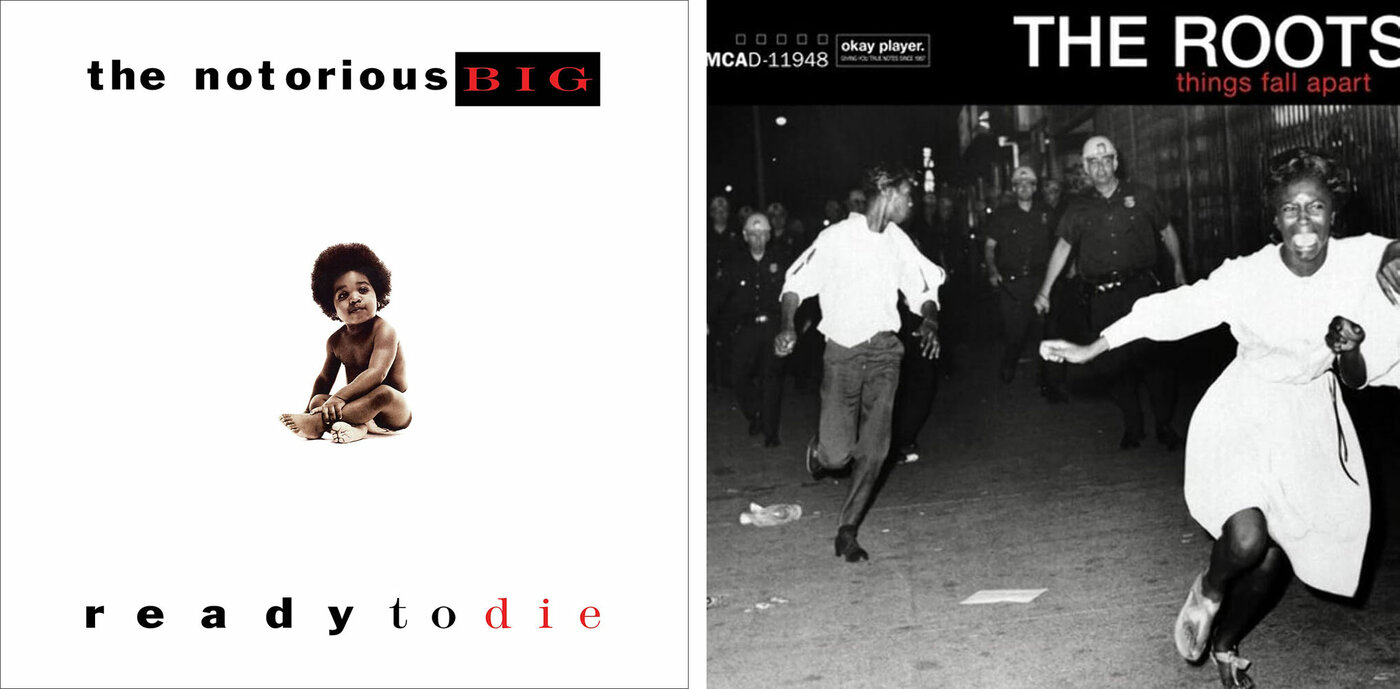
The album covers offer an early way into his visual thinking. Ready to Die and Things Fall Apart do not behave like inventories of everything the listener will hear. Each asks an image to carry a larger emotional proposition. A sleeve has to belong to the record while making someone curious enough to pick it up. A film poster would eventually ask him to make a related bargain.
Hollywood had a problem with squares
Kenny and DeAnna launched Gravillis Inc. in 2000. As music-packaging budgets contracted, film became an increasingly necessary direction. The transition brought a peculiar objection: prospective clients had seen their work on square album covers and struggled to picture it on rectangular movie posters. Shape, apparently, could become a professional qualification.
There was a more consequential label, too. The studio’s hip-hop history led people to describe it as “urban.” A body of work could be treated as a boundary. Independent-film opportunities, including Factory Girl, helped the agency establish another identity. By 2009, its projects included both Avatar and the Chipmunks sequel. That is a useful range for anyone attempting to put you in a small box.
The lesson travels beyond design. Experience has two audiences: the person who acquired it and the person deciding what it means. Gravillis could see transferable judgment in his music work. A new client might see only an unfamiliar format. The task was to keep finding occasions where the work could answer the objection in public.
One image, several hundred decisions
His affection for the original Alien poster explains a great deal. The image offers an invitation to feel uneasy before it offers an explanation. Gravillis keeps it in the studio. For him, a poster’s job includes making someone want to know more. There is considerable craft in knowing how much to withhold.
The finished object can make the process look wonderfully clean. The production of it is another matter. A major film can involve hundreds of versions and revisions. The initial ideas meet the studio, the filmmaker, and the practical demands of a campaign. He has a compact description of that change in ownership:
“Round one is ours. After that, it becomes a dance.”
Kenny Gravillis
It is an unusually companionable metaphor for negotiation. A dance requires responsiveness. It also requires someone to keep moving. A design director needs enough attachment to an idea to argue for it and enough distance to recognize an improvement. The audience will never see the meeting in which those two instincts wrestled.
Spike brings his notebook
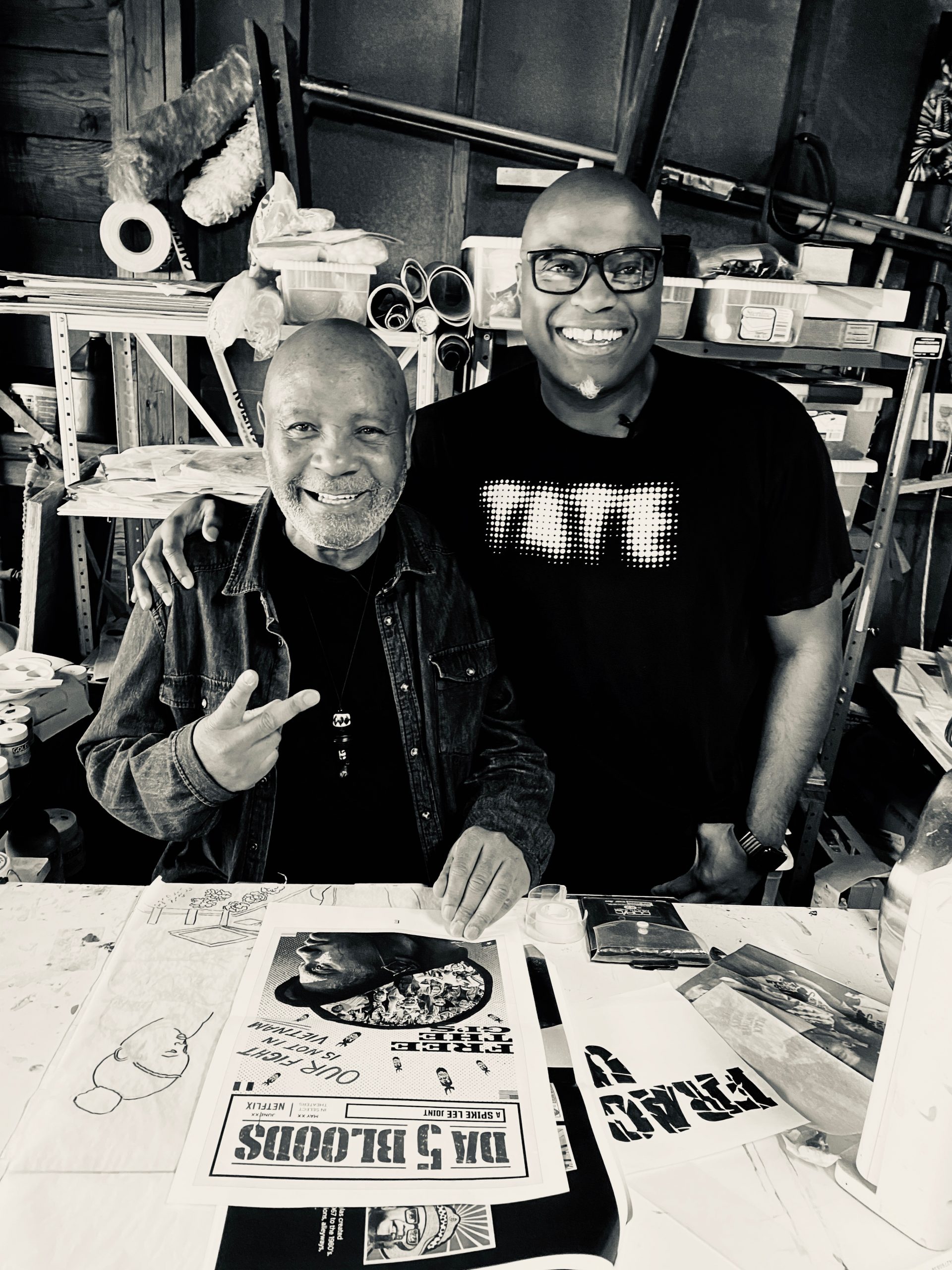
Gravillis began working with Spike Lee on Chi-Raq in 2015. Their collaboration has continued across films with very different demands. For Da 5 Bloods, research led to Emory Douglas, the former Black Panther Party minister of culture. Lee helped make the connection; Gravillis visited Douglas and documented the collaboration. A design assignment became an encounter between living practitioners of political imagery.
For Highest 2 Lowest in 2025, Lee arrived with sketches and a clear interest in Brooklyn, Denzel Washington, and headphones. Reds and oranges carried the feeling of a hot New York summer. The relationship allows direct exchanges about what works. Gravillis describes a filmmaker who will ask for his preference, then happily disagree with it. Familiarity has evidently left room for argument.
Sinners, another 2025 campaign, posed a different problem. Ryan Coogler’s film crossed genres, while its marketing needed to suggest the supernatural without giving too much away. The problem was specific to that film. A reliable house style would be of limited use if it supplied the wrong answer to the next story.
The baby in the agency logo
Even the studio’s own mark has a domestic backstory. Its dotted baby graphic began with a photograph of the co-founders’ nine-month-old daughter, hungry and about to make her requirements known. The company uses it as a reminder to stay hungry. Corporate symbolism rarely comes with quite such an efficient original client.
The joke fits an agency whose public language remains conversational. Its company page describes a team of 35 people from different backgrounds and experiences. Behind the posters are designers, colleagues, and the everyday labor of getting ideas into shape. A founder’s name on the door can obscure that division of effort. Gravillis has been candid that his present role involves overseeing and refining work rather than personally designing every image.
His own tastes have some pleasingly particular edges. Asked about type, he named Berthold Akzidenz Grotesk BE. Asked about a weakness, he admitted getting stuck on a typeface. Football also has a place in the picture: the East London upbringing came with an allegiance to West Ham. Some loyalties evidently survive a change of continent more easily than an album budget.
Making the job visible
The fourteen-year-old who needed to see a design office has become a founder helping others find a way into one. With Dawn Baillie of BLT Communications, Gravillis helped develop Access, the Netflix x Otis entertainment-marketing certificate program. Its design addresses two concrete obstacles: paying for training and connecting that training to actual agency work.
Full-tuition scholarships, materials, equipment and professional mentorship.
The first class completed the program in December 2024. Otis announced a second cohort in July 2025. Those dates give the ambition a tangible shape. There are students, completed projects, employers, and another intake. An industry that can seem invisible from the outside has acquired a more legible entrance.
In December 2025, Gravillis also appeared at the Academy Museum to discuss Jaws poster design. He was helping visitors look closely at work they might otherwise pass in a corridor. That seems a fitting continuation of his career: paying attention to the image, then inviting someone else to see how it works.
There is a line connecting the cousin’s drawing boards, the portfolio carried on holiday, and the apprentices entering agencies. Each makes a possible working life visible. Gravillis has spent years persuading people to stop for an image. He is now helping more people discover that making those images can be a job.
Stay for the credits
Explore the studio’s work, Kenny’s LinkedIn, and the studio on Instagram and X.
Watch the BlackFilm interview or The Art School Graduate conversation. Listen to Creative Boom’s podcast.
Read the conversations in MUBI Notebook, The Talks, GEMA, PRINT, The Knockturnal, and Creative Review. Explore Access at Otis.