In 2013, eight artists made pictures for a zombie movie. The film was World War Z. Their pictures were a tribute: interpretations made by people who wanted to take a turn at imagining its world. Then Paramount bought artwork from the project. Somewhere in that sequence, a group of enthusiasts had demonstrated a service a movie studio would pay for.
The early account on the pop-culture blog Blurppy is pleasingly concrete. One participant was asked to make a cover for a Max Brooks book reissue; another sold artwork to Paramount. By May, a second group project was tackling Star Trek Into Darkness. The experiment had produced both something to look at and something to do next.
That is a useful place to begin understanding Poster Posse. Founder Don Thompson had assembled artists around an interest they already possessed. The resulting work gave potential buyers a way to see what those artists could do. A portfolio had become a gathering place, and the gathering place had begun to function as an agency.
The useful part of being a fan
Today, the business presents itself as MEOKCA x Poster Posse. Its legal identity is MEOKCA, Inc. dba Poster Posse. It commissions and coordinates illustration, key art, digital marketing images, packaging and motion work, drawing on an international roster of creatives. The underlying skill is interpretation: deciding which image can make someone feel something about a story.
The roster matters because an illustration agency sells choices. A client might need painterly atmosphere, a compact visual joke, a character portrait or an image with the punch of a comic-book spread. Keeping those approaches recognizably different gives the buyer a reason to look through the work.
Artist Eileen Steinbach explained the arrangement in an interview with The Credits: the studio approaches the collective, which identifies suitable artists, and the studio chooses. There is a practical service hidden inside that simple description. Someone has to know the artists well enough to make a useful shortlist.
“The Poster Posse curates who would be good, and the studio picks the artist they like.”
Eileen Steinbach · The Credits, 2020
For a marketing team, this offers access to different visual voices through one agency relationship. For an illustrator, it offers a route into assignments that might be difficult to secure alone. The agency’s value sits partly in the match. A long list of names becomes useful only when someone knows which names belong on a particular brief.
A helmet, a trailer, a whole world
Consider the artwork Poster Posse made around the launch of The Mandalorian. In February 2020, StarWars.com gathered the illustrators’ explanations of their images. They had worked from trailers and stills. They were being asked to evoke a world while seeing only a carefully selected portion of it.
The responses were wonderfully varied. Nicky Barkla mixed earthy pigments and painted a helmet over a poured background. Matt Needle looked toward westerns and Kurosawa. Chris Skinner described blocking out elements in 3D, arranging camera and lighting, then moving into digital painting. A shared subject had become several distinct visual experiences.
There is a lesson here for anyone buying creative work. “Make it look like this” narrows the assignment before the artist has begun. “Here is the world, here is the audience, here is what the image must accomplish” leaves room for the reason you hired that artist in the first place. Poster Posse’s published work makes that distinction visible.
- 01Client brief
- 02Artist shortlist
- 03Studio selection
- 04Campaign artwork
A simplified reading of the process described by artist Eileen Steinbach.
The poster leaves the wall
Look through the portfolio and the word “poster” begins to feel pleasantly inadequate. Bethesda assignments include illustrated digital marketing assets for Indiana Jones and the Great Circle, credited to Rafal Rola and Julien Rico Jr. An Oblivion project credits Andrew Sides. These are assignments for promoting games, using the same ability to distill a fictional world into an image.
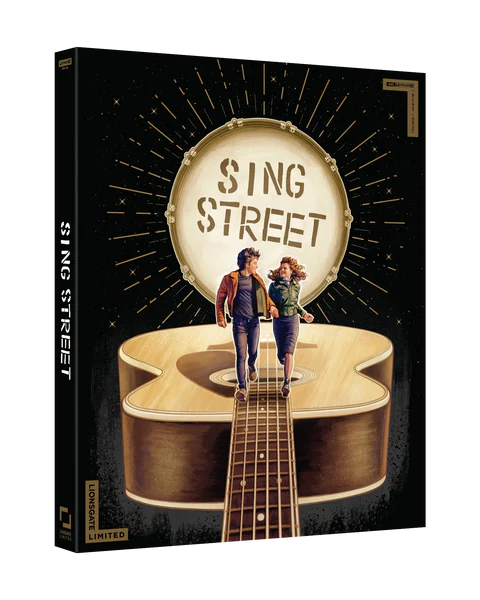
For Lionsgate’s Sing Street home release, the agency lists illustrated packaging art by Courtney Autumn Martin. Here the picture becomes part of an object. It has to work in the company of a title, a case and the other pieces of a physical edition. Someone might encounter it long after the release campaign has finished.
The distinction helps explain where the company fits. Entertainment advertising includes many jobs, from planning a campaign to distributing it. Poster Posse’s clearest specialty is making authored visual material for that campaign. Depending on the assignment, a buyer could also hire an individual illustrator, an illustration agency or a broader entertainment creative shop.
Its online store supplies another route to a customer: original prints and merchandise sold directly. At the September 2026 check, several artist print listings started at US$50. That is the price of a retail object, with options affecting the purchase. A studio commissioning a campaign is buying a different service, requiring a brief and a conversation.
The portfolio is already an audition
Bella Grace’s path into the group gives the origin story a smaller, repeatable shape. She made alternative posters as sample work, shared them online and followed Poster Posse. Don and Rebecca invited her to contribute to a tribute for Annihilation. Another guest project followed, then an invitation to join the team.
For an aspiring illustrator, the practical lesson is to make the kind of work that demonstrates the assignment you want. Choose a subject that can sustain your attention, finish the piece and give it a place in a coherent portfolio. An interested art director should be able to understand what hiring you would add.
The collective still accepts portfolio links through its application email and advertises an intermittent Protégé Program. That makes the route tangible, without making acceptance automatic. The useful unit of progress is a body of work strong enough to judge.
There is room for experimentation inside that body of work. In a 2018 SciFiNow interview, Matt Needle described trying to bring his collage and vector minimalism closer together. Personal projects give an artist somewhere to develop a visual language. A commercial client can then recognize that language when an appropriate brief arrives.
A fan still has to follow the brief
The transition to paid work changes the conditions. Steinbach described studio assignments with requirements around title treatment, billing text and likeness. She also recalled making early Mandalorian work without knowing about Baby Yoda. Enthusiasm does not grant access to the entire story. The artist has to make decisions with the material available.
That suggests a boundary for the model. It suits a buyer who wants an illustrator’s interpretation and can give that interpretation a useful role. A tightly predetermined execution leaves less space for what a varied roster offers. For artists, the fit depends on being willing to revise, meet constraints and make work that serves somebody else’s release.
The result can earn recognition beyond the fan community. The 2025 Clio Entertainment gallery awarded Silver to the Daredevil: Born Again In-Situ Art Series, entering MEOKCA, Inc. dba Poster Posse in its credits. The category was digital, mobile and social media craft. The name still says poster; the work travels.
Return to those eight artists and the zombie movie. The part worth borrowing is the specificity of the experiment: a shared subject, finished interpretations and a public place to see them. Poster Posse’s subsequent business shows what can happen when someone takes the additional job of connecting that work to a buyer. The drawing attracts attention. Choosing the right person for the next drawing gives the agency something to sell.