The pumpkin was a problem. Bob Gleason had sketched a hand gripping a knife, its repeating contours turning into a jack-o’-lantern. The people at B.D. Fox & Friends wanted the mask instead. For a moment, the image now associated with Halloween was simply an idea that had failed to get approval. Then the agency called back. The drawing got another chance.
That episode offers a useful way into this Santa Monica advertising company. Its archive contains famous films and instantly readable images, but the business behind them involved something less tidy: proposals, objections, revisions and the judgment to let an illustrator try again. The finished poster looks inevitable. The conversation that produced it was anything but.
B.D. Fox & Friends made entertainment advertising for the companies trying to get audiences into cinemas, in front of televisions and interested in new releases. Its particular appeal is visible in the work: a willingness to make one image carry a heavy load.
A toy blimp before the studio business
Brian Fox’s route into advertising included an unusually literal exercise in getting a message across. At Revell, he designed a model Goodyear Blimp with illuminated messages. The toy reached the market in 1973. Years later, he connected its entertainment value and interactivity to the qualities of an effective campaign.
After toy design, Fox joined a small advertising agency. When that business closed, he opened his own operation in a spare bedroom, with the laser show Laserium as his first client. The origin is modest, but it already contains the commercial subject that would occupy him: selling an experience people had to imagine before they could buy it.
“It’s all about image and attitude.”
Brian Fox · Los Angeles Business Journal · 1997
The useful connection is between the object and the audience. A toy with a moving message earns attention by being entertaining. A movie advertisement has a related challenge: it must offer a little pleasure, curiosity or unease before asking for the price of admission. Fox’s early work gave that idea a physical form.
The sketch that survived its first review
In his 2022 conversation with Fangoria, Gleason recalled the agency reconsidering his Halloween concept after roughly three days. Once approved, he said, the painting took about three or four days. The recollection supplies a sequence, without turning an ordinary change of mind into a grand creative strategy.
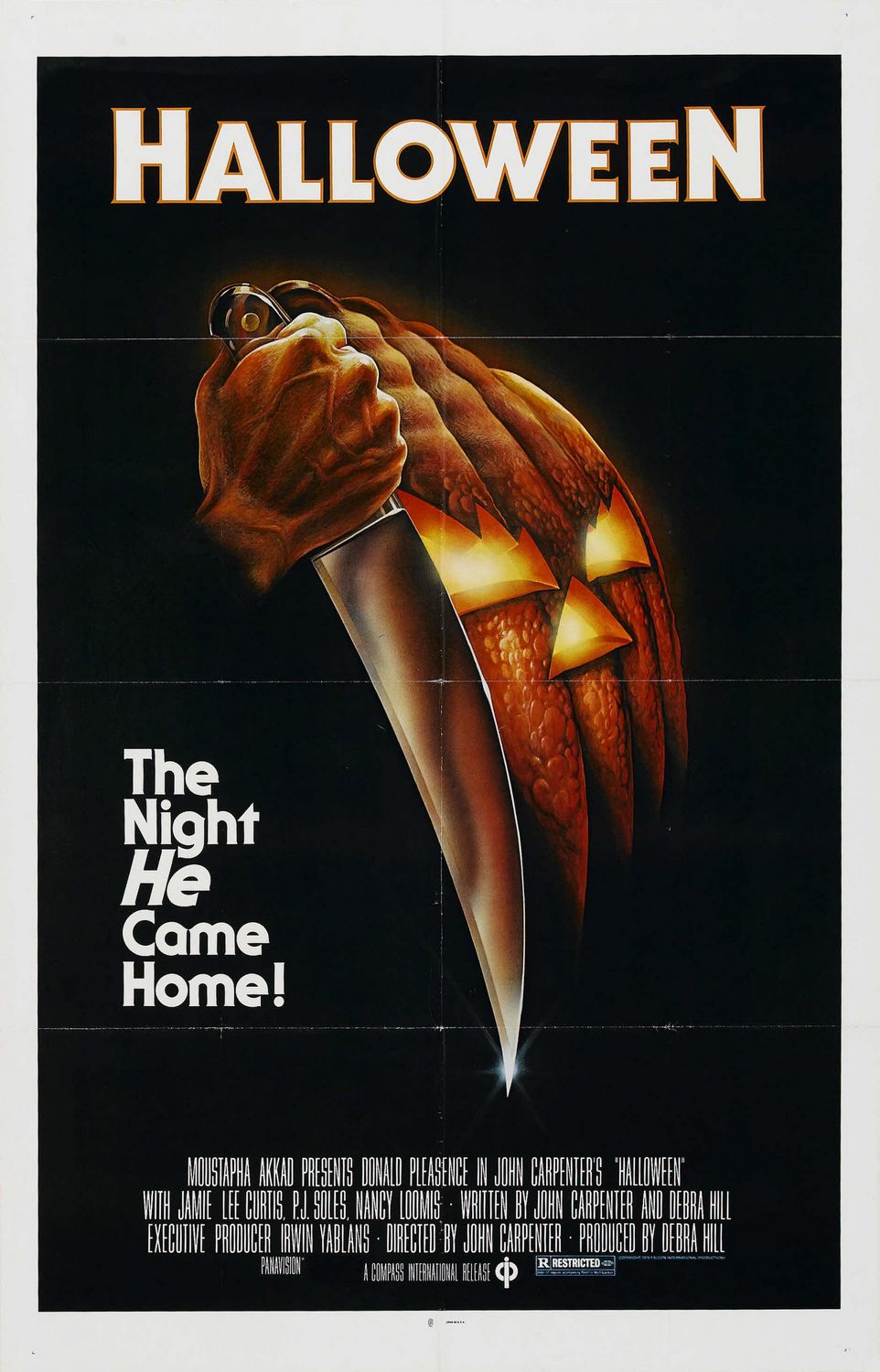
Look at the result. The weapon makes the danger legible; the pumpkin supplies the occasion. The repeated contour joins them so neatly that looking again becomes part of the experience. An ordinary seasonal decoration acquires a threatening edge.
The lesson for anyone reviewing creative work is practical: keep the sketch. A first reaction is a decision made at a particular moment, and reconsideration need not mean starting from scratch. Here, a rejected drawing remained available when the answer changed.
Batman, reduced to a signal
The agency’s credited work for Batman in 1989 takes a different route to recognition. The gold-and-black emblem dominates the poster. It offers neither a busy scene nor a guided tour of Gotham. You encounter a symbol rendered with weight, shine and shadow.
For an audience familiar with the character, that treatment can do several jobs at once. It announces Batman, suggests an expensive spectacle and gives the familiar insignia a harder surface. This is an interpretation of the design, but it helps explain why the poster remains worth studying beyond its value as film memorabilia.
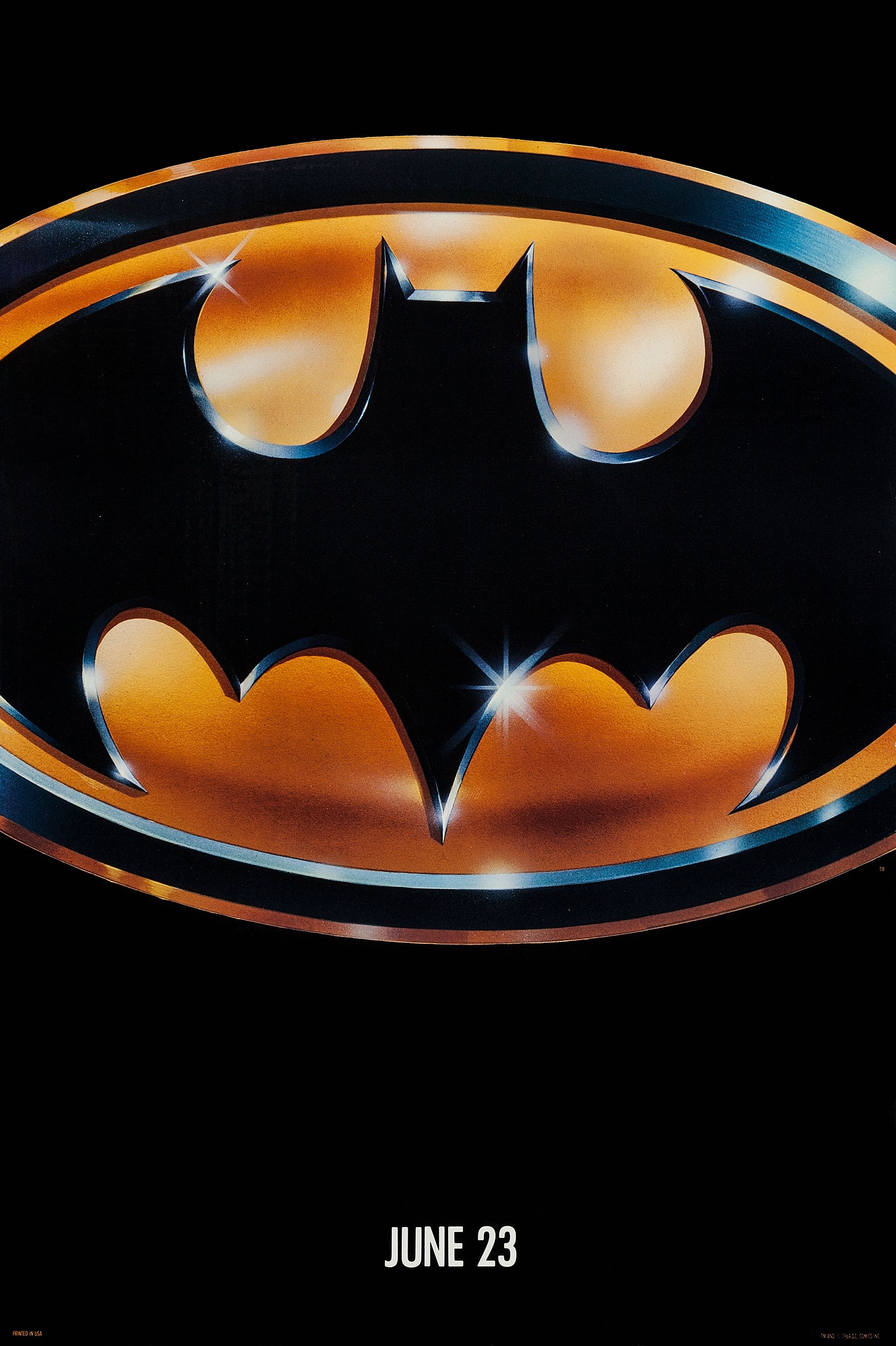
There is a condition attached to this approach. A familiar symbol arrives carrying information the advertisement does not have to supply. An unfamiliar film cannot assume that advantage. Remove the cast, setting and explanation from its poster and the result may simply be obscure.
So the transferable idea is to ask what the viewer already knows. With Batman, recognition creates room for mystery. With a new story, the design may first need to establish genre, stakes or a human relationship. The amount you can leave out depends on what the audience brings.
When the picture gives the game away
The bicycle silhouetted against the moon in E.T. makes the approval problem more interesting. Propstore’s accounts of the agency-associated artwork describe Steven Spielberg objecting to its use because it revealed too much of the story. The image later became associated with his Amblin production company.
That puts two reasonable demands into conflict. The advertisement wants to show something irresistible. The filmmaker wants the audience to discover that moment in the film. Both can be right. An image’s strength does not automatically settle where or when it should appear.
A surviving newspaper advertising print adds a less glamorous detail. Propstore describes hand-painted adjustments to a black-and-white reproduction, probably made to improve how it printed. The work continued after the central idea had been found. Contrast, reproduction and the eventual placement still mattered.
For a contemporary creative team, this suggests a useful test: review the concept in the place people will actually encounter it. A presentation image and a small advertisement impose different demands. The surviving print is a reminder that execution includes the journey from approved artwork to readable public communication.
The friends had names, jobs and deadlines
The people around Fox complicate any portrait of a solitary image-maker. Illustrator Bill Morrison worked at the agency from 1982 to 1986. In a Detroit Bookfest interview, he recalled meeting Matt Groening there, when Groening was a freelance writer. Art director Mili Smythe made the introduction.
It is the sort of detail a company directory misses. An agency can be a place where commercial assignments bring together people whose later work travels far beyond those assignments. Morrison’s account offers a glimpse of that everyday social machinery: a colleague knows someone, an introduction happens, another connection begins.
There was also the machinery of getting work delivered. Geren Lockhart’s account of her 1994-1996 stint describes handling client relationships, budgets and schedules across broadcast, print and consumer campaigns. The famous poster is the visible result; the account team makes the sequence of decisions and production tasks possible.
Other careers passed through the firm. Designer Steve Reaves identifies it as the start of his art-directing career. A Clio biography records Andi Delott’s work on cable and home-entertainment accounts at B.D. Fox before BLT. Together, these accounts show a workplace with multiple specialties, rather than a portfolio produced by one pair of hands.
What the clients were buying
By April 1997, the Los Angeles Business Journal reported a 75-person company. Its assignments extended into television promotions, music, video and interactive entertainment. Fox’s professional biography describes an 11-year CBS print-advertising relationship and work connected with the Xbox launch. Film key art was part of a broader creative-services operation.
The customers were studios, networks and other entertainment businesses. The commercial arrangement was therefore business-to-business: clients commissioned creative work to reach their own audiences. A film campaign gives that relationship a particular deadline; a network account can require continuity across a succession of programs and seasons.
Within that market, specialist agencies such as BLT and Intralink, along with studio creative departments, provide useful points of comparison. B.D. Fox & Friends’ documented strength was the combination of recognizable film work and experience across other entertainment formats. A buyer could assess the actual campaigns, then judge whether the people behind them understood the next assignment.
people at the agency in the April 1997 business profile.A historical snapshot, not a current headcount.
The distinction matters because a striking portfolio solves only part of a client’s problem. A campaign also requires an agreed audience, an approval process and materials suitable for their intended use. Lockhart’s description of the job supplies that operational half of the picture.
From selling the image to selling the film
In January 2006, trade reporting described a new step: B.D. Fox & Friends would take four completed films to Berlin’s European Film Market. Its combined marketing-and-sales offering included My Suicidal Sweetheart, Cold Storage, Night Feeders and Taylor.
The reported films generally occupied the $1 million to $10 million production-budget range. Those numbers describe the films, not what an agency charged to promote them. They indicate the scale of projects involved while leaving the economics of each assignment separate.
Fox’s professional biography dates his sale of the agency to key managers to August 2007. His subsequent B.D. Fox Independent operation pursued independent-film marketing and distribution. Screen reported in November 2009 that the later business had secured prints-and-advertising funding and was seeking three or four completed titles for American theatrical release.
The move is commercially intelligible: making a film attractive and finding a route to its audience are neighboring problems. They remain different jobs, however. A compelling poster can communicate an offer; distribution must make that offer available. Neither an admired image nor a production budget, by itself, establishes a profitable release.
That is why the agency’s work rewards a close look rather than a quick imitation. Start with the audience. Choose what the image needs to communicate. Give the idea enough room to be seen, and enough scrutiny to survive use. And keep the rejected sketch somewhere you can find it. Three days later, it may look different.