Grant Prigge once compared buying an air purifier to buying French wine. The customer, he observed, often has little idea how to judge either. Price becomes a convenient substitute for understanding. Choose the expensive bottle, or the expensive machine, and hope somebody further up the chain knew what they were doing. It is a funny comparison from someone selling appliances. It also gives away the question behind his company: what would make the buyer less dependent on hope?
Prigge is the co-founder and CEO of Mila Cares, with product design in his remit. His work sits at the rather awkward junction between engineering and domestic life. A device can satisfy its designers and still irritate the people who have to share a room with it. A fan can move air impressively while leaving its owner unsure what has changed. The technical accomplishment and the everyday experience have to meet somewhere.
His public story runs from Shanghai households to crowdfunding, from an appliance company's investment to a small brand's encounters with international trade. Along the way there are subscriptions, a hotel, a fictional color-changing machine, and some fairly plain advice about learning to build things. The recurring question is who gets to understand the product: the people selling it, or the people living with it?
Three fathers, one expensive assumption
In Shanghai, Prigge joined Charles Liao and David Chitayat in building Mila. All three were fathers. By December 2015, their business was already attracting attention for a particular commercial choice: customers could pay a monthly fee for a purifier service rather than face the cost of buying several machines at once. Replacement filters were part of the proposition. The payment arrangement belonged to the design brief.
That matters because a household purchase rarely ends at the checkout. Filters wear out. Someone has to remember to replace them. A home has separate rooms, each with its own practical requirements. The founders were working on the whole arrangement, including the inconvenient bits that tend to disappear from a handsome product photograph. Subscription billing could lower the initial hurdle and keep the replacement routine attached to the machine.
Mila took its name from a child of one of the founders. The company describes the name as a reminder of its obligations to families. It is a telling choice in a category that could easily have supplied a sequence of letters and numbers. Calling the company Mila makes it sound as though someone should answer when you speak to it. The founders have given themselves a name that invites a personal standard of service.
“Most people buy air purifiers like French wine.”
Grant Prigge
The wine comparison brings the business problem into focus. A high price can reassure a buyer, but reassurance is a poor instruction manual. Prigge's challenge was to make a machine's behavior easier to interpret. Once a customer can understand what is happening, the conversation changes. The appliance has to explain itself.
An appliance with something to say
In May 2019, Electrolux announced an investment in Mila. The startup was operating in China and planning expansion, including into the United States. Its connected machines combined indoor monitoring with outdoor data and smartphone controls. The arrangement joined a young consumer business to a company familiar with making appliances at scale. It also put a service model in front of an established manufacturer.
The November 2019 launch made the intended user experience concrete. Mila could estimate the time needed to reach a chosen air-quality target. It could respond to room presence, quieting down when someone entered and doing more work when the space was empty. A display and app gave the owner ways to follow and control it. These are small domestic negotiations translated into product behavior: do the work, explain the work, and please stop shouting over the conversation.
That combination suits a founder whose job includes both the company and the product. The CEO has to make the business viable; the designer has to make its decisions tolerable in a living room. Those duties can pull in different directions. More features create more to explain. More automation creates more occasions when a customer wonders why a machine has decided to do something. Clarity becomes part of the engineering task.
A machine has to earn its place in the room.
A hotel room is also a shop window
Prigge's approach to distribution included an unusually revealing example: Post Ranch Inn in Big Sur. Mila's machines appeared in guest rooms and the restaurant. In 2021, he explained that the hotel's direct sales contribution was small. The opportunity was the introduction. Guests could encounter the product somewhere they had already chosen to spend time, with the appliance doing its ordinary job.
At the time, Prigge said word of mouth drove half of Mila's sales. That was his account of the business at that moment, rather than a permanent ratio. Still, it explains the logic of a small hotel partnership. A product can be demonstrated through use. A guest sees it, hears it, and perhaps asks about it. The room supplies a context that an advertisement has to manufacture.
For a founder, this is a useful distinction between revenue today and familiarity tomorrow. A modest order can have a purpose beyond its invoice. Prigge was willing to describe the hotel's importance in those terms. There is something pleasingly literal about an appliance getting into the room where a future customer might notice it.
The joke that came back in four colors
Mila's public voice is playful. Prigge has thanked customers as Mil'iebers and used the company's invented word airblivion in a recruiting post. The jokes are part of how the brand talks, including when it is asking people to work there. A household appliance is allowed to have a personality, apparently, provided someone still remembers to make the appliance.
One campaign put that voice to work. For April Fool's Day, Mila presented Aura, a fictional purifier that would change color with a room's energy. The joke led to a real color vote for Air Mini. Nearly 2,000 customers participated, according to the company's award entry. The resulting choices were Smoky Gray, Dark Moss, Natural Sand, and Twilight Blue. Prigge and marketing and customer experience head Wendy Qi received campaign credits.
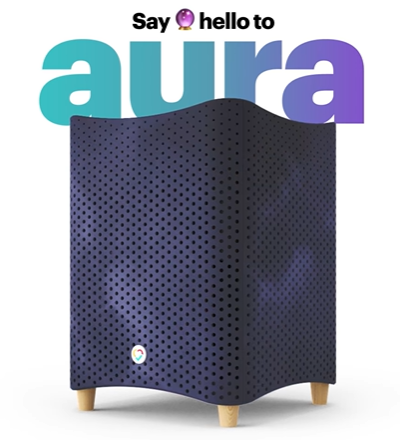
The campaign became a finalist in the 17th Annual Shorty Awards' launch category. Its interest lies in the sequence: amusement, participation, then a decision about a physical object. Customers were being asked for an opinion the company could actually use. A vote about color is modest, but it is specific. Someone who prefers blue can say so without first becoming an expert in the machine.
The calendar on the factory wall
The company closed a $10 million financing round in December 2022. Electrolux, Vulcan Capital, and Cercano Management appear in its investment history. By 2024, Mila ranked No. 1,500 on the Inc. 5000, with Prigge listed as its leader. The milestones put numbers beside a business that had begun with three fathers and a different way to pay for an appliance.
Then the public conversation became more prosaic. In April 2025, Prigge warned about the disruption tariffs could cause to gadget inventories. His concern was timing: products already in warehouses had been imported under earlier conditions, while replenishing those warehouses involved a changed calculation. A product business operates with several calendars at once. Customers see the day they order. The founder also has to see the next shipment.
Reporting that month said 70 percent of Mila customers had enrolled in filter auto-refills. The recurring business offered a buffer when the economics of new hardware became less predictable. The percentage belongs to that April account. Its larger significance is the connection to Mila's early thinking: replacing a filter can be both an ordinary customer task and an important part of the company's continuity.
Signed up for filter auto-refills
A dated snapshot of the business, not a current enrollment count.Give the next builder something to try
Prigge's comments about education offer another way to read his work. A Greensboro Day School graduate from the class of 1994, he argues for students having room to identify problems and attempt solutions. He also treats prototypes as a distinct part of learning. Thinking up an answer and making something that can be tried are different experiences.
That is a grounded ambition to bring back to a school. A prototype has an impolite habit of interrupting an elegant explanation. It can reveal that a button is confusing, a material is unsuitable, or an assumption needs another look. For students, as for founders, making something exposes the distance between intention and use.
Prigge's career at Mila keeps returning to that distance. The monthly payment, the visible readings, the quieter room, the hotel placement, and the customer color vote each address a different encounter between a person and an object. None removes the work of running a hardware company. Together they show where he has chosen to look: at the point where someone has to decide whether the expensive box is worth keeping.