Consider the remote control. Someone leaves it on the sofa. Someone else wants it. Between those two events lies a small domestic negotiation: find it, fetch it, put it somewhere sensible. Empire’s Foundry proposition begins in that unglamorous territory. Its advertised household robots retrieve everyday objects and return them to assigned places. The interesting word is assigned. Before the machine can take over a chore, the household has to decide what doing it properly means.
- The offer: five upright household robots, sold through early access.
- The price: advertised product prices run from $199 to $999, before applicable extras.
- The bargain: customers configure the home; capabilities and supervision vary by model.
A small chore with a large instruction manual
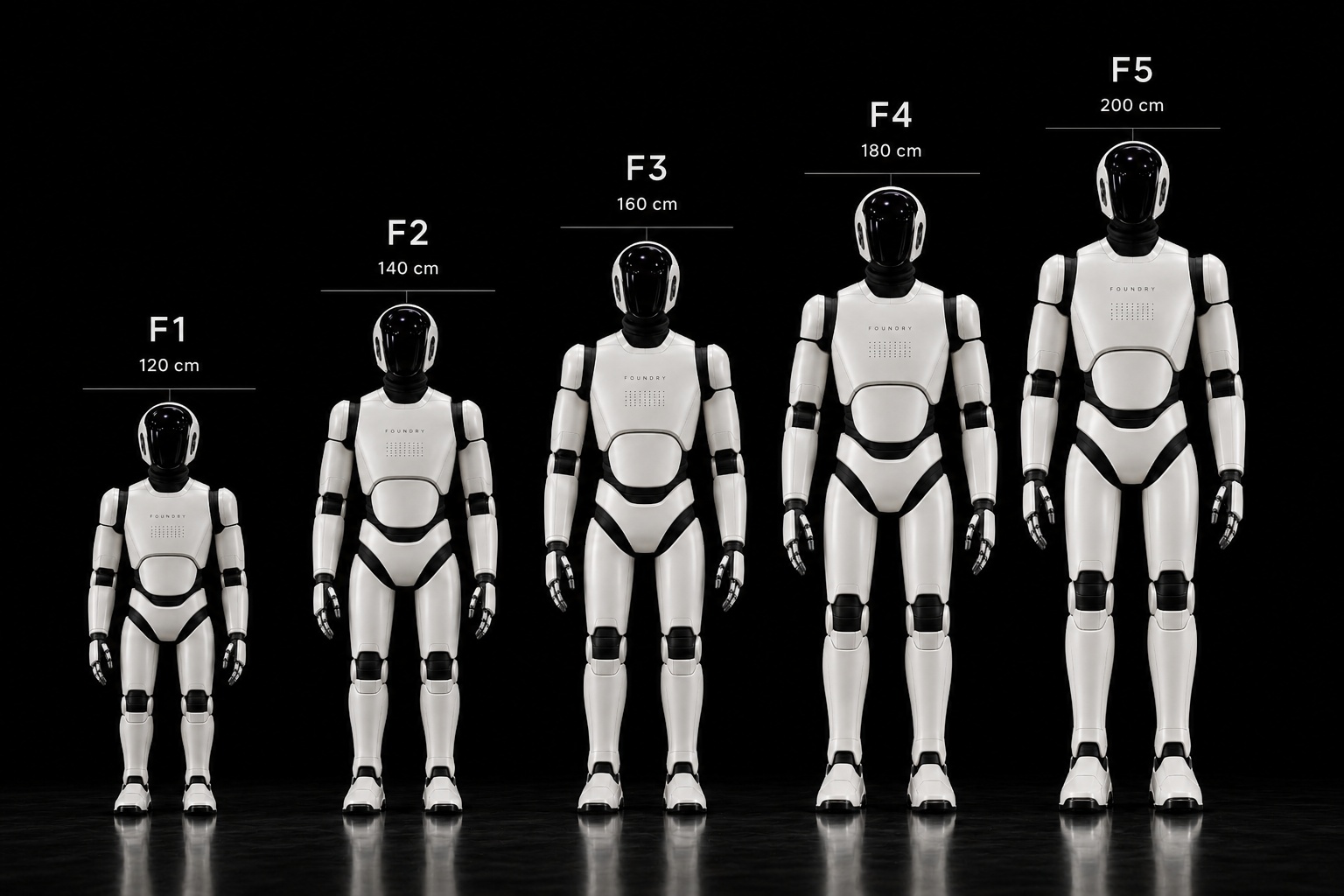
On the F1 product page, the examples are wonderfully ordinary: remote controls, folded towels, water bottles, small supplies. Owners choose rooms and storage locations during setup. The 120-centimeter entry model is pitched at apartments and smaller households. Its job description is closer to a helpful pair of hands than a cleaning appliance: Foundry explicitly distinguishes it from a floor-vacuuming robot.
That distinction explains the market Empire is courting. The customer wants the room ready again, the supplies carried, the familiar object returned. A specialist appliance handles a narrow job. A household assistant promises to connect jobs across the room. The usefulness would come from repetition: the same little interruptions removed every day. That is the proposition, rather than an established measure of time saved.
The price does the talking
The F Series comparison turns this ambition into five shopping choices. The early access ladder is $199, $399, $599, $799 and $999. Alongside those figures sit expected public launch prices of $1,999 through $9,999. In each case, the early offer is roughly one tenth of the stated future price. Those future figures are expectations, not a record of previous selling prices.
Foundry says the checkout amount buys the product outright; it is not a reservation deposit followed by the balance. Its terms describe payment in full at checkout. Shipping, taxes and duties can add to the bill. The business model presented here is a direct hardware sale with an accompanying account and software updates. The storefront advertises general availability by January 1, 2027, making the offer a purchase against future delivery.
The return policy adds a year from delivery to request a return, with conditions covering working order, damage and packaging. Cancellation is available before delivery preparation. The limited warranty covers defects for two years under normal supervised use. These provisions are part of the offer; their practical value depends on the product and service that arrive.
Every rung buys a different Tuesday
The F2 page adds pet food and water routines, laundry sorting, dry-surface wiping and scheduled room checks. Owners select portions, basket locations and approved surfaces. The target household is busier, with more recurring upkeep. Notice how much of the intelligence is expressed through those choices. The owner supplies a domestic rulebook; the advertised machine follows it.
The F3 moves into selected dishwasher assistance and multi-step tasks. The F4 describes larger carrying jobs and longer indoor sequences. At the top, F5 promises coordinated kitchen, laundry and room routines. Model pages and comparison summaries differ on some task thresholds, so a shopper should inspect the exact model description rather than infer a capability from the family name.
One F5 claim deserves particular attention: owner-controlled dog walking on approved routes. General safety guidance emphasizes indoor operation, while warranty language excludes outdoor damage. That tension makes the exact conditions consequential. A feature listed on a model page does not, by itself, settle where an owner can use it with coverage.
The house becomes part of the machine
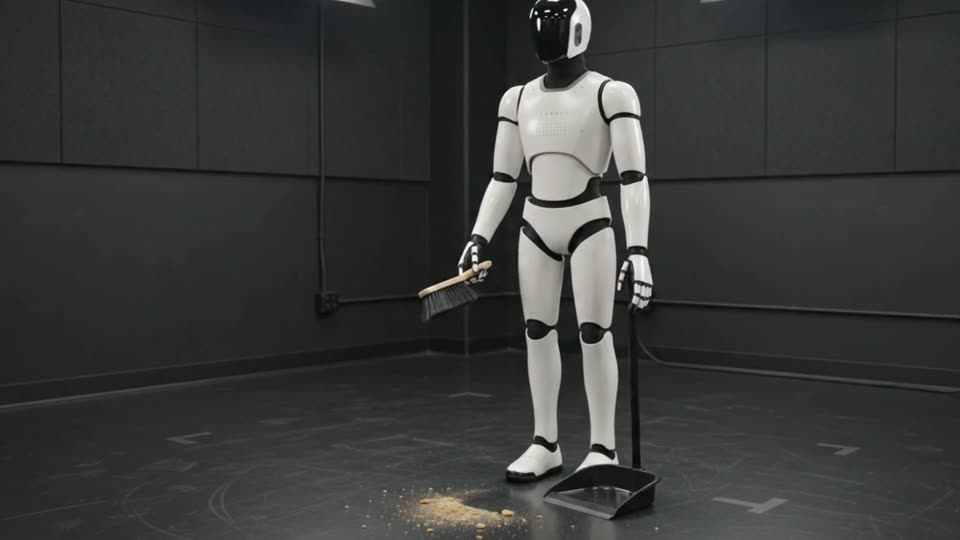
Foundry’s technology description combines sensing, configured routes, task planning and household permissions. Its sequence is “Observe. Plan. Confirm. Act.” Voice, app and physical controls are described as ways to interrupt activity. This is the company’s account of its system, not a published benchmark of navigation or manipulation performance.
Before the machine can take over a chore, the household has to decide what doing it properly means.From this profile
The setup guide makes the environment tangible: a level docking location, space to approach it, rooms mapped before routines begin. It also says Foundry does not autonomously navigate stairs. The safety guidance excludes standing water and hazardous cooking activities. A home with unpredictable obstacles or tasks requiring constant intervention would change the calculation of convenience considerably.
There is a useful lesson here for anyone designing automation. Give objects defined destinations. Break a vague ambition such as “tidy up” into permitted actions. Make stopping easy. Those principles can improve a household routine before any robot arrives. They also expose the central trade-off: preparation and supervision consume some of the attention the product is meant to save.
Privacy belongs in that calculation too. Foundry’s published policy describes collecting account, order, support and operational information, and says personal information is not sold. The household is being asked to grant a moving device access to private rooms. Clear permissions therefore have practical value: where it may go, what it may report and who can see the result. A privacy promise becomes useful when those choices are understandable during ordinary use.
A household pitch, still taking shape
Empire’s public identity is moving too. The supplied LinkedIn address now redirects to an Empire profile promoting Assembly and linking an Assembly website. Foundry’s storefront remains a separate public product proposition. That visible change supports a description of evolving branding, without establishing the corporate mechanics behind it.
In the market, 1X’s NEO offers another household humanoid proposition, including scheduled expert guidance for unfamiliar chores. Foundry’s distinctive retail pitch is its five-model ladder and low advertised entry price. The worthwhile test is wonderfully mundane: how often does the remote get home, and how much help does the helper need?