In 2009, Xavier Orr drove across the Nullarbor twice with equipment attached to his car. He needed data to train a navigation system. Australia supplied a rather long test bench. Before the customers, the factory openings and the conversations about robots on the Moon, there was an engineering student putting kilometres beneath an idea.
The detail is worth keeping in view. Artificial intelligence can sound as though it happens somewhere beyond the physical world. Orr’s work has repeatedly required an encounter with it: a vehicle moving, an underwater machine finding its bearings, a robot handling an object that will not stay politely in position.
He co-founded Advanced Navigation with Chris Shaw in 2012. In July 2024, he stepped down as co-CEO, announcing a continuing role as a board director and advisor. He subsequently founded Anitron, developing task intelligence for humanoid robots. His career now stretches from the problem of knowing where a machine is to the problem of getting it to do something useful once it gets there.
A lesson with purple hands
Orr’s interest in making things work was already established at school. He attended John XXIII College in Perth, graduating with the class of 2003. He later remembered programming alongside interested friends and the value of the information technology he learned there. He also remembered a chemistry lesson in which a compound passed around the class left everyone’s hands purple. Some educational experiences are more transferable than others.
A Year 10 outdoor education camp at Dwellingup made a different impression. The camping, walking and physical challenges stayed with him. Years later, he spoke about enjoying long hikes, including the Great North Walk between Sydney and Newcastle. The engineer interested in autonomous movement also likes covering ground himself.
While still at school, he started a business building and selling PCs. At the University of Western Australia, he studied mechatronic engineering and computer science. That combination put mechanical behaviour and computation in the same education. His eventual research concerned neural networks and inertial navigation: using measurements of motion to help determine a system’s position and movement.
The other half of the instrument
Orr also worked in autonomous systems at Cyber Technology, where he headed research and development. The practical needs of early drones gave his research a commercial setting. A machine intended to move by itself needs reliable information about where it is going. The available equipment did not always fit the emerging applications.
Shaw knew the problem from the hardware side. Working in drone technology, the pair encountered navigation equipment shaped by military and aerospace requirements: bulky devices with substantial power demands. Smaller autonomous machines needed a different balance. Their shared experience supplied a useful starting point for a business. They had a problem in front of them, rather than a technology searching indefinitely for employment.
Orr brought neural-network research; Shaw brought expertise in sensors and electronics. Their skills met inside the same instrument. It is an unusually tangible description of a founding partnership: the software needs measurements, and the hardware needs a way to interpret them.
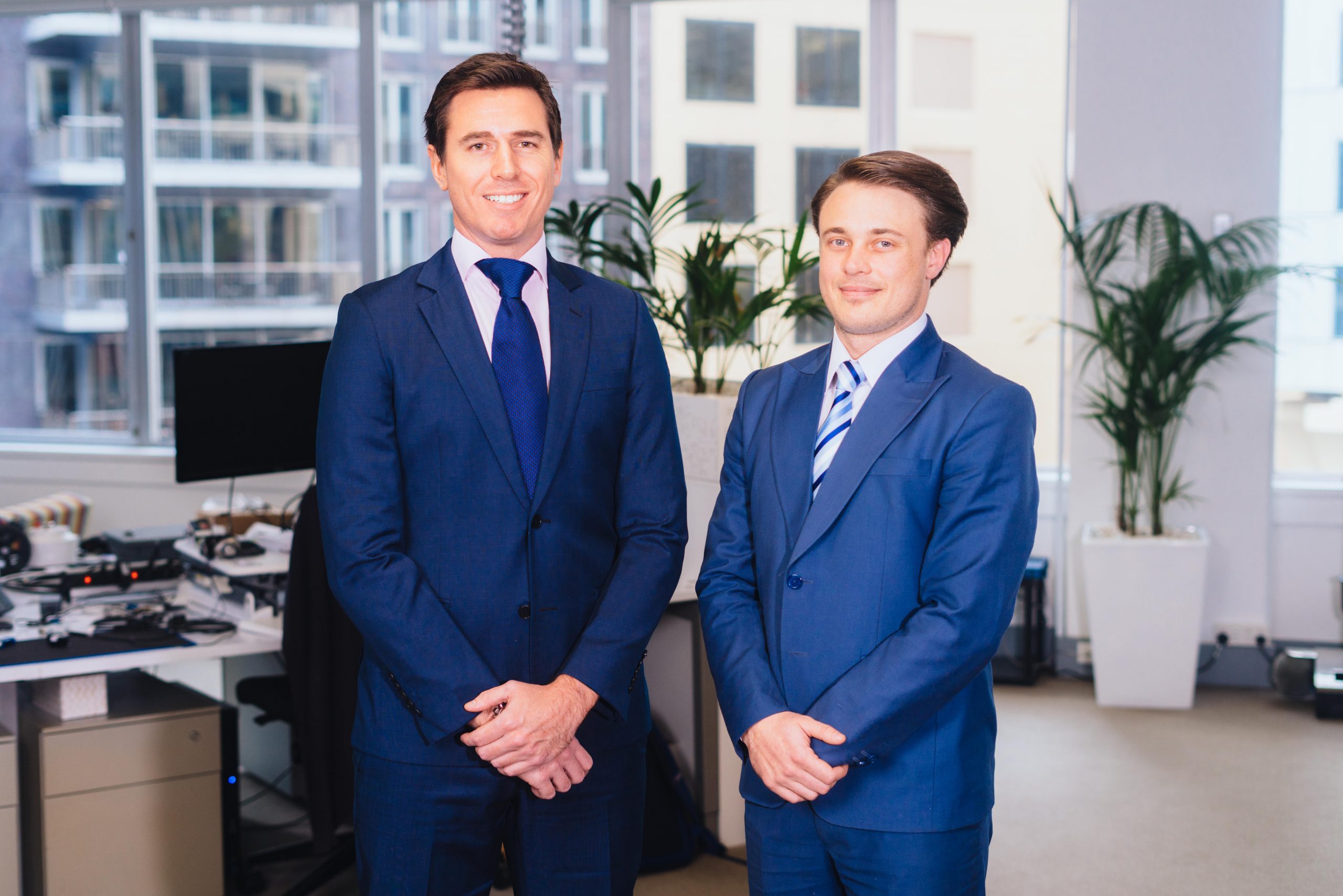
The business began in Shaw’s garage in Subiaco. The founders used personal loans and credit cards to get it moving. Orr later recalled volume orders arriving shortly before their money ran out. A research result had become something that somebody wanted enough to buy. That is a fairly stern form of peer review.
Finding the way without a satellite
The premise behind Advanced Navigation can be described without putting a satellite into the picture. Motion sensors provide information about a moving system. Software interprets those measurements. Orr’s university work explored how neural networks could contribute to that process, helping autonomous systems navigate where GPS cannot be relied upon.
The idea had to survive more than a thesis examination. An unfamiliar approach needs acceptance from people who will put it inside their own equipment. In a later conversation about the company’s beginnings, Orr identified Bombardier as an early breakthrough customer, roughly six months after the start. That kind of order changes the argument: the question becomes how to deliver.
He and Shaw shared the chief executive job. Orr’s explanation was economical: “You can cover double the territory.” He also stressed the trust required. Sharing the title does not automatically make two people complementary. Their engineering backgrounds and long working relationship gave the arrangement a practical basis.
“You can cover double the territory.”
Xavier Orr, on sharing the CEO role
- 2009Navigation research
- 2012Advanced Navigation
- 2024Anitron project begins
- 2026Commercial beta*
The ocean has no patience for a bad interface
The company’s work expanded into underwater systems. Hydrus, launched in 2022, gave the navigation problem an immediately recognisable body: a compact autonomous underwater drone designed to collect imagery and data. Its intended users included people inspecting infrastructure and studying marine environments.
Underwater operation imposes awkward conditions on a machine. GPS is unavailable beneath the surface, and a vehicle must find its way through an environment that resists ordinary radio communication. Hydrus brought sonar, navigation, communications and imaging together. Its appeal rested partly on reducing the equipment and specialist effort needed to obtain useful underwater information.
Orr compared that ambition with the growing accessibility of aerial drones. “Looking at underwater technology, we want the same thing to happen.” The point was practical: let more people conduct an underwater survey without assembling an expedition around the equipment. A device becomes more useful when operating it stops being the principal occupation of the person who bought it.
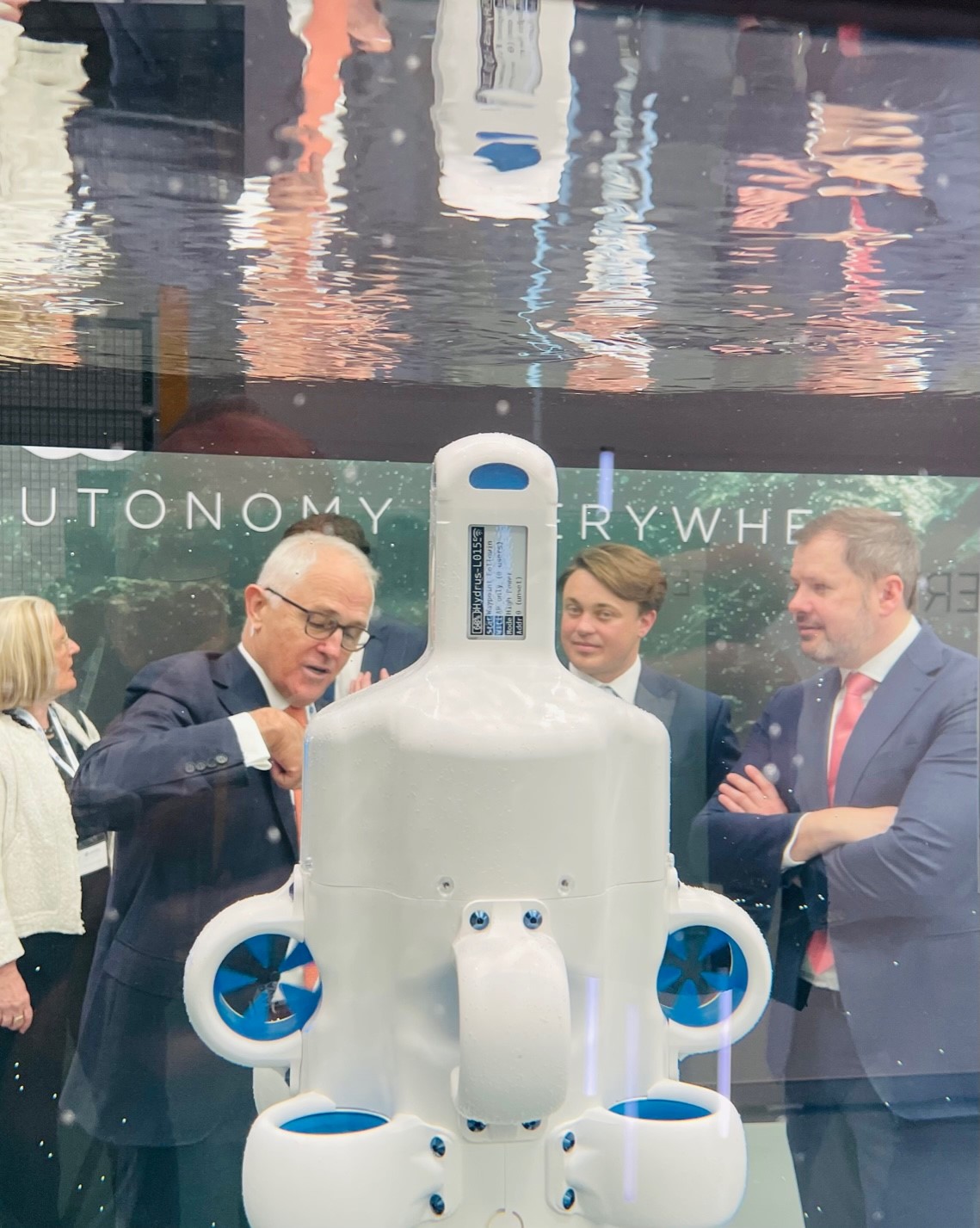
Hydrus received an Award of Merit in the 2022 Designers Australia Awards, with Orr named among its project team. The project involved consultation with marine scientists and research institutions. Here, the definition of a successful robot included the people using it and the environment through which it moved. Navigation was one component of a larger design problem.
A laboratory needs a factory
Growth brought another set of demands. In November 2022, Advanced Navigation announced a US$68 million, or A$108 million, Series B funding round led by KKR. Existing backers participating included Main Sequence and Malcolm Turnbull. The planned uses included research, product development and international expansion.
For Orr, this meant operating at a distance from the early two-person business while keeping a hand in its products. In a 2022 engineering interview, he estimated that actual product engineering still occupied five to ten per cent of his time, with further time devoted to product management and engineering direction. The job had changed; the products continued to claim part of his working week.
In September 2023, the company opened a manufacturing facility at UTS Tech Lab in Botany. It was intended to expand production of navigation systems, including digital fibre-optic gyroscope technology. University collaboration and manufacturing occupied the same site. An algorithm might start a company, but shipping instruments requires an assortment of less abstract arrangements.
The space work extended that research network further. Advanced Navigation acquired Vai Photonics, bringing in photonic sensing developed from Australian National University research. Its LUNA programme subsequently received A$5.2 million through the Australian Space Agency’s Moon to Mars initiative. The aim was a space-qualified sensor providing velocity and altitude information for lunar navigation.
Orr made a wider argument in a 2024 essay: Australia needed continued space research and a workforce equipped to turn it into practical capability. The position followed the shape of his own working life. Universities generate knowledge; companies have to make something dependable from it. Both need people who can cross the gap.
Back to a robot with hands
After leaving the co-CEO position, Orr returned to a field he had explored much earlier. At university in 2007, he had experimented with Honda’s ASIMO. By September 2024, he was working on the project that became Anitron. Humanoid hardware had advanced, and commercially available robots offered a new setting for his software interests.
He chose to work on the intelligence rather than build the entire mechanical platform. Anitron used Unitree G1 robots as development hardware. One demonstration he discussed in 2025 involved folding a shirt. Fabric makes an awkward examination paper: it changes shape during the attempt. A fixed sequence has difficulty accounting for every fold.
“You can’t fake that test,” he said. The attraction is easy to understand. An everyday task can expose a machine’s limitations without requiring a spectacular setting. A shirt is inexpensive, familiar and magnificently indifferent to a company presentation.
Work outside the demonstration
Anitron describes its approach as insect-inspired task intelligence, designed to run on computing hardware carried by the robot. The company says its model can respond to natural-language instructions and adapt to unfamiliar tasks with limited training. These are its stated capabilities and development goals; their commercial value depends on what the machines can repeatedly accomplish.
The website now reports that a beta trial began in the first quarter of 2026, with robots carrying out work in a commercial environment. Its stated ambition is to deploy millions of humanoid robots into industries experiencing labour shortages. The gap between that ambition and a working installation contains the next chapter of Orr’s engineering life.
A commercial workplace also changes the audience. The person beside a robot has a job to finish. That person needs the machine to cope with the room as it is, including the interruptions and misplaced objects. For a designer of robot intelligence, ordinary working life offers a demanding curriculum.
The Nullarbor drive makes a useful bookend. Then, he needed measurements from a moving vehicle. Now, the work concerns machines acting in surroundings that have not been arranged entirely for their convenience. Across both ventures, the physical world supplies the examination. It still declines to hand out the answers in advance.