At six, Amanda Johnstone had identified a problem with the school lunch economy. The sandwiches were predictable. The canteen offered ice creams. Money stood between the two. Growing up in a working-class family in regional Tasmania, she began selling homemade crafts to other children, then spent the proceeds on treats for herself and her friends. It was a small enterprise with a remarkably legible business plan: make something, sell it, improve lunch.
The distance from that canteen to an artificial intelligence keynote is considerable. The underlying impulse is easier to recognise. Johnstone likes finding an opening, figuring out how something works and bringing other people along. Today she is the founding CEO of Transhuman Inc., a Sydney-based Australian technologist whose working life also includes investing, mentoring and explaining emerging technology to audiences who have businesses to run.
Her public persona comes with the expected conference credentials. Her more revealing habit is a willingness to ask experts for a simpler explanation. Before large audiences were asking her about AI, she was asking technical people to explain their work as though she were ten. In a field where a complicated answer can pass for an impressive one, that is a useful piece of bad manners.
A shop before a laboratory
Johnstone was born in Launceston. At 17, she co-founded Sebachi, a Tasmanian retail chain that moved into online selling in the early 2000s. Cotton On founder Nigel Austin became a mentor. That combination matters: a local business, an internet storefront and guidance from someone who understood retail at a different scale. The technology was attached to the everyday question of getting something into a customer's hands.
It is tempting to tidy a career like this into an inevitable progression. Retail becomes entrepreneurship; entrepreneurship becomes technology; the keynote slides practically write themselves. The more interesting reading is that her early work required two kinds of attention at once. There was the new channel to understand, and there were people deciding whether to use it. An online shop still has to persuade somebody to shop.
Mentorship remained part of her career. Her public professional record includes advising Tech Ready Women Academy and, from 2025, Startmate. She also lists mentoring for Schmidt Futures' Quad programme in 2023. These are different settings from a teenage retail business, but they keep her close to people making their first moves. Expertise gets passed across a table, sometimes before anybody has a title impressive enough for a name badge.
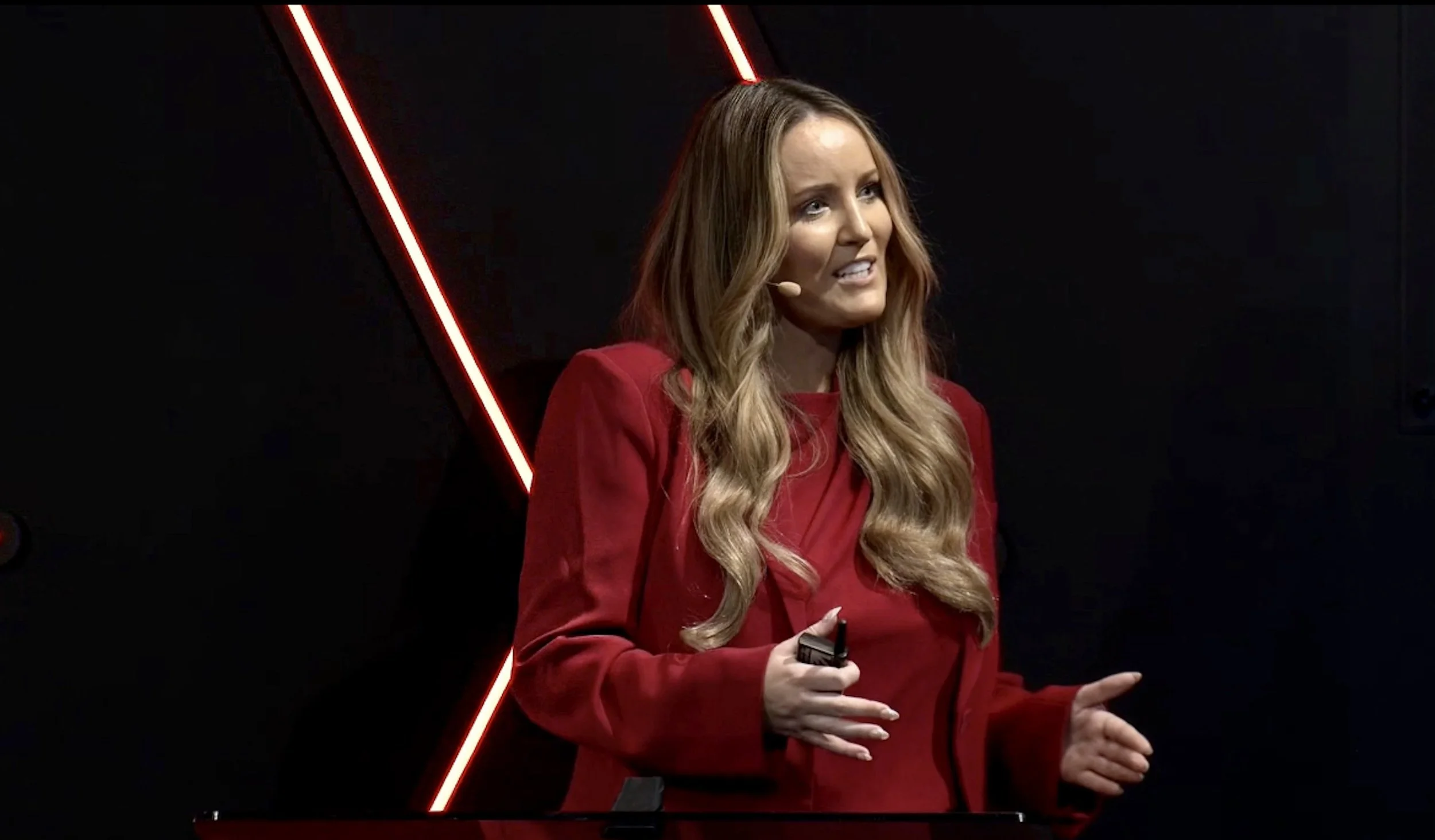
The room with no dress code
Transhuman was founded in 2014. Its work has included research into human-computer interaction, emotion AI and the storage of human data. Johnstone's role places her between technical development and the people who must decide what to do with it. That is a crowded border. Inventors, customers, executives and the public can all use the same word while picturing quite different things.
Then came an unusually useful place to practise translation. In late 2020, Johnstone was helping build Talk Nerdy to Me on Clubhouse, the social audio app. In a December post introducing the room, she named fellow founders Tarin Ziyaee, X. Eyeé and Maude Garrett. The subjects ranged across robotics, sustainability, gaming, autonomous vehicles and artificial intelligence. There was room for geek culture alongside the machinery.
Her introductory guide did something practical. It offered newcomers people to follow, explained where to begin and treated curiosity as an adequate admission requirement. The app itself still required an invitation and an iPhone at the time. Inside those limits, the format loosened the usual arrangements of a technology event. A voice could arrive without a slide deck, a conference ticket or a carefully selected jacket.
By 2023, Johnstone described a show with 300,000 subscribers. The number gives a sense of the appetite, although the more consequential detail is what she did with the microphone. She questioned people from technology, media, entertainment and the arts about where AI met their work. A useful answer had to travel beyond the speaker's own profession.
co-founded Sebachi
founding year
reported in 2023
Ten years old is a useful age
Her account of those conversations contains a small clue to the subsequent speaking career: she asked experts to explain things to her like a child. The exercise made their ideas portable. An answer that survives that request can reach someone who has never written code, someone who knows a great deal about a different subject, or someone who has become quietly lost three acronyms ago.
“Explain it to me like I'm 10 years old”
The question Johnstone brought to her conversations with experts
By the time she was preparing to speak at ADMA's Global Forum in 2023, she felt the Australian audience was ready for a conversation that would have been difficult five years earlier. Her emphasis was on helping people prepare for developments already under construction. For a marketing audience, that meant thinking beyond the tool immediately available on a laptop and towards the systems likely to surround it.
There is an editorial skill here as well as a technical one. A good moderator has to notice which answer needs another question. A good speaker has to anticipate where an audience will lose the thread. Her route through live audio gave her repeated encounters with both problems. The public version of expertise was being rehearsed in conversation, with listeners present.
The badge and the boarding pass
The recognition has accumulated across several different institutions. TIME selected her as a Next Generation Leader in 2019. The CEO Magazine named her Startup Executive of the Year in 2020. LinkedIn recognised her as a Top Voice in AI in 2023. In January 2026, Women in Digital included her in its Women to Watch in AI and Machine Learning.
Those markers describe visibility. The travel describes the labour behind it. In a post closing out her 2023 speaking year, Johnstone counted more than 140 flights and over 60 keynotes, alongside running Transhuman. She also looked back on more than 350 Clubhouse shows. Whatever one makes of a conference circuit, it has a less glamorous unit of measurement: getting to the next airport.
Her engagements have taken her into different organisational cultures. Her professional record lists Sitecore appearances in Japan, Singapore and Sydney in 2025, and TikTok and Tyro speaking engagements in March 2026. These are audiences with different products, customers and pressures. The recurring task is to give people enough understanding to make decisions inside their own work.
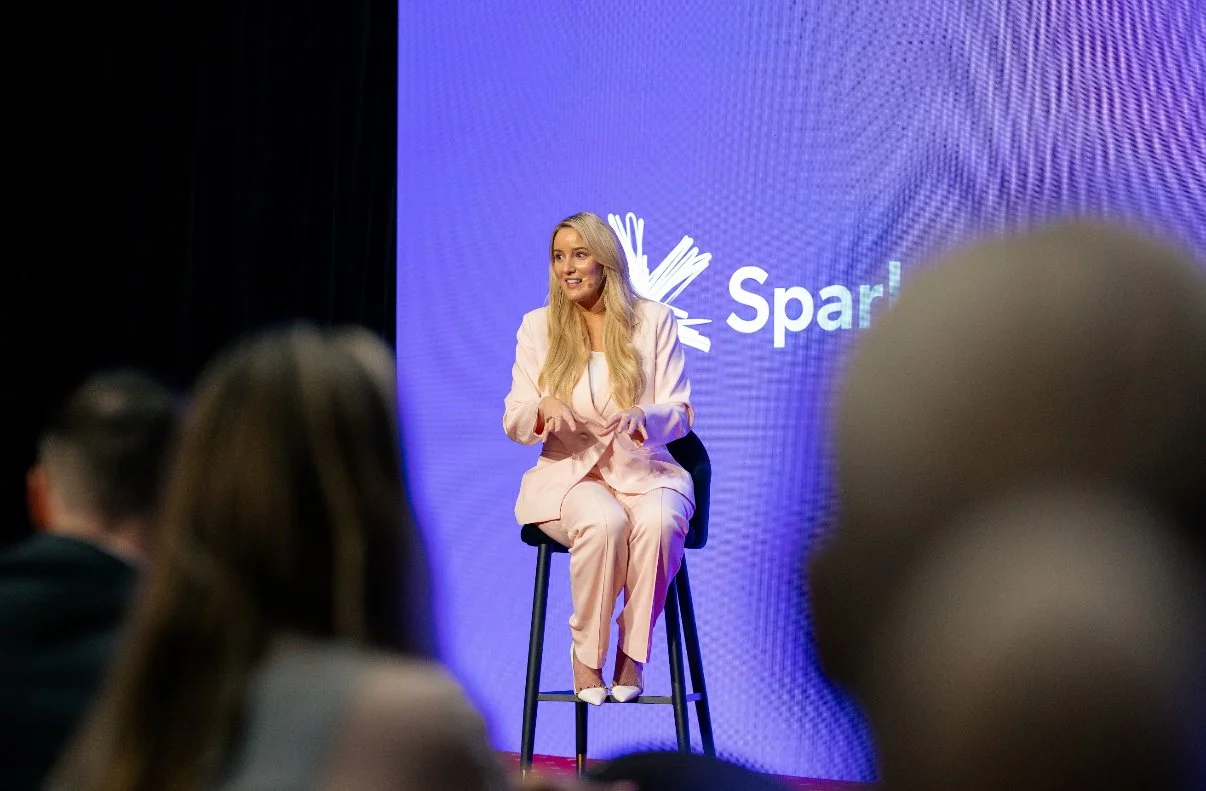
The future keeps office hours
Her March 2026 essay about forecasting makes the process sound pleasingly ordinary. She recommends looking through patent filings, following engineers' discussions, watching early investment and paying attention to regulatory activity. She also suggests spending time at the edges of one's own industry, where practitioners are talking about what is broken. The future, in this account, leaves paperwork.
The step that gives those habits a shape is a weekly synthesis: record three signals and consider what they might mean together. Johnstone says she puts time in her calendar for the exercise. That is an appealingly concrete detail for somebody who sells the ability to see around corners. Apparently a calendar appointment helps. Foresight has to compete with the rest of Thursday.
By May 2026, her writing was focused on what AI agents might mean for brands. Her argument is that businesses must prepare for software that searches, compares and acts for customers. She places clarity, reliable information and accountability at the centre of that preparation. It is an argument about the information a business presents and the authority a person chooses to delegate.
That brings the story back to the storefront, albeit with a peculiar new customer at the door. The teenage retailer helped a business find buyers online. The current technology communicator asks what happens when a buyer sends software ahead. The commercial question has acquired another participant, and Johnstone wants executives to understand its behaviour before arranging the window display.
Launceston remains in the picture
The geographical thread has survived the flights. In 2024, she returned to Tasmania for a TasICT International Women's Day event, speaking about forecasting technology. Her remarks about women in leadership emphasised collaboration and mutual respect. The point was participation: who gets the opportunity, the encouragement and the practical knowledge to enter a field.
Her December 2025 writing on Australia's National AI Plan returned explicitly to women, girls and regional communities, including Tasmania. Read as a statement of her interests, it connects the global speaking work with the place she grew up. The audience she imagines includes people outside the metropolitan rooms where technology is usually introduced. Access has a postcode as well as a price.
One piece of family advice has stayed with her. Her grandfather Patrick Bottle told her, “Never walk past a problem without doing something about it”. That is a demanding inheritance for anybody with a busy diary. It also gives her varied career a human scale. A school canteen, a retailer, an audio room and a boardroom all offer somewhere to begin. Johnstone's habit is to ask a question that lets somebody else begin too.
Keep the conversation going
Read Johnstone's forecasting notebook and essay on AI agents and brands, or explore her writing on regional opportunity. Revisit her 2020 introduction to Talk Nerdy to Me, the 2023 AI conversation, her Tasmanian homecoming and the 2026 Women in Digital selection.