The computer was built for games. Kimberly Randle and Arne Geschke had rather different entertainment in mind: making room for the data behind a supply-chain business. They bought a gaming computer because it was the affordable machine that could hold what they needed. Somewhere between the hardware aisle and the modern slavery problem, a lawyer’s practice was becoming a technology company.
That detail gives Fair Supply’s beginnings a welcome physical shape. Supply-chain intelligence can sound as though it arrived fully formed in a cloud. This version involved a purchase, a capacity problem and an early prototype that customers were willing to pay for. There is something reassuringly ordinary about the equipment, even when the work it carries is anything but.
A computer with other plans
Randle says the founders funded the business themselves from 2019 until late 2021. They had not understood that investors might back them before they became profitable. By the time they discovered that possibility, the business had reached profitability and attracted large Australian listed companies as customers. It is an unusually literal interpretation of proving a business before asking someone else to help pay for it.
Her central question was less charming than the hardware story. How could a business identify modern slavery risk when the relevant activity was buried beyond the suppliers it knew? An invoice could identify the seller. It would rarely explain the full network of work and purchases that had brought a product into existence.
“You can’t fix what you can’t see.”
Kimberly Randle
Before the algorithm, the witness table
Randle came to that question through law. She studied at Macquarie University, receiving a Bachelor of Law. During her studies, she interned for Senator Joseph Lieberman, working under his foreign policy fellow, and later at the United States Supreme Court’s Office of the Clerk. Her early experience took her into institutions where the machinery of public decisions was close enough to inspect.
She began her legal career at Jones Day in Los Angeles, then worked at Clayton Utz in Sydney. Commercial litigation gave way to family law, including complex custody matters. Before Fair Supply, her professional world already stretched across countries and across very different kinds of dispute. The tidy founder biography can make a career look inevitable. The actual route had several changes of practice.
At International Justice Mission Australia, Randle brought her legal background into human rights work. Its 2015 annual review identified her as Director of Corporate and Legal. It also recorded a life beyond the job: a husband, two daughters at the time, running and stand-up paddleboarding. Those details belong to that moment, rather than a frozen picture of her family today. Later interviews discuss being a founder and a parent of three daughters.
On 11 August 2017, she appeared before the New South Wales Select Committee on Human Trafficking. She introduced herself as a lawyer and mother, speaking for International Justice Mission Australia. Here the subject was no longer a hypothetical risk in a future business presentation. It was an issue she was asking government to take seriously, with a place in legislation and public policy.
The witness table helps explain the founder who followed. Randle had worked on the obligations that institutions could impose and the protections they could offer. Building Fair Supply would take her into the next practical question: what would organisations need in order to act on those obligations? A duty to investigate is easier to write down than a complicated network is to investigate.
The supplier behind the supplier
In March 2019, Fair Supply appeared as a Sydney legal practice focused on modern slavery compliance. Randle was its executive director and principal lawyer. The starting point was close to her existing expertise: help businesses respond to human rights responsibilities with legal and multidisciplinary advice. Her language at the launch put fairness squarely inside commercial life.
“Fairness is not charity. It’s just good business.”
Kimberly Randle, 2019
The visibility problem pushed the work further. Randle encountered the limits of the data available to companies trying to assess modern slavery exposure. Direct suppliers were only the first layer. Asking each supplier for the names of its own suppliers, then repeating the exercise through a large network, made for a formidable research assignment. Procurement teams had ordinary jobs to finish while the network kept extending.
Geschke brought a different professional toolkit. An industrial mathematician and academic, he worked with environmental economic models and global trade data. Their collaboration joined a lawyer’s understanding of the problem with a researcher’s ability to model economic relationships. Fair Supply’s own account places the beginning in a 2019 research project between the two.
The resulting platform examined exposure across multiple supply-chain tiers, incorporating public data and proprietary algorithms. It extended into modern slavery, carbon emissions and biodiversity. For Randle, the value of the mathematics lay in the decisions it could support: where to investigate, which relationships deserved attention and how to give a business more than an unexamined assurance.
Fair Supply models risk beyond the direct supplier. Modelled exposure guides further investigation; it does not establish abuse at a particular business.
That distinction matters to the story. A risk model offers a way to direct attention. The commercial and human rights work continues when someone uses the result. At the 2022 Concordia summit, Randle argued for companies to use data in business decisions and address risk across an organisation, beyond its policies and operating procedures. The information had to travel into the work.
A round with women at the table
By December 2022, the project had attracted a different kind of audience. Fair Supply announced an A$6.3 million Series A led by Airtree, with Tidal Ventures, Minderoo Foundation and QIC participating. Customers included AustralianSuper, QIC, Synergy Energy and RM Williams. The company reported having analysed more than A$750 billion in procurement and investment data at that point.
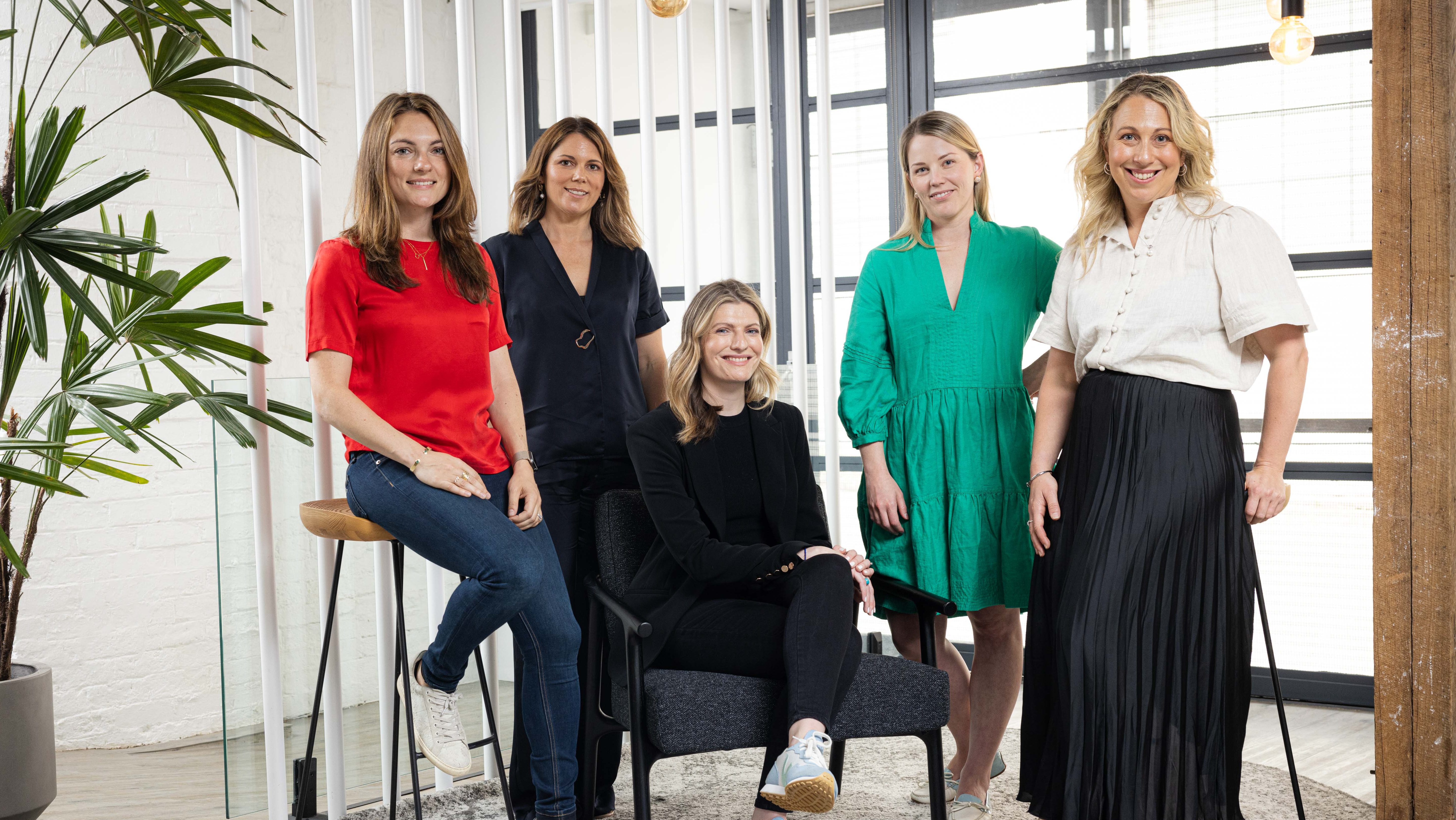
Airtree partner Jackie Vullinghs highlighted another feature of the investment: a female-led round backing a female founder. A photograph from the period brings those relationships into view, with Randle alongside Vullinghs, Serena Grant, Kate Bromley and Georgie Turner. Capital has a habit of presenting itself as a number. In this case, there was also a visible group of people.
The figures describe a business reaching customers and attracting investment. They also show how far Randle’s work had moved from a legal engagement with a single organisation. Her questions about hidden risk could now be applied across procurement spending and investment portfolios. The challenge was to make the method useful repeatedly, for people who had different purchases and different decisions in front of them.
The map finds another use
In January 2025, Fair Supply reported more than A$12 million in total funding. The new investment was led by Five V Capital, with Airtree and QIC supporting it. The company was targeting expansion in Canada and Europe after securing customers including Sobeys and the London Stock Exchange. Randle’s concern with supply chains was acquiring an international customer base.
She was candid about the problem beneath the product. “It is very difficult to measure a hidden crime,” she said. Assessing forced labour exposure carries a different evidentiary challenge from adding up published figures. Her company’s relationship with Minderoo, whose Walk Free initiative produces the Global Slavery Index, connected its commercial work with a wider anti-slavery research and advocacy network.
Then the map found another application. In April 2025, Fair Supply’s Supply Chain Tariff Calculator addressed costs accumulating through multiple tiers of suppliers. The tool had been developed in a month. Its appearance showed that the network behind a purchase could carry financial exposure as well as human rights and environmental concerns. A direct transaction could conceal consequences of several kinds.
September brought Fair Supply Analyst, a supplier due diligence tool. The company described a search beginning with a business name, website or identification number and returning company information, modelled risk and reported issues. The practical emphasis was on bringing material together for a procurement decision record. Someone still had to make the decision, but the desk research could begin in one place.
Fair Supply begins.
A$6.3m Series A announced.
Analyst launches.
Good business, spoken aloud
Randle also made room for a format less compressed than a software result. In December 2025, her Good Business podcast began with Airtree co-founder Craig Blair. Early guests included Brighte founder Katherine McConnell and Outland Denim founder James Bartle. The conversations examined what it takes to build companies that hold together commercially, ethically and culturally.
That is familiar territory for her. A founder can put a purpose into a company description quickly; working through its commercial consequences takes longer. Interviewing other founders makes room for the decisions behind the description. Randle’s conversations with Bartle considered the practical tensions between purpose and profit, and scaling a business while preserving its integrity.
Her public work continued in 2026. Fair Supply announced her participation in a March International Women’s Day procurement webinar focused on ethical supply chains. In September, the company announced its finalist place in the AFR Sustainability Leaders List. The trajectory still joins advocacy with the working routines of businesses: purchasing, assessing, engaging and deciding.
The gaming computer is an appealing opening because it makes the beginning imaginable. The larger story is harder to picture: relationships stretching beyond a buyer’s familiar suppliers, with people and consequences somewhere along the route. Randle has made a career of asking institutions to pay attention to them. Fair Supply gives that request a place inside the purchase decision, where an organisation’s values acquire a price, a supplier and a signature.