Before Hayden Smith helped build Pearler, the investing platform, he tried a meal comparison service with friends. It did not produce the result they wanted. It did teach him to put a product in front of customers quickly and listen. Later, UNSW Founders supplied Pearler’s first offices, mentoring and introductions. One fellow accelerator participant became an integration partner. The office was temporary. The relationship kept working.
- Start with free coaching if you have a UNSW connection.
- Build and test with Makerspace tools and technical help.
- Selected 10x startups receive investment, with future equity attached.
That is a useful way into UNSW Founders: a university entrepreneurship program whose work begins well before the investment pitch. A beginner needs permission to ask basic questions; a researcher needs somewhere to test a design; an established startup needs customers and capital. Putting those needs within one organisation makes the journey easier to navigate.
01 / Someone else paid for the starting line
The physical home came first. Michael Crouch’s A$10 million donation helped establish the Michael Crouch Innovation Centre in 2015. UNSW Founders followed in 2017. Philanthropy gave the university room to offer coaching, workshops and founder support without charging participants for every encounter. There is a practical generosity here: help can reach someone before that person has anything an investor would buy.
The early accelerator had its own benefactors. A February 2018 launch report described Maha Sinnathamby’s A$5 million gift to UNSW, half allocated to the accelerator. Ten startups in the inaugural cohort received mentoring and A$20,000 in seed funding. The donor page also credits Dr Fong Fui Wong’s contributions to establishing 10x. This was university infrastructure built partly with private generosity, rather than a standalone venture-backed startup.
02 / Free advice has a different price from capital
Coach & Connect is the low-friction entrance: online, individual coaching for eligible UNSW students, staff and alumni, with no limit on sessions. Coaches can help challenge assumptions, work through a business model or plan a capital raise. The problem it addresses is familiar: knowing your subject does not automatically tell you what to do next Monday.
For companies further along, the current All Industries 10x offer includes A$100,000 through an uncapped pre-money SAFE with a 15% discount. The training is free; the investment can become equity. There is no valuation cap, but there is still a financing agreement to understand. A founder should read the terms with the same care they give their product.
accelerator program15% discount
pre-money SAFENo cap
on valuation
The university offers an alternative to investor-led accelerators such as Startmate and campus programs such as Sydney Genesis. Its particular advantage is the connection between early exploration, technical facilities and company development. A founder can arrive uncertain and find support before meeting the accelerator’s more demanding entry requirements.
03 / A prototype earns the right to be wrong
Consider optometrist and UNSW researcher Jack Gordon. He is developing an eye-diagnostic device with an approximate A$5 target, aiming to reproduce functions of equipment that can cost A$20,000-A$30,000. Earlier attempts to obtain help elsewhere had left him stuck. At the Makerspace, individual design support and precision printing helped him work through more than a dozen prototypes. The price is an ambition, not a proven retail offer. The tangible achievement is repeated testing.
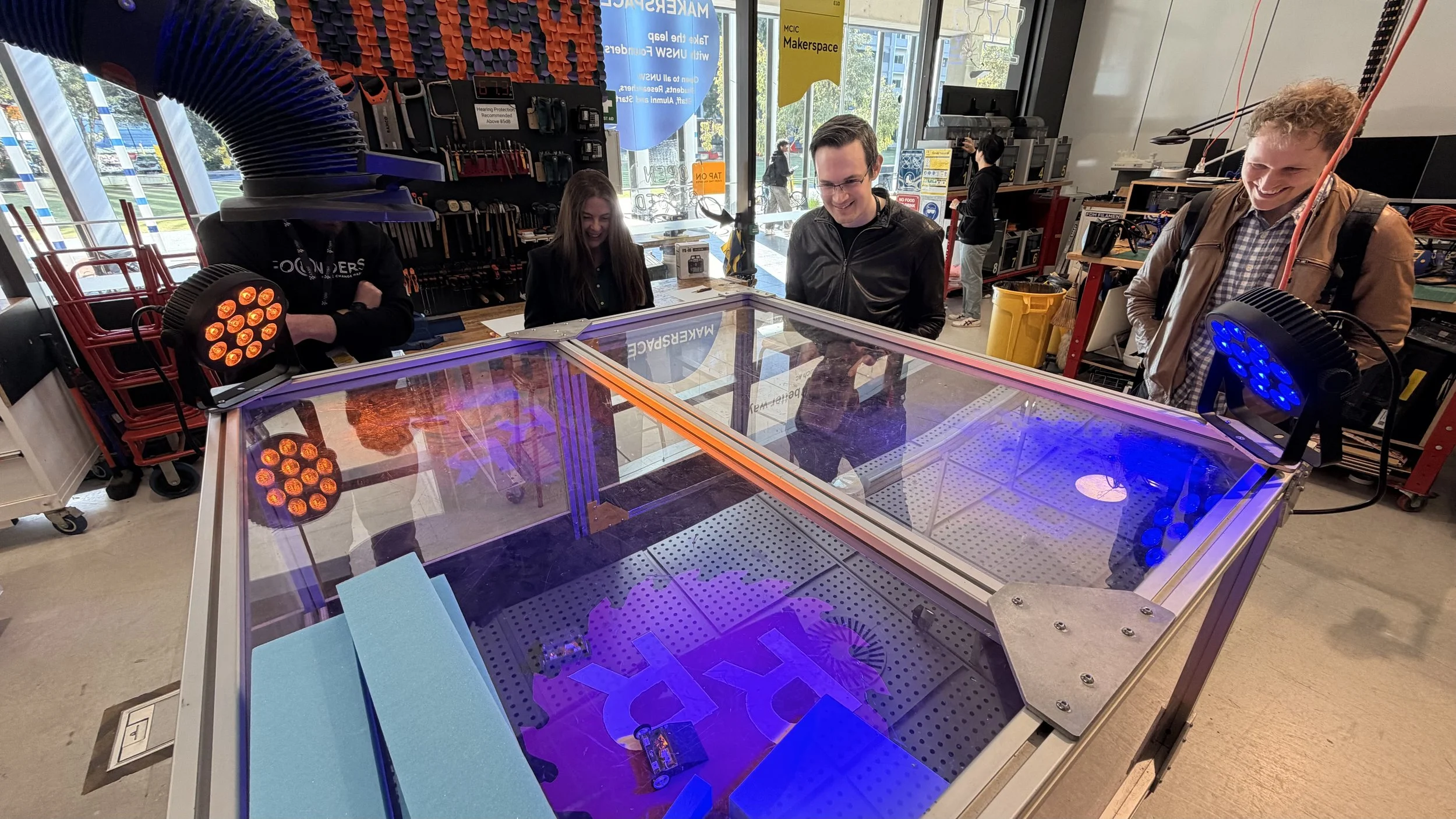
Access requires safety badges. That modest administrative detail carries a larger point: the equipment comes with training. Learning CAD, digital fabrication or Arduino basics gives participants skills they can reuse. A room of machines becomes more useful when its users can return and make the next version themselves.
04 / Different founders need different doors
Health 10x brings The George Institute for Global Health into the process. Its A$100,000 SAFE combines A$90,000 from UNSW with A$10,000 from the institute. Clinical, regulatory and commercial questions sit beside the usual fundraising work. Applicants need an Australian entity, rights to commercialise their intellectual property, a proof of concept and market engagement. They must also commit approximately 12 hours a week during the ten-week accelerator.
Climate 10x, established in 2023 through the Trailblazer for Recycling and Clean Energy, works with ventures addressing emissions, renewable energy and the circular economy. Health and Climate accept Australian startups without a UNSW affiliation. All Industries requires an affiliated co-founder. Those distinctions matter: a promising idea does not make every entrance available.
- AskCoaching
- TestMakerspace
- Build10x
- ExpandGlobal support
New Wave tackles an earlier obstacle. Women can apply with an idea, without one, with a team or looking for teammates. Workshops, coaches and mentors help them develop entrepreneurial skills. Online and in-person formats acknowledge that availability differs. Founders’ July 2026 showcase report describes family-friendly events and flexible delivery for people with caring responsibilities. Inclusion becomes a scheduling decision, as well as an invitation.
The team’s expertise spans program design, investment and fabrication. Its published roster includes an investor in residence, specialist health and climate managers, and a Makerspace coordinator. For users, that means choosing the person who understands the immediate problem, rather than expecting one mentor to know every industry and every machine.
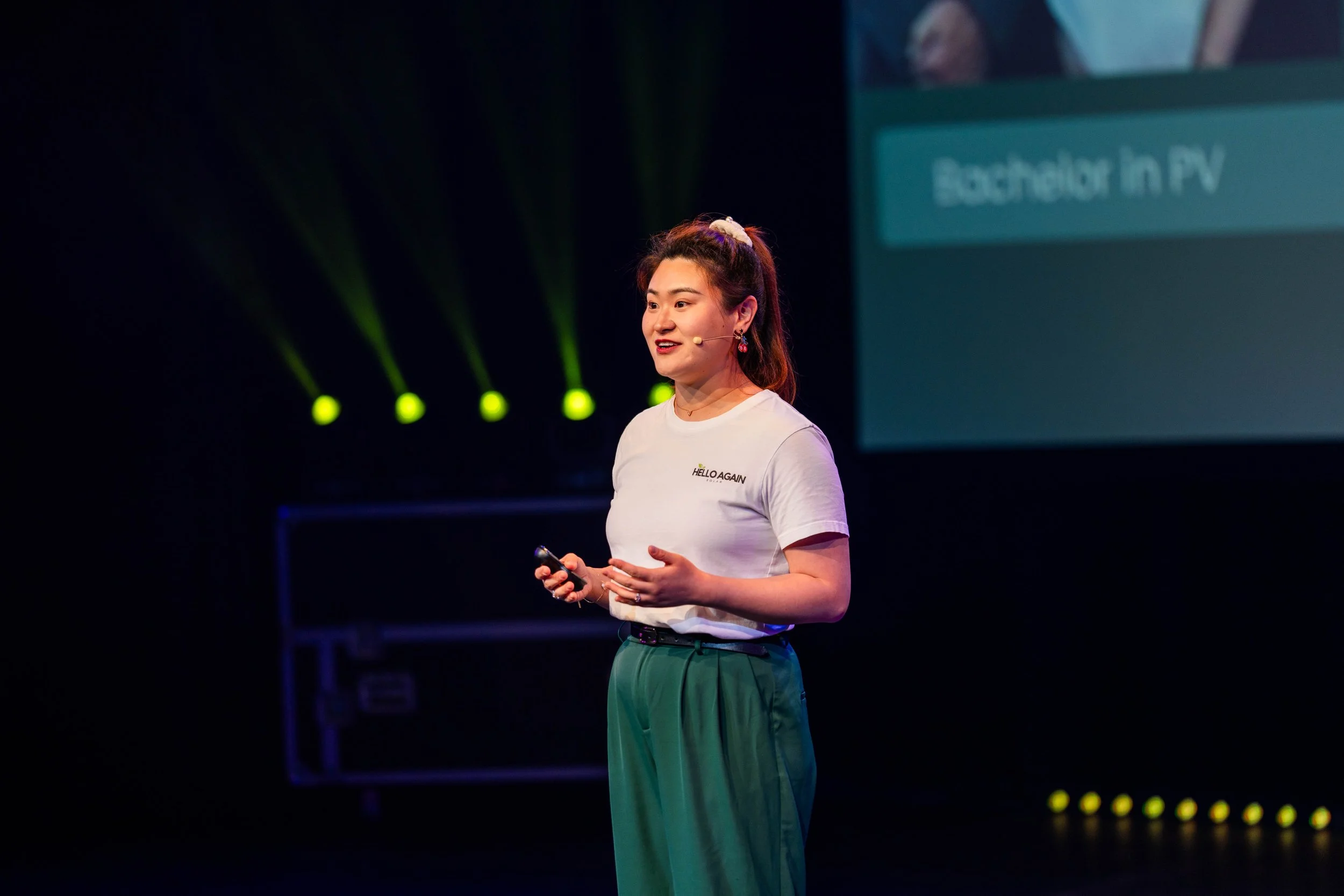
05 / The neighbours are part of the product
“the main thing for us was, by far, the connections in the community”Hayden Smith, Pearler co-founder · 2023
The relationships extend beyond campus. In February 2026, a Global Launchpads Summit connected around 100 entrepreneurs with partners across ten international markets. It also formally launched Global Innovation Foundry, designed to create international commercialisation pathways for at least 100 startups. Market entry needs introductions, local knowledge and decisions about where to spend scarce effort.
Meanwhile, the September 2026 Peter Farrell Cup finals rewarded OsseoThread’s surgical-material venture and Prockets’ modular prosthetics work with A$10,000 awards each. They illustrate the range of ideas entering the community. Readers can copy the sequence: seek criticism early, test a specific assumption, then ask for money suited to the evidence. It depends on eligibility, time and willingness to revise. A prototype can expose a weakness; the founder still has to act on it.